A Simple Guide to Working with Fusible Interlining Suppliers
If you run a garment factory, you already know that interlining is one of those inputs nobody talks about on the runway, but it decides
Double Ghoda supplies fusible interlining fabric wholesale, woven and non-woven for suit manufacturers, sherwani makers and garment factories across India. PA double-dot coating. 30–150 GSM. OEKO-TEX® certified. MOQ 1,000m. B2B only.

GSM Range(Woven)
Double-dot coating
Roll lengths
Min. order(B2B)
Certified
Fusible interlining is a base fabric — woven or non-woven — coated on one side with thermoplastic adhesive. When pressed against a fashion fabric using heat and pressure, the adhesive melts and bonds permanently. The result is a garment part that holds its shape, resists distortion and maintains its structure through repeated wearing and dry cleaning.
In India’s garment trade, fusible interlining goes by several names depending on how and where it is used. Fusing cloth, body fusing and suit fusing all refer to the same product — woven fusible interlining applied to the front body of a suit, sherwani or blazer. Body fusing cloth is the specific trade term for the heavy 100–150 GSM woven grades used in full-front garment construction.
Double Ghoda supplies both woven and non-woven fusible interlining from 30 to 150 GSM — the complete range required for Indian ethnic formal wear production. PA double-dot coating on woven grades ensures faster fusing and stronger bonds than single-coat alternatives.
Adds structure and shape — the garment holds its silhouette through wear
Faster application than sew-in interlining — PA double-dot fuses in 18–25 seconds
Dry-clean safe — bond withstands repeated cleaning cycles
Consistent quality — uniform GSM, hand-feel and coating across every batch
OEKO-TEX® Standard 100 — tested for harmful substances
Double Ghoda supplies woven and non-woven fusible interlining wholesale across India. Most garment factories order both — woven for the garment body, non-woven for collar and cuff construction.
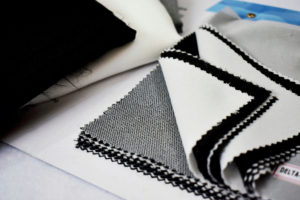
The primary fusing cloth for structured formal wear. Woven polyester base with PA double-dot coating — the grade that gives suits, blazers and sherwanis their shape and structure. Our flagship 111 quality (140 GSM) is the most-recognised sherwani fusing grade across India.
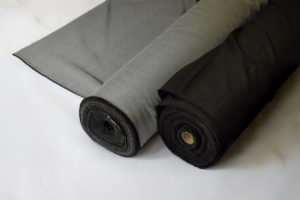
PA double-dot coating — faster fusing, stronger bond
Complete range: 30–150 GSM in 11 grades
50m rolls · 6 rolls per bale · 150cm width
White, Black, Grey / Charcoal
OEKO-TEX® Standard 100 · Dry-clean safe

Lighter, more economical fusible interlining for collars, cuffs, plackets and smaller garment parts. PES double-dot coating. Good elasticity and dimensional stability. The right choice when structural support is needed but full body fusing is not.
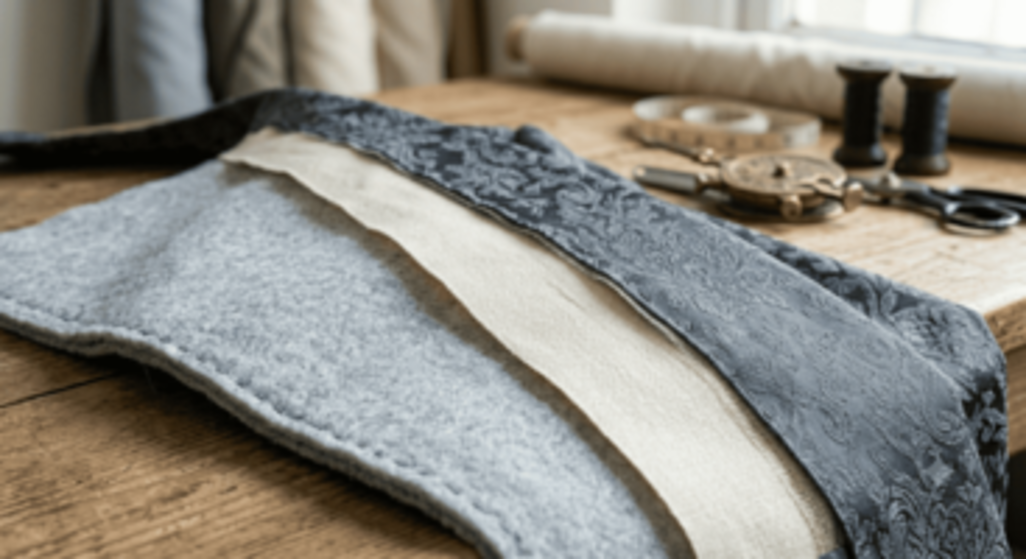
30–82 GSM range for all garment parts
90m rolls · White & Black · 100cm width
Good elasticity — moves with the garment part
OEKO-TEX® Standard 100 · Wash at 40°C safe
Different garments need different interlining grades. Tell us what you’re making and we’ll point you to the right product and GSM.
140 GSM Woven — 111 Quality
Full-front body fusing for sherwani construction. 111 quality (140 GSM) is the trade-standard grade across Surat. PA double-dot coating.
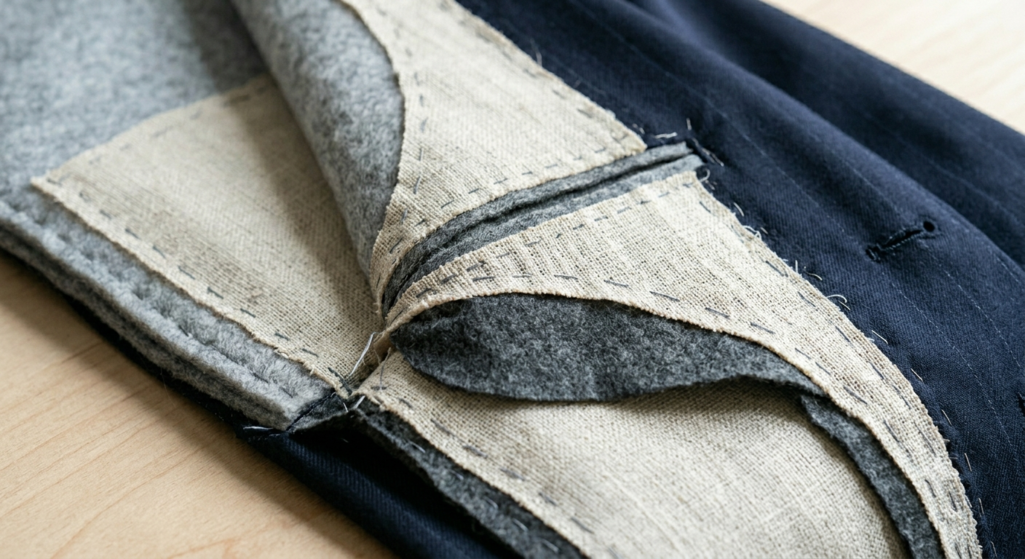
80–130 GSM Woven
Structured suits need 80–130 GSM woven fusing cloth. For premium suits, 120–130 GSM gives a firmer chest and better shape retention.
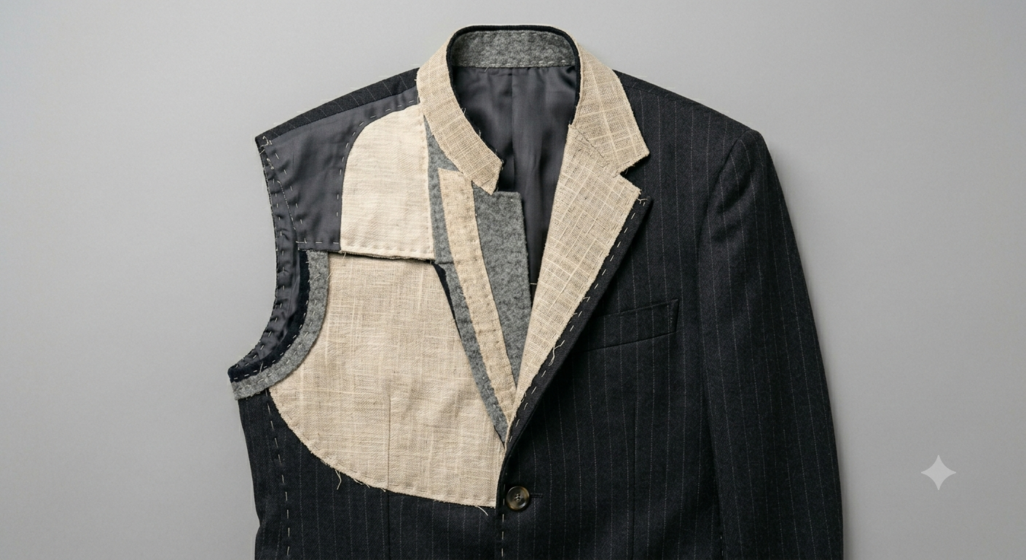
80–120 GSM Woven
Full-front fusing for blazers and formal jackets. 80–100 GSM for standard blazers; 100–120 GSM for heavily structured or premium blazers.
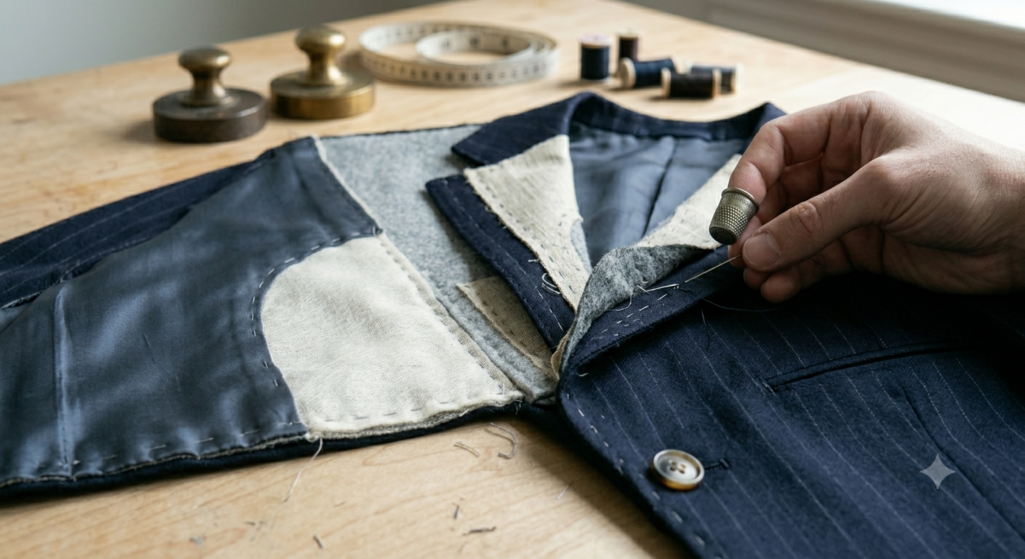
100–150 GSM Woven
Bandgala, Nehru jacket, achkan — heavy ethnic formal wear needs 100–150 GSM woven body fusing for full-front construction and shape retention.
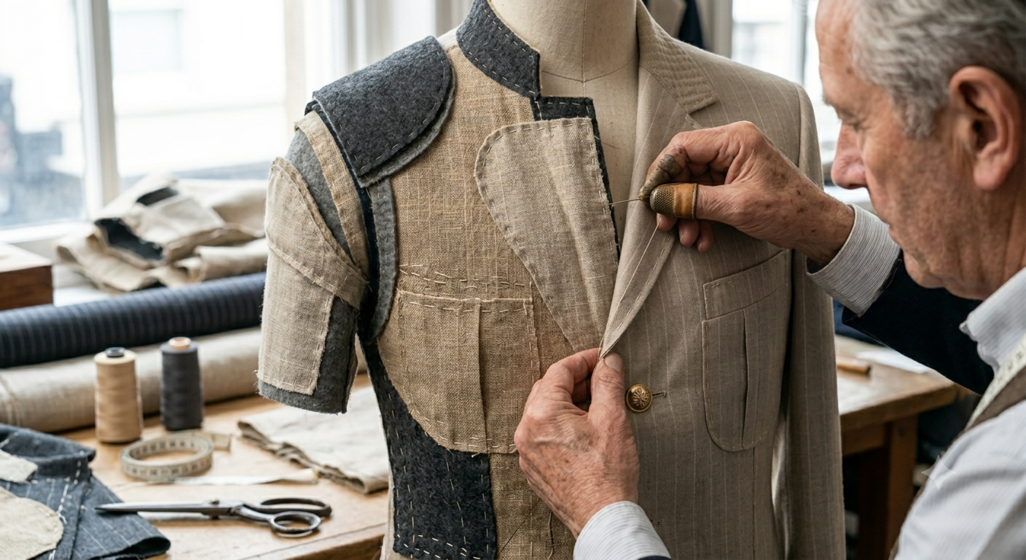
30–60 GSM Woven or Non-Woven
Ladies’ ethnic wear, light formal wear, waistbands and pockets. Non-woven for economy; lightweight woven where more durability is needed.
GSM (grams per square metre) is the most important specification when sourcing fusing cloth. The wrong GSM leaves a garment under-structured or over-stiff — neither looks good on a finished product. This is the complete guide for Indian garment manufacturers.
GSM Grade | Type | Application | Garment Examples | Notes |
|---|---|---|---|---|
30–40 GSM | woven | Ultralight reinforcement | Sheer fabrics, delicate women’s wear, Full fusing for trousers or linen pants | Minimum stiffness |
40–60 GSM | woven | Collar, cuffs, placket | Shirts, kurtas, light formal wear | Standard collar grade |
55–70 GSM | Woven (light) | Light jacket parts, waistbands | Light ethnic wear, pocket areas | Woven for more durability |
80 GSM | Woven | Blazer body fusing | Standard blazers, formal jackets | Economy blazer grade |
100 GSM | Woven | Full-front suit fusing | Structured suits, formal Indian wear | Minimum for suits |
120 GSM | Woven | Premium suit & blazer body fusing | Premium suits, bandgala jackets | High structure grade |
130 GSM | Woven | Heavy formal wear body fusing | Winter coats, heavy ethnic jackets | Extra heavy |
140 GSM 111 QUALITY | Woven | Sherwani full-front fusing, Suits | Sherwanis, heavy ethnic occasion wear | Top-selling grade — flagship SKU |
150 GSM | Woven | Maximum structure | Heavily embroidered sherwanis, overcoats | Heaviest grade |
This is the most common sourcing question from garment manufacturers. The short answer: woven for the garment body, non-woven for smaller parts. Here’s the full comparison.
Property | Woven Fusible Interlining | Non-Woven Fusible Interlining |
|---|---|---|
Construction | Woven polyester yarns — true fabric | Bonded polyester fibres |
Coating | PA double-dot (polyamide) | PES Single-dot (polyester) |
Strength | High tensile & tear strength | Moderate — sufficient for small parts |
GSM range | 30–150 GSM | 30–82 GSM |
Roll length | 50 metres | 90 metres |
Width | 150 cm (60 inch) | 100 cm (40 inch) |
Colours | White · Black · Grey | White · Black |
Fusing temp | 125–145°C | Up to 120°C (lower energy) |
Primary use | Suits · Blazers · Sherwanis (full front) | Collars · Cuffs · Plackets · Pockets |
Dry-clean safe | Yes | Yes |
OEKO-TEX | Standard 100 | Standard 100 |
Cost tier | Higher (stronger & heavier) | More economical |
India preference | 100+ GSM for ethnic formal wear | 30–60 GSM for small parts |
Most factories order both — woven for the body, non-woven for collar and cuff details. Contact us and we can quote both products together in one order.
Applying fusing cloth correctly determines the quality of the finished garment. Here’s the standard process used by garment factories across India.PA double-dot coating advantage: Double Ghoda’s woven fusible interlining uses PA double-dot coating — the adhesive is applied in a staggered two-coat pattern that increases adhesive surface coverage. This means the fusing cloth bonds faster, more evenly and with stronger resistance to delamination compared to single-dot or paste-dot grades — which is critical for heavy ethnic formal wear that undergoes repeated dry cleaning.
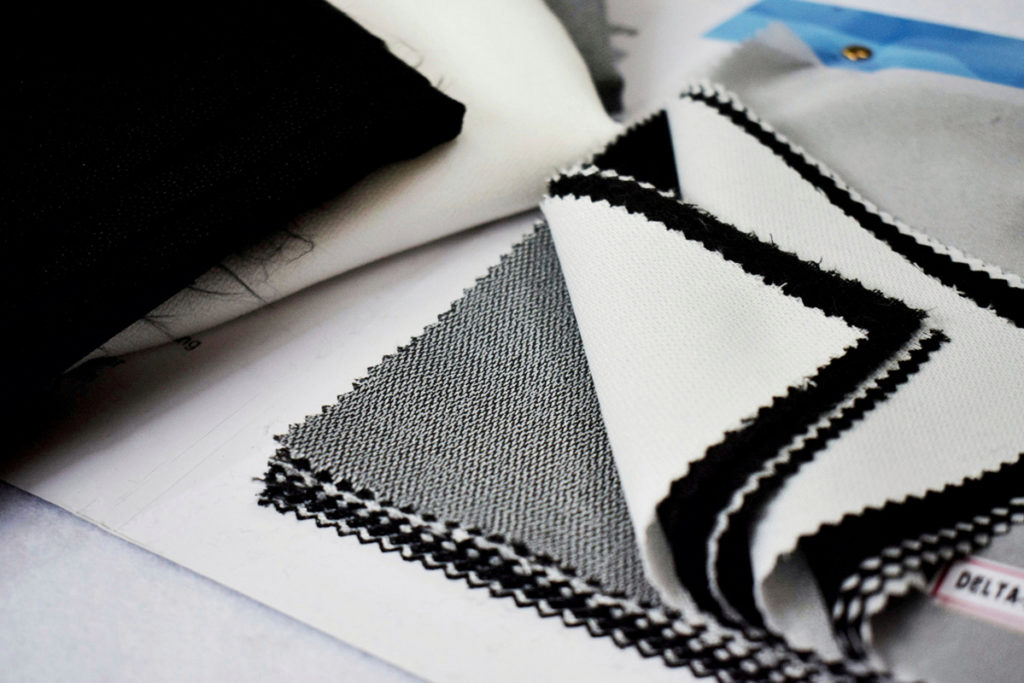
Cut the fusible interlining to match the garment panel — suit front, collar, cuff or any part requiring stiffening.
Coated side (slightly rougher, with PA or PES adhesive dots) faces the wrong side of the fashion fabric.
Flatbed press: 125–145°C for woven (PA), up to 120°C for non-woven (PES). 18–25 seconds. 1.5–2.5 kg/cm².
Cool completely before handling. Check bond — no bubbles, no edge lifting, consistent adhesion across the full panel.

We are not a marketplace, a catalogue aggregator or a drop-shipper. Double Ghoda is B.C. Impex — a family-run interlining import and wholesale trading business with over 10 years of supply experience, specifically serving India’s garment manufacturing industry.
Every roll is measured and verified before dispatch. No short metres — a problem that causes real production losses and is surprisingly common in the interlining trade.
Our woven interlining uses PA double-dot coating — higher adhesive coverage, faster fusing, stronger bond. The difference is measurable in production: fewer rejects, better throughput
Uniform GSM, hand-feel and shrinkage across every delivery. Factories reordering from the same quality lot get the same product performance every time.
We stock the 100–150 GSM range that Indian ethnic formal wear requires — grades most generic interlining suppliers don’t carry or carry inconsistently.
All woven fusible interlining is OEKO-TEX® Standard 100 certified — tested for harmful substances throughout the supply chain. Relevant for export-oriented garment factories.
Core SKUs held in ready stock at our Bhiwandi, Maharashtra warehouse. Dispatch to Surat, Delhi, Mumbai, Ludhiana, Kolkata and across North India.
Common questions from suit manufacturers, sherwani factories and garment wholesalers about fusible interlining types, GSM, body fusing and wholesale supply across India.
Fusible interlining is a base fabric — woven or non-woven — with thermoplastic adhesive coated on one side. Unlike regular fabric, it is designed to bond permanently to another fabric when pressed with heat and pressure. It is not visible in the finished garment — it sits between the fashion fabric and the lining, providing structural support. Regular fabric has no adhesive coating and must be sewn in if used as interlining (which is the older “sew-in” method, now largely replaced by fusible interlining in factory production).
They are the same product referred to by different trade names. Fusing cloth is the term most commonly used in Surat and Gujarat’s garment trade. Body fusing refers specifically to the heavy woven interlining (100–150 GSM) applied across the full front body of a suit or sherwani. Fusible interlining is the technical term used in international and more formal trade contexts. Suit fusing and body fusing cloth are further variations. Double Ghoda stocks all grades regardless of what your factory calls it.
For sherwanis: 140 GSM woven fusible interlining (trade name: 111 quality) — this is the industry-standard grade for full-front sherwani fusing across Surat and North India. For structured suits: 100–130 GSM woven. For blazers: 80–120 GSM depending on fabric weight and desired stiffness. Indian garment manufacturers consistently use heavier grades than international markets because ethnic formal wear requires higher structural rigidity. Double Ghoda’s complete 30–150 GSM range covers every requirement.
111 quality is a trade-recognised name for 140 GSM woven fusible interlining — the flagship body fusing grade used by sherwani manufacturers across Surat, Delhi and North India. The number 111 identifies a specific GSM, hand-feel and bonding performance that buyers in the garment trade recognise by name without needing further specification. It is Double Ghoda’s top-selling product. Contact us and ask for 111 quality by name — we know exactly what you need.
Woven fusible interlining has a proper woven structure — yarns interlaced in both directions — making it stronger, more durable and better at retaining structural shape. It is used for the full-front body of suits, blazers and sherwanis (80–150 GSM). Non-woven fusible interlining is made by bonding fibres together — lighter (30–82 GSM), more economical, and suited for collars, cuffs, plackets and smaller garment parts where full structural support is not required. Most factories use both: woven for the garment body, non-woven for construction details.
PA stands for polyamide — the thermoplastic adhesive used on woven fusible interlining. Double-dot refers to the application pattern: adhesive is applied in two staggered rows of dots, increasing surface coverage compared to single-dot grades. In practice, PA double-dot coating means faster fusing (the adhesive activates more completely), stronger bonds (more adhesive contact area), and better resistance to delamination after dry cleaning. All woven fusible interlining from Double Ghoda uses PA double-dot — it is our standard, not an upgrade.
Fusing cloth wholesale price in India varies by GSM, construction type (woven or non-woven) and quantity ordered. Heavier GSM costs more per metre; non-woven is more economical than woven at the same GSM. The 111 quality (140 GSM) is priced at a premium over lighter woven grades. Double Ghoda provides written quotations with per-metre pricing for orders of 1,000 metres and above. The fastest way to get a price is to WhatsApp your GSM, colour, quantity and city — we respond within 1 hour.
Double Ghoda’s minimum order for fusible interlining wholesale is 1,000 meters — for both woven and non-woven grades. We supply garment factories, formal wear wholesalers and clothing brands, not individual tailors or retail buyers. Woven interlining is supplied in 50m rolls; non-woven in 90m rolls. Contact us for a written quotation with per-metre pricing and freight terms to your city.
Yes. Surat is our primary market — it is India’s largest ethnic wear manufacturing hub and the city where demand for heavy fusing cloth and body fusing is highest. We also supply across North India: Delhi NCR, Ludhiana, Chandigarh, Amritsar, Kolkata and Chhattisgarh. Stock is held in our Bhiwandi, Maharashtra warehouse for dispatch across all cities. Suit fusing wholesale Surat is our most frequent order type — contact us for current availability and freight terms.
Contact us today to find the best solution for your garments.

Ready to place a bulk order?
We are here to help suit manufacturers, wholesalers, and production houses find the right fusing cloth, body fusing, and fusible interlining wholesale across India.

If you run a garment factory, you already know that interlining is one of those inputs nobody talks about on the runway, but it decides

“Premium” and “non-woven” don’t sound like they belong in the same sentence, but that’s more about assumption than fact. The honest answer is: it depends

Pick the wrong lining weight and you’ll feel it before you see it. A blazer that feels stiff and bulky on the inside, or a
B.C. Impex Ground Floor, Office No. 3, Bhola Jarda Compound Bldg No 1, Thane Bhiwandi Road, Village Purne, Near TCI Petrol Pump, Bhiwandi, 421302.
+91 8928787250
© 2026 doubleghoda.com All Rights Reserved