When you select polyester lining for a suit, blazer or sherwani, the fibre content is only one part of the decision. The way the yarns are interlaced also affects the fabric’s surface, texture, appearance and drape. This is why two polyester linings can feel and look quite different even when they are made from the same fibre.
For garment manufacturers, understanding these differences makes it easier to match the lining to the garment’s construction and finish. A smooth satin lining, for example, creates a different interior appearance from a patterned jacquard or textured satin dobby.
So, how does the weave structure affect polyester lining fabric? It influences how the fabric looks and feels, how it falls inside a garment and the kind of finish it contributes to. Let’s look at the main weave types and their practical differences.
What Is the Weave Structure of Polyester Lining Fabric?
Weave structure refers to the way lengthwise yarns, known as warp yarns, cross over and under widthwise yarns, known as weft yarns, to form a fabric. The arrangement of these yarns creates different surface patterns and fabric characteristics.
Polyester lining can be produced in different constructions. Although the fibre remains polyester, the weave can give each lining a distinct appearance and feel.
For example:
- A satin construction creates a smooth, glossy surface.
- A dobby construction introduces small patterns or textured details.
- A jacquard construction creates more elaborate woven patterns.
- Taffeta has a lightweight, crisp character and a clean surface.
These differences matter when the lining is sewn inside a garment. The interior may be visible when a jacket is opened, while its texture and drape influence how the lining sits against the outer fabric.
How Does Weave Structure Affect Polyester Lining Fabric?
The weave determines how the yarns are arranged across the fabric. This affects the visible surface and contributes to the way the lining feels and falls. For manufacturers, these differences can influence the appearance and finish of the garment interior.
1. Surface Appearance
The most noticeable difference between weave structures is often the fabric’s surface.
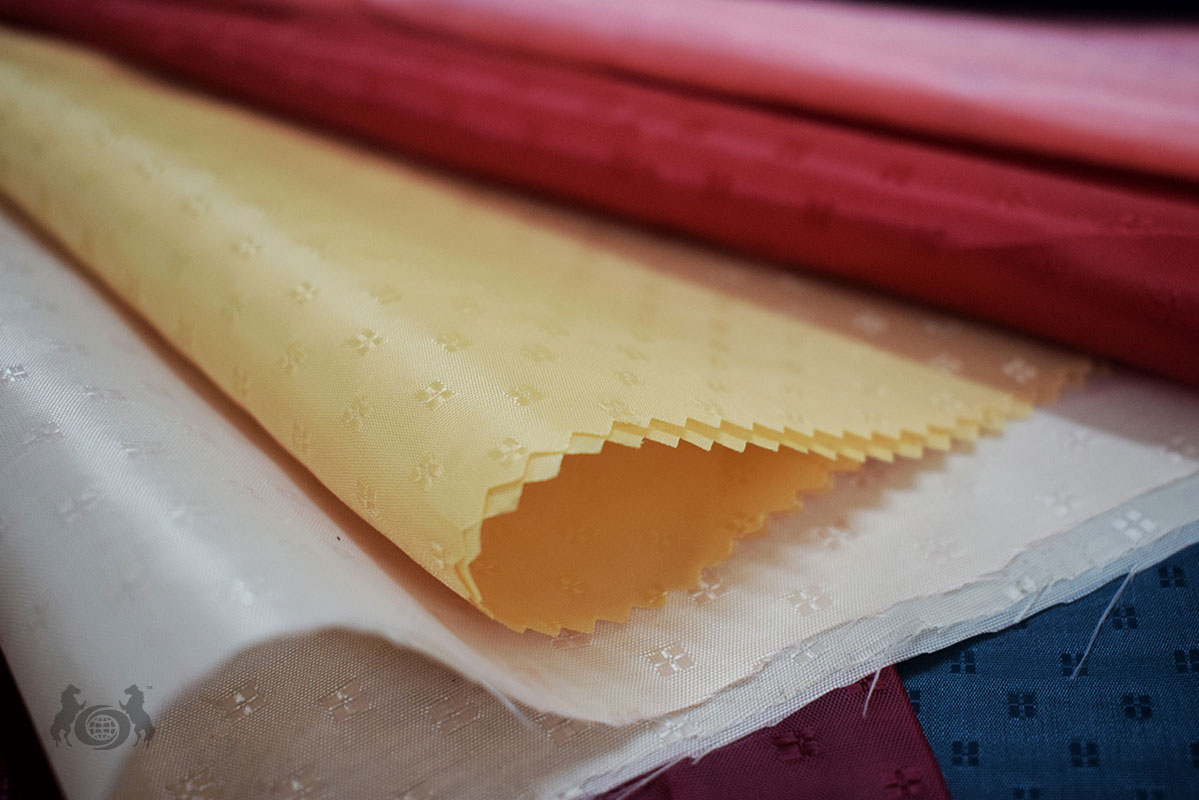
Satin has a smooth, glossy face, while satin dobby combines a satin base with additional texture. Jacquard has a pattern woven into the fabric rather than printed onto its surface. Taffeta offers a cleaner, more understated appearance.
The choice depends on the interior finish you want. A patterned lining can add visual detail to a premium garment, while a plain, smooth surface may be more suitable when you want the outer fabric to remain the main focus.
2. Texture and Feel
The arrangement of the yarns influences how the fabric feels when handled.
Plain satin has a smooth and slippery feel. Satin dobby introduces a slight texture while retaining the smooth character of its satin base. Jacquard offers a more visibly patterned surface, giving the lining a different hand-feel from plain satin.
These distinctions are useful when choosing lining for garments where the inside finish is part of the overall presentation.
3. Drape and Fabric Behaviour
Drape describes how a fabric hangs or falls under its own weight. Weave construction can influence this behaviour, but it is not the only factor. Yarn characteristics, fabric density, finishing and GSM also contribute.
Double Ghoda describes its satin lining as having good drape and a smooth, slippery feel. Its satin dobby option retains the smooth feel and drape of satin while adding surface texture. Taffeta, meanwhile, is positioned as a lightweight option for garments where a less bulky lining is required.
When selecting a lining, assess how it falls alongside the actual outer fabric rather than judging it by the weave name alone.
4. Visual Finish Inside the Garment
The lining contributes to the overall appearance when a garment is opened or worn without being fully fastened.
For example, a patterned jacquard lining can create a more decorative interior in a sherwani or premium suit. Satin provides a simpler glossy finish, while satin dobby adds texture without relying on an elaborate surface pattern.
The weave therefore gives manufacturers options to match the interior finish with the garment’s design and intended positioning.
How Do Different Weave Structures Change Polyester Lining?
Each weave offers a different combination of surface appearance, texture and weight. Double Ghoda supplies four polyester lining options: Jacquard, Satin Dobby, Plain Satin and Taffeta (190T).
Jacquard Polyester Lining
Jacquard is recognised by its woven surface patterns. The design is created through the arrangement of warp and weft yarns, rather than being added as a surface print.
This makes jacquard a suitable option when you want the lining itself to contribute to the garment’s interior appearance. Double Ghoda lists its jacquard polyester lining at 80–85 GSM and identifies sherwanis, premium suits and blazers as its applications.
It is particularly relevant for garments where the inner finish is visible and contributes to the overall presentation.
Satin Dobby Polyester Lining
Satin dobby combines the smooth character of a satin base with the texture created by a dobby weave. Dobby structures use controlled arrangements of warp yarns to form small patterns or textured details.
Compared with plain satin, satin dobby offers more surface interest while retaining a smooth feel and good drape. Double Ghoda lists this lining at 72–82 GSM for suits, blazers and formal jackets.
It can be considered when you want something more textured than plain satin without choosing a more visibly patterned jacquard.
Plain Satin Polyester Lining
Plain satin is characterised by its smooth, glossy surface. In a satin weave, yarns pass over several yarns in the opposite direction before interlacing again. This creates longer yarn floats on the fabric surface, contributing to its characteristic sheen and smooth feel.
Double Ghoda describes its satin lining as having a slippery feel and good drape. The product page lists it at 67–80 GSM and identifies suits, blazers and formal jackets as common applications.
For manufacturers looking for a clean, smooth interior finish, plain satin is a practical option to assess.
Taffeta Polyester Lining (190T)
Taffeta has a lightweight, crisp character and a smooth finish. Double Ghoda lists its polyester taffeta lining as 190T, with a GSM range of 52–65. It is intended for blazers, safari suits and outerwear where a less bulky lining is preferred.
Its lighter construction can help keep the lining layer from adding unnecessary weight to the garment. This makes it worth considering when the outer fabric and garment construction do not require a heavier interior layer.
The 190T designation is a construction specification used for this taffeta option. Confirm the supplier’s exact measurement convention when comparing it with other fabric specifications.
Which Weave Structure Is Suitable for Different Garments?
The right weave depends on the garment’s design, the desired interior appearance and the weight required. The following options reflect the applications listed on Double Ghoda’s polyester lining page.
| Lining type | GSM listed | Surface and feel | Applications listed |
| Jacquard | 80–85 GSM | Patterned surface | Sherwanis, premium suits and blazers |
| Satin Dobby | 72–82 GSM | Textured satin surface | Suits, blazers and formal jackets |
| Plain Satin | 67–80 GSM | Smooth and glossy | Suits, blazers and formal jackets |
| Taffeta (190T) | 52–65 GSM | Lightweight and crisp | Blazers, safari suits and outerwear |
Use these specifications as a starting point rather than a universal rule. The same lining may behave differently depending on the outer fabric, garment construction and finishing process.
Before confirming a bulk order, assess the lining with the actual shell fabric. Check its surface, drape, feel and appearance after sewing and pressing. This helps you judge whether the combination delivers the finish you need in the completed garment.
For repeat production, also confirm the colour and batch details. A consistent lining shade helps maintain a uniform interior appearance across garments produced in different batches.
Choosing a Lining Based on the Desired Finish
- For a patterned interior: Consider jacquard when the lining is intended to add visible design detail.
- For texture with a smooth satin feel: Consider satin dobby.
- For a glossy, smooth interior: Consider plain satin.
- For a lightweight, less bulky lining: Consider taffeta (190T).
The final selection should account for both the weave and GSM. A weave name alone does not tell you the complete weight or behaviour of a fabric.

Frequently Asked Questions About Polyester Lining Fabric
Does weave structure change the appearance of polyester lining?
Yes. Different weave structures create different surface characteristics. Jacquard produces woven patterns, satin has a smooth and glossy face, satin dobby adds texture to a satin base, and taffeta has a lightweight, crisp appearance.
Which polyester lining weave has a glossy surface?
Plain satin is the smooth, glossy option in Double Ghoda’s range. Satin dobby also has a satin base, but its surface includes additional texture.
What is the difference between jacquard and satin dobby lining?
Jacquard creates woven patterns across the fabric surface. Satin dobby combines a satin base with smaller textured details. Both add visual interest, but their surface patterns and overall appearance differ.
Is taffeta polyester lining suitable for lightweight garments?
Taffeta is listed as a lightweight lining option at 52–65 GSM. Double Ghoda identifies it for blazers, safari suits and outerwear where a less bulky lining is preferred.
Does GSM affect polyester lining along with weave structure?
Yes. Weave structure influences the surface and construction, while GSM indicates the fabric’s weight per square metre. Both should be considered when selecting lining for a garment. Double Ghoda’s listed polyester lining range runs from 52 to 85 GSM, depending on the type.
How should garment manufacturers choose between different polyester lining weaves?
Start with the garment type and the finish you want. Compare the surface, texture and GSM of the available options, then test a sample with the actual outer fabric. This gives you a better indication of how the lining will look and behave after construction.
The weave structure makes a noticeable difference to the appearance and feel of polyester lining. Jacquard, satin dobby, plain satin and taffeta each offer a different finish, so the right option depends on the garment you are producing.
For garment manufacturers sourcing polyester lining fabric in bulk, Double Ghoda offers these four options in 45-metre rolls, with a minimum order quantity of 1,000 metres. You can compare the available weave types, GSM and colours before selecting the lining that suits your production requirement.
Explore polyester lining fabric from Double Ghoda to review the available options.
Link of related Articles
- Lightweight Interlining vs. Heavyweight Interlining
- A Beginner’s Guide to Interlining
- Choosing the Right Interlining