Categories
Polyester Fabrics

What Lining Fabric Should You Use for Wedding Season Garments?

There’s no single lining fabric that’s right for every wedding garment. The best choice depends on the garment you’re making, the outer fabric it’s paired with, the finish you want, and how the piece will be constructed and produced. A sherwani, a premium suit, and a lightweight blazer can each call for a different lining, even within the same wedding-season collection.

What matters more than picking “the best” lining is matching weight, weave, and finish to what the garment actually needs. Below is how lining choice affects the finished piece, how to think through it by garment type, and what to check before you commit a lining order to wedding-season production.

What Lining Fabric Works Best for Wedding Season Garments?

The short answer: it depends on the garment, and treating lining as a single, universal choice usually leads to a mismatch somewhere in the range. A structured sherwani front, a tailored suit body, and a lightweight festive jacket each put different demands on the lining, how it drapes, how much body it adds, and how it looks when the garment opens.

Rather than asking which lining is best overall, it’s more useful to ask what each style in your wedding-season line needs: how visible the interior will be, how the garment moves, and how heavy or light the outer fabric already is. That framing carries through the rest of this guide.

Why Does Lining Matter in Wedding Wear?

Lining matters in wedding wear because it directly shapes how the garment looks, moves, and feels once it’s finished, and wedding garments are worn and examined closely, often with the jacket or sherwani open.

A few specific ways lining affects the outcome:

  • Interior appearance. In sherwanis and open-front jackets, the lining is visible whenever the garment is worn, it’s part of the finished look, not just a hidden layer.
  • Comfort and movement. A smooth interior lets the garment slide easily over what’s worn underneath, which matters through a long wedding function.
  • Structure and drape. Lining adds a small amount of body to a panel, which changes how the outer fabric hangs and holds its shape.
  • Finish quality. Colour consistency and a clean interior read as quality to a wearer, mismatched shading or a rough interior undercuts an otherwise well-made garment.

Because wedding garments are occasion pieces, buyers and wearers tend to notice these details more than they would on everyday clothing, which is exactly why lining choice deserves the same attention as the outer fabric.

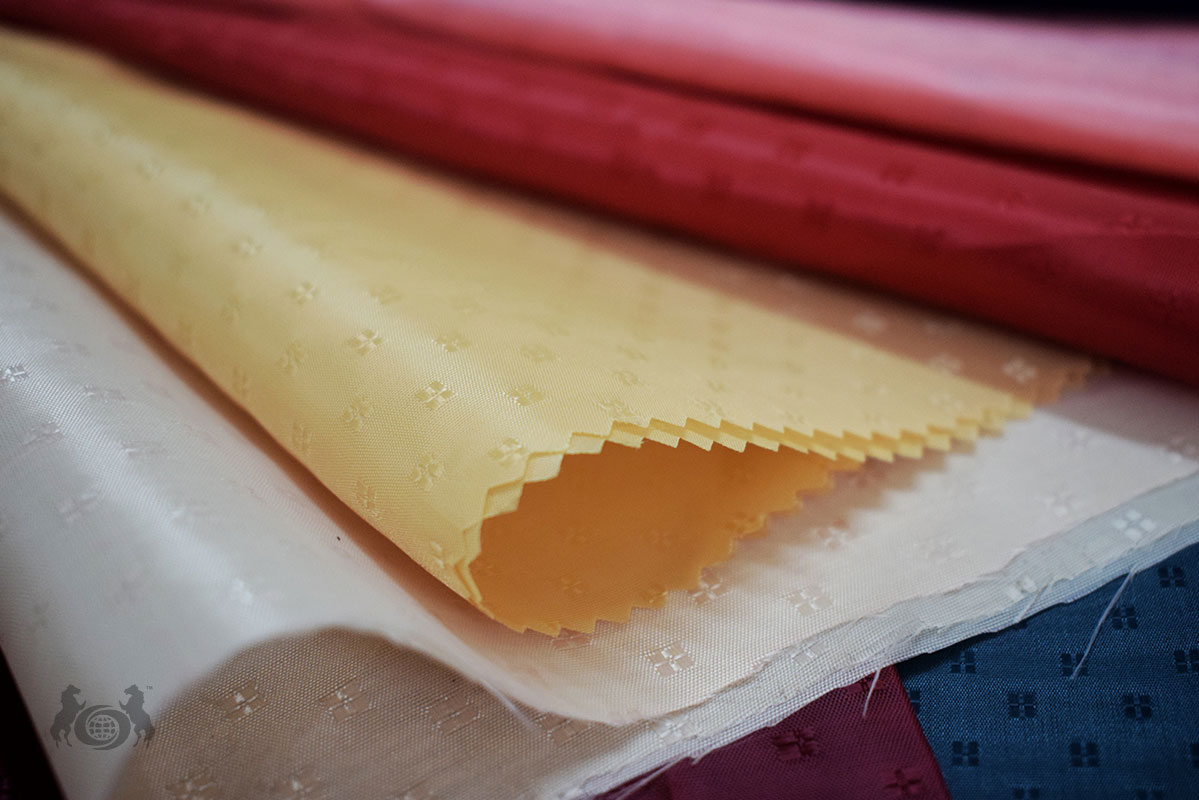
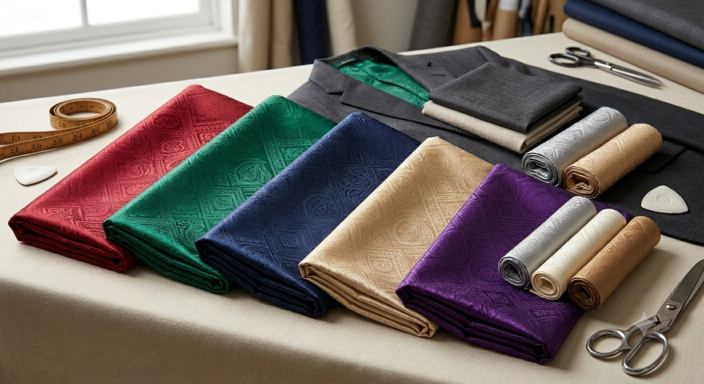
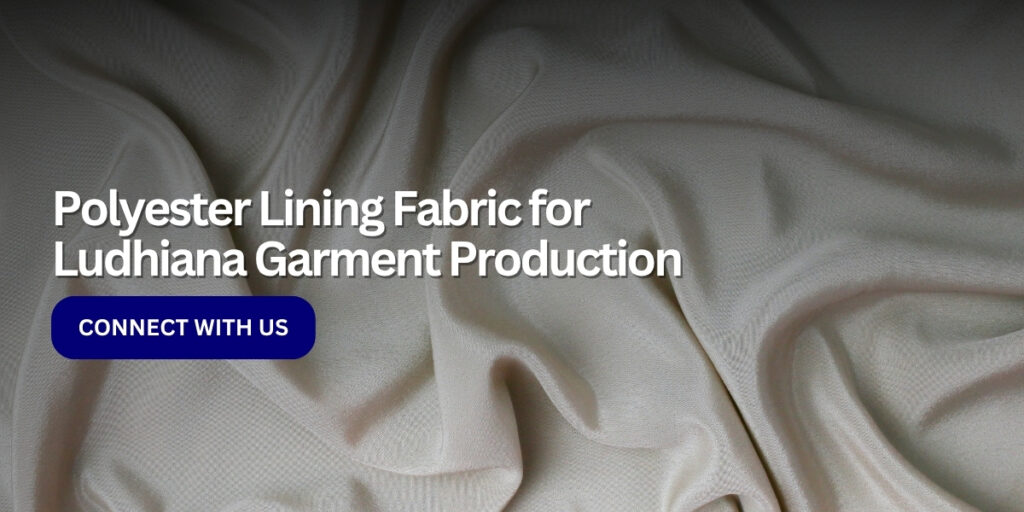
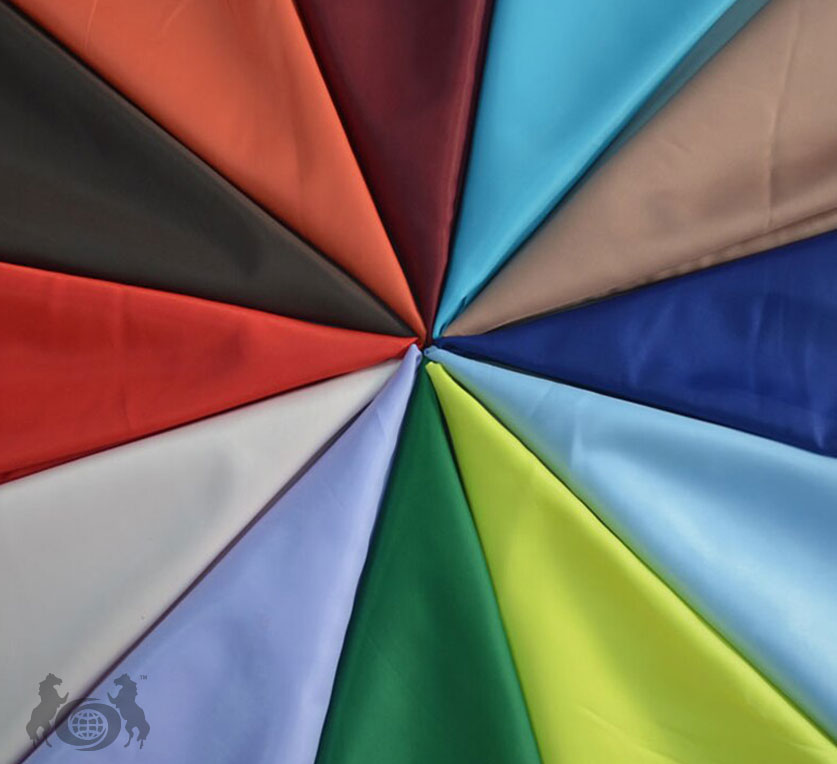
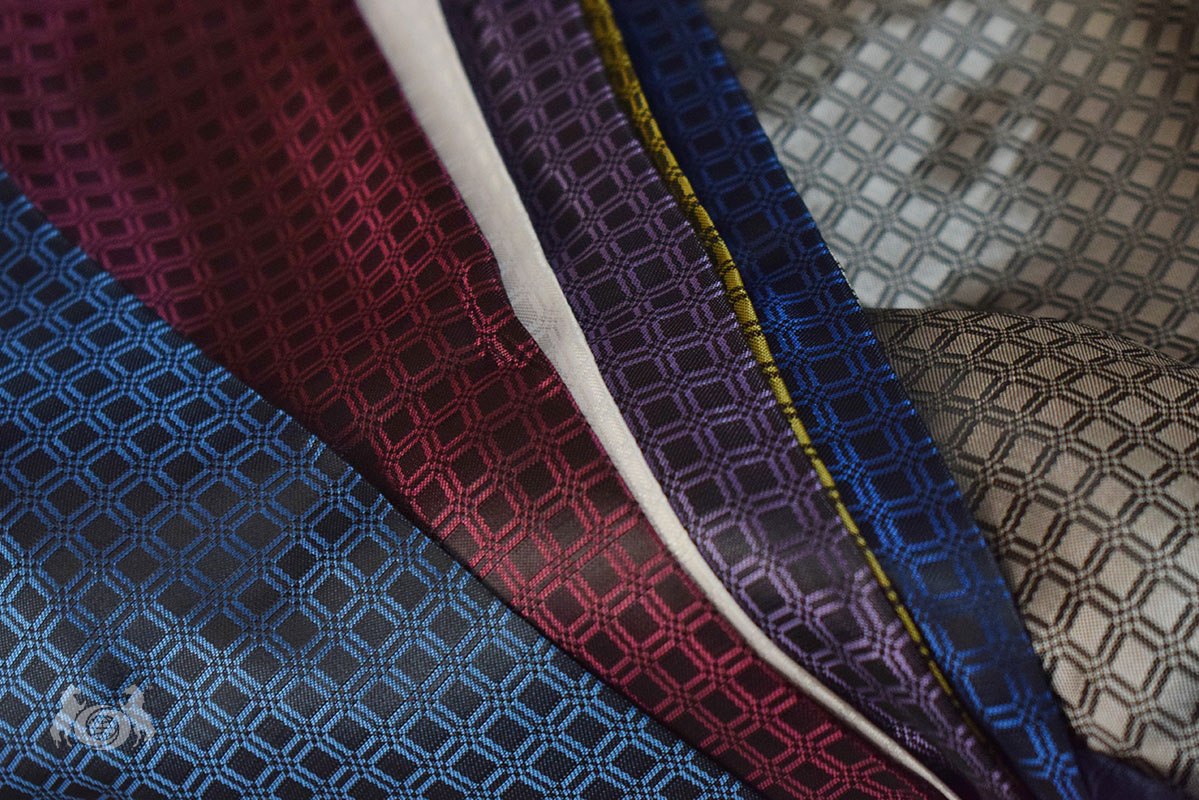
Polyester Lining Fabric Samples

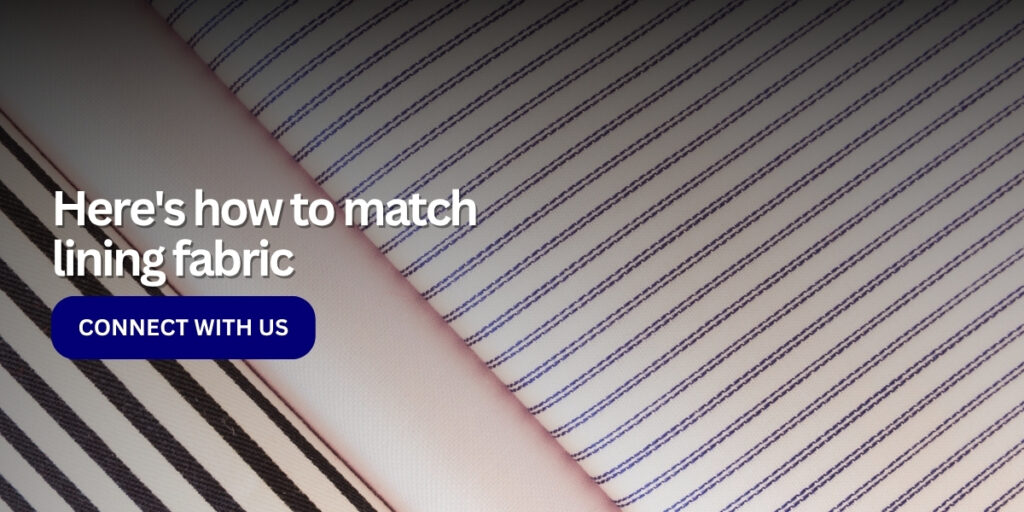
Are Poly Lining andHow Should You Choose Lining Based on the Garment? Polyester Lining the Same?

Choosing lining by garment type means matching the lining’s weight, drape, and finish to how that specific piece is constructed and worn.

A few starting considerations by garment category:

  • Sherwanis and open-front ethnic wear. The interior is on display whenever the garment is worn open, so appearance and a premium hand-feel tend to matter more here than on a fully closed garment.
  • Structured suits and blazers. These need a lining that supports the tailored shape without adding unwanted bulk, especially at the chest and shoulders.
  • Lighter festive jackets and outerwear. A heavier lining can weigh the piece down or change its drape, so lower-bulk options are often more appropriate.

None of these are fixed rules, outer fabric weight, construction method, and your buyer’s expectations all factor in. The point is to work through the garment’s specific requirements rather than defaulting to one lining across your whole range.

How Do Lining Weight and Weave Affect the Final Finish?

Lining weight and weave affect the final finish by changing how the fabric drapes, how much body it adds, and how the interior looks and feels once the garment is complete.

Weight (GSM) considerations:

  • Lighter linings generally drape closer to the body and add minimal bulk, which suits garments where you don’t want the lining to compete with the outer fabric’s own structure.
  • Heavier linings add more body and a fuller hand-feel, which can suit garments built for a more substantial, structured presence.

Weave considerations:

  • Textured or patterned weaves tend to read as a richer, more premium interior finish, which is often relevant for garments where the lining is visible.
  • Smoother, plainer weaves offer a cleaner, simpler interior finish, generally at a more accessible cost tier.

Weight and weave work together, not separately, a heavier, textured lining reads differently from a lighter, smooth one, and the right combination depends on the outer fabric and the finished look you’re aiming for. Testing lining against your actual shell fabric and construction, rather than judging it in isolation, is the most reliable way to confirm the pairing works.

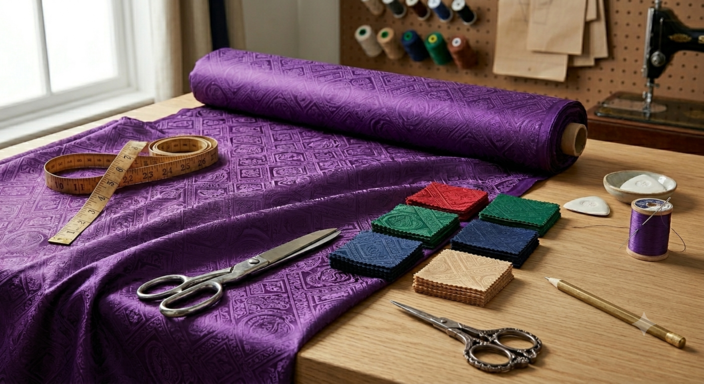
polyester lining fabric

What Should You Check Before Buying Lining Fabric for Wedding Production?

Before you commit a lining order to wedding-season production, check that the fabric matches your garment’s requirements, not just its specification sheet.

Practical points to confirm:

  • Colour consistency across the order. Wedding-season production often runs in bulk, so shade variation between rolls or deliveries can show up across a batch of finished garments.
  • Weight and drape against your actual outer fabric. A lining that looks right on a swatch can behave differently once paired with your specific shell fabric and construction.
  • Weave suited to how visible the interior will be. Confirm whether the garment calls for a more decorative interior or a simpler, functional one.
  • Consistency across reorders. Wedding-season demand can mean multiple orders in a short window, check whether your supplier can match the same shade and hand-feel on a repeat order.
  • Care compatibility. Confirm the lining suits how the finished garment will be cleaned, especially for pieces likely to go to dry cleaners rather than standard washing.

Working through this list against your actual production plan, rather than assuming one lining will suit your whole wedding-season range, is what keeps the finished garments consistent.

Polyester Lining Options From Double Ghoda

We supply polyester lining fabric across four weave types, Jacquard, Satin Dobby, Satin, and Taffeta, which gives you room to match the interior to different garments within a wedding-season range rather than sourcing one fabric for everything.

Our GSM range runs from 52 to 85 across these weaves, with lighter taffeta and satin grades suited to blazers and lighter outerwear, and heavier jacquard and satin dobby grades used for premium suits and sherwanis where a fuller interior finish is wanted. Jacquard is our most-ordered lining, with a woven pattern on the surface that reads as a premium interior choice, relevant if you’re sourcing lining for a sherwani or another garment where the interior is visible.

Colour consistency is something we hold to deliberately: our lining is kept in consistent dye lots, so a reorder from the same batch matches the shade you ordered before. For wedding-season production, where you may be placing more than one order across the season, that consistency is worth checking against your own production timeline.

Beyond weave, weight, and colour, the right lining for your garment still comes down to the factors covered above, how it’s constructed, how it will be worn, and what finish your buyer expects.

Frequently Asked Questions

How do I choose lining fabric for wedding garments?

Match the lining’s weight, weave, and finish to the specific garment, a sherwani, a suit, and a lighter jacket can each call for a different lining depending on how visible the interior is and how the piece is constructed.

Colour consistency is something we hold to deliberately: our lining is kept in consistent dye lots, so a reorder from the same batch matches the shade you ordered before. For wedding-season production, where you may be placing more than one order across the season, that consistency is worth checking against your own production timeline.

Beyond weave, weight, and colour, the right lining for your garment still comes down to the factors covered above, how it’s constructed, how it will be worn, and what finish your buyer expects.

FAQs

How do I choose lining fabric for wedding garments? Match the lining’s weight, weave, and finish to the specific garment, a sherwani, a suit, and a lighter jacket can each call for a different lining depending on how visible the interior is and how the piece is constructed.

Is jacquard or satin better for sherwani lining?

Both are used for sherwanis. Jacquard offers a more textured, premium-looking interior, which suits garments where the lining is visible when worn. Satin gives a smoother, simpler finish at a more accessible cost tier. Neither is universally better, it depends on the finish you want.

Does lining weight matter for wedding wear?

Yes. Lighter lining adds minimal bulk and drapes closer to the body, while heavier lining adds more body and a fuller hand-feel. The right weight depends on your outer fabric and how structured the garment is meant to feel.

What should I check before ordering lining for a wedding-season collection?

Check colour consistency across the order, how the lining drapes against your actual outer fabric, whether the weave suits how visible the interior will be, and whether your supplier can match the same shade on a reorder.

Can I use the same lining across different wedding garments?

You can, but it’s not usually the best approach. Different garments in a wedding-season range often have different structural and appearance needs, so matching lining to each garment type tends to give a better finished result than a single fabric across the whole line.

Why does colour consistency matter for lining in bulk wedding production?

Wedding-season orders are often produced in volume and sometimes reordered mid-season. Shade variation between rolls or batches can become visible across a run of finished garments, which is why consistent dye lots matter for this kind of production.

Link of related Articles

shweta-textile-designer
 
Shweta, a textile designer with a keen eye and deep knowledge of fabrics, translates her passion into unique designs. She loves to share her expertise and ignite a love for textiles in others. Dive into the world of fabrics with Shweta!

Categories
Polyester Fabrics

Is Poly Lining the Same as Polyester Lining Fabric?

Yes, in almost every case. “Poly lining” is trade shorthand for the same material, a 100% polyester fabric used to finish the inside of suits, blazers and sherwanis. The naming difference rarely signals a different product, but it’s still worth confirming before you place a bulk order. Here’s what buyers should know before sourcing.

Table of Contents

  1. What Is Poly Lining?
  2. What Is Polyester Lining Fabric?
  3. Are Poly Lining and Polyester Lining the Same?
  4. Why Is Polyester Used for Garment Lining?
  5. Where Is Polyester Lining Commonly Used?
  6. How to Choose the Right Polyester Lining Fabric?
  7. FAQs

What Is Poly Lining?

Poly lining is the everyday trade term for a polyester-based interior fabric used to finish garments from the inside. Buyers, tailors and factory floor staff use “poly lining” as a quick, informal way to refer to this material without spelling out the full name every time.

It’s not a separate product category, it’s shorthand. When a cutting master asks for “poly lining” in black or navy, they mean the same interior finishing fabric that appears on a supplier’s spec sheet under a more formal name. The term travels faster in verbal trade conversations, on the factory floor, and in WhatsApp orders than the full technical name does.

This kind of shorthand is common across the interlining and lining trade generally, buyers say “fusing” instead of “fusible interlining,” and “lining” alone instead of specifying the fibre. It saves time in daily conversation, but it can create ambiguity once an order moves from a phone call to a written purchase order, which is why the formal name and specification still matter at the point of confirming quantity, weave and colour.

What Is Polyester Lining Fabric?

Polyester lining fabric is the interior finishing layer sewn inside suits, blazers, sherwanis and jackets, the fabric a wearer sees and touches when a garment is opened. It’s made from 100% polyester yarns, woven into constructions like satin, satin dobby, jacquard or taffeta, each giving a different surface texture and sheen.

Its job is functional as much as visual: it hides raw seams, interlining and construction stitches, gives the garment a smooth interior that slides easily over a shirt or kurta, and protects the outer fabric’s inner face from wear. In premium and ethnic formal wear, the lining’s finish also signals interior quality to the buyer, since it’s the first thing seen when a jacket or sherwani is opened.

Unlike interlining, which is buried and never seen once a garment is finished, lining is a visible, touchable part of the product. That difference shapes how it’s bought: interlining is chosen mainly on GSM and bonding performance, while lining is chosen on weave, sheen, drape and colour match, the qualities a buyer or wearer notices directly.

Polyester Lining Fabric Samples

Are Poly Lining and Polyester Lining the Same?

Yes, “poly lining” and polyester lining refer to the same material. Poly is simply the shortened, trade-floor version of polyester, and both terms describe a 100% polyester interior fabric used for the same purpose in a garment.

The confusion, when it happens, isn’t usually about the fibre, it’s about which weave or grade is meant. “Poly lining” as a phrase doesn’t specify jacquard, satin, satin dobby or taffeta, so two buyers using the same term can end up picturing different fabrics. This is where a purchase order needs more precision than the trade term alone provides, specify the weave, GSM and colour, not just “poly lining,” when placing an order.

Occasionally the term gets used loosely for non-polyester interior fabrics too, which is where a genuine mismatch can happen. If a supplier quotes “poly lining” without confirming 100% polyester content, it’s worth asking directly before confirming a bulk quantity.

For a purchase order, the safest approach is to treat “poly lining” as a starting point in conversation and the fully specified name, weave, GSM, colour, as what actually goes on paper. That way, whichever term either side uses casually, the written order leaves no room for the wrong fabric to arrive.

Why Is Polyester Used for Garment Lining?

Polyester holds shape, resists wrinkling, and costs less than natural-fibre alternatives, while still giving a smooth, comfortable interior finish.

Polyester fibre is dimensionally stable, meaning it doesn’t stretch or shrink as easily as many natural fibres during construction, wear or dry cleaning. For a factory running large production runs, that stability translates into fewer fit inconsistencies between pieces cut from the same batch.

It’s also wrinkle-resistant and holds its surface finish, a satin or jacquard weave keeps its sheen through repeated wear, where a natural-fibre lining can dull or crease more visibly over time. Combined with lower material cost than silk or viscose linings, this is why polyester has become the standard interior fabric across suits, blazers and ethnic formal wear in the Indian garment trade.

Durability under dry cleaning matters too. Formal wear, especially sherwanis and heavy suits, goes through repeated dry-clean cycles across its wear life, and polyester’s resistance to that process without significant shade or texture loss is a practical reason factories default to it for interior finishing.

Cost predictability plays a role as well. Polyester yarn pricing is generally more stable than natural-fibre alternatives, which makes budgeting for bulk lining orders more straightforward for factories planning production costs across a full season’s range.

polyester lining fabric

Where Is Polyester Lining Commonly Used?

Anywhere a structured formal garment needs a finished, comfortable interior, suits, blazers, sherwanis, and formal jackets.

The most common application is the body interior of suits and blazers, where lining covers the inside of the front and back panels, hiding the interlining and seam allowances underneath. A close second is sherwanis and other heavy ethnic formal wear, where the interior is often seen when the garment is worn open over a kurta.

Sleeve linings are another standard use, a smooth polyester surface lets the arm move freely inside the sleeve without the fashion fabric dragging against a shirt. Pocket bags, especially in tailored jackets, are frequently cut from the same lining fabric for a consistent interior finish.

Lighter-weight polyester lining also shows up in safari suits and structured outerwear, where the priority is a clean interior finish without adding bulk to the outer shell. Across all these uses, the choice of weave and GSM shifts with the garment, heavier for sherwanis and premium suits, lighter for safari suits and casual jackets.

Brand-facing garments add one more consideration: for wholesale clothing brands producing at scale, a consistent lining choice across a season’s collection helps standardise interior finish across styles, which simplifies both sourcing and quality control on the factory floor.

How to Choose the Right Polyester Lining Fabric?

Match weave and GSM to the garment type, confirm colour consistency across the order, and sample before committing to bulk quantity.

Use this checklist when sourcing:

  • Match GSM to garment weight. A heavier weave (jacquard or satin dobby) suits sherwanis and premium suits; a lighter weave (taffeta or plain satin) works better for safari suits and lightweight jackets.
  • Confirm the weave, not just the fibre. “Polyester” alone doesn’t tell you whether you’re getting a glossy satin, a textured dobby, or a patterned jacquard, each behaves and looks different once sewn in.
  • Check colour and dye-lot consistency. Lining is visible when a garment is opened, so a shade mismatch across rolls is a visible defect, not a hidden one. Ask for a batch reference on bulk orders.
  • Sample before bulk confirmation. Request a cut length in your chosen weave and colour, and check hand-feel, drape and colour against your reference before placing a full purchase order.
  • Ask about reorder matching. If you’re placing repeat orders, confirm the supplier can match a new delivery to your previously approved dye lot.
  • Confirm roll length and width against your cutting layout. A mismatch here wastes material and slows down the cutting floor, regardless of how good the fabric itself is.

None of these checks take long, but skipping them is how a factory ends up with a delivery that technically matches the order on paper but doesn’t behave the way the sample did on the cutting table.

This is where general sourcing advice needs to connect to what’s actually available. We supply polyester lining fabric in jacquard, satin dobby, plain satin and taffeta weaves, across a 52–85 GSM range depending on the weave, in 45-metre rolls. Colour range includes black, navy, white and off-white as our top-selling shades, with 50+ additional colours available including maroon, brown, grey, green and purple.

Weave selection follows the same logic covered above: jacquard and satin dobby (72–85 GSM) for sherwanis and premium suits, plain satin (67–80 GSM) for standard suits and blazers, and taffeta (52–65 GSM) for safari suits and lightweight outerwear. All colours are held in consistent dye lots specifically so reorders can be matched to a previous batch. Minimum order is 1,000 metres, wholesale only, contact us with your weave, GSM, colour and quantity for a written quotation.

Frequently Asked Questions

Is “poly lining” ever a lower-quality material than polyester lining fabric?

No, the terms describe the same fibre content. Quality differences come from the weave, GSM and manufacturing consistency, not from which name a supplier uses. Always confirm the specific weave and GSM rather than relying on the general term alone.

How do I know which lining weave to specify on a purchase order?

Match it to the garment and finish level: jacquard for a premium, patterned interior; satin for a smooth, standard finish; taffeta for the lightest, most economical option. If you’re unsure, ask your supplier to recommend a grade based on your garment type and target price point.

What should I check when sampling lining fabric before a bulk order?

Check colour against a physical reference (not a screen), feel the hand and drape by hand, and confirm the roll length and width match your cutting layout. A sample fused or handled under different conditions than your factory’s process can look different once it’s in production.

Can I get consistent colour across multiple bulk orders of polyester lining?

Yes, if your supplier tracks dye lots and can match new deliveries to a previous batch. Always reference your last purchase order and approved shade when reordering, rather than relying on the colour name alone.

Link of related Articles

shweta-textile-designer
 
Shweta, a textile designer with a keen eye and deep knowledge of fabrics, translates her passion into unique designs. She loves to share her expertise and ignite a love for textiles in others. Dive into the world of fabrics with Shweta!

Categories
Polyester Fabrics

Before You Buy Polyester Lining Fabric, Check These 7 Things

Before you commit to a bulk order, check these seven things: construction and finish, garment fit, GSM and roll specifications, shade consistency, a physical sample, MOQ and supply terms, and, only after all of that, the supplier’s actual product range. When sourcing polyester lining for production, skipping any one of these checks can lead to a rejected batch, a mismatched interior, or a reorder that doesn’t match the shade you started with. 

This isn’t a product explainer. If you already know what jacquard, satin and taffeta are, you don’t need another rundown of weave types, you need to know what to verify before your money is committed. That’s what this checklist covers, in the order a sourcing team should actually work through it.

Table of Contents

  1. Before You Buy Polyester Lining Fabric, Check These 7 Things
  2. Check the Fabric Construction and Finish
  3. Make Sure the Lining Matches Your Garment Requirements
  4. Review GSM, Width and Roll Specifications
  5. Check Shade and Quality Consistency
  6. Test the Sample Before Placing a Bulk Order
  7. Confirm MOQ, Supply Requirements and Product Details
  8. Ready to Source Polyester Lining Fabric in Bulk?

Check the Fabric Construction and Finish

Start with construction, not colour or price. The weave and finish determine how the fabric behaves inside the finished garment, its drape, its hand-feel, and how it holds up to repeated wear.

Ask your supplier to confirm:

  • Weave type. A patterned weave, a textured satin-base weave, a plain glossy weave and a crisp, lightweight weave all behave differently once sewn in. Confirm which one you’re actually being quoted, not just the fabric’s trade name.
  • Surface finish. Smooth and glossy finishes feel different against the skin than a textured or patterned surface. If your buyer or brand has a specific interior “feel” in mind, this is where you confirm it matches.
  • Drape. Heavier, structured constructions sit differently than lightweight ones. A construction that’s too stiff will fight the outer fabric’s movement; too soft, and it won’t hold its shape inside a structured garment.

Don’t take a supplier’s description at face value, ask for a swatch and check it against the garment you’re building, not against a photo.

Make Sure the Lining Matches Your Garment Requirements

The right construction for a sherwani isn’t automatically right for a safari suit. Match the fabric to the garment before you match it to a price point.

  • For premium, visible interiors — sherwanis and occasion wear where the lining shows when the garment is worn open, a richer, patterned construction generally signals interior quality better than a plain finish.
  • For standard suits and blazers — a smooth, glossy construction is the common industry default: comfortable against the skin, reliable drape, and priced to work at volume.
  • For lightweight or non-bulky applications — safari suits and outerwear where you don’t want the lining adding weight, a lighter, crisper construction keeps the interior clean without bulking out the shell.

Before you request pricing, write down the garment type, the finish you need, and the weight range you’re targeting. A supplier can quote faster and more accurately when you lead with the requirement instead of asking “what do you have.”

Polyester Lining

Review GSM, Width and Roll Specifications

GSM tells you how the lining will behave once it’s sewn in, too light, and it wrinkles and creases in wear; too heavy, and it adds bulk the outer fabric wasn’t designed to carry. Always ask for the GSM range in writing before you commit to a quantity, and check it against your garment’s weight class rather than assuming “standard” will work.

Alongside GSM, confirm:

  • Roll length. Know exactly how many linear metres each roll holds so your cutting plan and your order quantity line up, a mismatch here creates wastage that only shows up after the fabric is cut.
  • Width. Fabric width determines how many panels you can cut per metre. Confirm it before finalising your order quantity, not after the rolls arrive.
  • Colour-to-batch consistency. If you’re ordering multiple rolls for one production run, confirm they’re coming from the same dye lot, this matters more than most buyers expect (more on that below).

None of this is complicated, but it’s exactly the detail that gets skipped when a purchase order is written under time pressure.

Check Shade and Quality Consistency

A lining that looks fine on a single swatch can still cause problems across a bulk order if the shade shifts from roll to roll. This is one of the most common, and most preventable, quality issues in garment lining, and it’s worth checking specifically rather than assuming it won’t happen.

Before ordering in volume:

  • Ask whether your order will be supplied from a single dye lot, and what happens if you reorder later, will the shade match, or could it drift?
  • Request a physical shade card rather than relying on a screen image, since colour rendering varies by device and lighting.
  • If your production run spans multiple deliveries, ask the supplier how they maintain shade consistency across batches supplied months apart.

Shade mismatch is easy to catch before cutting and expensive to fix afterward, a finished garment with visible shade variation in the lining is very hard to sell as premium, no matter how good the outer fabric looks.

Polyester Lining Fabric Samples

Test the Sample Before Placing a Bulk Order

No specification sheet replaces a physical test. Before you place a bulk order, get a sample cut and put it through the same conditions your production floor will use.

At minimum, check:

  • Hand-feel against your outer fabric. Does the combination feel right together, or does the lining fight the shell fabric’s drape?
  • Sewing behaviour. Some constructions fray more at the cut edge or shift under the needle. Run a test seam before committing to volume.
  • Colour under your actual lighting. Factory lighting and daylight can shift how a shade reads, check the sample in the same light your finished garments will be seen in.
  • Care compatibility. Confirm the lining’s care requirements match what your finished garment’s care label will promise the end customer.

A sample review takes a day or two. A bulk order that doesn’t perform on the factory floor costs a lot more than that, in time, material, and a delayed production schedule.

Confirm MOQ, Supply Requirements and Product Details

Once construction, specification and sample are confirmed, lock down the commercial terms before the order is placed, not after.

Confirm in writing:

  • Minimum order quantity, and whether it applies per colour, per weave type, or across your total order.
  • Lead time, from confirmed order to dispatch, and whether that changes for custom colours or non-standard specifications.
  • Roll count and total metres, cross-checked against your cutting plan so there’s no ambiguity at delivery.
  • What happens if a roll arrives outside spec, shade, GSM or length, so you’re not negotiating a resolution after the fact.

Buyers who skip this step often find out the terms only when something goes wrong. Getting it in writing upfront is a small effort that avoids a much bigger problem later.

Ready to Source Polyester Lining Fabric in Bulk?

Once you’ve worked through construction, garment fit, specification, shade consistency, sampling and supply terms, the last step is matching all of that to an actual supplier’s range, and that’s where the details matter.

We supply polyester lining fabric in four weave types, Jacquard, Satin Dobby, Plain Satin and Taffeta (190T), across a 52–85 GSM range, so garment factories can match construction and weight to the specific application rather than settling for a one-size-fits-all option. Jacquard sits at the premium end for sherwanis and structured suits; Taffeta is the lighter, more economical choice for blazers and outerwear where bulk needs to be kept down.

All of our lining is 100% polyester, supplied in 45-metre rolls, and available in a standard colour range that includes black, navy, off-white, white and several additional shades. Rolls are held in consistent dye lots so reorders match the batch you started with, the shade consistency point covered above.

Minimum order quantity is 1,000 metres, supplied on a wholesale B2B basis. If you’re working through the checks in this article and want to confirm which weave and GSM fits your garment, share your requirement and we can point you to the right specification before you commit to a bulk quantity.

Frequently Asked Questions

How do I check the quality of polyester lining fabric before ordering in bulk?

Request a physical sample, test it against your outer fabric, run a test seam, and check the shade under your actual production lighting, not just from a photo or spec sheet.

What’s the biggest mistake buyers make when sourcing lining fabric for garment production?

Ordering on price or trade name alone without confirming construction, GSM and shade consistency in writing. These are the details that cause rejected batches later.

Should I always ask for a sample before a bulk lining order?

Yes. A sample lets you check hand-feel, sewing behaviour and colour accuracy before committing to volume, it’s a small step that prevents expensive production problems.

Does GSM matter as much as weave type when choosing lining?

Both matter, but for different reasons. Weave type affects finish and perceived quality; GSM affects how the lining behaves in wear, drape, bulk and durability.

How do I make sure reorders match the original shade?

Confirm with your supplier whether lining is supplied from consistent dye lots and ask specifically how shade is maintained across deliveries placed months apart.

What should be confirmed before placing a wholesale lining fabric order?

Minimum order quantity, lead time, roll count against your cutting plan, and what happens if a delivery arrives outside the agreed specification.

Link of related Articles

shweta-textile-designer
 
Shweta, a textile designer with a keen eye and deep knowledge of fabrics, translates her passion into unique designs. She loves to share her expertise and ignite a love for textiles in others. Dive into the world of fabrics with Shweta!

Categories
Polyester Fabrics

52 GSM vs 85 GSM Polyester Lining: Which Weight Should You Choose?

When you open a well-tailored suit or sherwani, the lining comes into contact with your hand before the outer fabric. It covers the stitching and interlining beneath your shirt, slides over it smoothly, and subtly improves the feel and functionality of the garment. However, not every lining feels or functions in the same way, and a lot of that is determined by one number: GSM. 

When sourcing polyester lining for your next production run, you’ve probably noticed that 52 GSM and 85 GSM behave quite differently once you handle them. One feels lighter and softer, while the other is heavier and richer. The choice is totally dependent on what you’re building, so neither is “better” in a strict sense. Let’s go over how to make a decision. 

Table of Contents

  1. What Does GSM Mean for Polyester Lining?
  2. 52 GSM vs 85 GSM: What’s the Difference?
  3. How Lining Weight Affects Drape, Strength and Feel
  4. When Should You Choose 52 GSM?
  5. When Is 85 GSM the Better Choice?
  6. Our Polyester Lining Options at Double Ghoda

What Does GSM Mean for Polyester Lining?

Grams per square meter, or GSM for short, is a measurement of a fabric’s weight for a specific area. It’s not a stand-alone indicator of quality; a heavier GSM isn’t always better, and a lighter one isn’t always worse. It is a measurement of density, and once a fabric is sewn into a garment, its behavior is determined by its density.

When you handle the fabric, you’ll notice that GSM has an immediate impact on the following aspects of lining: 

  • Thickness and bulk — how much volume the lining adds inside the finished garment
  • Drape — whether the fabric falls softly or holds a bit more body
  • Hand-feel — the tactile impression it gives, from silky and light to smooth and substantial
  • Durability under stress — how well it holds up to the friction of being slipped on and off repeatedly

You want a lightweight lining fabric inside a blazer or other piece of outerwear that already has enough structure from its own construction because it moves easily and adds very little bulk. A sherwani that is frequently worn open is an example of a garment where the interior is intended to look and feel premium because a heavier lining fabric has more body and a richer surface feel. 

Additionally, it’s important to keep in mind that interlining and lining function together rather than independently. The structural function of interlining, which is located closer to the outer fabric, is to support panels, maintain shape, and give the garment its form. On top of that, closer to the wearer, is lining, whose purpose is not structure but rather finish, comfort, and glide. Because the two layers have different functions, they are selected separately: your lining weight is determined by how the interior should feel and look after the garment is finished, while your interlining weight is determined by how much support the garment requires. 

Because the proper weight is always relative to the garment it’s going into, manufacturers sourcing polyester lining fabric typically work within a defined GSM band rather than choosing a single number in isolation. For this reason, it is helpful to compare two particular weights, such as 52 GSM and 85 GSM, in order to comprehend the range. 

52 GSM vs 85 GSM: What’s the Difference?

These two weights sit at opposite ends of a practical lining range, and the difference is noticeable the moment you run them between your fingers.

Factor52 GSM85 GSM
Typical weaveTaffeta (crisp, lightweight)Jacquard (patterned, richer surface)
FeelLight, crisp, minimal bulkSubstantial, smooth, more body
DrapeFalls close to the body, low volumeHolds a slightly fuller, structured drape
Visual impressionClean and understatedPremium, patterned finish
Typical useBlazers, safari suits, outerwearSherwanis, premium suits, structured formal wear
Cost tierMore economicalHigher, reflecting the weave and finish

In summary, 52 GSM is designed for lightweight, silent, and practical clothing where you want the lining to vanish. 85 GSM is designed for clothing where the interior is part of the presentation, and the piece feels more upscale when it has a little more weight and pattern.

There is no compromise in either weight. Simply put, they are designed for different tasks, and the key to making the right decision between them is knowing this difference.

Choose 52 GSM if your garment requires a light, low-bulk interior think safari suits and blazers. Choose 85 GSM if the interior of your garment is visible or needs to feel high-end (think sherwanis and structured formal wear). 

Polyester Lining

How Lining Weight Affects Drape, Strength and Feel

It’s worth slowing down on why GSM has such a visible effect on the finished garment, because it comes down to a few practical mechanics.

Drape. Because lighter lining fabric is less resistant to gravity, it falls near the body and moves smoothly with the wearer. When the interior of the garment needs to maintain its own shape instead of collapsing against the lining underneath it, a heavier lining is helpful because it carries a little more structure of its own, giving it a slightly fuller fall.

Strength and durability. In general, a denser weave is more resilient to repeated friction, such as the daily sliding motion of putting on and taking off a jacket. Although lighter linings are still strong enough for their intended use, they are preferred for clothing with less stress or where reducing bulk is more important than increasing density.

Hand-feel. This is the most noticeable change right away. The lighter lining has a crisp, nearly weightless feel to the skin. The interior finish of a jacket with a heavier lining, particularly one with a patterned weave, feels richer and smoother and conveys quality as soon as the jacket is opened. 

Bulk inside the garment. This is more important than most people realize. A garment may appear stiff and overbuilt if it has a heavy outer fabric and a heavy lining. An excessively heavy lining combined with a light outer fabric can completely upset the balance of the garment. A key component of doing this correctly is matching the lining weight to the outer fabric rather than just the type of garment. 

Sound and movement. Although it’s a minor detail, it’s important to know that lighter, crisper weaves, like taffeta, create a faint rustle when the wearer moves, which some consumers actually connect with the feel of high-end outerwear. Satin and jacquard are examples of smoother, heavier weaves that glide rather than rustle and move more silently. It’s just another distinction that becomes apparent when the garment is worn; neither is right nor wrong. 

Once you understand these mechanics, choosing between 52 GSM and 85 GSM stops being a guessing game and becomes a straightforward decision based on what the garment actually needs to do.

When Should You Choose 52 GSM?

Lighter lining earns its place in a specific set of situations. Reach for 52 GSM when:

  1. You’re lining a blazer or safari suit where the priority is a clean, low-bulk interior rather than a heavily structured feel.
  2. The outer fabric is already lightweight, and a heavier lining would throw off the garment’s overall balance.
  3. You need to control cost across a large production run without compromising on function.
  4. Minimal bulk matters more than a premium visual finish — for example, in outerwear where the lining’s job is purely functional.
  5. The garment is worn in warmer conditions, where a lighter interior improves comfort.

In these cases, a lighter weight isn’t a downgrade — it’s the correct engineering choice. Using a heavier lining fabric here wouldn’t necessarily damage the garment, but it would make it feel bulkier and less refined than the outer fabric intended.

When Is 85 GSM the Better Choice?

Heavier lining earns its place just as clearly, particularly in garments where the interior does more than just finish the seams. Choose 85 GSM when:

  1. You’re building a sherwani, or highly structured ethnic formal garment, where the interior is visible when the garment is worn open and adds to its upscale appearance.
  2. A lighter lining would feel out of place against the heavy or richly textured outer fabric.
  3. Because heavier weaves, like jacquard, have visible details that plain, light fabric cannot match, a patterned or textured surface adds value.
  4. A denser lining is more resilient to repeated use because the garment will be handled and worn frequently at events.
  5. Customers can tell the difference between an ordinary lining and one that feels thoughtful, and interior finish is a part of your brand positioning. 

This is why heavier GSM lining shows up consistently in premium suits, bandgala jackets and sherwanis across India’s formal wear trade the interior is doing more than a purely functional job, and the weight reflects that.

Our Polyester Lining Options at Double Ghoda

At Double Ghoda, we stock polyester lining across the full range that garment factories actually order from not just the two extremes, but everything in between, so you can match the exact weave and weight to your garment.

Here’s how our range breaks down by weave type:

WeaveFeelTypically Used For
TaffetaLight, crisp, minimal bulkBlazers, safari suits, lightweight outerwear
SatinSmooth, glossy, comfortable against the skinStandard suits and blazers
Satin DobbySlightly textured, richer hand than plain satinPremium suits, blazers, formal jackets
JacquardPatterned surface, the most premium interior finishSherwanis and heavily structured suits

A few things worth knowing before you place an order:

  • Consistency in color is just as important as weight. For high-end suits and sherwanis where the interior is visible, it is crucial that a reorder from the same batch matches the shade you originally received because we keep our polyester lining fabric in consistent dye lots.
  • Black, navy, off-white, white, and a broader range of hues like maroon, brown, green, purple, and gray are included in our standard color selection. Custom colors can be ordered in large quantities.
  • Before committing to a large order, samples are available so you can test the drape and hand feel against your outer fabric before scaling up. 

We work as a wholesale supplier to garment factories, formal wear wholesalers and clothing brands, with a minimum order of 1,000 metres, supplied in 45-metre rolls. If you’re not sure whether your garment calls for something closer to 52 GSM or 85 GSM, tell us the garment type and outer fabric, and we’ll point you to the right weave and weight for your production line.

Frequently Asked Questions

What does GSM mean in lining fabric, and why does it matter?

GSM stands for grams per square metre and measures how dense a fabric is. In lining, it directly affects drape, bulk, hand-feel and how the interior of a garment behaves once it’s sewn in. Choosing the right GSM means matching the lining’s weight to the outer fabric and the garment’s intended use, rather than picking a number arbitrarily.

Is heavier lining always better quality?

No. Heavier lining suits garments where a richer, more structured interior adds value, like sherwanis and premium suits. Lighter lining is the correct choice for blazers, safari suits and outerwear where minimal bulk and a clean drape matter more. Weight should match the garment’s needs, not a general assumption that heavier automatically means better.

Which polyester lining weight is best for a sherwani?

Sherwanis typically call for the heavier end of the range, closer to 85 GSM, often in a jacquard or satin dobby weave. Since a sherwani’s interior is frequently visible when worn open, a richer, more patterned lining contributes to the garment’s overall premium finish.

Can I use the same lining weight for both suits and blazers?

Not always. Standard suits often work well with a mid-range weight, while blazers frequently do better with a lighter lining to avoid adding unnecessary bulk under a fitted silhouette. The best approach is to match the lining weight to the specific outer fabric and construction of each garment rather than standardising across every product line.

Link of related Articles

shweta-textile-designer
 
Shweta, a textile designer with a keen eye and deep knowledge of fabrics, translates her passion into unique designs. She loves to share her expertise and ignite a love for textiles in others. Dive into the world of fabrics with Shweta!

Categories
Polyester Fabrics

Polyester Lining Fabric: GSM, Weave Types, and Applications

Open up any well-made suit, blazer or sherwani and the first thing you notice on the inside isn’t the stitching, it’s the lining. It’s the layer your customer’s hand actually touches when they try the garment on, and it says a lot about the quality standard you’re building your product around.

If you manufacture formal or ethnic wear, you already know lining does more than just look neat. It hides the construction work underneath, adds comfort against the skin, and finishes the garment the way a buyer expects at whatever price point you’re selling into. Choosing the right polyester lining weave and weight for that job isn’t complicated once you understand what each option is actually built for, and that’s what we’ll walk through here. 

This matters more in the Indian formal and ethnic wear trade than it might elsewhere. Sherwanis, bandgala jackets and premium suits are often worn open or partially open, which means the lining isn’t hidden the way it would be in a fully buttoned Western jacket. Your buyer, and often their customer, sees the interior directly, so the finish you choose there is doing real work for how the finished garment is perceived.

Table of Contents

  1. What Lining Fabric Actually Does Inside a Garment
  2. How Weight Changes the Way Lining Feels and Performs
  3. Jacquard, Satin, Dobby and Taffeta – Weave Types Explained
  4. Matching Weave and Weight to Your Garment Type
  5. Colour and Consistency: What to Check Before You Order
  6. Why Manufacturers Source Their Lining from Double Ghoda

What Lining Fabric Actually Does Inside a Garment

Lining sits between the outer shell fabric and the wearer, sewn in as the final interior layer of a suit, blazer, sherwani or formal jacket. It’s easy to overlook because it’s never the star of the garment, but skip it or get it wrong, and the whole product feels unfinished.

Here’s what a good lining is actually doing for you:

  • Hides the construction work — seams, interlining and tailoring details stay out of sight
  • Adds comfort — a smooth interior surface means the garment slides on easily and feels good against the skin
  • Protects the shell fabric — the inner face of your outer fabric stays cleaner for longer, away from direct wear and perspiration
  • Signals quality — a buyer opening a sherwani or premium suit jacket notices the interior finish before anything else

In India’s ethnic and formal wear market, this last point matters more than manufacturers sometimes expect. A sherwani that opens to reveal a patterned, well-finished interior reads as a premium product even before the wearer has looked closely at the outer fabric. Polyester lining fabric is the standard choice for this job across the trade – durable, easy to source in consistent colour, and available in weave types that suit everything from everyday formal wear to premium occasion pieces.

How Weight Changes the Way Lining Feels and Performs

Like most fabric decisions in garment manufacturing, weight is the first thing to get right when you’re sourcing polyester lining for a new line. A lining that’s too light wrinkles easily and can look thin under a structured jacket. One that’s too heavy adds bulk you don’t want, especially under a fitted suit or blazer.

The general pattern is straightforward:

Weight rangeWhat it feels likeWhere it works well
LighterCrisp, minimal bulk, good drapeBlazers, safari suits, lightweight outerwear
Mid-weightBalanced weight and durabilityStandard suits and blazers
HeavierMore body, richer interior feelPremium sherwanis, heavily structured suits

There’s no single “correct” weight across the board, it depends on how structured your garment is and what finish you’re going for. A safari suit or lightweight blazer benefits from a lighter lining that keeps the whole garment easy to wear. A premium sherwani, on the other hand, often calls for a heavier lining that gives the interior a fuller, richer hand-feel, something buyers notice the moment they open the garment.

This is one area where sampling before a full production run genuinely pays off. The right weight on paper can still feel different once it’s cut, sewn and worn inside your specific outer fabric.

Polyester Lining

Jacquard, Satin, Dobby and Taffeta – Weave Types Explained

Weave type changes both the look and the performance of lining fabric, and it’s usually the first decision factories make before settling on a specific weight.

Jacquard has a woven pattern built into the surface rather than printed on top. It’s the most premium-looking option in the range and the one most associated with high-end sherwanis and formal suits, a patterned interior signals quality the moment a garment is opened.

Satin Dobby combines a dobby texture with a satin base, giving a slightly richer surface than plain satin while keeping that smooth, glossy drape. It sits a step above standard satin without moving all the way to a jacquard price point.

Plain Satin is the standard choice for suits and blazers where a smooth, glossy interior is expected without the added cost of a patterned weave. It has a comfortable, slippery feel against the skin, which is part of why it remains a common default across the trade.

Taffeta is lighter and crisper than the satin-based weaves, with a clean finish that adds minimal bulk. It’s a practical choice for blazers and safari suits where keeping the interior lightweight matters more than a premium surface finish.

A quick way to compare them:

WeaveLook and feelTypical use
JacquardPatterned, premiumSherwanis, premium suits
Satin DobbyTextured satin, richer handSuits, blazers, formal jackets
Plain SatinSmooth, glossy, comfortableStandard suits and blazers
TaffetaCrisp, lightweightBlazers, safari suits, outerwear

None of these weaves is universally “better” than another, they’re built for different jobs, and most factories end up stocking two or three depending on the range they’re producing.

It also helps to think about how each weave behaves once it’s actually in production, not just how it looks on a swatch. Jacquard, with its woven pattern, tends to show construction detail more clearly, so cutting and sewing need a bit more care to keep the pattern aligned across panels. Satin and taffeta are more forgiving in this respect, their plain surface means alignment isn’t a concern, which is one reason factories often default to them for higher-volume, standard production runs.

Matching Weave and Weight to Your Garment Type

Once you understand the weave options, matching them to your production line becomes a fairly practical exercise. Here’s how factories typically approach it:

  1. Start with your outer fabric. A heavier, more structured outer fabric usually pairs well with a fuller lining; a lighter outer fabric calls for something that won’t overwhelm it.
  2. Consider the price point you’re building for. Premium sherwanis and suits often justify a jacquard or satin dobby lining, while everyday formal wear works well with satin or taffeta.
  3. Think about season and use. Outerwear and safari suits benefit from a lighter, less bulky lining, especially in warmer climates.
  4. Factor in your buyer’s expectations. If your customer associates a patterned interior with quality, which many premium ethnic wear buyers do, that should weigh into the decision even if a plainer lining would technically perform the same function.

Most manufacturers don’t run a single lining across their entire range. It’s common to stock a jacquard or satin dobby polyester lining fabric for premium lines, alongside a lighter satin or taffeta option for standard production, giving you flexibility without overcomplicating your sourcing.

Colour and Consistency: What to Check Before You Order

Colour consistency is one of those details that seems minor until it isn’t. A garment with slightly mismatched lining shade across a production batch looks unfinished, especially in premium suits and sherwanis where the interior is visible when the garment is worn open.

A few things worth checking with any lining supplier:

  • Dye lot consistency — ask whether reorders come from the same dye batch, so colour doesn’t drift between production runs
  • Core colour availability — black, navy, white and off-white cover the majority of formal and ethnic wear production, so reliable stock in these shades matters most
  • Sample access before bulk commitment — a small sample lets you confirm shade, hand-feel and drape against your outer fabric before you place a full order

Getting this right at the sourcing stage avoids a frustrating problem later, a reorder that technically matches the spec sheet but looks noticeably different once it’s sewn into the garment.

It’s also worth building this check into your own quality process, not just relying on your supplier’s word for it. Keep a small swatch from each batch you receive, and compare new deliveries against it before cutting begins. This takes a few minutes per batch and catches shade drift early, before it’s sewn into hundreds of finished garments and much harder to fix.

Why Manufacturers Source Their Lining from Double Ghoda

We supply polyester lining to suit manufacturers, blazer factories and sherwani makers across India, with a range that covers jacquard, satin dobby, plain satin and taffeta weaves. Whatever finish you’re building toward, a premium sherwani interior or a lightweight blazer lining, we can point you to the right weave and weight for your garment.

What factories consistently value when they order from us:

  • Consistent dye lots, so your reorders match the shade you started with
  • A full range of weave types, so you’re not sourcing from multiple suppliers to cover your product range
  • A supplier who understands garment construction, not just a fabric price list

Double Ghoda is a wholesale supplier, we work with garment factories, formal wear wholesalers and clothing brands, not individual tailors or retail buyers. If you’re setting up a new line or refining your current one, talk to us about your outer fabric, price point and finish before placing a bulk order. Getting the weave and weight right at the sampling stage is far easier than correcting it after a production run.

We know that lining often gets decided late in a factory’s sourcing process, after the outer fabric and interlining choices are already locked in. That’s a normal way to work, and it’s exactly why we keep a full range of weave types and core colours ready to move quickly once you’re at that stage, you shouldn’t have to wait on your lining supplier while the rest of your production schedule is already moving.

Frequently Asked Questions

What is polyester lining fabric used for?

It’s the interior finishing layer sewn inside suits, blazers, sherwanis and formal jackets. It hides the construction work, adds comfort against the skin, and gives the garment a finished, quality interior.

Which lining weave is best for a sherwani?

Jacquard is the most common choice for premium sherwanis because the patterned surface signals interior quality when the garment is worn open. Satin dobby is a common second choice for a slightly less premium price point.

What’s the difference between satin and taffeta lining?

Satin has a smooth, glossy surface with a comfortable slippery feel, commonly used in standard suits and blazers. Taffeta is lighter and crisper, adding less bulk, a practical choice for blazers and safari suits.

How do I choose the right lining weight for my garment?

Match the lining weight to your outer fabric and the finish you want. Lighter linings suit blazers and lightweight outerwear, while heavier options give a fuller, richer feel that works well in premium, structured garments like sherwanis.

Link of related Articles

shweta-textile-designer
 
Shweta, a textile designer with a keen eye and deep knowledge of fabrics, translates her passion into unique designs. She loves to share her expertise and ignite a love for textiles in others. Dive into the world of fabrics with Shweta!

Categories
Polyester Fabrics

Lightweight vs Heavyweight Polyester Lining Fabric: How to Decide

Pick the wrong lining weight and you’ll feel it before you see it. A blazer that feels stiff and bulky on the inside, or a sherwani lining that wrinkles and clings after a few wears, both usually trace back to one decision made early in sourcing: was the lining too light, or too heavy, for the garment it went into?

This guide walks you through how to make that call with confidence, without needing a lab report to do it. It’s a decision that comes up on nearly every order, and getting it right the first time saves you from reworking a production run after the garments are already cut and stitched.

Table of Contents

  1. What “Lightweight” and “Heavyweight” Actually Mean for Lining
  2. When a Lighter Lining Is the Right Call
  3. When a Heavier Lining Is the Right Call
  4. Lighter vs Heavier Polyester Lining: Side-by-Side Comparison 
  5. Common Mistakes When Choosing Lining Weight
  6. How Double Ghoda Helps You Choose the Right Lining

What “Lightweight” and “Heavyweight” Actually Mean for Lining

Lining sits on the inside of a garment, over the interlining and construction work, giving the interior a smooth, finished look. Polyester lining fabric isn’t visible from the outside, but it’s the layer your customer actually feels every time they put the garment on.

“Lightweight” and “heavyweight” describe how much body and weight the lining fabric carries. Lighter linings are thinner and drape more freely. Heavier linings have more body, a firmer hand, and a slightly richer surface texture. The difference comes mostly from the weave:

  • Taffeta is the lightest and crispest option, low weight, minimal bulk, and an economical choice for everyday formal wear.
  • Plain satin sits in the middle, smooth, glossy, and comfortable against the skin, without adding much weight.
  • Satin dobby carries more texture and a bit more body than plain satin, giving the interior a slightly richer feel.
  • Jacquard is the heaviest and most textured of the group, a woven pattern on the surface that signals a premium interior finish.

None of these is a “better” fabric overall. Each one suits a different type of garment, and the right choice depends on what the outer fabric and construction actually call for, not on habit or whatever’s easiest to reorder.

It helps to think about weight the same way you’d think about the outer fabric itself. Nobody picks a suiting fabric without considering the season, the occasion, and how the garment will be worn, lining deserves that same level of thought, even though it’s hidden. The interior of a garment does real work: it affects comfort, how the jacket moves on the body, and how the whole piece feels the moment someone tries it on.

When a Lighter Lining Is the Right Call

A lighter lining works best whenever the priority is comfort, drape, and keeping the finished garment from feeling bulky on the inside. Here’s when it makes sense:

  • Everyday blazers and safari suits. These garments benefit from a lining that adds structure without extra weight, keeping the jacket easy to wear through a full day.
  • Warmer climates and lightweight outerwear. A lighter lining breathes better against the skin and doesn’t trap heat the way a heavier weave can.
  • Cost-conscious production runs. If you’re producing at volume for a price-sensitive segment, a lighter weave keeps material cost down without compromising the finish.
  • Garments where the lining is barely visible. If the interior isn’t a major selling point of the garment, a standard suit rather than an open-front sherwani, a lighter lining does the job without adding unnecessary cost.

A lighter option is also the more forgiving choice on outer fabrics that already have some body of their own. Pairing a heavy lining with a heavy outer fabric can make a jacket feel stiff and overbuilt, a lighter lining balances that out and keeps the drape natural.

There’s also a practical wearability angle worth mentioning. Garments worn for long stretches, a full workday in a blazer, or extended travel in a safari suit, benefit from a lining that doesn’t add friction or heat. A lighter weave slides smoothly over the layers underneath, which matters more to the end wearer than most buyers initially expect. It’s a small detail, but it’s the kind of detail that shows up in customer feedback and repeat purchases down the line.

Polyester Lining

When a Heavier Lining Is the Right Call

A heavier lining earns its place whenever the interior of the garment is part of the presentation, or when the garment needs a firmer, richer hand-feel on the inside.

Here’s when it’s worth the extra weight and cost:

  • Sherwanis and open-front ethnic wear. The interior is visible when the garment is worn open, so a heavier, textured lining signals quality the moment someone sees the inside.
  • Premium suits and formal jackets. Brands positioning themselves at the higher end often choose a heavier lining specifically because buyers associate more body and texture with a better-made garment.
  • Bandgala and Nehru jackets. Like sherwanis, these garments show the interior lining, and a richer weave adds to the overall premium feel.
  • Garments that need extra structure from the lining itself. A heavier lining contributes a small amount of additional body to the finished garment, on top of what the interlining already provides.

If your buyer is going to notice the inside of the garment, because it’s visible, because it’s a premium price point, or because your brand competes on interior finish, a heavier lining is usually worth the investment.

It’s worth remembering that “heavier” here doesn’t mean uncomfortable. A well-chosen heavier weave still drapes properly and feels good against the skin, it just carries more visual and tactile presence than a light taffeta would. The goal isn’t to add bulk for its own sake; it’s to match the interior finish to the level of attention the garment is going to get from the person wearing and buying it.

Lighter vs Heavier Polyester Lining: Side-by-Side Comparison 

Here’s a simple way to compare the two without getting lost in specification sheets:

Lighter LiningHeavier Lining
FeelSmooth, minimal, easy drapeRicher, more textured, firmer hand
Best forBlazers, safari suits, everyday formal wearSherwanis, premium suits, bandgala jackets
Visibility factorInterior mostly hiddenInterior visible or on display
Cost tierMore economicalHigher, reflects premium positioning
Common weaveTaffeta, plain satinJacquard, satin dobby
Climate fitWarmer conditions, everyday wearOccasion wear, less climate-sensitive

If you take one rule from this table: let visibility and positioning decide the weight, not habit. A garment where the interior is seen and judged deserves a lining that earns that attention. And where the interior stays hidden, spending on extra weight rarely pays back in anything the customer notices.

Common Mistakes When Choosing Lining Weight

Even experienced buyers slip into a few predictable mistakes here. Watch out for these:

  1. Defaulting to the same lining for every garment type. What works for a standard blazer often looks and feels wrong inside a sherwani, and vice versa. Match the weight to the garment, not to what’s already in stock.
  2. Choosing a heavy lining purely because it “feels premium” on the roll. A heavy lining only reads as premium if it suits the garment. On a lightweight summer blazer, it can feel bulky and out of place instead.
  3. Ignoring the outer fabric’s own weight. A heavy outer fabric paired with a heavy lining often results in a stiff, overbuilt garment. Balance the two rather than maximising both.
  4. Not accounting for colour consistency across a production run. Weight matters, but so does getting the same shade batch after batch, a mismatched lining lot is just as visible as the wrong weight.
  5. Overlooking climate and end-use. A heavier lining that performs beautifully in a wedding-season sherwani may be the wrong call for an everyday office blazer meant to be worn all day in warmer conditions.

None of these mistakes are hard to avoid once you’re deliberately checking garment type, visibility, and climate before you place an order, rather than reordering the same lining out of convenience. A short checklist before every order, garment type, interior visibility, outer fabric weight, and end climate, catches most of these issues before they become a production problem.

How Double Ghoda Helps You Choose the Right Lining

We supply polyester lining fabric across four weave types, Jacquard, Satin Dobby, Satin, and Taffeta, to garment manufacturers across India, with Surat and North India as our core markets. That range covers both ends of the weight spectrum, from the light, economical taffeta used in everyday blazers to the richer jacquard preferred for premium sherwanis and formal wear.

Here’s how we help you get the decision right:

  • Guidance based on garment type, not just what’s in stock. Tell us what you’re constructing, and we’ll recommend the weave and weight that fits the garment and its price point.
  • Consistent colour and hand-feel across every batch. Reordering from the same shade lot matters as much as picking the right weight, especially for visible interiors.
  • A full range under one supplier. Alongside lining, we supply woven and non-woven fusible interlining, buttons, and garment accessories, everything needed to complete a full garment order without juggling multiple vendors.

We work directly with garment manufacturers, formal wear wholesalers, and clothing brands, not individual tailors or retail buyers, so every conversation starts with your actual production need.

If you’re unsure whether your next order calls for a lighter or heavier lining, the quickest way to find out is to tell us the garment type, whether the interior will be visible, and your target price point. Reach out to Double Ghoda directly, or visit our website to see the full lining range and place your enquiry.

That one conversation upfront is usually enough to settle the weight question, and it’s a far cheaper step than discovering the mismatch after a batch is already cut and stitched into finished garments.

Frequently Asked Questions

What is the difference between lightweight and heavyweight lining fabric?

Lightweight lining is thinner, drapes more freely, and adds minimal bulk to a garment, common in taffeta and plain satin weaves. Heavyweight lining has more body and texture, often seen in jacquard and satin dobby weaves, and is typically used where the interior of the garment is visible or where a premium hand-feel matters.

Which lining is best for sherwanis?

Jacquard is generally the top choice for sherwanis, since the interior is visible when the garment is worn open. Its textured, woven surface signals a higher-quality finish, which matters at the premium end of the ethnic wear market. Satin dobby is a common second choice.

Is a heavier lining always better quality?

No. Weight and quality aren’t the same thing. A heavier lining suits garments where the interior is on display or where a firmer hand-feel is wanted, but a lighter lining is the right, high-quality choice for everyday blazers and garments where comfort and drape matter more than interior texture.

What lining works best for everyday blazers?

Taffeta or plain satin are usually the better fit for everyday blazers. They keep the interior lightweight and comfortable for all-day wear, without the extra bulk and cost that a heavier, more textured lining would add.

Link of related Articles

shweta-textile-designer
 
Shweta, a textile designer with a keen eye and deep knowledge of fabrics, translates her passion into unique designs. She loves to share her expertise and ignite a love for textiles in others. Dive into the world of fabrics with Shweta!

Categories
Polyester Fabrics

Choosing the Perfect Polyester Lining Colour for Formal Wear

Walk into any well-run garment factory and you’ll notice something: nobody debates the outer fabric colour for long, but the lining colour conversation can go on for days. That’s because a mismatched lining shows up the moment a customer tries the jacket on, unbuttons it, or catches a glimpse of the sleeve. Getting it right isn’t a finishing touch, it’s part of how your garment reads as premium or ordinary.

We work with suit factories, sherwani manufacturers and formal wear wholesalers every day at Double Ghoda, and colour choice is one of the questions we get asked about most. In this guide, we’ll walk you through how to choose polyester lining colour with confidence, avoid the mistakes that lead to rework, and source it consistently at wholesale volume.

Table of Contents

  1. Why Lining Colour Matters More Than You Think
  2. Black, Navy, White or Off-White: Matching Lining to Your Outer Fabric
  3. Matching Lining Colour to Garment Type: Suits, Sherwanis and Blazers
  4. Common Colour-Matching Mistakes That Cost You Rework
  5. Solid, Jacquard or Print: Choosing the Right Lining Finish
  6. Sourcing Consistent Lining Colour at Wholesale Scale

Why Lining Colour Matters More Than You Think

Lining fabric sits inside a suit, sherwani or blazer, hiding the seams, the interlining and the raw construction underneath. But it’s rarely fully hidden. It shows at the cuff when a sleeve is rolled back, at the front when a sherwani is worn open, and at the collar edge on a blazer. Buyers — especially at the premium end, notice this detail even when they can’t name why a garment feels finished.

Colour choice affects your garment in a few practical ways:

  • Perceived quality — a lining that matches or intentionally contrasts with the outer fabric signals attention to detail; a random or mismatched colour signals the opposite
  • Consistency across a production run — buyers expect every unit in an order to carry identical interior colour, not shade variation between batches
  • Brand positioning — premium suit and sherwani brands often use lining colour deliberately, choosing jacquard patterns or unexpected contrast linings as a signature
  • Practical wear — darker linings hide sweat marks and general soiling better over the life of the garment, which matters for daily-wear formal pieces

Getting this right at the sourcing stage saves you from a much more expensive problem later: garments returned or reworked because the interior didn’t match what the buyer expected.

Black, Navy, White or Off-White: Matching Lining to Your Outer Fabric

Most polyester lining fabric orders in India settle around four core colours – black, navy blue, white and off-white. There’s a reason these dominate: they work across the widest range of outer fabric shades without clashing, and they’re the easiest to source consistently at wholesale volume.

Here’s a practical way to think about matching:

Outer Fabric ShadeRecommended Lining ColourWhy It Works
Black or charcoal suitingBlackSeamless match, no visible contrast at seams
Navy or dark blue suitingNavy blue or blackNavy blends naturally; black gives subtle contrast
Grey or light suitingOff-white or whiteKeeps the interior light and avoids a heavy look
Cream or ivory sherwani fabricOff-white or matching pastelPreserves the soft tone of ethnic formal wear
Brocade or embroidered sherwaniBlack or maroonDark lining lets embroidery detail stand out
Bright or patterned outer fabricNeutral (black, navy or white)Keeps the interior from competing with the pattern

A general rule that holds across most formal wear: match tone-on-tone for a quiet, premium finish, or go for deliberate contrast (a bright lining inside a dark, restrained outer fabric) if the brand wants a distinctive interior reveal. What you should avoid is a near-match that’s slightly off, a lining that’s almost but not quite the same shade as the outer fabric reads as a mistake rather than a choice.

Polyester Lining

Matching Lining Colour to Garment Type: Suits, Sherwanis and Blazers

Different garment categories carry different colour expectations, largely because of how much of the lining is actually visible in normal wear.

Suits — For suit lining, black, navy and grey dominate because these garments are typically worn buttoned, with the lining only glimpsed at the cuff or when the jacket is removed. Satin or jacquard polyester lining in these tones covers the vast majority of suit orders we see.

Sherwanis — Sherwanis are often worn open or half-open, which means the lining colour is on full display. This is where colour choice matters most. Black and dark navy jacquard remain the most-ordered combination for sherwani interiors, since the pattern reads as premium against rich outer fabrics like brocade and silk blends. For lighter cream or pastel sherwanis, manufacturers often move to off-white or a tonal pastel to keep the whole garment feeling cohesive.

Blazers — Blazers split into two colour approaches. Formal, corporate-style blazers usually stay conservative, black, navy or grey satin. Fashion-forward or event blazers sometimes use a contrasting lining colour deliberately, treating the interior reveal as part of the design.

Bandgala and Nehru jackets — Since the stand collar is fully visible and the jacket is worn closed to the neck, lining colour matters mainly at the front opening and cuffs. Jacquard or satin dobby in a tone that complements the outer fabric is the common choice here.

A quick summary table:

GarmentTypical Lining Colour Approach
Formal suitTone-matched black, navy or grey
Sherwani (worn open)Black or navy jacquard, or tonal pastel for light fabrics
Blazer (corporate)Conservative tone-matched satin
Blazer (fashion)Contrast colour as design feature
Bandgala / Nehru jacketJacquard or satin dobby, complementary tone

Common Colour-Matching Mistakes That Cost You Rework

Even experienced production teams run into the same handful of colour issues repeatedly. Here are the ones worth watching for:

  1. Ordering lining before finalising the outer fabric colour. Shade decisions made too early often need to be revisited once the actual fabric roll arrives, since dye lots vary.
  2. Assuming “black” is one colour. Black lining can carry a warm or cool undertone depending on the dye batch. Pairing a cool-toned black lining with a warm-toned black suiting fabric can look mismatched under certain lighting.
  3. Mixing dye lots mid-order. Reordering lining partway through a production run from a different batch, even in the “same” colour, risks a visible shade shift between garments.
  4. Choosing lining weight without checking colour availability. Not every colour is available in every GSM or weave, check both together before finalising your cutting plan.
  5. Ignoring how the lining looks under factory lighting versus daylight. A colour that looks fine under fluorescent factory light can shift noticeably in natural light, which is when buyers usually inspect the garment.

The fix for most of these is straightforward: lock your outer fabric first, request a lining sample against that exact fabric, and confirm before you commit to bulk quantity.

Polyester

Solid, Jacquard or Print: Choosing the Right Lining Finish

Colour and finish work together, so it helps to think about both at once. Double Ghoda supplies polyester lining fabric across four weave types, and each carries a different colour personality.

  • Jacquard — Has a woven pattern on the surface, which means colour reads with texture and shine variation built in. This is the top-selling choice for sherwani and premium suit interiors because the pattern signals quality even in a single dominant colour like black or navy.
  • Satin Dobby — Adds a subtle textured pattern to a satin base. Slightly richer than plain satin, good for premium suits and blazers where you want more surface interest than a flat colour but less pattern than jacquard.
  • Plain Satin — Smooth and glossy, colour reads clean and consistent across the whole panel. This is the standard, cost-effective choice for suits and blazers where a solid, reliable colour match matters more than surface pattern.
  • Taffeta — Lightweight and crisp, typically ordered in solid black or white. Colour here tends toward the practical end, taffeta is chosen more for economy and low bulk than for a decorative colour statement.

If your priority is a premium visual signal, jacquard in black or navy is the safest, most recognised choice in the Indian formal wear trade. If your priority is consistent, budget-friendly colour across a large production run, satin or taffeta in solid tones gives you that reliability.

Sourcing Consistent Lining Colour at Wholesale Scale

Choosing the right colour on paper is only half the job, the bigger challenge at wholesale volume is getting the same shade every time you reorder. A few things worth checking with any polyester lining supplier before you commit:

  • Do they hold dye lots for reorders, or does every order risk a slightly different batch?
  • Can they show you the actual roll, not just a swatch card that may not match production stock?
  • Do they stock your required colour in the weave and GSM you need, rather than asking you to compromise on one or the other?
  • What’s their minimum order quantity, and does it fit your production run?

This is exactly what we focus on at Double Ghoda. We hold our lining fabric in consistent dye lots at our Bhiwandi warehouse, across black, navy, white, off-white and a wider range that includes maroon, brown, grey, green and purple, in Jacquard, Satin Dobby, Satin and Taffeta weaves from 52 to 85 GSM. If you’re reordering the same colour for a repeat production run, we can match you to the same batch wherever stock allows, so your buyers never see a shade shift between deliveries.

Our minimum order is 1,000 meters, supplied in 45m rolls, and we work only with garment manufacturers, formal wear wholesalers and clothing brands, not individual tailors or retail buyers. If you tell us your outer fabric colour, garment type and quantity, we’ll recommend the lining colour and weave that fits, and get you a sample before you commit to bulk.

Frequently Asked Questions

What is the best lining colour for a black suit? Black is the safest and most common choice for a black suit, giving a seamless match at the seams and cuffs. Some manufacturers use a subtle contrast, like dark grey or navy, as a deliberate design detail, but true tone-matched black remains the standard choice for formal suiting.

What colour lining is best for a sherwani? Black and dark navy jacquard are the most-ordered lining colours for sherwanis, since the interior is often visible when the garment is worn open. For lighter cream or pastel sherwani fabrics, off-white or a matching pastel tone keeps the overall look cohesive.

Should lining match or contrast with the outer fabric? Both approaches work, depending on the effect you want. Tone-matched lining gives a quiet, seamless, premium finish. Contrast lining, using a bold or unexpected colour against a restrained outer fabric, works well for brands that want the interior reveal to be part of the design statement.

Why does black lining sometimes look mismatched with black suiting fabric? Black dye can carry a warm or cool undertone depending on the batch, so two “black” fabrics from different sources can look slightly different under certain lighting. Always check a lining sample against your actual fabric roll, not just a swatch card, before committing to bulk.

What is the difference between jacquard and satin lining colour? Jacquard lining carries a woven pattern, so colour reads with built-in texture and shine variation, giving a premium look even in a single shade like black or navy. Satin lining has a smooth, glossy, flat surface, so the colour reads clean and uniform across the whole panel.

How do I make sure my lining colour stays consistent across a bulk order? Order your full production quantity from a single dye lot where possible, and confirm with your supplier that they can match reorders to the same batch. Reordering the same named colour from a different lot, even from the same supplier, can carry a slight shade shift.

What is the minimum order quantity for polyester lining fabric in specific colours? Most wholesale suppliers, including Double Ghoda, set a minimum order of around 1,000 meters for polyester lining fabric, supplied in standard roll lengths. Colour availability at this quantity depends on current stock, so it’s worth confirming your exact shade and weave before finalising your order.

Can I get a custom lining colour for my brand? Custom colours and prints are generally available for polyester lining fabric on bulk orders, though lead times and minimum quantities are usually higher than for stock colours. It’s best to confirm your required shade against a physical sample, and check GSM and weave availability, before committing to a custom colour run.

Link of related Articles

shweta-textile-designer
 
Shweta, a textile designer with a keen eye and deep knowledge of fabrics, translates her passion into unique designs. She loves to share her expertise and ignite a love for textiles in others. Dive into the world of fabrics with Shweta!

Categories
Polyester Fabrics

Choosing the Right Polyester Lining Supplier in Surat

If you manufacture suits, blazers, or sherwanis in Surat, you already know the outer fabric is only part of the story. Buyers judge a garment on how it drapes, how it wears, and, for anything worn open, like a sherwani, how the interior looks too. That interior finish comes down to one thing: your polyester lining fabric.

Surat is India’s biggest hub for ethnic formal wear manufacturing, and the volume of suits, sherwanis, and bandgalas moving through this city means your lining supplier needs to keep pace. A bad batch, an inconsistent shade, or a late delivery doesn’t just slow you down, it costs you orders. This guide walks you through exactly what to look for before you commit to a polyester lining supplier.

Table of Contents

  1. Why Your Polyester Lining Supplier Choice Matters So Much
  2. What to Look for in a Polyester Lining Fabric Supplier
  3. Polyester Lining Types Every Surat Manufacturer Should Know
  4. Choosing the Right GSM and Colour for Your Garment
  5. Red Flags to Watch Out for When Sourcing Polyester Lining
  6. Why Surat Manufacturers Choose Double Ghoda for Polyester Lining

Why Your Polyester Lining Supplier Choice Matters So Much 

Let’s be honest, lining fabric doesn’t get the attention the outer fashion fabric gets. But if you’ve ever had a client reject a batch over shade mismatch, or had your tailoring line stall because a roll came up short, you know how much this “invisible” layer actually matters.

Polyester lining fabric is the interior finishing layer sewn inside suits, blazers, sherwanis, and formal jackets. It sits over the fusible interlining and the raw construction work, hiding seams and giving the inside of the garment a clean, finished look. It also does real functional work, it lets the wearer slip the garment on and off easily, stops the outer fabric from clinging to the body, and protects the inner face of your fashion fabric from sweat and friction.

Here’s why your supplier choice for this fabric carries more weight than it seems:

  • Shade consistency affects your brand reputation — a mismatched lining batch on a bulk sherwani order is a visible defect, not a minor one
  • Roll length accuracy affects your production planning — short rolls mean wasted fabric and delayed cutting schedules
  • Reorder reliability affects your delivery timelines — if your supplier can’t match the same dye lot, your repeat orders become a gamble
  • Weave and GSM choice affects the finished garment’s feel — the wrong lining can make a premium suit feel cheap, even if the outer fabric is excellent

In a market as competitive as Surat’s garment trade, small inconsistencies in your lining fabric add up fast, across hundreds or thousands of metres, they become real losses.

What to Look for in a Polyester Lining Fabric Supplier

Not all polyester lining suppliers operate the same way. Some are traders reselling whatever stock they can source; others hold consistent inventory built specifically for garment manufacturing. Here’s what separates a supplier worth building a long-term relationship with from one that’ll cause you headaches.

A genuine range of weave types You shouldn’t have to go to three different suppliers to get jacquard, satin, dobby, and taffeta lining. A supplier who stocks the full range lets you match the right lining to every garment type in your production line without juggling vendors.

Consistent dye lots for reorders Ask directly: can they match the exact shade when you reorder six months later? This is one of the most common failure points in the lining trade, and it’s worth confirming before you place your first bulk order.

Accurate roll lengths, verified before dispatch Short metres on a roll is a surprisingly common problem in this trade, and it causes real production losses on the cutting table. A reliable supplier checks and verifies every roll before it ships.

Fast response and written quotations In a fast-moving manufacturing hub like Surat, you don’t have time to wait days for a price. Look for suppliers who respond with a written quotation, GSM, colour, quantity, price, within a few hours.

Samples before bulk commitment Any supplier confident in their product will send you samples before asking you to commit to a 1,000-metre order. If a supplier pushes you straight to bulk without offering samples, treat that as a caution sign.

Stock built for Indian ethnic formal wear A generic import catalogue doesn’t always carry the GSM ranges and jacquard designs that Surat’s sherwani and suit manufacturers specifically need. Look for a supplier whose range is clearly built around what your segment of the market actually orders.

Polyester Lining

Polyester Lining Types Every Surat Manufacturer Should Know

Before you place an order, it helps to know exactly which lining type fits which garment. Here’s a practical breakdown of the four main polyester lining fabric weaves used across Surat’s suit and sherwani production.

  • Jacquard lining — has a woven pattern on the surface, giving it the most premium look of the four types. This is the top choice for sherwanis and premium suits, since the interior is often visible when the garment is worn open. Typically runs 80–85 GSM.
  • Satin Dobby lining — combines a dobby texture with a satin base, giving it a slightly richer hand than plain satin while keeping that smooth drape. A strong mid-premium choice for blazers and suits. Usually falls in the 72–82 GSM range.
  • Plain Satin lining — smooth, glossy, and comfortable against the skin, this is the standard workhorse choice for suits and blazers where cost matters but quality still needs to hold up. Typically 67–80 GSM.
  • Taffeta lining (190T) — lightweight and crisp, this is the most economical lining option. 190T refers to the thread count, a specification widely recognised across the Indian garment trade. Ideal for blazers, safari suits, and outerwear where you want minimal bulk. Runs 52–65 GSM.

Most manufacturers in Surat end up ordering more than one type, jacquard for premium sherwani lines, satin or taffeta for standard suits and blazers. A supplier who stocks all four saves you from splitting your orders across multiple vendors.

Choosing the Right GSM and Colour for Your Garment 

GSM affects how your lining behaves once it’s sewn into the garment. Go too light and it wrinkles easily under wear; go too heavy and you add bulk your tailors and your buyers will both notice. Here’s a quick reference to match GSM to your garment type.

GSM RangeWeaveBest For
52–65 GSMTaffeta / light satinBlazers, safari suits, lightweight outerwear
67–80 GSMSatin / Satin DobbyStandard suits and blazers
80–85 GSMJacquard / DobbyPremium sherwanis, heavily structured suits

Colour matters just as much as weight, especially for garments where the interior shows. Black, navy blue, white, and off-white cover the majority of orders, but don’t overlook the value of a wider palette, maroon, bottle green, grey, purple, and beige give you more flexibility to match interior lining to your outer fabric or brand identity.

A few practical pointers when specifying colour and GSM on your purchase order:

  • For sherwani interiors that show when worn open, prioritise a premium-looking weave like jacquard in black or dark navy
  • For blazers where cost control matters, taffeta in black or white covers most standard requirements
  • Always request the same dye lot number for reorders, especially on large or repeat bulk orders
  • If your buyer has a specific shade requirement, ask your supplier about custom colour or print options before finalising the order
Polyester

Red Flags to Watch Out for When Sourcing Polyester Lining 

Surat’s garment trade has plenty of lining fabric traders, but not all of them are built for consistent bulk supply. Watch for these warning signs before you commit to a supplier relationship.

  • No willingness to provide samples — a supplier who pushes straight to bulk order without samples is asking you to take a costly risk
  • Vague answers on GSM or weave specification — if they can’t tell you the exact GSM range for jacquard versus satin, they likely don’t hold consistent stock
  • No clarity on minimum order quantity or roll length — this should be stated upfront, not discovered after you’ve placed the order
  • Inconsistent shade across previous orders — ask other manufacturers in your network about their experience reordering from the same supplier
  • Slow or unclear quotations — in a fast-moving market like Surat, a supplier who takes days to quote a price isn’t built for your production pace
  • No physical stock, only broker-style sourcing — suppliers without their own warehouse often can’t guarantee delivery timelines during peak season

If a supplier checks any of these boxes, it’s worth asking more questions before you place a large order, a cheaper price upfront isn’t worth the cost of production delays or rejected batches later.

Why Surat Manufacturers Choose Double Ghoda for Polyester Lining 

At Double Ghoda, we’ve supplied polyester lining fabric to India’s garment trade for over 10 years, and Surat is one of our primary markets. Sherwani manufacturers, suit factories, and formal wear wholesalers across the city order from us because we solve the exact problems that make lining sourcing frustrating elsewhere.

Here’s what you get when you source polyester lining fabric from us:

  • A complete range in four weave types, Jacquard, Satin Dobby, plain Satin, and Taffeta, all held in ready stock, so you’re not splitting orders across vendors
  • A full 52–85 GSM range, giving you the right weight for everything from lightweight safari suits to heavily structured premium sherwanis
  • Consistent colour shade batch to batch, so your reorders match without surprises, a detail our clients tell us is the reason they keep coming back
  • 50+ colour options, from the top-selling black, navy, white, and off-white through to maroon, green, grey, and purple
  • Accurate roll lengths, verified before dispatch, every roll is checked so you’re not losing production time to short metres
  • A written quotation within 1 hour on WhatsApp, with samples available before you commit to bulk

We’re a direct wholesale supplier, not a marketplace listing or a broker reselling someone else’s stock. Our range is built specifically for what Indian ethnic formal wear manufacturers need, the jacquard designs, GSM grades, and colour range reflect real demand from Surat, Delhi, Ludhiana, and Kolkata, not a generic import catalogue. Most of our clients order polyester lining fabric alongside our woven fusible interlining and garment accessories, covering their full construction requirement in a single order.

Looking to source polyester lining fabric for your next production run? Tell us the lining type, GSM, colour, and quantity you need, and we’ll send a written quotation with per-metre pricing and freight terms to Surat, usually within the hour.

Link of related Articles

shweta-textile-designer
 
Shweta, a textile designer with a keen eye and deep knowledge of fabrics, translates her passion into unique designs. She loves to share her expertise and ignite a love for textiles in others. Dive into the world of fabrics with Shweta!

Categories
Polyester Fabrics

Different Types of Polyester Lining Fabric and Their Uses

Open up any well-made suit, blazer or sherwani and the first thing you’ll notice on the inside isn’t the stitching, it’s the lining. That interior layer does more work than most buyers give it credit for, and choosing the wrong type can quietly undercut the quality of an otherwise well-made garment.

At Double Ghoda, we supply polyester lining fabric wholesale to suit manufacturers, sherwani makers and formal wear factories across Surat and North India. In this article, we’ll walk you through the different types available, what each one is best suited for, and how to pick the right one for your production line.

Table of Contents

  1. What Is Polyester Lining Fabric and Why It Matters
  2. Jacquard Polyester Lining — The Premium Choice
  3. Satin and Satin Dobby Lining — The Everyday Standard
  4. Taffeta Polyester Lining — The Economical Option
  5. How to Choose the Right GSM and Colour for Your Garment
  6. Where to Source Reliable Polyester Lining Fabric Wholesale

What Is Polyester Lining Fabric and Why It Matters

Polyester lining fabric is the interior finishing layer sewn inside suits, blazers, sherwanis and formal jackets. It sits over the fusible interlining and the raw construction of the garment, and it does three jobs at once.

First, it hides the tailoring work. Seams, interlining edges and construction details all disappear under a clean layer of lining, giving the inside of the garment a finished, polished look. Second, it makes the garment comfortable to wear, the smooth surface lets the jacket slide on and off easily instead of dragging against the shirt underneath. Third, it protects the outer fabric’s inner face from sweat, friction and general wear, extending the useful life of the garment.

Here’s what you should know before you start sourcing:

  • Polyester lining fabric is available in different weave types, Jacquard, Satin, Satin Dobby and Taffeta, and each one changes the look, feel and cost of the interior
  • GSM typically runs between 52 and 85 for garment lining, depending on the weave and application
  • Colour consistency matters more than most buyers expect, especially on sherwanis where the interior is visible when worn open
  • Lining is chosen to match the outer fabric and the positioning of the garment, a premium sherwani calls for a different lining than an economy safari suit

For sherwanis especially, where the interior is often on display, your polyester lining fabric choice sends a quality signal to the buyer before they’ve even checked the stitching.

It’s also worth noting that lining does more than sit passively inside the garment, it interacts directly with how the finished piece moves and hangs on the body. A lining with a smooth, slippery surface helps the outer fabric drape correctly instead of clinging or bunching at the waist and shoulders. This is one of the reasons experienced buyers check the lining almost as carefully as they check the outer fabric when evaluating a new supplier’s sample.

Jacquard Polyester Lining — The Premium Choice

Jacquard is the most premium lining type available, and it’s consistently the top-selling option across our factory clients. The weave pattern is built into the surface of the fabric itself, not printed on, giving it a richer, more textured look than a plain satin.

Here’s where Jacquard lining fits:

  • Sherwanis, where the interior is frequently visible when the garment is worn open
  • Premium suits from brands that want their interior finish to match their exterior positioning
  • Bandgalas and Nehru jackets, where a patterned interior adds to the garment’s premium feel
  • Any formal wear line where buyers judge quality partly by what they see when they open the jacket

Jacquard typically runs 80–85 GSM, giving it a bit more body than lighter weaves, and it’s most commonly ordered in black, blue and white. If you’re producing sherwanis at the Manyavar scale or supplying premium suit brands, Jacquard is usually the default starting point, it’s what buyers expect when they check the interior of a high-end garment.

Because the pattern is woven rather than printed, Jacquard also holds up better over the garment’s lifespan. A printed surface can fade or wear thin after repeated dry cleaning, while a woven pattern stays intact because it’s part of the fabric’s structure, not a coating on top of it. For a garment that’s meant to be worn for special occasions across several years, as sherwanis and premium suits often are, that durability is part of what justifies the higher cost.

Polyester Lining

Satin and Satin Dobby Lining — The Everyday Standard

Satin is the workhorse of polyester lining fabric, smooth, glossy, and the most commonly ordered lining across standard suits and blazers. It has a slippery hand-feel that makes garments easy to wear, and it delivers a clean, professional interior finish without the added cost of Jacquard.

Satin Dobby is a step up from plain satin, it adds a subtle textured pattern to the satin base, giving a slightly richer surface while keeping the same smooth drape. It’s a good middle ground for factories that want more visual interest than plain satin but don’t need the full premium positioning of Jacquard.

Where these two lining types are typically used:

  • Plain Satin — standard suits and blazers where cost efficiency matters alongside a clean finish
  • Satin Dobby — premium suits, blazers and formal jackets where a slightly richer texture is wanted
  • Both work well for chest lining, back lining and sleeve lining across suit construction
  • Both are dry-clean compatible and hold up well through repeated wear

Satin runs around 67–80 GSM, and Satin Dobby sits slightly higher at 72–82 GSM. Black, white and blue remain the most-ordered colours for both, covering the bulk of standard suit and blazer production.

Many factories standardise on Satin or Satin Dobby for their core product range and reserve Jacquard for premium lines or specific brand orders. This split gives you a practical way to manage lining cost across a mixed production run, you’re not paying premium pricing on every unit, but your higher-tier garments still get the interior finish that matches their positioning.

Taffeta Polyester Lining — The Economical Option

Taffeta is the most economical polyester lining fabric on the market, and it’s built for garments where keeping the interior lightweight and cost-controlled matters more than a premium visual finish.

The most recognised specification here is 190T taffeta, a thread count widely used across the Indian and international garment trade to indicate a standard-quality, lightweight taffeta lining. It has a crisp hand-feel, low bulk, and a clean surface that works well for:

  • Blazers, particularly at the economy and mid-tier price points
  • Safari suits, where taffeta is the standard lining choice
  • Lightweight outerwear that shouldn’t feel bulky when worn
  • Any garment line where interior cost needs to stay controlled without sacrificing a finished look

Taffeta typically runs 52–65 GSM, making it the lightest of the four weave types. Black and white cover most orders, with black taffeta being the most commonly requested colour for safari suit jackets specifically.

Don’t mistake “economical” for “low quality” here, taffeta serves a genuine functional purpose beyond cost. Its low bulk keeps the interior from adding unwanted weight to garments that are already structured with heavier fusible interlining underneath. For safari suits and lightweight jackets in particular, a heavier lining would work against the garment rather than for it.

Polyester

How to Choose the Right GSM and Colour for Your Garment

GSM affects how lining behaves once it’s sewn into a garment. Too light, and it wrinkles easily inside the jacket. Too heavy, and it adds bulk you don’t want in a lining layer. Here’s a practical way to think about it by garment type:

Garment TypeRecommended WeaveGSM Range
Sherwanis, bandgalasJacquard, Satin Dobby75–85 GSM
Premium suitsJacquard, Satin65–80 GSM
Standard suits, blazersSatin, Satin Dobby67–82 GSM
Safari suits, economy blazersTaffeta52–65 GSM
Sleeve liningSatin, Taffeta55 GSM

Colour is just as important as GSM, and it’s often where factories run into trouble with inconsistent suppliers. A garment with a mismatched or slightly off-shade lining looks unfinished, and buyers notice this most on premium suits and sherwanis where the interior is visible when worn.

A few points worth keeping in mind when you’re placing your order:

  • Black, navy, white and off-white cover the majority of production requirements across all four weave types
  • Additional colours, maroon, brown, grey, green and purple, are available for factories running broader colour lines
  • Reordering from the same dye lot matters if you’re producing the same garment style across multiple batches, since even a slight shade shift is noticeable once garments are hung side by side
  • Custom colours and prints are usually available on bulk orders if your brand needs something outside the standard range

Where to Source Reliable Polyester Lining Fabric Wholesale

Once you know which weave and GSM your garment needs, sourcing consistently becomes the next challenge. A few things are worth checking before you commit to a bulk order:

  • Consistent dye lots. Ask whether your supplier can match your reorder to the same shade batch, this is the single biggest driver of complaints in lining fabric sourcing.
  • Accurate roll lengths. Short metres on lining rolls cause the same production headaches as short metres on interlining.
  • A genuine range of weave types. A supplier who only stocks one or two lining types limits your ability to match lining to garment positioning across your product line.
  • Ready stock and fast dispatch. Lining is usually ordered alongside interlining and accessories for a full production run, so dispatch timing matters for your planning.

At Double Ghoda, polyester lining fabric is one of our core product lines alongside woven and non-woven fusible interlining. We stock all four weave types, Jacquard, Satin Dobby, Satin and Taffeta, across the full 52–85 GSM range, with ready stock held at our Bhiwandi, Maharashtra warehouse for fast dispatch to Surat, Delhi, Ludhiana, Kolkata and across North India. Our Jacquard lining remains the top-selling type among sherwani and premium suit manufacturers, and every colour we stock is held in consistent dye lots so your reorders match your first order.

If your production line needs polyester lining fabric that holds its shade and its finish across every batch, get in touch with us on WhatsApp or through our enquiry form. Tell us your weave, GSM, colour and quantity, and we’ll send a written quotation within the hour.

Link of related Articles

shweta-textile-designer
 
Shweta, a textile designer with a keen eye and deep knowledge of fabrics, translates her passion into unique designs. She loves to share her expertise and ignite a love for textiles in others. Dive into the world of fabrics with Shweta!

Categories
Polyester Fabrics

Polyester Lining Fabric vs Cotton Lining: Which Is Better?

If you’re finalising the interior construction for your next suit, blazer, or sherwani run, lining choice is one of the decisions that shapes both cost and finish. Polyester lining  and cotton are the two options you’ll compare most often, and each behaves differently once it’s sewn inside a finished garment.

This guide walks through how the two compare on drape, durability, cost, and suitability for Indian formal and ethnic wear production, so you can make the right call for your next order.

Table of Contents

  1. The Role of Lining Fabric in Garment Construction
  2. Why Choose Polyester Lining Fabric?
  3. Cotton Lining: Where It Works and Where It Falls Short
  4. Polyester vs Cotton — A Side-by-Side Comparison
  5. Which One Should You Choose for Suits, Blazers, and Sherwanis?
  6. Why Manufacturers Order Polyester Lining Fabric from Double Ghoda

1. The Role of Lining Fabric in Garment Construction

Before comparing materials, it helps to understand what this layer is actually for. Lining fabric sits between the outer fabric and the wearer’s body. It isn’t decorative in a visible sense, but it does important work behind the scenes, and it’s one of the details that separates a well-made garment from an average one.

Here’s what a well-chosen lining cloth contributes to a finished garment:

  • It hides the raw construction — seams, interlining, and tailoring work stay covered
  • It lets the garment slide on and off smoothly, instead of catching on the fusing underneath
  • It protects the outer fabric from sweat, friction, and everyday wear
  • It adds to the drape and hang of the finished piece, which matters most in structured formal wear
  • It supports the fusible interlining beneath it, so the two layers work together rather than against each other

The material you choose for this layer affects how the garment feels to wear, how it holds up over repeated use, and how it performs during regular dry cleaning. That’s why choosing between polyester and cotton isn’t just a cost decision. It changes the practical experience of the finished product, and in premium sherwanis and suits, it also affects how the interior is perceived when the garment is worn open at events.

Most Indian formal wear manufacturers work with a fixed set of considerations when specifying lining: cost per metre at the volumes they order, consistency across dye lots, how well the fabric performs after dry cleaning, and how it feels against the wearer during long hours of use, common at weddings and formal events. Weighing polyester against cotton on each of these points is a useful way to make the decision, rather than defaulting to habit or whatever a previous supplier stocked.

2. Why Choose Polyester Lining Fabric?

Polyester lining is the standard choice across most of India’s suit, blazer, and sherwani manufacturing. There are practical reasons it’s become the default rather than the exception, especially at factory scale.

  • Smooth, consistent slide — the slick surface lets the garment go on and off easily, which matters in daily-wear formal clothing and multi-hour event wear
  • Doesn’t shrink or stretch — batch-to-batch dimensional stability makes cutting and construction easier to plan, so your pattern measurements hold across the full production run
  • Handles dry cleaning well — holds shade and shape across repeated cleaning cycles, unlike some natural-fibre alternatives that soften or shrink over time
  • Wide colour and weave range — available in jacquard, satin, satin dobby, and taffeta, so you can match the interior finish to your product tier
  • Better cost-to-performance ratio — reliable at scale, which matters when you’re ordering for full factory production runs rather than single pieces

We supply polyester lining fabric across all four weave types, in the 55–85 GSM range, with consistent dye lots so your reorders match your original batch. Jacquard is our most-ordered weave, typically chosen for sherwanis and premium suits where the interior finish signals quality to the buyer when the garment is worn open. Satin and satin dobby cover most standard suit and blazer production, giving a clean, understated interior finish at a moderate price point. Taffeta, often specified as 190T, remains the most economical choice for blazers and safari suits where the lining stays fully hidden and cost efficiency matters more than visible finish.

Colour selection also plays a role in how the lining performs commercially. Black, navy, white, and off-white remain the highest-demand shades across our production, largely because they pair with the widest range of outer fabric colours and reduce the number of SKUs a factory needs to hold in stock. Manufacturers producing at scale generally standardise on these core shades and reserve brighter or patterned linings for premium or made-to-order pieces.

Polyester Lining

3. Cotton Lining: Where It Works and Where It Falls Short

Cotton lining has its place, particularly in lightweight, breathable garments where comfort in hot and humid conditions matters more than structure. It absorbs moisture well and feels soft against the skin, which is why it’s still specified for some casual and seasonal pieces.

That said, for structured formal wear — suits, blazers, and sherwanis — cotton comes with a few practical limitations worth knowing before you commit a production run to it:

  • Shrinkage — cotton can shrink after washing or dry cleaning, which affects fit consistency across a batch and can create rework if measurements drift after the first clean
  • Wrinkles more easily — it doesn’t hold a smooth, pressed appearance as well as polyester over a full day of wear, which shows up quickly in event and wedding wear where garments are worn for hours at a stretch
  • Higher cost at scale — cotton lining fabric typically costs more than polyester for equivalent yardage, which adds up quickly across bulk orders running into thousands of metres
  • Less slide — it doesn’t glide over inner garments the way polyester does, which can make suits and jackets feel less comfortable to put on and take off, particularly for the wearer during a long event
  • Less consistent across dye lots — natural fibre batches can show more shade variation, which matters when you’re matching lining across a large production run

Cotton isn’t the wrong fabric. It simply suits a different category of garment. For casual, breathable wear, it remains a reasonable option, and some manufacturers do use lightweight cotton blends for daily-wear pieces where comfort in warm weather takes priority over structure. For tailored formal wear meant to hold its shape and finish through repeated wear and cleaning, most Indian manufacturers lean toward polyester lining fabric instead, largely for the reasons above.

4. Polyester vs Cotton — A Side-by-Side Comparison

Here’s how the two stack up on the factors that matter most in garment production:

PropertyPolyester LiningCotton Lining
DrapeSmooth, consistentSofter, less structured
ShrinkageMinimalNoticeable after washing
Dry-clean durabilityHighModerate
Slide and comfortExcellentLower
Wrinkle resistanceHighLow
Cost at scaleMore economicalHigher
Colour and weave rangeWide — satin, jacquard, dobby, taffetaNarrower
Dye-lot consistencyHighMore variable
Best suited forSuits, blazers, sherwanis, formal jacketsLightweight, breathable garments

Some buyers also weigh acetate lining vs polyester lining as a third option. Acetate sits closer to polyester on drape and slide, but it tends to cost more and needs more careful handling during pressing, since it’s more heat-sensitive and can scorch at temperatures polyester tolerates without issue. For most factory-scale formal wear production, polyester remains the more practical choice on cost, consistency, and ease of handling on the production floor, which is why it dominates sherwani and suit manufacturing across Surat and North India.

It’s also worth noting that lining choice doesn’t work in isolation. The lining sits directly over your fusible interlining, so the two need to move and behave compatibly. A slippery polyester lining over a well-fused, structured woven interlining panel is the combination most Indian formal wear factories have settled on, because it delivers a consistent result across both comfort and shape retention.

Polyester Lining

5. Which One Should You Choose for Suits, Blazers, and Sherwanis?

For structured, tailored garments — the category most Indian manufacturers are producing at scale — polyester is generally the better fit. Here’s a quick way to match your choice to your product:

  • Sherwanis and premium ethnic wear — jacquard or satin dobby, 75–85 GSM, for a rich interior finish that’s visible when the garment is worn open
  • Suit lining fabric for premium formal wear — satin or jacquard, 65–80 GSM, balancing finish and cost
  • Blazers and safari suits — taffeta or plain satin, 55–70 GSM, keeping the interior lightweight and the cost per garment controlled
  • Sleeve lining specifically — many large-scale buyers standardise on jacquard here as well, since it’s the weave most associated with a premium finish when a sleeve is rolled back or a jacket is removed
  • Casual or breathable garments — cotton lining may suit better if comfort in warm conditions is the priority over structure and finish

If you’re not sure which GSM or weave fits your specific product, share your garment type and target price point, and we’ll recommend the right poly lining fabric option from what we stock. This is a common conversation for factories moving from a lighter product line into heavier ethnic formal wear, where the lining requirements shift along with the fusing GSM.

6. Why Manufacturers Order Polyester Lining Fabric from Double Ghoda

We’ve been supplying lining fabric to India’s garment trade for over 10 years, with a focus on formal and ethnic wear manufacturers. We’re a direct wholesale supplier, not a marketplace listing, and our stock is held ready at our Bhiwandi warehouse for quick dispatch.

Here’s what you can expect when you order from us:

  • Four weave types in stock — jacquard, satin, satin dobby, and taffeta, across the full 55–85 GSM range
  • Consistent dye lots — your reorder matches your original batch, which matters when your production runs span several months
  • Accurate roll lengths — 45 metres per roll, verified before dispatch, so your cutting plan is based on numbers you can rely on
  • A colour range built for Indian formal wear — black, navy, white, and off-white are our top sellers, with 50+ additional shades available for premium and made-to-order lines
  • Reliable turnaround — written quotations within an hour on WhatsApp, with samples available before you commit to bulk

Beyond lining, we also supply the woven and non-woven fusible interlining that typically goes underneath this layer, along with plastic buttons in 24 and 32 ligne, and garment accessories including shoulder pads, chest piece, sleeve head, reversible hem tape, undercollar felt, and foam lappa. Most factories producing suits, blazers, or sherwanis need several of these components together, and ordering them from one supplier keeps specifications consistent from one production run to the next.

Our minimum order is 1,000 metres, and we work with garment factories, formal wear wholesalers, and clothing brands across Surat, Delhi, Ludhiana, Kolkata, Chandigarh, and Amritsar. Surat remains our highest-volume market for both lining and fusible interlining, largely because of the concentration of sherwani and formal ethnic wear manufacturing in the region.

Whether your next production run calls for polyester lining jacket interior on a blazer line or a full sherwani-specific finish, we can match the weave, GSM, and colour to what you need. Share your quantity, colour, and city with us on WhatsApp, and we’ll get back to you within the hour.

If you’re placing your first order with us, it helps to have three details ready before you reach out: the garment type you’re producing, your preferred weave or a sample you’re currently using, and the quantity you need per colour. This lets us give you an accurate quote and confirm stock availability in one message, rather than going back and forth over several rounds of questions.

Link of related Articles

shweta-textile-designer
 
Shweta, a textile designer with a keen eye and deep knowledge of fabrics, translates her passion into unique designs. She loves to share her expertise and ignite a love for textiles in others. Dive into the world of fabrics with Shweta!

ENQUIRE NOW