
If you’ve ever had a jacket lose its shape after a few wears, or a stretch garment feel stiff and wrong on the body, the interlining underneath is usually the reason. Getting the construction type right, woven, knit, or non-woven, matters just as much as getting the weight right, and it’s a decision a lot of buyers make out of habit rather than by checking what the garment actually needs.
This guide breaks down the real difference between a woven interlining base and a knit base, when each one earns its place in a garment, and how to avoid the sourcing mistake we see garment factories make most often.
It’s a question that comes up more than buyers expect, especially as factories take on a wider mix of orders, structured formal wear alongside stretch-blend or fusion pieces. The construction type isn’t something you can eyeball from a roll; it has to match the fabric it’s going under, and that match is what decides whether the finished garment looks tailored or looks like a mistake.
Table of Contents
- Woven, Knit, and Non-Woven: What Actually Sets Them Apart
- Where a Woven Base Wins: Structured, Tailored Garments
- Where a Knit Base Wins: Stretch and Curved Panels
- A Practical Comparison for Quick Decisions
- Common Mistakes Buyers Make Choosing Between Them
- How Double Ghoda Helps You Get This Right
Woven, Knit, and Non-Woven: What Actually Sets Them Apart
Interlining sits between the outer fabric and the lining of a garment. It’s coated with a heat-activated adhesive, and once it’s pressed with heat, it bonds and gives the garment its shape. What changes between the three main types is how the base fabric itself is constructed, and that construction decides how the interlining behaves once it’s inside a finished garment.
Here’s the short version of each type:
- Woven interlining is made from yarns interlaced in two directions, lengthwise and crosswise. This gives it strength and stability in every direction, but very little natural stretch.
- Knit interlining is made from yarns looped together, the same basic principle as a knitted sweater. This gives it natural stretch and drape, but less rigidity than a fabric with a crossed yarn structure.
- Non-woven fabric is made by bonding fibres together directly, without weaving or knitting. It’s lighter and more economical, generally used for smaller garment parts rather than full structure.
None of these is “better” in a general sense. Each one is built for a different job, and the right choice depends entirely on what the finished garment needs to do, hold a rigid shape, move with the body, or provide light support in a small area.
A useful way to think about it: a woven base behaves like the garment’s skeleton, a knit base behaves like a supportive layer that moves with the body, and the non-woven type is a lightweight patch used where you need some support but not much of it.
Where a Woven Base Wins: Structured, Tailored Garments
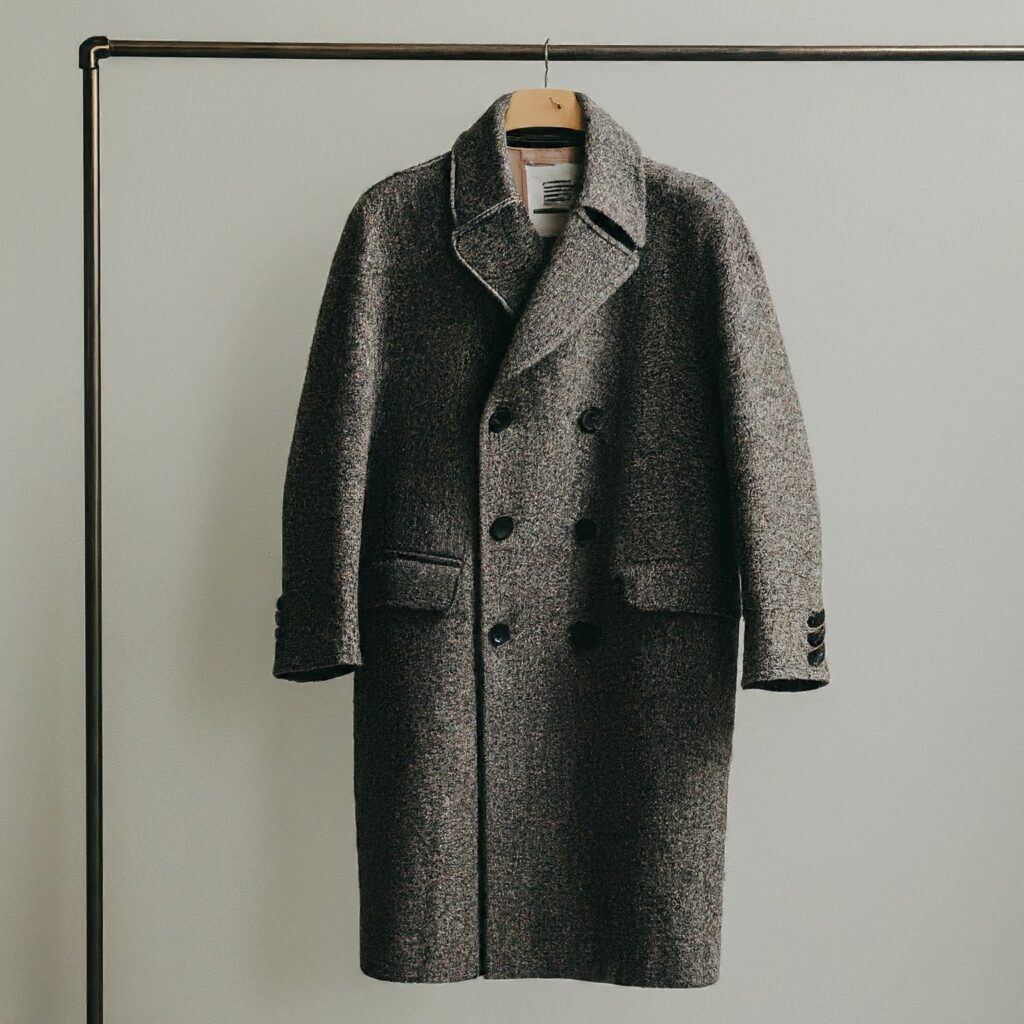
A crossed-yarn base is the standard choice whenever a garment needs to hold a fixed, tailored shape. Think of anything where the fabric shouldn’t move or sag on its own, the chest and front panels of a suit, a blazer, or a sherwani.
Here’s when this construction type is the right call:
- Structured tailoring. Suits, blazers, sherwanis, and formal jackets rely on it to hold their silhouette through wear and repeated dry cleaning.
- Heavy ethnic formal wear. Sherwanis, bandgala jackets, and achkans need a firm, stable front panel that doesn’t stretch or lose shape after construction.
- Garments with minimal or no stretch in the outer fabric. If your fashion fabric doesn’t stretch, your interlining shouldn’t either, a stable base matches that behaviour and keeps the garment looking crisp.
- Panels that go through heavy handling. Chest pieces and full-front panels get pressed, pulled, and pressed again during construction. This construction type holds up to that handling without distorting.
This is exactly the kind of garment construction Double Ghoda’s woven fusible interlining is built for. Suit and sherwani manufacturers across Surat and North India use it specifically because it gives the front body of a garment the firm, tailored shape that ethnic formal wear demands, a knit or fibre-bonded base simply can’t hold that same structure.
If you’re building a garment that needs to look sharp and hold its line, not move with the body, this is almost always the right answer.
Where a Knit Base Wins: Stretch and Curved Panels
A knit base earns its place in a very different type of garment: anything with stretch built into the outer fabric, or any panel that needs to move naturally with the wearer’s body.
It tends to work better for:
- Stretch fabrics. If your outer fabric has any give, spandex blends, stretch wovens, jersey, a stable, crossed-yarn base will fight against that stretch and cause puckering or bubbling after a few wears. A knit base moves with the fabric instead of against it.
- Curved or contoured panels. Areas like the underarm, shoulder seam, or fitted waist need an interlining that can flex around a curve without creating stiff, unnatural lines.
- Soft-structure garments. Casualwear, unstructured jackets, and garments meant to drape rather than hold a rigid shape often use a knit base for a softer, more natural hand-feel.
- Knitwear construction. Interlining used inside knit garments themselves, necklines, plackets on polo shirts, generally needs to stretch along with the base fabric it’s attached to.
The simplest way to know if you need a knit base: ask whether the outer fabric stretches. If it does, and you want the finished panel to move with the body rather than resist it, that’s your answer.
A Practical Comparison for Quick Decisions
Here’s a straightforward side-by-side to help you decide quickly:
| Woven Base | Knit Base | |
| Stretch | Very little, stable in all directions | Stretches with the fabric |
| Best for | Structured tailoring, suits, blazers, sherwanis | Stretch fabrics, curved or fitted panels |
| Shape retention | Excellent, holds a fixed silhouette | Good, moves and flexes naturally |
| Feel | Firm, crisp | Soft, natural drape |
| Typical use in Indian ethnic wear | Sherwani, bandgala, achkan front panels | Fitted or stretch-blend formal wear |
| Risk if used wrong | Fine for structured garments, wrong on stretch fabric causes puckering | Fine for stretch garments, wrong on tailored panels loses shape |
If you remember one rule from this table, make it this: match the interlining’s stretch behaviour to the outer fabric’s stretch behaviour. A rigid base on a stretch fabric fights the fabric. A stretchy base on a rigid, tailored panel won’t hold the shape you’re trying to build. When in doubt, check the fabric first and let that decide the interlining, not the other way around.
Common Mistakes Buyers Make Choosing Between Them
Even experienced buyers get this wrong sometimes, usually because they default to whatever they’ve always ordered rather than checking it against the specific garment. Here are the mistakes we see most often:
- Using a stable, crossed-yarn base on a stretch-blend fabric because it’s what the factory always stocks. This causes visible puckering after a few washes, because the interlining can’t move with the fabric around it.
- Choosing a knit base for a sherwani or structured suit front to save cost. It feels soft initially, but the garment won’t hold its shape through construction or wear, the panel goes limp instead of standing firm.
- Not testing a sample panel before committing to a full order. Interlining behaves differently once it’s bonded to your specific fashion fabric. A quick test press catches mismatches before they show up in a full production run.
- Assuming construction type doesn’t matter for smaller panels. Collars, cuffs, and plackets still need the right base, a mismatched choice here shows up as a stiff collar or a puckered cuff, even if the rest of the garment is fine.
- Judging the interlining by how it feels on its own. A base can feel perfectly fine off the roll and still behave wrong once it’s bonded to your specific fashion fabric, hand-feel in isolation doesn’t tell you how the two will move together.
Getting this right isn’t complicated once you know what to check. It just needs a quick look at how the outer fabric behaves before you decide what goes underneath it. As a general starting point, woven interlining is the safer default for anything structured and non-stretch, and a knit base is the safer default the moment stretch enters the picture.
How Double Ghoda Helps You Get This Right
We supply woven fusible interlining and a lighter, fibre-bonded range to garment manufacturers across India, with Surat and North India as our core markets. Our woven range is built specifically for structured formal wear, the suits, blazers, and sherwanis that need a firm, tailored front panel that holds up through repeated dry cleaning.
If you’re working on structured ethnic formal wear, here’s how we can help:
- Guidance on the right grade for your garment. Tell us what you’re constructing, and we’ll point you to the grade that fits, not just sell you whatever’s in stock.
- Consistent quality, order after order. The same hand-feel and bonding performance every time you reorder, which matters when you’re running production at scale.
- A full range of supporting products. Alongside our structured formal-wear range, we supply lighter interlining for collars and cuffs, polyester lining, buttons, and garment accessories, everything needed for a full garment order from one supplier.
We work directly with garment manufacturers, wholesalers, and formal wear factories, not individual tailors or retail buyers, so every conversation starts with your actual production requirement, not a generic sales pitch.
If you’re not sure whether your next garment calls for a woven or knit base, the safest move is to send us the fabric and construction details before you place a bulk order. It’s a quick conversation, and it saves you from a costly mismatch later. Reach out to Double Ghoda directly, or visit our website to see the full range and place your enquiry.
That one conversation upfront, fabric type, garment, and how the panel needs to behave, is usually enough to settle the question. It’s a far cheaper step than discovering the mismatch after a production run is already cut and pressed.
Frequently Asked Questions
What is the main difference between woven and knit interlining?
A woven base is made from yarns interlaced in two directions, giving it strength and stability with very little stretch. A knit base is made from looped yarns, giving it natural stretch and drape. The choice comes down to whether your garment needs a fixed, tailored shape or needs to move with the body.
Can you use knit interlining on a suit or sherwani?
It’s not recommended for the front body panel. Suits and sherwanis need a firm, stable structure that holds its shape through wear and dry cleaning, which is what a crossed-yarn base is built for. A knit base works better on stretch garments or curved, fitted panels, not on structured formal wear.
Does woven interlining work on stretch fabric?
Generally, no. A crossed-yarn base has very little give, so pairing it with a stretch fabric can cause puckering or bubbling once the garment is worn and washed. A knit base is the better match for any fabric with stretch built in.
Does Double Ghoda supply knit interlining?
Double Ghoda specialises in woven and fibre-bonded interlining for structured formal wear and garment construction. For your specific requirement, it’s best to check directly with us so we can point you to the right product for your garment.
Link of related Articles
- Lightweight Interlining vs. Heavyweight Interlining
- A Beginner’s Guide to Interlining
- Choosing the Right Interlining