
Categories
Fusible Interlining Suppliers

Best Interlining for Suit Manufacturers in India (2026 Guide)

If you manufacture suits, blazers, sherwanis, or ethnic jackets at any meaningful scale, one thing is certain, the interlining you choose will define the quality of your final product. It is the layer your customer never sees but always feels. Get it right and your garments hold their shape, bond cleanly, and come back on repeat orders. Get it wrong and you are dealing with delamination, stiff drape, and production rework that eats into your margins.

This guide is written specifically for every interlining for suit manufacturer in India — suit factories, blazer producers, and ethnic formal wear wholesalers looking for a reliable, trade-scale supply. We cover every decision point: interlining types, GSM selection, coating quality, and how to identify fusible interlining suppliers who will not let your production line down. At Double Ghoda, we supply across Surat, Gujarat, and North India, and everything in this guide is built on direct experience from production floors like yours.

Table of Contents

  • What Is Fusible Interlining for Suits?
  • Woven vs Non-Woven: Which One Does Your Factory Need?
  • How to Choose the Right GSM for Your Garment
  • Why PA Double-Dot Coating Matters on the Production Floor
  • How to Evaluate Fusible Interlining Suppliers in India
  • FAQs: Buying Interlining Wholesale in India
Interlining for Suit Manufacturers

What Is Fusible Interlining for Suits?

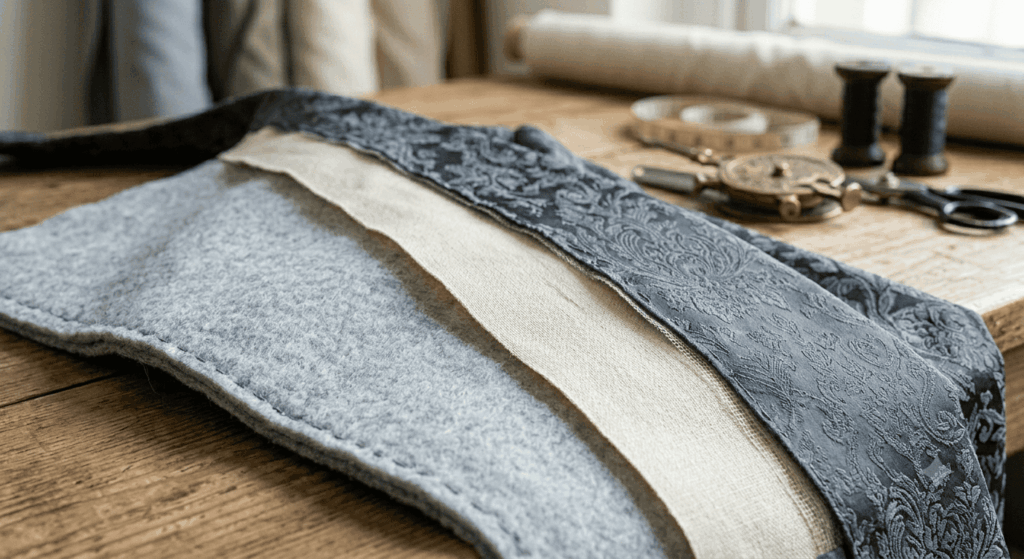
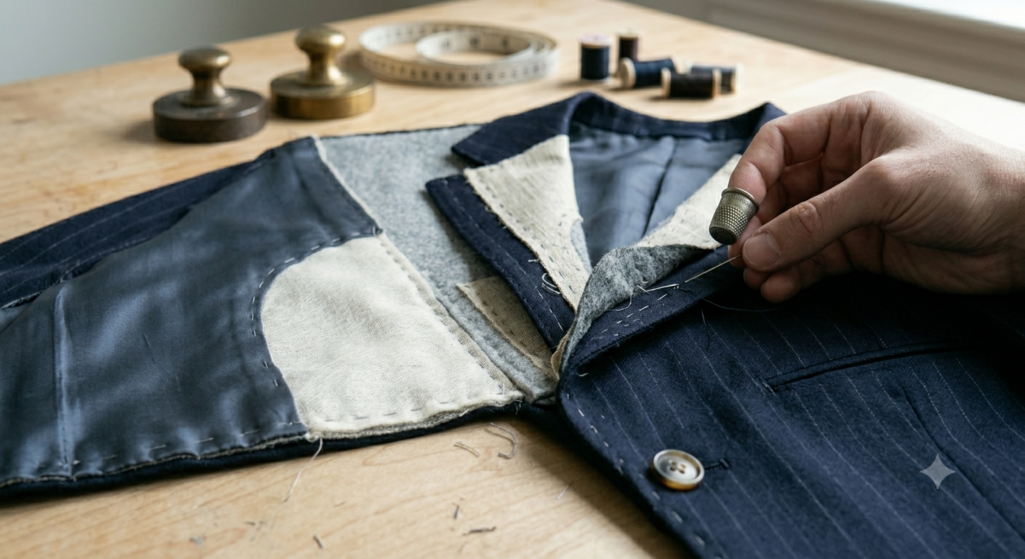
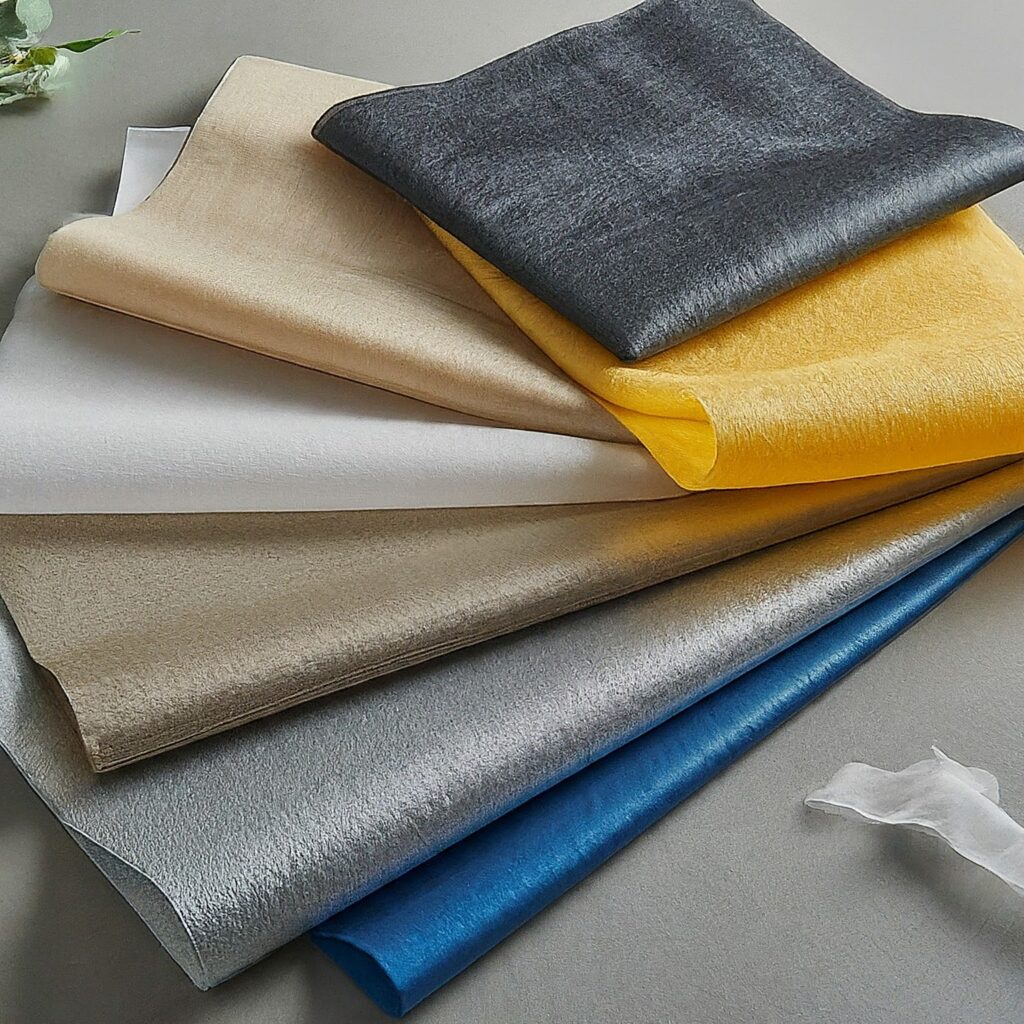
Fusible interlining, known in the trade as suit fusing, body fusing, fusing cloth, or fusing fabric, is a woven or non-woven base fabric coated with a heat-activated adhesive on one side. When pressed against the inside of your outer fabric using heat and pressure, it bonds permanently and gives the garment its structure, shape, and stability.

For suits, blazers, jackets, and sherwanis, fusible interlining is not an add-on, it is what gives the garment its silhouette. Without it, even the most expensive suiting fabric will look limp and tailored poorly. With the right interlining, a mid-range fabric can finish with the appearance of something far more premium.

In Indian garment manufacturing, interlining is primarily used in:

  • Suits and blazers — front body, lapels, collar
  • Sherwanis and bandhgalas — full front body, collar band, cuffs
  • Ethnic jackets and waistcoats — structured panels
  • Safari suits — chest and collar applications

It is important to note that fusible interlining for suits and sherwanis is a completely different product category from the lightweight non-woven used in shirts, collars, and cuffs. The GSM range, construction, and coating requirements are different. Using shirt interlining on a sherwani body is one of the most common quality mistakes we see in new manufacturers. When evaluating any interlining fabric manufacturer India, always confirm that their product range is built for structured formal wear, not repurposed from shirting applications.

The key specifications to understand before you buy, whether you are an interlining for suit manufacturer or a sherwani production unit, are:

  • GSM (grams per square metre): determines weight and structure
  • Construction: woven or non-woven base
  • Coating type: PA single-dot, PA double-dot, or paste, determines bonding speed and strength
  • Roll length: standard in India is 50 metres for woven, 90 metres for non-woven

Once you understand these four variables, you can evaluate any interlining product with confidence, and know exactly what to ask your supplier before placing a wholesale order.

Woven vs Non-Woven: Which One Does Your Factory Need?

This is the first and most important decision in your interlining selection. The construction of the interlining, whether woven or non-woven, determines how it behaves on your outer fabric, how it drapes, and where it can be used in the garment.

Woven Fusible Interlining

Woven interlining is constructed with interlaced yarns, exactly like a woven fabric. This gives it two critical properties that non-woven cannot match: natural drape and directional stability. It moves with your outer fabric rather than fighting it, which means the finished garment looks and feels the way a tailored garment should.

For interlining for suit manufacturer use cases, blazers, sherwanis, bandhgalas, ethnic jackets, woven fusible interlining is the correct choice. It is what professional garment units across Surat, Ludhiana, and Delhi use for structured formal wear production.

Our woven fusible interlining is available in:

  • GSM range: 30, 42, 55, 60, 70, 80, 100, 120, 130, 140, 150 GSM
  • Roll length: 50 metres
  • Coating: PA double-dot on all qualities

Our flagship woven product is 111 quality — 140 GSM, built specifically for sherwani manufacturing. It is the most ordered quality in our catalogue and is recognised by name across Surat’s sherwani production community. If you produce sherwanis or heavy ethnic formal wear, 111 quality is the standard your factory should be running on.

Indian manufacturers consistently prefer 100 GSM and above for ethnic formal wear. This is different from international markets, which typically work in the 60–80 GSM range. Our interlining range is specifically built around Indian production requirements, not adapted from international specs. Every interlining for suit manufacturer sourcing from us gets a product calibrated to how Indian garments are actually constructed and worn.

Non-Woven Fusible Interlining

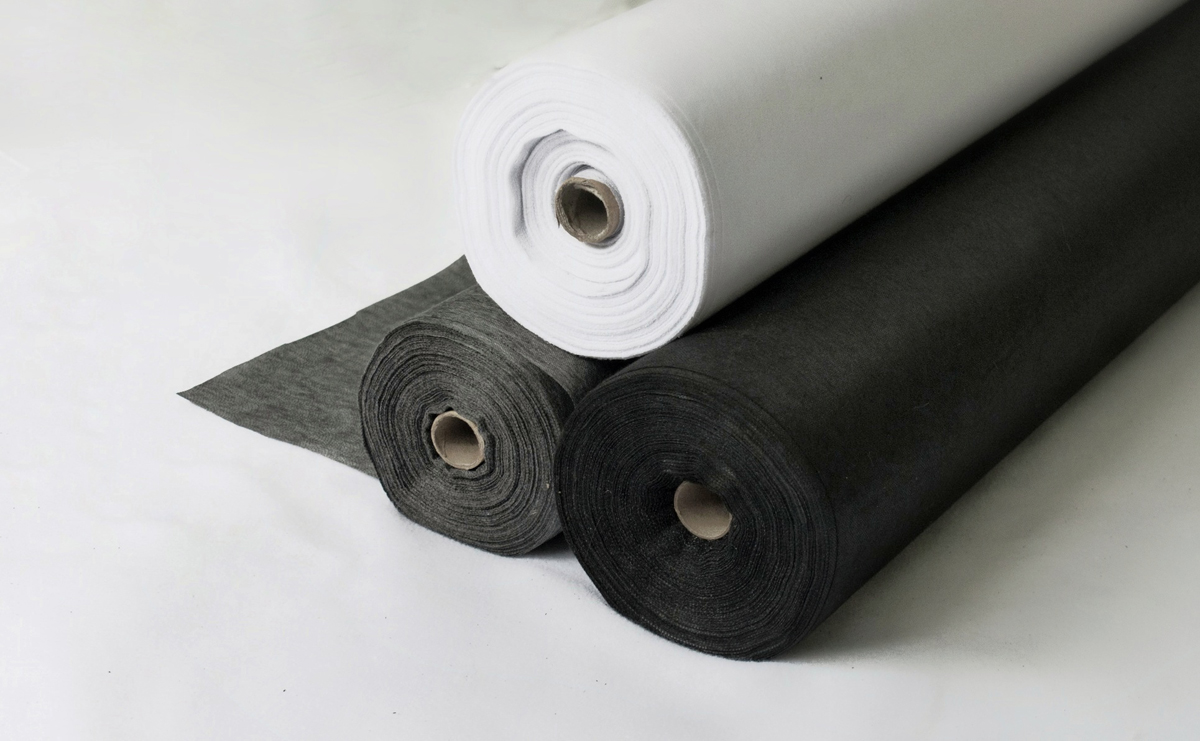
Non-woven interlining is made from bonded fibres compressed into a uniform sheet. It is lighter, more economical, and does not have the directional drape of woven interlining. For structured suit and sherwani bodies, non-woven is not the right choice. But for specific applications in your garment, it is essential.

Our non-woven fusible interlining is available in:

  • GSM range: 30 to 80 GSM
  • Roll length: 90 metres
  • Colours: white and black

Use non-woven interlining for:

  • Collars and cuffs
  • Shirt plackets (patti)
  • Lighter casual and daily wear garments
  • Women’s ethnic wear where lighter hand feel is needed

Most garment factories producing suits and sherwanis run both woven and non-woven interlining simultaneously, woven for the body and structured panels, non-woven for collars, cuffs, and plackets. If your factory produces across categories, you will need both in your inventory. Our minimum order is 1,000 metres per product, so both can be trialled independently before you scale.

Interlining for Suit Manufacturers

How to Choose the Right GSM for Your Garment

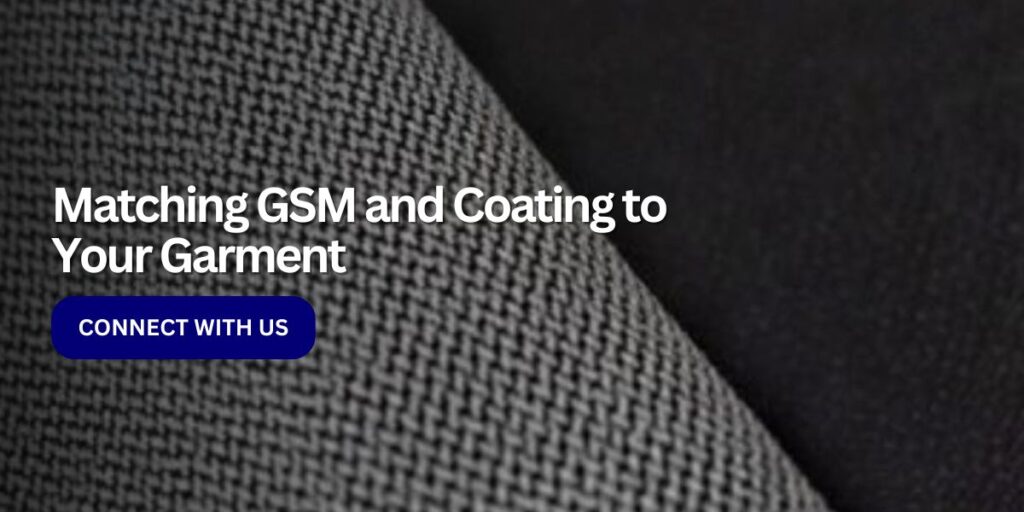
GSM is the single most important specification to get right before you place a wholesale interlining order. Too light and your garment loses its structure and shape retention. Too heavy and the outer fabric distorts, fusing becomes uneven, and the finished garment feels board-stiff in the wrong places. This is the variable that separates a well-specified fusible interlining wholesale India purchase from one that causes production headaches.

The right GSM depends on three things: your outer fabric weight, your garment type, and the level of structure your end customer expects. Here is the practical reference guide we give to manufacturers ordering from us for the first time:

For Sherwanis and Heavy Ethnic Formal Wear
  • 130–150 GSM woven — full sherwani body, structured front panels
  • 111 quality (140 GSM) — the trade standard for sherwani manufacturing in Surat
  • 120 GSM woven — bandhgala, Nehru jacket, heavy ethnic outerwear
For Suits and Western Blazers
  • 80–100 GSM woven — standard blazer and structured western jacket
  • 55–70 GSM woven — summer suits, lightweight blazers, thinner outer fabrics
  • 42 GSM woven — very lightweight suiting, soft-shouldered construction
For Collars, Cuffs, and Plackets
  • 30–60 GSM non-woven — collars, cuffs, shirt plackets, light applications

One common mistake manufacturers make when switching suppliers is ordering the same GSM number without checking whether the base construction and coating are equivalent. A 100 GSM non-woven and a 100 GSM woven are completely different products with different applications. Always specify both GSM and construction type when placing your order.

If you are unsure which GSM works best on your specific outer fabric, request a sample roll before committing to volume. We supply samples for evaluation, it is the most reliable way to confirm the right spec for your production before your first wholesale order.

Why PA Double-Dot Coating Matters on the Production Floor

The coating on your fusible interlining is what actually bonds the interlining to your outer fabric. It is the most technically important part of the product, and it is also the most commonly misunderstood. Most manufacturers focus entirely on GSM and miss the coating spec entirely. That is a mistake.

There are three common coating types used in fusible interlining:

  • Single-dot PA coating: widely available, slower bonding, less uniform adhesive distribution
  • Double-dot PA coating: two-layer adhesive application, faster fusing, more even bond across the full fabric surface
  • Paste coating: older technology, inconsistent bonding, slower production, largely phased out in quality manufacturing

All our fusible interlining, across every GSM and both woven and non-woven, carries PA double-dot coating. Here is what that means for your production floor:

  • Faster press cycle: Double-dot activates at lower temperatures and shorter dwell times. Your fusing press runs faster without compromising bond quality.
  • No cold spots or uneven bonding: The double-dot pattern distributes adhesive uniformly across the full surface. No lifting edges, no bubble marks, no weak patches after fusing.
  • Consistent performance across rolls: Coating consistency is one of the biggest quality variables between fusible interlining suppliers. With PA double-dot, roll 1 and roll 100 perform identically.
  • Better bond durability: PA (polyamide) adhesive has excellent resistance to dry cleaning and repeated wear. Your garments hold their shape longer after delivery to the end customer.

If your current interlining is showing any of the following issues, the coating is almost certainly the cause, not your fusing press settings:

  • Edges lifting after fusing
  • Bubble marks or puckering on the outer fabric surface
  • Interlining separating after the garment is washed or dry cleaned
  • Needing multiple press passes to achieve a reliable bond

Switching to PA double-dot coated interlining resolves all four of these problems in the majority of cases. It is the most impactful upgrade a production floor can make without changing any equipment.

Interlining for Suit Manufacturers

How to Evaluate Fusible Interlining Suppliers in India

Selecting the right fusible interlining suppliers is a procurement decision that affects every garment your factory produces. Price per metre is the most visible variable, but it is rarely the most important one. Here is how to evaluate a supplier properly before you commit to volume.

1. Accurate Roll Metres

Short rolls are one of the most common complaints in the interlining trade. A roll labelled 50 metres that consistently measures 47 or 48 metres is a 4–6% material loss on every order, which adds up to significant cost across a production season. Ask your supplier how they measure and whether rolls are guaranteed to length. Ours are.

2. Batch Consistency

The interlining you receive on your third order should perform exactly like your first. Inconsistent GSM between batches, variation in coating density, or changes in base fabric construction are signs of a supplier who sources opportunistically rather than maintaining a stable supply chain. Ask for multiple batch samples before you commit.

3. Coating Quality You Can Test

Before placing any wholesale order, fuse a sample roll on your most commonly used outer fabric. Press at your standard settings and check for even bonding, no edge lifting, clean surface finish on the outer fabric, and bond strength after the fused panel cools. This 15-minute test will tell you more than any product specification sheet.

4. Trade Knowledge and Product Range

A supplier who understands the difference between sherwani fusing and western suit fusing, and who stocks the GSM range to serve both, is a meaningfully different partner from a general textile distributor. The best fusible interlining suppliers do not just sell you a roll, they help you spec the right product for your outer fabric, your garment type, and your production process. Ask whether they supply to manufacturers at your scale, whether they understand Indian ethnic wear requirements, and whether they can recommend the right GSM for your specific application.

5. Minimum Order and Supply Reliability

Know the minimum order quantity before you engage. Our minimum is 1,000 metres per product, which is the right scale for wholesale garment manufacturing. Suppliers with no minimum are usually serving retail tailors, not production units. Suppliers with very high minimums may not be set up to serve mid-scale factories flexibly. Understand what you are working with upfront.

At Double Ghoda, we are importers and wholesale suppliers, not a general textile distributor and not a domestic interlining fabric manufacturer India. Our catalogue is built specifically for Indian suit and ethnic wear manufacturing, and our supply network covers Surat, Gujarat, and all major North India garment manufacturing hubs. We understand what your production floor needs because we work with factories like yours every day.

FAQs: Buying Interlining Wholesale in India

These are the questions we hear most often from manufacturers placing their first or second wholesale interlining order with us.

What is the minimum order quantity for fusible interlining wholesale India?

Our minimum order is 1,000 metres per product. Woven interlining, non-woven interlining, and polyester lining are each counted separately. If you are ordering across multiple GSM ranges or product types, each line item has its own 1,000 metre minimum. This is a wholesale-only supply, we do not supply retail quantities.

Can we trial a sample roll before placing a bulk order?

Yes, and we strongly recommend it. Fusing a sample on your production fabric before confirming a bulk order is the most reliable way to verify GSM, bonding performance, and surface finish on your specific outer fabric. Contact us via WhatsApp or our website inquiry form to request sample rolls.

Which interlining is best for sherwani manufacturing?

For sherwani manufacturing, 111 quality (140 GSM woven) is the trade standard. It is our most ordered product and is recognised by name across Surat’s sherwani production community. It provides the heavy body and structured drape that sherwani buyers expect, with PA double-dot coating for clean, fast bonding on your production floor.

Do you supply to manufacturers outside Surat and Gujarat?

Yes. We have established buyers in Ludhiana, Delhi, Kolkata, Chandigarh, Amritsar, and Chhattisgarh. If your factory is in any of these regions, you are within our active supply network. Reach out and we will confirm availability, pricing, and dispatch timelines for your location.

What is an interlining fabric manufacturer India, and are you one?

An interlining fabric manufacturer India refers to companies that produce interlining at a manufacturing facility within India. We are importers and wholesale suppliers, we source premium fusible interlining and supply it to garment manufacturers across India at wholesale quantities. This means our product consistency and quality are tied to our import sourcing standards, not a single domestic production facility. For manufacturers, this is often an advantage, our range and batch consistency reflect international production quality.

Do you supply polyester lining and garment accessories as well?

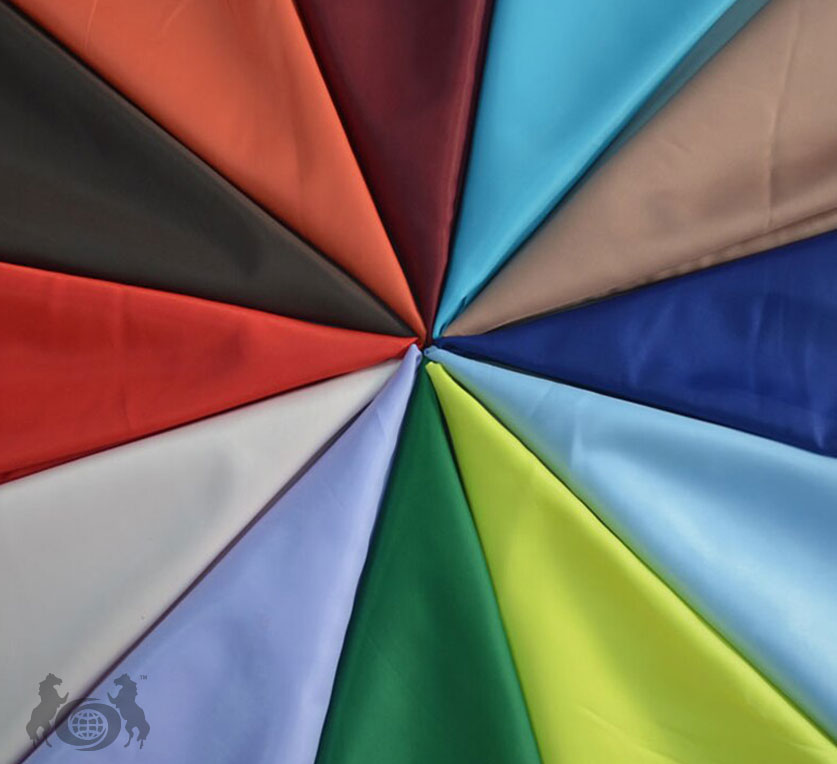
Yes. We supply polyester lining in Satin, Satin Dobby, Jacquard, and Taffeta, 55 to 85 GSM in 45-metre rolls. We also supply plastic buttons (24 and 32 ligne, 50+ colours) and a full range of garment accessories including shoulder pads, chest piece, sleeve head, reversible hem tape, undercollar felt, and foam lappa. Most of our manufacturers source interlining, lining, and accessories from us together, it simplifies procurement and ensures everything is matched to the same garment specification.

Ready to Place a Wholesale Inquiry?

If you are a garment manufacturer, sherwani unit, or suit factory looking for a consistent, trade-scale interlining supply, we are set up to support your production. Accurate rolls, strong bonding, PA double-dot coating, and a product range built specifically for Indian ethnic formal wear.

Double Ghoda supplies woven and non-woven fusible interlining, polyester lining, buttons, and garment accessories to manufacturers across India. Minimum order 1,000 metres. No retail. No short rolls. No inconsistent batches.

Link of related Articles

shweta-textile-designer
 
Shweta, a textile designer with a keen eye and deep knowledge of fabrics, translates her passion into unique designs. She loves to share her expertise and ignite a love for textiles in others. Dive into the world of fabrics with Shweta!

Categories
Fusible Interlining Suppliers

What to Look for in Fusible Interlining Suppliers in India

When you think about garment quality, your mind probably goes straight to fabric, stitching, fit, and finishing. While these visible elements are important, experienced manufacturers know that the hidden components inside a garment often play an equally significant role in determining its final appearance and performance.

One of those critical components is fusible interlining. It provides structure, shape retention, durability, and support to different garment sections, helping clothing maintain its intended form throughout its lifespan. Whether you’re producing formal shirts, blazers, ethnic wear, uniforms, jackets, or premium fashion apparel, the quality of the interlining directly influences the quality of the finished garment.

However, selecting the right material is only half the challenge. Choosing the right fusible interlining suppliers is what truly determines whether you receive consistent products, reliable deliveries, technical support, and long-term value. 

At Double Ghoda, we have worked closely with garment manufacturers and apparel businesses across India for decades, helping them find solutions that support quality production and efficient operations. Understanding what to look for in a supplier can save you time, money, and unnecessary production challenges.

Table of Contents

  • Know Your Interlining Requirements Before You Start
  • Evaluate Product Quality Beyond Sample Swatches
  • Assess Manufacturing Strength and Quality Control Systems
  • Check Delivery Reliability and Supply Consistency from Fusible Interlining Suppliers
  • Look for Industry Knowledge and Technical Support
  • Choose a Partner That Supports Your Business Growth
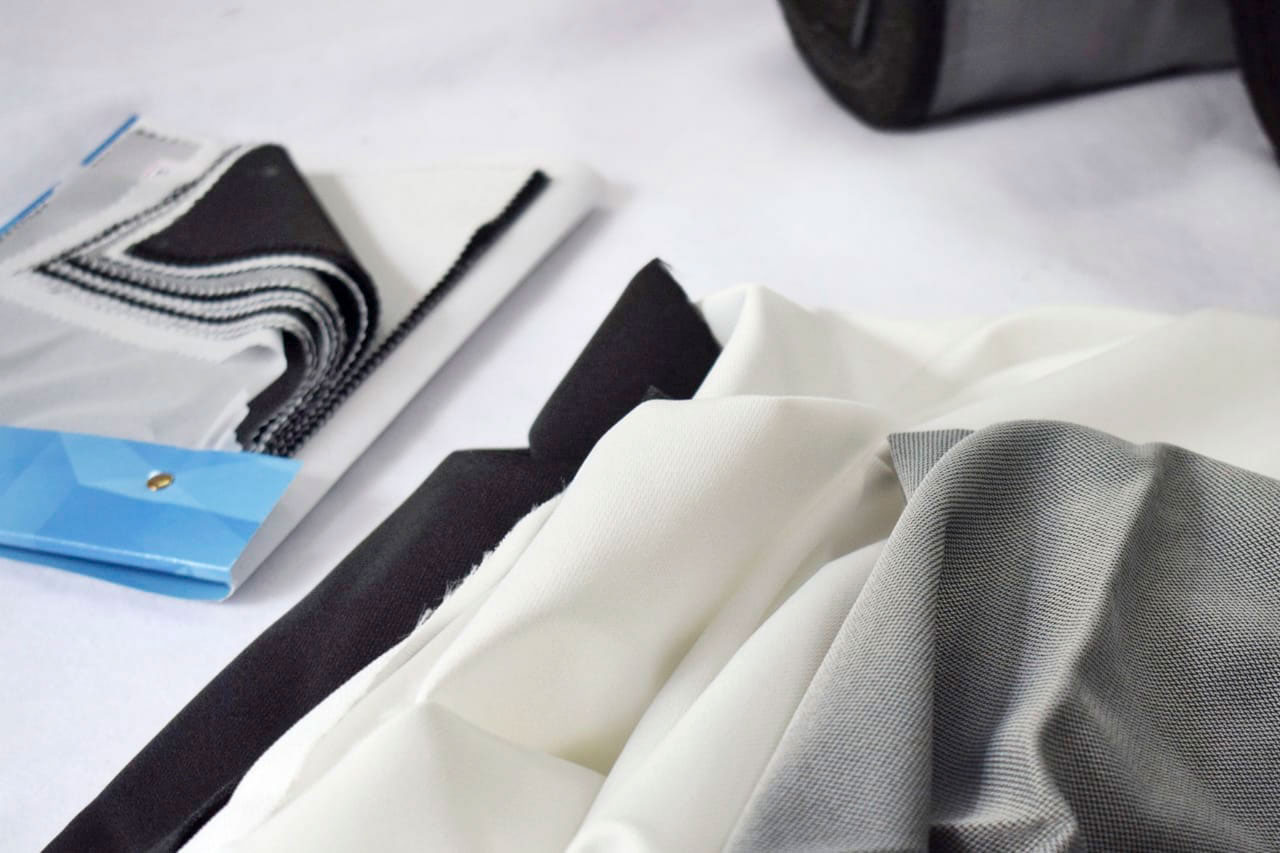
Fusible interlining is used by both professional and amateur designers in order to reinforce certain parts of garments

Know Your Interlining Requirements Before You Start

Before you begin comparing suppliers, it is important to clearly understand your own requirements.

Many garment manufacturers make the mistake of requesting quotations without first identifying the exact performance characteristics they need. This often leads to purchasing products that may seem suitable initially but fail to meet expectations during production.

Different garments require different types of support.

A lightweight formal shirt requires a different interlining than a blazer. A structured ethnic jacket requires different characteristics than a soft casual garment. Even within the same product category, requirements may vary depending on the fabric, construction method, and desired finish.

Consider factors such as:

  • Fabric composition
  • Garment category
  • Required stiffness or softness
  • Washing and maintenance expectations
  • End-user comfort requirements
  • Production methods

When you understand these factors, you can communicate more effectively with suppliers and receive more accurate recommendations.

A reliable supplier should also take the time to understand your application rather than simply offering a standard product. Suppliers that ask questions about your manufacturing process often provide more suitable solutions because they understand the relationship between interlining performance and garment construction.

At Double Ghoda, we believe that successful sourcing begins with understanding the garment itself. The more information you provide about your requirements, the easier it becomes to identify the most suitable product for your application.

Defining your needs before contacting suppliers creates a stronger foundation for making informed purchasing decisions and achieving consistent production results.

Evaluate Product Quality Beyond Sample Swatches

Many fusible interlining suppliers can provide an impressive sample book. The real test, however, is whether the product performs consistently across multiple production runs.

Sample swatches only provide a snapshot of a product. They do not always reveal how the material will behave during large-scale manufacturing, repeated washing, or long-term use.

When evaluating interlining quality, focus on performance rather than appearance alone.

  • Bonding Performance

The adhesive coating should bond evenly and securely with the outer fabric. Poor bonding can lead to bubbling, separation, and garment defects.

  • Shrinkage Stability

The interlining should maintain its dimensions during fusing, washing, and pressing. Excessive shrinkage can distort garment panels and negatively impact fit.

  • Shape Retention

A quality interlining helps garments retain their intended structure throughout regular use.

  • Hand Feel

The finished garment should achieve the desired balance between support and comfort.

  • Durability

The material should continue performing effectively after repeated wear and maintenance cycles.

One of the best ways to evaluate a supplier is by conducting trial production runs. Testing products under actual manufacturing conditions often reveals important performance characteristics that may not be visible in laboratory samples.

When comparing fusible interlining suppliers, consistency across multiple batches should be one of your highest priorities. A slightly lower-cost product can become expensive if inconsistent quality leads to rework, production delays, or customer complaints.

Quality should always be evaluated based on long-term performance rather than initial appearance alone.

Fusible Interlining Suppliers

Assess Manufacturing Strength and Quality Control Systems

The reliability of a supplier often depends on the strength of its manufacturing processes and quality control systems.

A supplier may offer excellent samples, but without strong production controls, maintaining consistency becomes difficult.

Before selecting a supplier, try to understand how they manage quality throughout the manufacturing process.

Important questions include:

  • How are products inspected?
  • What quality standards are followed?
  • How frequently are tests conducted?
  • How is batch consistency maintained?
  • What procedures exist for handling quality concerns?

Strong quality control systems help ensure that every roll delivered performs according to expected specifications.

Several quality parameters deserve particular attention.

  • Adhesive Coating Uniformity

Consistent coating helps ensure predictable bonding performance.

  • Dimensional Stability

Products should maintain their dimensions throughout manufacturing and use.

  • Shade Consistency

Uniform coloration is particularly important when working with lighter fabrics.

  • Surface Quality

Smooth and consistent surfaces contribute to better garment appearance.

  • Performance Testing

Regular testing helps identify issues before products reach customers.

An experienced interlining fabric manufacturer india businesses trust will typically invest heavily in quality assurance because consistency is essential for long-term customer relationships.

At Double Ghoda, quality remains a central focus of our operations. We understand that garment manufacturers depend on consistent materials to maintain production efficiency and product quality. This is why we prioritize reliable manufacturing processes and rigorous quality checks across our product range.

A supplier’s quality systems often reveal more about their reliability than any marketing brochure ever could.

Check Delivery Reliability and Supply Consistency from Fusible Interlining Suppliers

Even the highest-quality interlining creates problems if it does not arrive when needed.

Garment manufacturing schedules are often tightly planned. Delays in raw material availability can disrupt production timelines, increase costs, and create unnecessary pressure throughout the supply chain.

For this reason, delivery reliability should be evaluated alongside product quality.

When assessing suppliers, consider the following:

  • Inventory Availability

Can they maintain adequate stock levels for your regular requirements?

  • Scalability

Can they support increased demand during peak production periods?

  • Lead Times

How quickly can orders be fulfilled?

  • Geographic Reach

Can they efficiently serve your manufacturing locations?

  • Emergency Support

Can they respond effectively to urgent requirements?

Reliable supply becomes even more important as production volumes grow.

Many interlining fabric manufacturer india discover that sourcing challenges become more significant when moving from small production runs to large-scale operations. A supplier that performs well at lower volumes may struggle to support expanding requirements. Businesses evaluating fusible interlining wholesale india sourcing options should pay close attention to supply chain capabilities and inventory management systems.

Dependable suppliers understand that timely delivery is just as important as product quality. They invest in inventory planning, logistics coordination, and customer communication to ensure smooth operations. At Double Ghoda, we work continuously to support our customers with dependable supply and responsive service, helping them maintain production schedules without compromising on quality.

A reliable supply chain can often become a competitive advantage in today’s fast-moving apparel industry.

fusible interlining suppliers

Look for Industry Knowledge and Technical Support

Not every supplier brings the same level of expertise to the table.

Some simply sell products. Others act as knowledgeable partners who help customers solve problems, improve efficiency, and achieve better garment performance.

Technical expertise becomes particularly valuable when:

  • Launching new product lines
  • Working with unfamiliar fabrics
  • Addressing quality concerns
  • Improving garment construction
  • Optimizing production processes

Experienced suppliers understand how different interlinings interact with various fabrics and garment types. They can often recommend adjustments that improve both quality and efficiency.

A supplier’s technical knowledge can be evaluated through the questions they ask and the recommendations they provide.

  • Do they understand garment construction?
  • Can they explain performance characteristics clearly?
  • Do they offer practical solutions when challenges arise?

These indicators often reveal whether a supplier is simply selling a product or genuinely supporting your business. This expertise becomes especially important in specialized garment categories. For example, products developed for an interlining for suit manufacturer must provide excellent shape retention, structural support, and long-term durability while maintaining wearer comfort.

Meeting these requirements requires a deep understanding of both garment construction and interlining performance. At Double Ghoda, we view technical guidance as an important part of customer support. By helping manufacturers understand available options, we aim to make product selection easier and more effective.

Knowledge and experience often create value that extends far beyond the product itself.

Choose a Partner That Supports Your Business Growth

Perhaps the most overlooked factor when selecting a supplier is their ability to support your future growth.

Many sourcing decisions focus only on immediate requirements. However, the most successful businesses choose suppliers capable of growing alongside them.

A strong supplier relationship offers benefits that extend beyond individual transactions.

Over time, a trusted supplier gains a deeper understanding of your:

  • Product categories
  • Quality expectations
  • Production methods
  • Seasonal requirements
  • Business objectives

This familiarity enables better recommendations, faster service, and improved consistency.

Long-term partnerships often result in:

  • Better Communication

Both parties develop a clearer understanding of expectations.

  • Greater Efficiency

Ordering and planning become more streamlined.

  • Improved Product Consistency

Standardized sourcing helps maintain quality.

  • Stronger Problem Solving

Challenges can be addressed more quickly and effectively.

  • Enhanced Flexibility

Established relationships often make it easier to handle unexpected requirements.

Rather than constantly changing suppliers based solely on price, many successful manufacturers focus on building stable relationships that create long-term value.

At Double Ghoda, we believe that lasting partnerships are built on trust, consistency, transparency, and customer support. Our objective is not simply to supply products but to contribute to the success of the businesses we serve.

As your manufacturing needs evolve, having a dependable partner can make a significant difference in maintaining quality, efficiency, and customer satisfaction.

Conclusion

Choosing the right supplier is about much more than comparing prices.

The ideal partner should offer consistent quality, strong manufacturing capabilities, dependable delivery, technical expertise, and the ability to support your long-term growth.

By carefully evaluating these factors, you can reduce production risks, improve garment quality, and build a more reliable supply chain.

At Double Ghoda, we understand the critical role interlining plays in garment manufacturing. Through our commitment to quality, consistency, and customer support, we strive to help manufacturers achieve superior production outcomes and create garments that stand the test of time. If you’re looking for a trusted partner for your garment manufacturing needs, taking the time to choose the right supplier today can deliver benefits for years to come.

Link of related Articles

shweta-textile-designer
 
Shweta, a textile designer with a keen eye and deep knowledge of fabrics, translates her passion into unique designs. She loves to share her expertise and ignite a love for textiles in others. Dive into the world of fabrics with Shweta!