
Choosing woven interlining for shirt collars and cuffs depends on five things: your shirt style, the outer-fabric characteristics, the stiffness you need, the finish you want and bonding compatibility. Assess them together. Do not choose by GSM alone.
Collars and cuffs need enough support to keep their intended shape. How much support you need depends on your garment design and fabric. No single specification suits every shirt.
In this guide, we walk you through the factors we suggest you compare, from formal and casual styles to fabric compatibility and pre-production checks.
Why Shirt Collars and Cuffs Require the Right Interlining
Collars and cuffs need reinforcement because the outer fabric alone rarely holds their shape through sewing, wear and washing. The right selection gives you a collar that sits cleanly and cuffs that stay crisp.
What does reinforcement do in a shirt?
Reinforcement adds shape, steadies edges and keeps each part stable while you sew it. It also affects how the finished shirt looks. A well-supported collar frames the face. A poorly supported one curls, collapses or shows ripples.
How do collar points, bands and cuffs differ?
Each part has its own job:
- Collar points: need enough support to stay sharp and lie flat.
- Collar bands: need a stable base that holds the neckline.
- Cuffs: need to keep their shape through repeated wear and wash cycles.
- Other components, such as plackets, may need lighter support than collars.
Because the jobs differ, we treat them as separate decisions.
Why do shirt fabric and style matter?
The same reinforcement behaves differently on a fine poplin, a textured weave or a heavier cloth. Your shirt style also sets the target. A sharp business shirt and a relaxed weekend shirt ask for different results.
Why evaluate the full application?
Part, fabric, finish and bonding all affect each other. We suggest you review them together before bulk production, not one at a time.
Woven Interlining for Formal Shirts vs Casual Shirts
Formal and casual shirts often need different support, but your design and fabric make the final call. We avoid fixed rules here, because exceptions are common.
What do formal shirts usually need?
Formal shirts often call for a defined collar and neat cuffs. That usually points to firmer support. Yet a formal shirt in a soft, drapey fabric may still need a lighter touch. Your design decides.
What do casual shirts usually need?
Casual shirts often use a more relaxed collar and a softer cuff. That can mean lighter support. But some casual designs, such as a structured camp collar, may need more shape than you expect.
How do fabric weight, texture and construction change the choice?
A lightweight fabric can be overpowered by heavy support. A textured or loosely constructed fabric may show the reinforcement through the surface. A dense, heavier fabric may need more support to hold the same collar shape. Always judge the pair together.
How can you assess the intended finish before approval?
- Start from your approved reference shirt or design sample.
- Compare handle, crispness and drape side by side.
- Wear-test or wash-test the sample where your design requires it.
- Record the result, so your team approves against the same standard.
A crisp finish and a relaxed finish may need different selections. Confirm which one your design needs first.
How GSM and Fabric Construction Influence Collar and Cuff Support
GSM stands for grams per square metre. It helps you compare materials by weight, but it does not tell you how a collar will look or feel on its own.
What factors affect the stiffness of shirt collars?
Stiffness comes from several factors acting together:
- The weight and construction of the reinforcement
- The adhesive and coating on the reinforcement
- The weight and structure of your outer fabric
- The number of layers in the collar construction
- Your fusing conditions
How does fabric construction influence handling and support?
Yarn structure affects how a material feels, drapes and holds its shape. Two materials with a similar GSM can handle very differently. Check handle and stability, not just the number on the specification sheet.
Does a higher GSM always provide better collar support?
No. A higher GSM adds weight and often stiffness, but “better” depends on your design. A heavier material on a light shirt fabric can look stiff or show through the surface. We do not recommend one universal GSM range for all collars and cuffs.
Why test in the actual garment?
A swatch test rarely shows the full picture. Collars and cuffs have curves, seams and layers. Test in the real application, on your real fabric, and compare the result with your approved sample.
Matching Woven Interlining With Different Shirt Fabrics
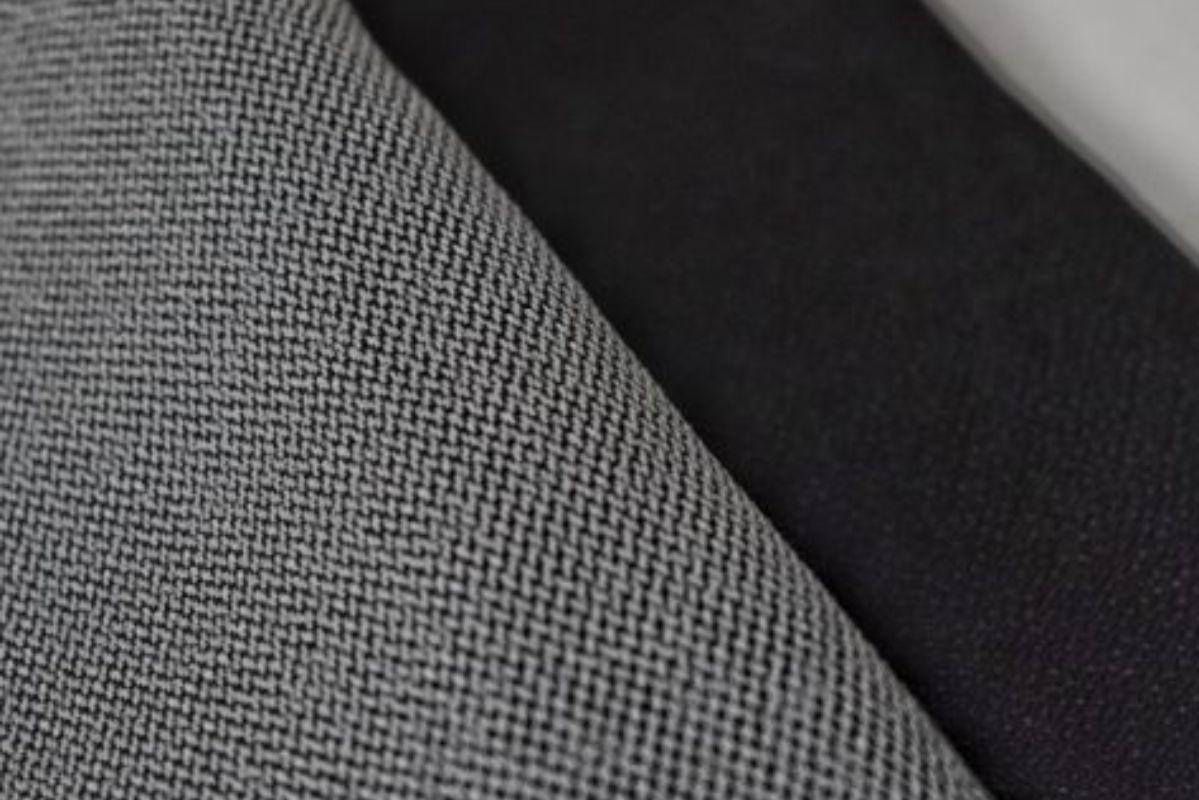
Compatibility between the reinforcement and your shirt fabric decides whether the result looks clean after fusing. We cannot say every product suits every fabric, so test each pairing. When you assess woven interlining for a new shirt fabric, start with a sample.
| Shirt fabric | What to watch | What to check in the sample |
| Cotton | Crispness, shrinkage, surface smoothness | Adhesion, collar shape, bubbling after wash |
| Cotton blends | Heat sensitivity and finish differences | Bond quality, wrinkling, any surface change |
| Linen and linen blends | Open texture, natural crease, drape | Show-through, hand-feel, shape after pressing |
| Lightweight fabrics | Over-stiffening, visible marks | Face-side appearance, softness |
| Heavier fabrics | Enough support to hold the shape | Collar and cuff stability, adhesion across layers |
What can change after fusing?
Watch for shine, ripples, bubbling, wrinkling, a stiffer or flatter hand, and any distortion in shape. Some fabrics are more sensitive than others.
Why is a sample test important?
A sample test shows you the real result before you commit to bulk production. Follow the fusing conditions your material supplier recommends. Then check the finished appearance, adhesion, bubbling, wrinkling and any change in fabric hand or shape.
Quality Checks to Complete Before Bulk Shirt Production
What should you check before selecting a supplier’s product?
Before you approve any woven fusible interlining for bulk shirt production, we suggest you work through this checklist:
- Confirm the intended application: collar points, bands, cuffs or other parts.
- Review GSM and construction: compare the specifications against your design.
- Check outer-fabric compatibility: test the pairing, not the material alone.
- Test bonding: use the processing conditions your supplier recommends.
- Inspect the finished parts: look at collar and cuff shape, appearance and adhesion.
- Check dimensional stability and wash performance: where your garment needs it.
- Review sample approval and batch consistency: keep a record to compare later batches.
- Confirm roll specifications and order requirements: do this before you purchase.
These checks help you catch avoidable issues early and keep your garment output consistent. They do not remove every risk, so keep inspecting during production. If something looks off, share your findings with your supplier. It helps both sides find the cause faster.
Explore Our Woven Fusible Interlining Range
We are Double Ghoda, a trade name of B.C. Impex. We are a wholesale supplier and stockist, not a manufacturer, and we work with garment manufacturers and shirt production teams.
Our official page lists woven grades from 30 to 150 GSM with PA double-dot coating. It also includes a GSM guide and a technical specification table. Please read it with your own application in mind. The page lists lighter grades for small parts such as cuffs, and it also covers non-woven and collar interlining categories that you may want to compare for shirt collars and cuffs.
We do not suggest any single grade for every shirt. Check your collar or cuff application, your outer fabric and your production requirements first, then match them to the specifications you need.
When you are ready, explore our woven fusible interlining range and review the product information.
Frequently Asked Questions
How do you choose the right interlining for shirt collars and cuffs?
Start with your shirt style, outer fabric, required stiffness and desired finish. Then check bonding compatibility on a sample. Assess these factors together instead of choosing by GSM alone.
Why should manufacturers test interlining before bulk shirt production?
Testing shows how the material behaves on your actual fabric. It helps you spot bubbling, wrinkling, poor adhesion or changes in hand and shape before they reach your full production run.
Where can we explore woven fusible interlining from Double Ghoda?
You can explore our woven grades, GSM guide and technical specifications on our official product page. We are a wholesale supplier and stockist, and the page is written for garment manufacturers and sourcing teams.
Link of related Articles
- Lightweight Interlining vs. Heavyweight Interlining
- A Beginner’s Guide to Interlining
- Choosing the Right Interlining