
Quality in woven fusible interlining comes down to six checks: fabric construction, GSM consistency, coating uniformity, bonding performance, dimensional stability and compatibility with the outer fabric. How much each one matters depends on your garment application and production requirements. No single parameter decides overall performance. Evaluate samples against your own specification before you approve a bulk order.
This guide walks you through each parameter and shows you how to inspect it.
Understanding Woven Fusible Interlining Quality
The base fabric is woven, and one side carries a heat-activated adhesive. Quality means that the material behaves the same way, roll after roll, under your production conditions.
- What does it do in a garment?
Once fused, the layer supports the garment’s structure and appearance. It helps parts such as jacket fronts, collars and cuffs keep their shape through stitching, pressing and wear.
- Why consistency matters
One good roll is not enough. Repeat production needs the same material behaviour in every lot. If the material changes between batches, your fusing settings, finish and rejection rate can change with it.
- Why application changes the requirement
A structured jacket front and a lighter garment part do not need the same material. Define what the component must do before you judge whether the material is good enough.
- Why appearance alone is not enough
A roll can look clean and still bond poorly or shift after pressing. Check several parameters together instead of relying on a visual impression.
Fabric Construction and GSM: What to Check
Start with the base fabric. It carries the adhesive and sets the foundation for how the material behaves.
- Fabric construction and consistency
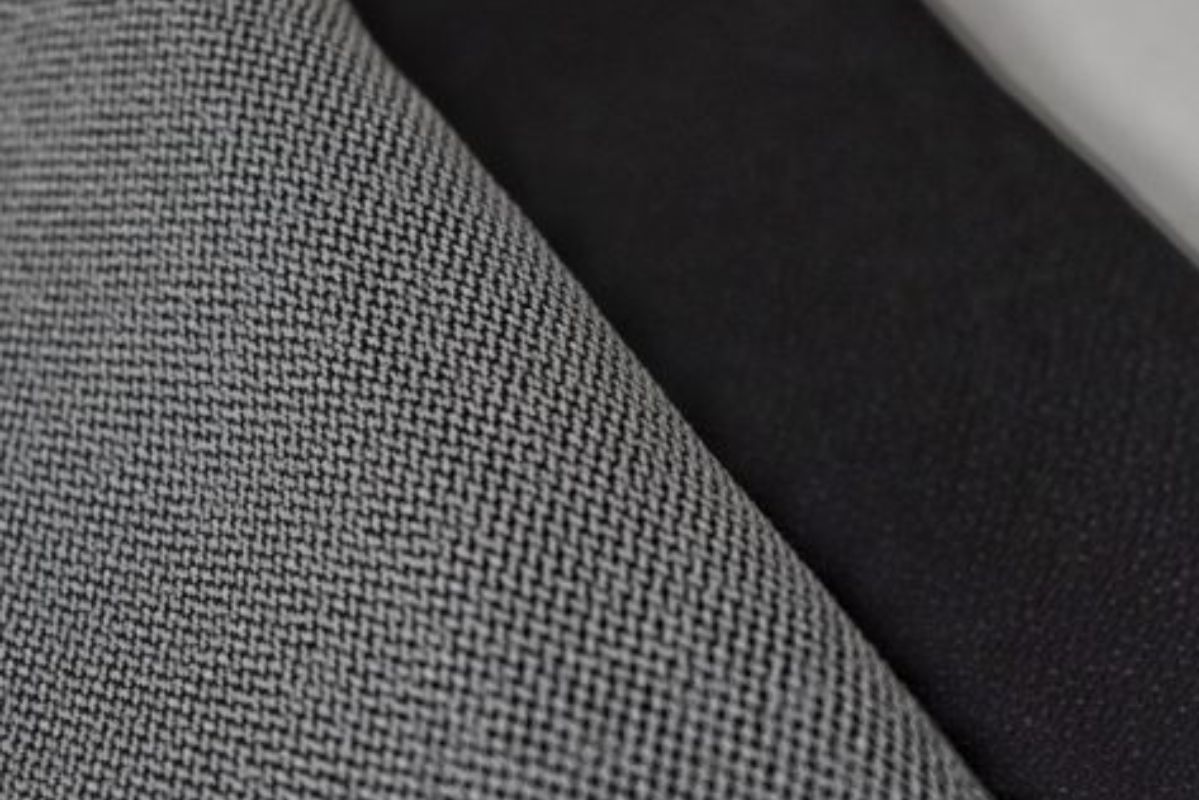
Check that the weave looks even across the roll. Look for uniform texture and a consistent structure from edge to edge. Hold the fabric to the light and look for thin patches, uneven density or irregular yarns.
- GSM as a specification to verify
GSM measures weight in grams per square metre. Treat it as a figure to verify against your specification, not as a quality score. Ask your supplier for the stated GSM, then confirm it on your own samples. Consistent GSM across rolls and batches matters because weight affects hand-feel, support and how the material behaves in the press.
- Why does GSM consistency matter?
Weight variation can change how a garment part feels and drapes. If one roll runs heavier or lighter than another, the same garment may finish differently. Consistency lets you set your process once and repeat it.
- Does higher GSM mean better quality?
No. A higher GSM means a heavier material, not a better one. The right weight depends on the outer fabric, the garment construction and the finish you want. A heavier material can leave a garment stiff or over-built when the design calls for something softer.
- Check visible variations
Inspect a sample across the full width and along the length. Note any variation in thickness, texture or structure. Record what you see, so you can compare future samples against the same reference.
Coating Uniformity and Bonding Performance
The adhesive coating is what turns a woven fabric into a fusible one. Even distribution helps create even results.
- Why coating uniformity matters
Evenly spread adhesive helps the layer bond consistently across the whole panel. If the coating is patchy, some areas may bond well while others do not. Inspect the coated side under good light and look for gaps, clustering or visible irregularity.
- How inconsistent coating affects bonding
Uneven coating can lead to uneven adhesion. The result may be weak spots, lifting edges or surface changes on the outer fabric. These issues may appear only after pressing or after the garment is handled, so test before you commit.
- Material compatibility and fusing conditions
Bonding depends on the material, the outer fabric and the fusing conditions working together. We do not give universal temperature, pressure or time settings, because they vary by product and fabric. Follow your supplier’s instructions, then confirm the result on your own equipment with your own fabric.
How to assess bonding with controlled sample testing
Keep your test controlled so you can compare results fairly:
- Cut samples from several points across the roll.
- Fuse them to your actual outer fabric using your normal process.
- Let the samples cool completely.
- Inspect the bond across the full surface.
- Handle and flex the sample to check how the bond holds.
Repeat the test with different rolls or lots if you plan to reorder.
Signs of poor bonding
Watch for these common signs:
- Bubbling on the surface
- Lifting at the edges
- Uneven adhesion across the panel
- Surface marks or changes in the outer fabric’s look
If you see any of these, adjust the process or review the material before moving ahead. A material that behaves reliably as woven interlining is easier to plan around for repeat production.
Dimensional Stability and Fabric Compatibility
Even a well-bonded material can cause problems if it moves or reacts badly with the outer fabric.
- Dimensional changes during processing
Heat and pressure can change material dimensions. The base fabric and the outer fabric may react differently. If they shift by different amounts, the garment part can pucker or distort.
- Assess shrinkage and appearance after fusing
Measure your sample before fusing and again after it cools. Compare the interlining and the outer fabric. Look at the surface for waviness, puckering or pulling. A small mismatch can show up on a finished garment.
- Compatibility with the outer fabric
Different outer fabrics respond differently to the same material. Weight, texture and fibre content all play a part. Test your actual fabric and avoid assuming that a result on one fabric will carry over to another.
- Wrinkling, distortion and visible defects
Poor compatibility can show up as wrinkling, distortion or a change in the surface look. These are risks, not certainties. Careful testing helps you catch them early.
- Make testing reflect real production
Test on the garment part you plan to make, using your intended process. Not every material needs identical testing, so shape your checks around the application. A test that does not match production tells you little.
Common Quality Issues to Look Out For
Use this table as a quick inspection guide. Each issue is a prompt to check, not a guaranteed defect.
| Issue | What to look for | Suggested check |
| GSM or construction variation | Uneven thickness, texture or weight between rolls | Compare samples against your specification |
| Uneven coating | Gaps or clusters on the coated side | Inspect under light across the width |
| Inconsistent bonding | Weak or patchy adhesion | Fuse controlled samples and inspect |
| Shrinkage or distortion | Puckering or waviness after fusing | Measure before and after fusing |
| Roll irregularities | Marks, flaws or uneven areas along the roll | Unroll and inspect a section of each roll |
| Batch differences | Sample behaves differently from later lots | Compare each lot with the approved sample |
Document before you approve
Write down your specification. Include the garment application, the outer fabric, the desired finish and the test results from your approved sample. Keep a reference sample on file.
Check material before bulk acceptance
Inspect incoming rolls before they go to the cutting floor. Check a sample from each lot against your approved reference. Catching a problem at receiving costs far less than finding it after cutting or fusing.
A simple routine for your quality team
- Receive and log the lot.
- Inspect visually along the roll.
- Fuse test pieces.
- Compare results with your reference.
- Accept, hold or flag the lot.
A routine like this keeps decisions consistent, even when different people run the checks.

Exploring Woven Interlining at Double Ghoda
Ask for specifics before you test anything. For our woven interlining, here is what we publish:
- Base and coating: woven polyester base with PA double-dot coating
- Weight range: 30 to 150 GSM
- Certification: OEKO-TEX® Standard 100
- Roll checks: every roll is measured and verified before dispatch
Those details tell you what to test. Your own samples tell you whether a grade works with your fabric, your equipment and your finish. A published specification never replaces a bonding trial.
You will find the full woven and non-woven grades side by side in our fusible interlining category. Pick the grade that matches your garment, then check it against your own specification before you plan a bulk order.
B.C. Impex, the business behind the Double Ghoda name, supplies this range as a wholesale stockist. We do not manufacture it.
FAQs
What are the key quality parameters of woven fusible interlining?
The key parameters are fabric construction, GSM consistency, coating uniformity, bonding performance, dimensional stability and compatibility with the outer fabric. Their importance depends on your garment application. Test samples against your specification before bulk approval.
Does higher GSM mean better interlining quality?
No. Higher GSM means a heavier material, not a better one. The right weight depends on the outer fabric, the garment construction and the finish you want. Verify GSM against your specification and check it for consistency across rolls.
How can buyers check bonding performance before bulk production?
Fuse controlled samples to your actual outer fabric using your normal process, following the supplier’s instructions. Let them cool, then inspect for bubbling, lifting and uneven adhesion. Test across several rolls or lots where possible.
Link of related Articles
- Lightweight Interlining vs. Heavyweight Interlining
- A Beginner’s Guide to Interlining
- Choosing the Right Interlining