To select polyester lining fabric for a bag or accessory, start with how the product will be used. The lining has to suit the item’s construction, what it carries, how often it is handled and how the interior should look. Then compare weaves and weights, test a sample inside the actual product, and confirm consistency before you place a bulk order.
Understanding Lining Requirements for Bags and Accessories
The intended use of the product sets the lining requirement. Define that first, and the choice of fabric gets much easier.
What shapes the requirement?
Four factors do most of the work:
- Construction: Soft, unstructured items need a lining that moves with the outer material. Structured pieces can carry a crisper one.
- Contents: Keys, cosmetics, documents and devices each put different demands on the interior.
- Frequency of use: A daily-use bag sees more friction and handling than an occasional-use accessory.
- Interior finish: Some products show the lining every time they open. Others hide it completely.
How do requirements differ across products?
An everyday bag usually needs a lining that handles regular loading and unloading without looking tired. A pouch is small, so a lightweight lining keeps it from feeling bulky. A structured accessory needs a lining that sits flat and follows the shape of the frame. Write down these needs before you compare fabrics, so you judge every sample against the same brief.
Choosing the Right Polyester Lining Fabric for Your Product
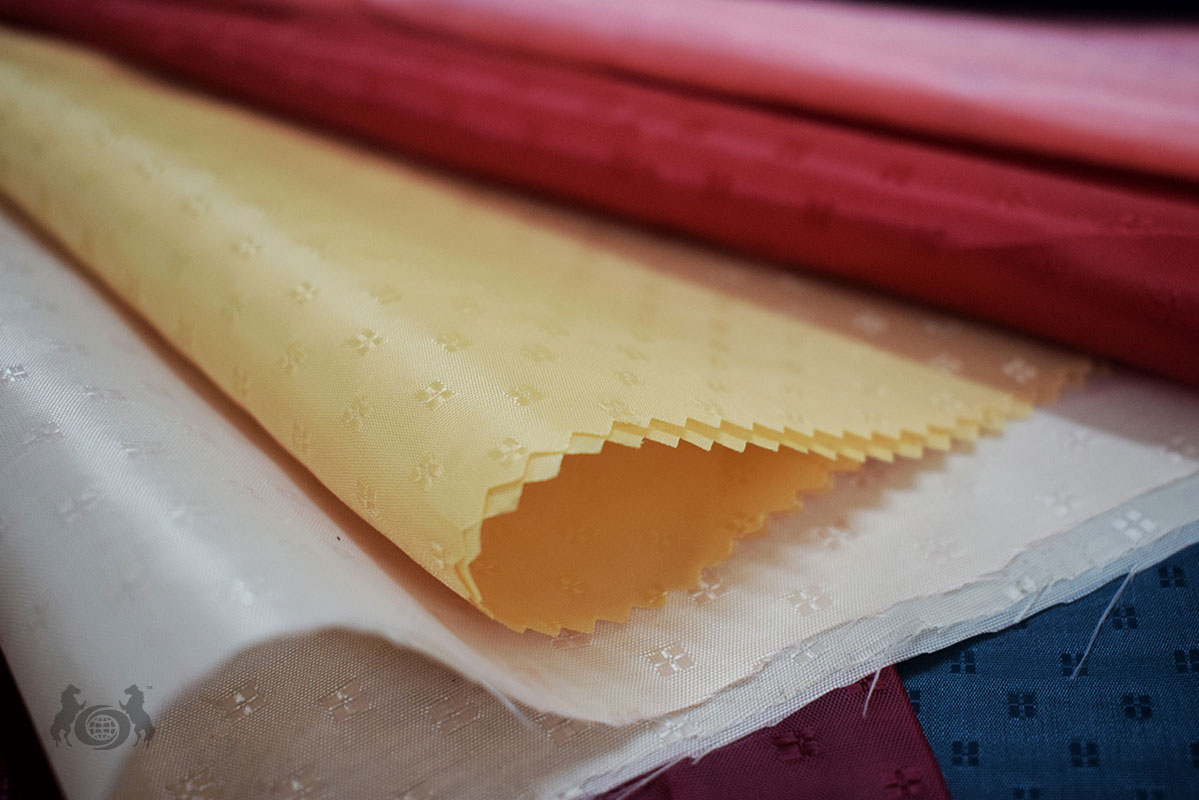
Weave and surface finish decide how a lining looks and handles. Compare them side by side before you commit.
How do the common weaves differ?
Four lining constructions are widely used. Their surface characteristics differ, and no one weave is right for every bag.
| Weave | Surface character | What to check for a bag or accessory |
| Jacquard | Woven pattern on the surface | Does the pattern suit the product’s look, and does the heavier hand suit the shape? |
| Satin Dobby | Dobby texture on a satin base, slightly textured with a smooth feel and drape | Does the added texture work with the outer material and the interior design? |
| Satin | Smooth, glossy surface with good drape and a slippery feel | Does the slippery surface behave well when you cut and stitch it? |
| Taffeta (190T) | Lightweight, crisp, clean finish | Is the light weight enough for the product’s contents and handling? |
Compare before you choose
Look at each weave against your product brief. Ask whether the surface suits the interior look you want. Ask whether it feels right against the contents. Then ask whether it works with your outer material. Never assume a weave suits every bag type. A sample in your hands will tell you more than a description.
For a polyester lining, 100% polyester content is a useful baseline to confirm. Always check the full specification for the specific fabric you plan to buy.
Evaluating Fabric Weight, Texture and Finish
Weight, surface feel and flexibility all change how the finished product handles and looks.
- Why does weight matter?
A heavier lining adds body and a richer feel. It also adds bulk, which matters in small or slim products. A lighter lining keeps the product slim but may give less body. Our published range runs from 52 to 85 GSM across the four weaves. Taffeta (190T) sits at the lighter end, at 52–65 GSM. Jacquard sits at the heavier end, at 80–85 GSM, and Satin Dobby falls between them at 72–82 GSM.
- Treat garment figures with care
Those ranges describe lining for formal garments. They are a useful reference for comparing weight across weaves. They are not proven specifications for bags. A figure that suits a jacket interior may feel wrong in a small pouch. Treat the numbers as a starting point, then judge the result on a real sample.
- Texture and finish
Surface feel affects how the lining handles and how the interior looks. A smooth finish slides easily over contents. A textured finish gives a richer look and a firmer grip. Consider what goes in and out of the product, and how often.
- Flexibility
Check how the lining drapes and folds. It should move with the product, and a lining that is too stiff or too limp can show through the outer material or distort the shape. Fold, crease and flex your sample to see how it behaves.
- Assess samples before bulk
Request samples early. Put them inside a prototype of your actual product, then handle it the way a user would. Judge the feel, the look and the fit before you plan bulk procurement.
Matching Lining Fabric to Bag Design and Construction
Good lining selection depends on the whole product, not just the fabric. Consider each design element before you decide.
- Outer material
The lining should suit the outer material’s weight and structure. A rigid outer material can carry a firmer lining. A soft one usually needs a lining that moves with it. Check that the lining does not show through or add unwanted stiffness.
- Internal compartments and contents
Pockets, dividers and zip sections add layers. Each extra layer adds bulk, so lining weight matters more in compartment-heavy designs. Think about what the contents will do to the lining. Sharp or hard objects place more stress on the interior than soft ones.
- Seam construction
Look closely at your seams. Thicker linings add bulk at folded edges and corners. Check how the fabric behaves at stitched joins, and confirm that seams stay neat after a test run.
Test the lining in production
Appearance and price alone are poor guides. Test how the lining behaves through the production steps:
- Cutting: Does the fabric shift or fray?
- Stitching: Does it pucker, slip or snag?
- Handling: Does it crease, wrinkle or lose its look after use?
Smooth, slippery surfaces can shift during cutting and sewing, so test them early. A short production trial on a few units catches problems before they scale up.
Key Checks Before Selecting Polyester Lining Fabric
Run through these checks before you approve a fabric for bulk purchase.
Procurement checklist
- Fabric specifications: Confirm weave, GSM and composition against your requirement.
- Colour matching: Compare the lining shade against your outer material in daylight and indoor light.
- Sample evaluation: Test a sample inside your actual product.
- Batch consistency: Check that later lots match the approved sample in shade, hand-feel and weight.
- Suitability: Confirm the fabric works for your product’s contents, use and construction.
Why colour and batch matter
Colour differences between lots show up quickly inside a bag, especially when the interior is visible. Ask how your supplier handles dye lots and reorders, and keep an approved reference sample on file. That gives your team something firm to compare every delivery against.
Document your decision
Record the approved weave, weight, shade and any test notes. That record makes reorders faster and keeps quality consistent when different people handle the purchasing.
FAQs
What should you consider when choosing lining for bags and accessories?
Consider the product’s construction, its contents, how often it is used and the interior finish you want. Then compare weave, weight and colour, and test a sample inside the actual product before bulk buying.
Does a heavier lining make a better bag lining?
Not always. A heavier lining adds body but also bulk, which can hurt slim products and compartment-heavy designs. Choose the weight that suits the outer material, the construction and the feel you want.
What should buyers check in a lining sample before bulk orders?
Check how the fabric cuts, stitches and handles in production. Look at colour match, surface feel, flexibility and how seams sit. Confirm that later batches match the approved sample.
Link of related Articles
- Lightweight Interlining vs. Heavyweight Interlining
- A Beginner’s Guide to Interlining
- Choosing the Right Interlining