Neither weight is better in every case. 80 GSM woven interlining generally gives lighter, more flexible support, while 120 GSM woven interlining generally gives firmer structure. Which one suits your garment depends on the outer fabric, the garment construction, the support you need, the flexibility you want and the finish you are aiming for.
This interlining GSM comparison explains what the numbers tell you, how the two weights differ and what to check before you order. It combines general textile guidance with details from our own range, so you can shortlist grades with confidence.
What GSM tells you about woven interlining
GSM means grams per square metre. It is the weight of one square metre of fabric, and it is measured by a standard method for woven fabrics (ISO 3801). So 80 GSM is 80 grams per square metre, and 120 GSM is 120 grams per square metre. By weight alone, the second is 50% heavier per unit area.
That is all GSM tells you. It does not directly tell you how stiff, springy or soft the finished panel will be. Yarn type, weave density, coating and finishing all shape performance, so two interlinings with the same GSM can feel and behave differently.
Our woven fusible interlining has a 100% polyester woven base and a polyamide (PA) adhesive coating. Treat GSM as a first filter, then confirm the rest through samples.
80 GSM vs 120 GSM: structure and support
In general, 120 GSM material is heavier and offers more potential support, while 80 GSM tends to leave more room for flexibility and drape. Actual results depend on fabric construction and product characteristics, so treat this as a starting point.
| Factor | 80 GSM | 120 GSM |
| Material weight | Lighter | About 50% heavier per square metre |
| Potential support | Moderate | Higher |
| Flexibility and drape | Generally more flexible | Generally less flexible |
| Typical intent | Softer, lighter structure | Firmer, more defined structure |
| Key caution | May feel under-supported beneath a heavy outer fabric | May feel stiff or bulky beneath a light outer fabric |
80 GSM woven interlining
In our range, 80 GSM is a medium-heavy grade for standard blazers and jackets. It balances structure and drape.
120 GSM woven interlining
In our range, 120 GSM is a heavy grade for premium suits, blazers and bandgala jackets.
Your own fabric and process decide how either one performs, so test before you commit.
Which woven interlining GSM works best for suits, blazers and jackets
There is no single best GSM for every garment. Use the points below to narrow your options, then confirm with samples.
Suits
The front body and chest give a suit its shape. Lighter weights keep a softer line, and heavier weights give a firmer, more tailored structure. The right choice depends on your suiting fabric and silhouette. When you compare interlining for suits, test at least two weights on the same cloth.
Jackets and blazers
Structured styles need front support, while relaxed styles may value softness. Interlining for jackets can sit anywhere between these two weights, or outside them. We stock both 80 and 120 GSM for blazers and jackets, so sampling both is a sensible comparison.
Bandgala jackets, sherwanis and other ethnic formal wear
Garments such as bandgala jackets and sherwanis often need more support. We supply 100 to 140 GSM for bandgala jackets and 140 GSM (111 quality) for sherwanis, so these may go beyond 120 GSM.
For collars, cuffs and plackets, lighter support is usual, and non-woven grades are typically used. See our non-woven fusible interlining range.d sherwanis often need more support. We supply 100 to 140 GSM for bandgala jackets and 140 GSM (111 quality) for sherwanis, so these may go beyond 120 GSM.
How Outer Fabric Weight Influences Interlining Selection
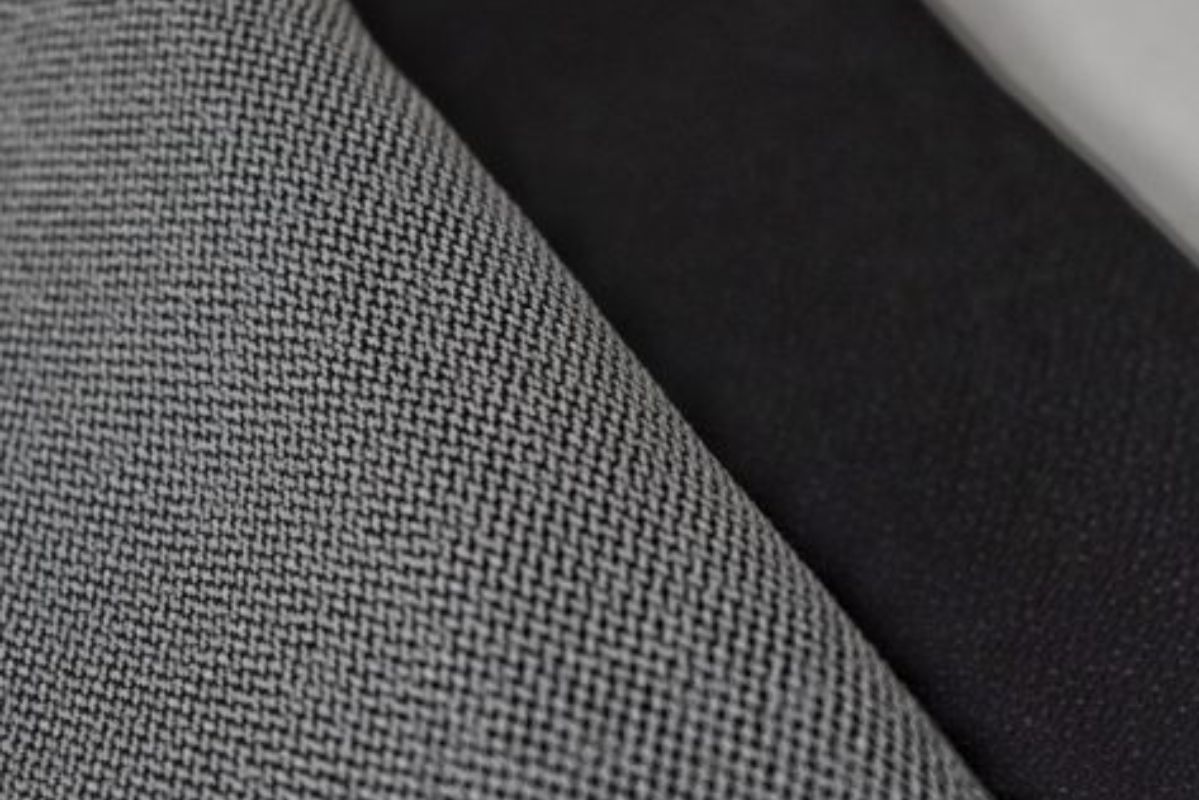
Match the interlining to the outer fabric. It should support the cloth without overpowering it. Selecting interlining for the fabric is a standard part of garment manufacturing practice (NZQA unit standard 2848).
Weight
A light outer fabric can show stiffness or a visible imprint if the interlining is too heavy. A heavy outer fabric may need more support to hold its intended shape.
Texture and construction
Open weaves, dense weaves, brocades and embroidered fabrics all bond and behave differently. Loose or open constructions can be sensitive to adhesive showing through.
Drape and silhouette
If you want a flowing line, lean toward more flexible support. If you want a crisp line, lean toward firmer support. Sharp shoulders and a structured chest ask for different support than a soft, relaxed cut.
Heat tolerance
Some outer fabrics are sensitive to heat, so check this before you shortlist grades.
A practical example: a lightweight suiting and a heavy brocade can both be formal wear, but they rarely need the same support.
Test compatibility before you commit
- Shortlist two or three grades, for example one near 80 GSM, one near 120 GSM and one in between.
- Fuse them on your actual outer fabric using your normal process and the supplier’s guidance.
- Compare hand-feel, drape, surface appearance and bond after cooling.
- Test the result through the care method your garment will face.
- Record the approved sample as your reference.
For fine cloth, see fusing interlining on delicate fabrics.erence.
What to check before ordering woven interlining in bulk
Confirm the full specification, test a sample on your fabric and approve it before you place a bulk order.
Common purchasing mistakes
- Choosing by GSM alone: Weight is one factor. Construction, coating and finish matter too.
- Skipping sample tests: A sample on your own fabric shows what a data sheet cannot.
- Overlooking garment-specific needs: A jacket front, a collar and a waistband do not need the same support.
- Ordering in bulk before specifications are confirmed: Fixing a mismatch after bulk delivery costs time and material.
Specifications to confirm in writing
When you source interlining fabric for garment manufacturers, confirm these points in writing:
- Base material and construction
- Adhesive or coating type
- GSM grade
- Width and roll length
- Colour
- Care requirements
- Minimum order quantity
- Consistency from batch to batch
Sourcing Woven Interlining from Double Ghoda
Double Ghoda, a trade name of B.C. Impex, is a wholesale supplier and stockist of interlining, lining, buttons and garment accessories. We are not a manufacturer.
Our woven fusible interlining runs from 30 GSM to 150 GSM across 11 grades, including 80 GSM and 120 GSM. The woven grades are 100% polyester with PA double-dot coating, supplied in 50 metre rolls. We supply wholesale buyers only, with a minimum order of 1,000 metres.
To assess your requirements before sourcing, note these points:
- Your garment type
- The weight and construction of your outer fabric
- The support and finish you want
- Your care method
Then ask us for samples of your shortlisted grades and compare them on your own fabric. Review the specifications on our woven fusible interlining page before you order.
FAQs
What is GSM in woven interlining?
GSM stands for grams per square metre. It measures fabric weight per unit area. It shows how heavy a grade is, but it does not alone determine stiffness or performance.
What is the difference between 80 GSM and 120 GSM woven interlining?
120 GSM is 40 grams per square metre heavier and generally offers more potential support. 80 GSM generally offers more flexibility and drape. Results depend on construction, coating and the outer fabric, so neither is universally better.
How do you choose the right GSM for a garment?
Start with the outer fabric weight, garment construction, required support, flexibility and intended finish. Shortlist a few grades, test them on your actual fabric and approve a sample before bulk ordering
Is there a grade between 80 GSM and 120 GSM?
Yes. Our woven range includes 100 GSM, which is a sensible third sample when 80 feels light and 120 feels heavy on your fabric.
Where can garment manufacturers explore woven fusible interlining options from Double Ghoda?
You can explore our woven range on our official Double Ghoda fusible interlining page. Share your garment type and outer fabric, and we will help you shortlist grades to sample.
Link of related Articles
- Lightweight Interlining vs. Heavyweight Interlining
- A Beginner’s Guide to Interlining
- Choosing the Right Interlining