
When you open a well-tailored suit or sherwani, the lining comes into contact with your hand before the outer fabric. It covers the stitching and interlining beneath your shirt, slides over it smoothly, and subtly improves the feel and functionality of the garment. However, not every lining feels or functions in the same way, and a lot of that is determined by one number: GSM.
When sourcing polyester lining for your next production run, you’ve probably noticed that 52 GSM and 85 GSM behave quite differently once you handle them. One feels lighter and softer, while the other is heavier and richer. The choice is totally dependent on what you’re building, so neither is “better” in a strict sense. Let’s go over how to make a decision.
Table of Contents
- What Does GSM Mean for Polyester Lining?
- 52 GSM vs 85 GSM: What’s the Difference?
- How Lining Weight Affects Drape, Strength and Feel
- When Should You Choose 52 GSM?
- When Is 85 GSM the Better Choice?
- Our Polyester Lining Options at Double Ghoda
What Does GSM Mean for Polyester Lining?
Grams per square meter, or GSM for short, is a measurement of a fabric’s weight for a specific area. It’s not a stand-alone indicator of quality; a heavier GSM isn’t always better, and a lighter one isn’t always worse. It is a measurement of density, and once a fabric is sewn into a garment, its behavior is determined by its density.
When you handle the fabric, you’ll notice that GSM has an immediate impact on the following aspects of lining:
- Thickness and bulk — how much volume the lining adds inside the finished garment
- Drape — whether the fabric falls softly or holds a bit more body
- Hand-feel — the tactile impression it gives, from silky and light to smooth and substantial
- Durability under stress — how well it holds up to the friction of being slipped on and off repeatedly
You want a lightweight lining fabric inside a blazer or other piece of outerwear that already has enough structure from its own construction because it moves easily and adds very little bulk. A sherwani that is frequently worn open is an example of a garment where the interior is intended to look and feel premium because a heavier lining fabric has more body and a richer surface feel.
Additionally, it’s important to keep in mind that interlining and lining function together rather than independently. The structural function of interlining, which is located closer to the outer fabric, is to support panels, maintain shape, and give the garment its form. On top of that, closer to the wearer, is lining, whose purpose is not structure but rather finish, comfort, and glide. Because the two layers have different functions, they are selected separately: your lining weight is determined by how the interior should feel and look after the garment is finished, while your interlining weight is determined by how much support the garment requires.
Because the proper weight is always relative to the garment it’s going into, manufacturers sourcing polyester lining fabric typically work within a defined GSM band rather than choosing a single number in isolation. For this reason, it is helpful to compare two particular weights, such as 52 GSM and 85 GSM, in order to comprehend the range.
52 GSM vs 85 GSM: What’s the Difference?
These two weights sit at opposite ends of a practical lining range, and the difference is noticeable the moment you run them between your fingers.
| Factor | 52 GSM | 85 GSM |
| Typical weave | Taffeta (crisp, lightweight) | Jacquard (patterned, richer surface) |
| Feel | Light, crisp, minimal bulk | Substantial, smooth, more body |
| Drape | Falls close to the body, low volume | Holds a slightly fuller, structured drape |
| Visual impression | Clean and understated | Premium, patterned finish |
| Typical use | Blazers, safari suits, outerwear | Sherwanis, premium suits, structured formal wear |
| Cost tier | More economical | Higher, reflecting the weave and finish |
In summary, 52 GSM is designed for lightweight, silent, and practical clothing where you want the lining to vanish. 85 GSM is designed for clothing where the interior is part of the presentation, and the piece feels more upscale when it has a little more weight and pattern.
There is no compromise in either weight. Simply put, they are designed for different tasks, and the key to making the right decision between them is knowing this difference.
Choose 52 GSM if your garment requires a light, low-bulk interior think safari suits and blazers. Choose 85 GSM if the interior of your garment is visible or needs to feel high-end (think sherwanis and structured formal wear).
How Lining Weight Affects Drape, Strength and Feel
It’s worth slowing down on why GSM has such a visible effect on the finished garment, because it comes down to a few practical mechanics.
Drape. Because lighter lining fabric is less resistant to gravity, it falls near the body and moves smoothly with the wearer. When the interior of the garment needs to maintain its own shape instead of collapsing against the lining underneath it, a heavier lining is helpful because it carries a little more structure of its own, giving it a slightly fuller fall.
Strength and durability. In general, a denser weave is more resilient to repeated friction, such as the daily sliding motion of putting on and taking off a jacket. Although lighter linings are still strong enough for their intended use, they are preferred for clothing with less stress or where reducing bulk is more important than increasing density.
Hand-feel. This is the most noticeable change right away. The lighter lining has a crisp, nearly weightless feel to the skin. The interior finish of a jacket with a heavier lining, particularly one with a patterned weave, feels richer and smoother and conveys quality as soon as the jacket is opened.
Bulk inside the garment. This is more important than most people realize. A garment may appear stiff and overbuilt if it has a heavy outer fabric and a heavy lining. An excessively heavy lining combined with a light outer fabric can completely upset the balance of the garment. A key component of doing this correctly is matching the lining weight to the outer fabric rather than just the type of garment.
Sound and movement. Although it’s a minor detail, it’s important to know that lighter, crisper weaves, like taffeta, create a faint rustle when the wearer moves, which some consumers actually connect with the feel of high-end outerwear. Satin and jacquard are examples of smoother, heavier weaves that glide rather than rustle and move more silently. It’s just another distinction that becomes apparent when the garment is worn; neither is right nor wrong.
Once you understand these mechanics, choosing between 52 GSM and 85 GSM stops being a guessing game and becomes a straightforward decision based on what the garment actually needs to do.
When Should You Choose 52 GSM?
Lighter lining earns its place in a specific set of situations. Reach for 52 GSM when:
- You’re lining a blazer or safari suit where the priority is a clean, low-bulk interior rather than a heavily structured feel.
- The outer fabric is already lightweight, and a heavier lining would throw off the garment’s overall balance.
- You need to control cost across a large production run without compromising on function.
- Minimal bulk matters more than a premium visual finish — for example, in outerwear where the lining’s job is purely functional.
- The garment is worn in warmer conditions, where a lighter interior improves comfort.
In these cases, a lighter weight isn’t a downgrade — it’s the correct engineering choice. Using a heavier lining fabric here wouldn’t necessarily damage the garment, but it would make it feel bulkier and less refined than the outer fabric intended.
When Is 85 GSM the Better Choice?
Heavier lining earns its place just as clearly, particularly in garments where the interior does more than just finish the seams. Choose 85 GSM when:
- You’re building a sherwani, or highly structured ethnic formal garment, where the interior is visible when the garment is worn open and adds to its upscale appearance.
- A lighter lining would feel out of place against the heavy or richly textured outer fabric.
- Because heavier weaves, like jacquard, have visible details that plain, light fabric cannot match, a patterned or textured surface adds value.
- A denser lining is more resilient to repeated use because the garment will be handled and worn frequently at events.
- Customers can tell the difference between an ordinary lining and one that feels thoughtful, and interior finish is a part of your brand positioning.
This is why heavier GSM lining shows up consistently in premium suits, bandgala jackets and sherwanis across India’s formal wear trade the interior is doing more than a purely functional job, and the weight reflects that.
Our Polyester Lining Options at Double Ghoda
At Double Ghoda, we stock polyester lining across the full range that garment factories actually order from not just the two extremes, but everything in between, so you can match the exact weave and weight to your garment.
Here’s how our range breaks down by weave type:
| Weave | Feel | Typically Used For |
| Taffeta | Light, crisp, minimal bulk | Blazers, safari suits, lightweight outerwear |
| Satin | Smooth, glossy, comfortable against the skin | Standard suits and blazers |
| Satin Dobby | Slightly textured, richer hand than plain satin | Premium suits, blazers, formal jackets |
| Jacquard | Patterned surface, the most premium interior finish | Sherwanis and heavily structured suits |
A few things worth knowing before you place an order:
- Consistency in color is just as important as weight. For high-end suits and sherwanis where the interior is visible, it is crucial that a reorder from the same batch matches the shade you originally received because we keep our polyester lining fabric in consistent dye lots.
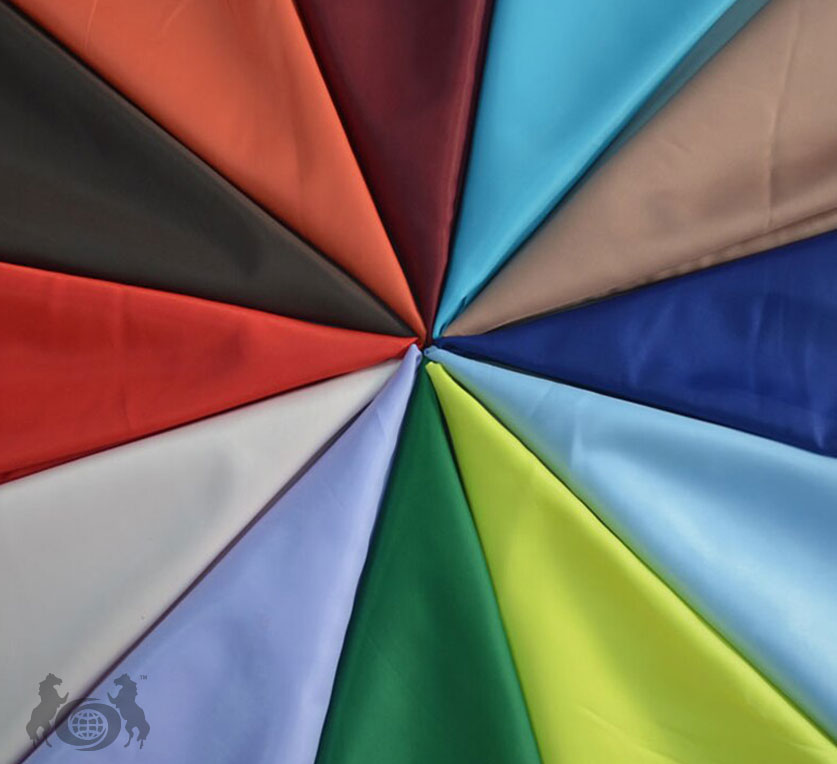
- Black, navy, off-white, white, and a broader range of hues like maroon, brown, green, purple, and gray are included in our standard color selection. Custom colors can be ordered in large quantities.
- Before committing to a large order, samples are available so you can test the drape and hand feel against your outer fabric before scaling up.
We work as a wholesale supplier to garment factories, formal wear wholesalers and clothing brands, with a minimum order of 1,000 metres, supplied in 45-metre rolls. If you’re not sure whether your garment calls for something closer to 52 GSM or 85 GSM, tell us the garment type and outer fabric, and we’ll point you to the right weave and weight for your production line.
Frequently Asked Questions
What does GSM mean in lining fabric, and why does it matter?
GSM stands for grams per square metre and measures how dense a fabric is. In lining, it directly affects drape, bulk, hand-feel and how the interior of a garment behaves once it’s sewn in. Choosing the right GSM means matching the lining’s weight to the outer fabric and the garment’s intended use, rather than picking a number arbitrarily.
Is heavier lining always better quality?
No. Heavier lining suits garments where a richer, more structured interior adds value, like sherwanis and premium suits. Lighter lining is the correct choice for blazers, safari suits and outerwear where minimal bulk and a clean drape matter more. Weight should match the garment’s needs, not a general assumption that heavier automatically means better.
Which polyester lining weight is best for a sherwani?
Sherwanis typically call for the heavier end of the range, closer to 85 GSM, often in a jacquard or satin dobby weave. Since a sherwani’s interior is frequently visible when worn open, a richer, more patterned lining contributes to the garment’s overall premium finish.
Can I use the same lining weight for both suits and blazers?
Not always. Standard suits often work well with a mid-range weight, while blazers frequently do better with a lighter lining to avoid adding unnecessary bulk under a fitted silhouette. The best approach is to match the lining weight to the specific outer fabric and construction of each garment rather than standardising across every product line.
Link of related Articles
- Lightweight Interlining vs. Heavyweight Interlining
- A Beginner’s Guide to Interlining
- Choosing the Right Interlining