
Yes, in almost every case. “Poly lining” is trade shorthand for the same material, a 100% polyester fabric used to finish the inside of suits, blazers and sherwanis. The naming difference rarely signals a different product, but it’s still worth confirming before you place a bulk order. Here’s what buyers should know before sourcing.
Table of Contents
- What Is Poly Lining?
- What Is Polyester Lining Fabric?
- Are Poly Lining and Polyester Lining the Same?
- Why Is Polyester Used for Garment Lining?
- Where Is Polyester Lining Commonly Used?
- How to Choose the Right Polyester Lining Fabric?
- FAQs
What Is Poly Lining?
Poly lining is the everyday trade term for a polyester-based interior fabric used to finish garments from the inside. Buyers, tailors and factory floor staff use “poly lining” as a quick, informal way to refer to this material without spelling out the full name every time.
It’s not a separate product category, it’s shorthand. When a cutting master asks for “poly lining” in black or navy, they mean the same interior finishing fabric that appears on a supplier’s spec sheet under a more formal name. The term travels faster in verbal trade conversations, on the factory floor, and in WhatsApp orders than the full technical name does.
This kind of shorthand is common across the interlining and lining trade generally, buyers say “fusing” instead of “fusible interlining,” and “lining” alone instead of specifying the fibre. It saves time in daily conversation, but it can create ambiguity once an order moves from a phone call to a written purchase order, which is why the formal name and specification still matter at the point of confirming quantity, weave and colour.
What Is Polyester Lining Fabric?
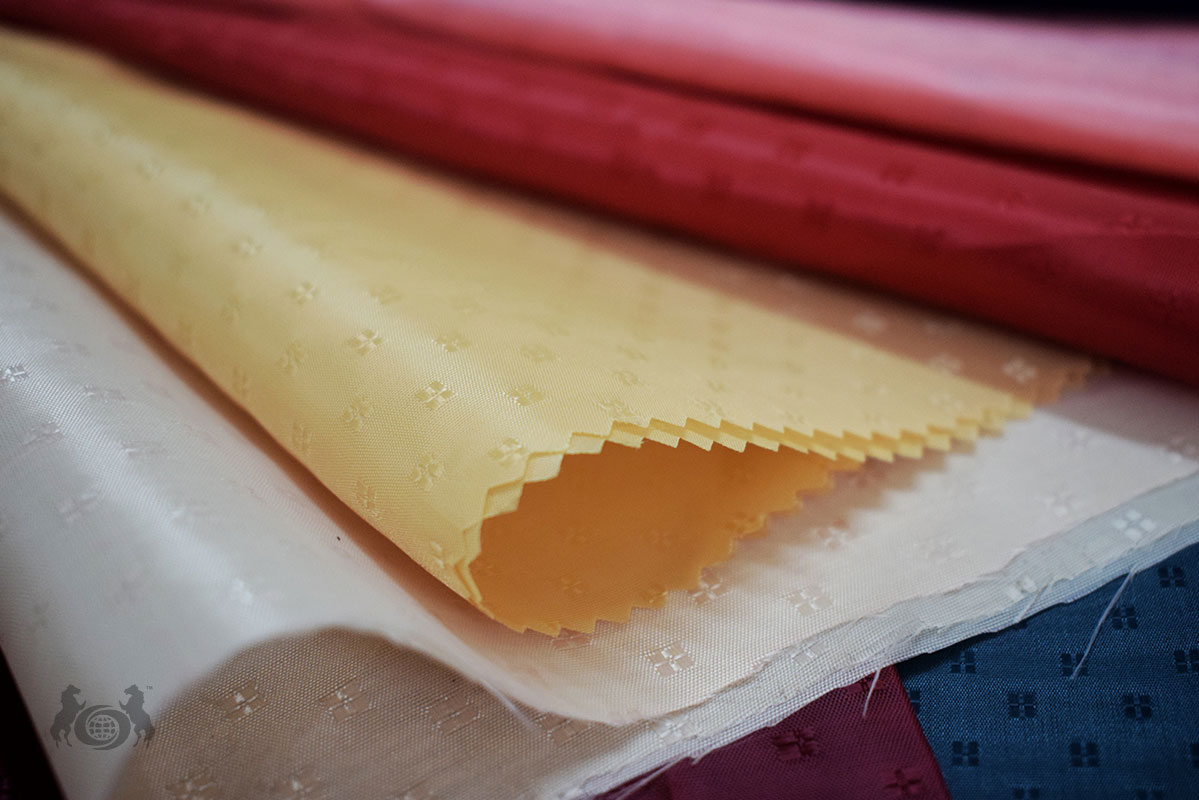
Polyester lining fabric is the interior finishing layer sewn inside suits, blazers, sherwanis and jackets, the fabric a wearer sees and touches when a garment is opened. It’s made from 100% polyester yarns, woven into constructions like satin, satin dobby, jacquard or taffeta, each giving a different surface texture and sheen.
Its job is functional as much as visual: it hides raw seams, interlining and construction stitches, gives the garment a smooth interior that slides easily over a shirt or kurta, and protects the outer fabric’s inner face from wear. In premium and ethnic formal wear, the lining’s finish also signals interior quality to the buyer, since it’s the first thing seen when a jacket or sherwani is opened.
Unlike interlining, which is buried and never seen once a garment is finished, lining is a visible, touchable part of the product. That difference shapes how it’s bought: interlining is chosen mainly on GSM and bonding performance, while lining is chosen on weave, sheen, drape and colour match, the qualities a buyer or wearer notices directly.
Are Poly Lining and Polyester Lining the Same?
Yes, “poly lining” and polyester lining refer to the same material. Poly is simply the shortened, trade-floor version of polyester, and both terms describe a 100% polyester interior fabric used for the same purpose in a garment.
The confusion, when it happens, isn’t usually about the fibre, it’s about which weave or grade is meant. “Poly lining” as a phrase doesn’t specify jacquard, satin, satin dobby or taffeta, so two buyers using the same term can end up picturing different fabrics. This is where a purchase order needs more precision than the trade term alone provides, specify the weave, GSM and colour, not just “poly lining,” when placing an order.
Occasionally the term gets used loosely for non-polyester interior fabrics too, which is where a genuine mismatch can happen. If a supplier quotes “poly lining” without confirming 100% polyester content, it’s worth asking directly before confirming a bulk quantity.
For a purchase order, the safest approach is to treat “poly lining” as a starting point in conversation and the fully specified name, weave, GSM, colour, as what actually goes on paper. That way, whichever term either side uses casually, the written order leaves no room for the wrong fabric to arrive.
Why Is Polyester Used for Garment Lining?
Polyester holds shape, resists wrinkling, and costs less than natural-fibre alternatives, while still giving a smooth, comfortable interior finish.
Polyester fibre is dimensionally stable, meaning it doesn’t stretch or shrink as easily as many natural fibres during construction, wear or dry cleaning. For a factory running large production runs, that stability translates into fewer fit inconsistencies between pieces cut from the same batch.
It’s also wrinkle-resistant and holds its surface finish, a satin or jacquard weave keeps its sheen through repeated wear, where a natural-fibre lining can dull or crease more visibly over time. Combined with lower material cost than silk or viscose linings, this is why polyester has become the standard interior fabric across suits, blazers and ethnic formal wear in the Indian garment trade.
Durability under dry cleaning matters too. Formal wear, especially sherwanis and heavy suits, goes through repeated dry-clean cycles across its wear life, and polyester’s resistance to that process without significant shade or texture loss is a practical reason factories default to it for interior finishing.
Cost predictability plays a role as well. Polyester yarn pricing is generally more stable than natural-fibre alternatives, which makes budgeting for bulk lining orders more straightforward for factories planning production costs across a full season’s range.
Where Is Polyester Lining Commonly Used?
Anywhere a structured formal garment needs a finished, comfortable interior, suits, blazers, sherwanis, and formal jackets.
The most common application is the body interior of suits and blazers, where lining covers the inside of the front and back panels, hiding the interlining and seam allowances underneath. A close second is sherwanis and other heavy ethnic formal wear, where the interior is often seen when the garment is worn open over a kurta.
Sleeve linings are another standard use, a smooth polyester surface lets the arm move freely inside the sleeve without the fashion fabric dragging against a shirt. Pocket bags, especially in tailored jackets, are frequently cut from the same lining fabric for a consistent interior finish.
Lighter-weight polyester lining also shows up in safari suits and structured outerwear, where the priority is a clean interior finish without adding bulk to the outer shell. Across all these uses, the choice of weave and GSM shifts with the garment, heavier for sherwanis and premium suits, lighter for safari suits and casual jackets.
Brand-facing garments add one more consideration: for wholesale clothing brands producing at scale, a consistent lining choice across a season’s collection helps standardise interior finish across styles, which simplifies both sourcing and quality control on the factory floor.
How to Choose the Right Polyester Lining Fabric?
Match weave and GSM to the garment type, confirm colour consistency across the order, and sample before committing to bulk quantity.
Use this checklist when sourcing:
- Match GSM to garment weight. A heavier weave (jacquard or satin dobby) suits sherwanis and premium suits; a lighter weave (taffeta or plain satin) works better for safari suits and lightweight jackets.
- Confirm the weave, not just the fibre. “Polyester” alone doesn’t tell you whether you’re getting a glossy satin, a textured dobby, or a patterned jacquard, each behaves and looks different once sewn in.
- Check colour and dye-lot consistency. Lining is visible when a garment is opened, so a shade mismatch across rolls is a visible defect, not a hidden one. Ask for a batch reference on bulk orders.
- Sample before bulk confirmation. Request a cut length in your chosen weave and colour, and check hand-feel, drape and colour against your reference before placing a full purchase order.
- Ask about reorder matching. If you’re placing repeat orders, confirm the supplier can match a new delivery to your previously approved dye lot.
- Confirm roll length and width against your cutting layout. A mismatch here wastes material and slows down the cutting floor, regardless of how good the fabric itself is.
None of these checks take long, but skipping them is how a factory ends up with a delivery that technically matches the order on paper but doesn’t behave the way the sample did on the cutting table.
This is where general sourcing advice needs to connect to what’s actually available. We supply polyester lining fabric in jacquard, satin dobby, plain satin and taffeta weaves, across a 52–85 GSM range depending on the weave, in 45-metre rolls. Colour range includes black, navy, white and off-white as our top-selling shades, with 50+ additional colours available including maroon, brown, grey, green and purple.
Weave selection follows the same logic covered above: jacquard and satin dobby (72–85 GSM) for sherwanis and premium suits, plain satin (67–80 GSM) for standard suits and blazers, and taffeta (52–65 GSM) for safari suits and lightweight outerwear. All colours are held in consistent dye lots specifically so reorders can be matched to a previous batch. Minimum order is 1,000 metres, wholesale only, contact us with your weave, GSM, colour and quantity for a written quotation.
Frequently Asked Questions
Is “poly lining” ever a lower-quality material than polyester lining fabric?
No, the terms describe the same fibre content. Quality differences come from the weave, GSM and manufacturing consistency, not from which name a supplier uses. Always confirm the specific weave and GSM rather than relying on the general term alone.
How do I know which lining weave to specify on a purchase order?
Match it to the garment and finish level: jacquard for a premium, patterned interior; satin for a smooth, standard finish; taffeta for the lightest, most economical option. If you’re unsure, ask your supplier to recommend a grade based on your garment type and target price point.
What should I check when sampling lining fabric before a bulk order?
Check colour against a physical reference (not a screen), feel the hand and drape by hand, and confirm the roll length and width match your cutting layout. A sample fused or handled under different conditions than your factory’s process can look different once it’s in production.
Can I get consistent colour across multiple bulk orders of polyester lining?
Yes, if your supplier tracks dye lots and can match new deliveries to a previous batch. Always reference your last purchase order and approved shade when reordering, rather than relying on the colour name alone.
Link of related Articles
- Lightweight Interlining vs. Heavyweight Interlining
- A Beginner’s Guide to Interlining
- Choosing the Right Interlining