
No, Woven lining and interlining are both woven fabrics used inside a garment, but they do different jobs, sit in different places, and are never interchangeable on a cutting table. Here’s the functional difference, and what to check before sourcing either one in bulk.
Table of Contents
- What Is Woven Lining?
- What Is Woven Interlining?
- Is Woven Lining the Same as Woven Interlining?
- Key Differences Between Woven Lining and Woven Interlining
- When Should You Use Woven Lining vs Woven Interlining?
- What Should Buyers Check Before Ordering Woven Interlining in Bulk?
- Common Mistakes When Choosing Woven Interlining for Garment Production
- Choosing Woven Interlining from Double Ghoda
- FAQs
What Is Woven Lining?
Woven lining is the fabric that finishes the inside of a garment, the layer a wearer actually sees and touches when they put on a jacket, sherwani or blazer. It’s woven from yarns in both directions, giving it drape and a smooth surface, and it’s chosen mainly for how it looks, feels and slides against a shirt or kurta underneath.
Lining isn’t structural. Its job is to hide raw seams, tailoring stitches and the reinforcement layers underneath, while giving the garment a clean, finished interior. Satin, satin dobby, jacquard and taffeta are common woven lining constructions, each offering a different sheen and hand-feel for the interior of formal wear.
Because lining is visible when a jacket is opened, colour, sheen and pattern matter as much as the base construction. A mismatched lining colour is a visible defect in a way a mismatched interlining layer never is, since interlining is buried and never seen.
What Is Woven Interlining?
Woven interlining is a support fabric fused or sewn between the outer fashion fabric and the lining, and its only job is structure, not appearance. It’s never seen once the garment is finished.
Most structural interlining used in Indian formal wear construction is woven fusible interlining: a thermoplastic adhesive coating is applied to one side, and heat and pressure bond it permanently to the wrong side of the fashion fabric. This is what gives a suit front, sherwani panel or blazer chest its shape, and what keeps that shape through repeated wear and dry cleaning.
Because it’s buried inside the garment, shade and sheen barely matter for this layer, GSM, coating quality and bonding strength do. A buyer sourcing this material is really buying structural performance, not appearance, which is the opposite of what matters when sourcing lining.
Is Woven Lining the Same as Woven Interlining?
No, they are different materials with different jobs, even though both are woven and both sit inside the same garment.
Lining faces inward and is meant to be seen when a garment is worn open. Interlining faces outward, toward the fashion fabric, and is never visible at all, it’s bonded or stitched between two other layers and disappears from view the moment construction is finished.
The confusion usually comes from the word “woven” doing double duty. Buyers searching for “woven lining” are often actually asking about the fusible layer that gives a garment its shape, which is interlining, not lining at all. Getting the terminology right before placing a purchase order avoids ordering the wrong material entirely.
Key Differences Between Woven Lining and Woven Interlining
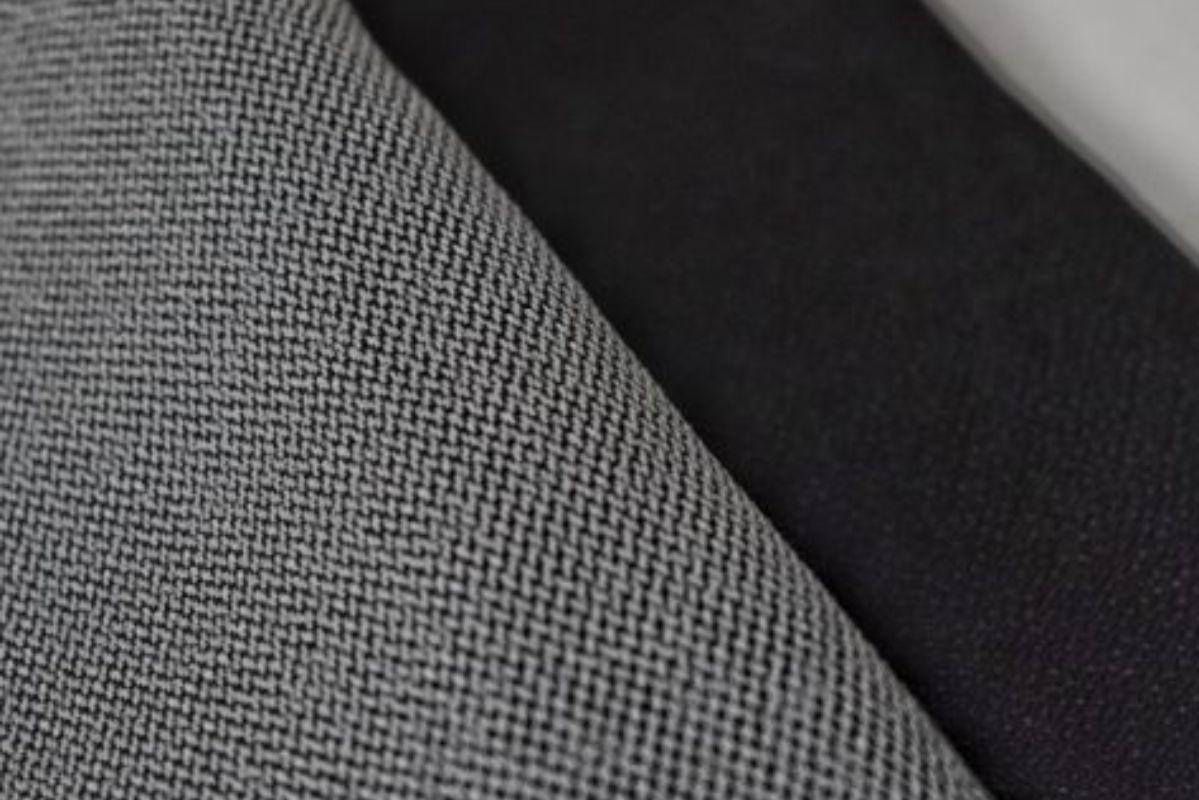
| Property | Woven Lining | Woven Interlining |
| Purpose | Finish, comfort, appearance | Structure, shape, rigidity |
| Placement | Innermost visible layer | Hidden, between fashion fabric and lining |
| Visibility | Seen when garment is open | Never visible once fused |
| Attachment | Sewn into the garment | Fused with heat, pressure and adhesive |
| Key buying factor | Colour, sheen, drape | GSM, coating, bonding strength |
| Typical constructions | Satin, jacquard, taffeta | Woven polyester with thermoplastic coating |
| What a defect looks like | Visible shade or sheen mismatch | Bubbling, peeling, loss of shape after wear |
The practical takeaway: lining is chosen with the eye, woven fusible interlining is chosen with a spec sheet. Mixing up the two at the sourcing stage almost always means reordering.
When Should You Use Woven Lining vs Woven Interlining?
Use lining wherever the inside of the garment is seen, and interlining wherever the garment needs to hold its shape.
Use woven lining for the visible interior of jackets, sherwanis and blazers, the panel a customer sees when trying on a garment or checking the finish before purchase. It’s also the right choice for sleeve linings, where smooth fabric-to-fabric movement matters more than structure.
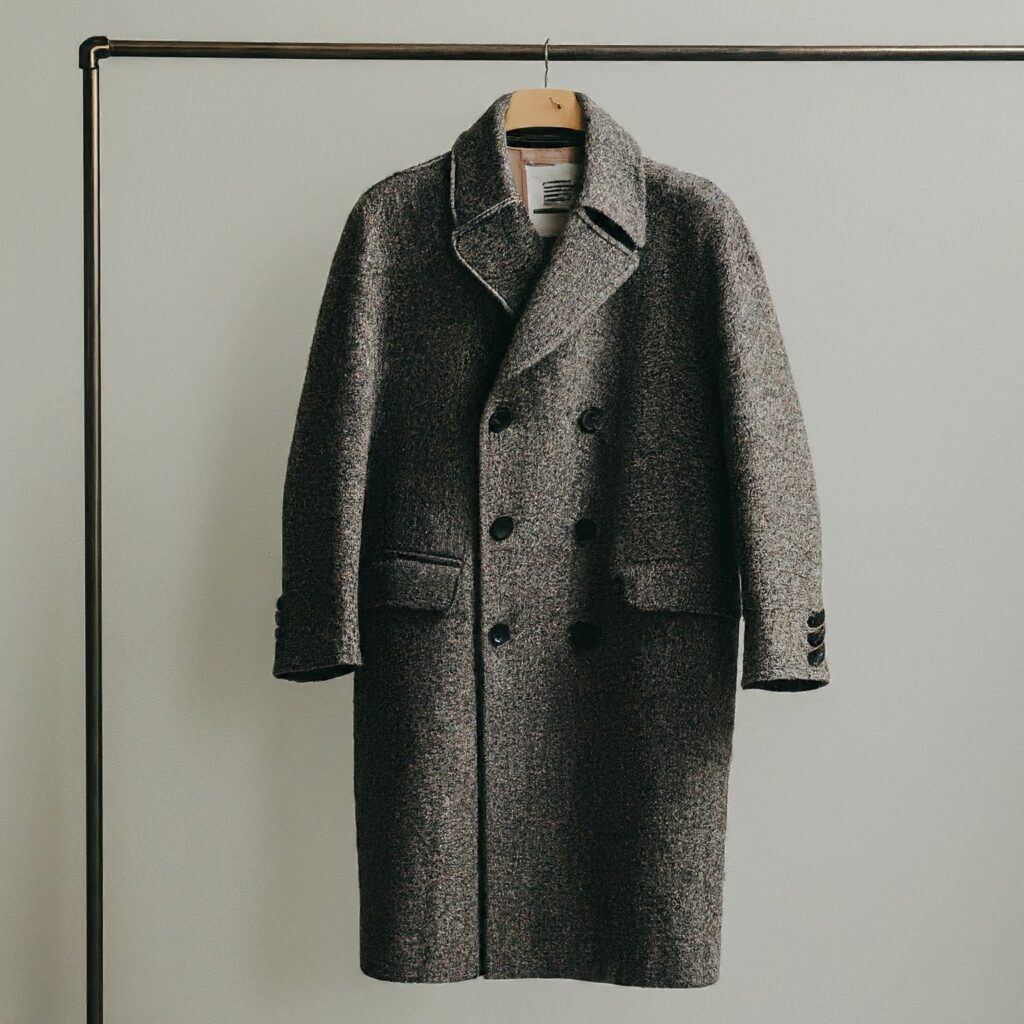
Use interlining for the front body, chest, collar stand and any panel that needs to hold its shape through construction, wear and cleaning. This includes full-front sherwani panels, suit and blazer chests, bandgala fronts, and structured collars, anywhere the garment would look flat or shapeless without reinforcement underneath.
Most formal-wear factories order both together for a single garment: interlining for the structural panels, lining for the visible interior finish. Ordering only one or the other usually means a garment that’s either shapeless or unfinished on the inside.
What Should Buyers Check Before Ordering Woven Interlining in Bulk?
Check GSM match, coating type, bonding performance and batch consistency before confirming a bulk purchase order.
Use this checklist before accepting a large delivery:
- Confirm GSM against the garment part, a 140 GSM grade suited to a sherwani front will over-stiffen a lighter jacket, and a light grade under-supports a heavy panel.
- Check the coating type and dot pattern, a double-dot adhesive coating generally bonds faster and more evenly than single-dot alternatives, which matters for factory throughput.
- Run a bonding test before full production, fuse a sample panel at your factory’s actual press settings and inspect for bubbling, peeling or uneven adhesion before committing to the full order.
- Ask for width and roll-length specs in writing, mismatched roll width against your cutting layout wastes material and slows the cutting floor.
- Request a batch or lot reference, this lets you confirm a reorder is matched to your last approved delivery, not just to the same GSM number.
- Do a basic interlining fabric quality check on arrival, inspect hand-feel, coating uniformity and shade across a spread of rolls, not just the top one on the pallet.
This is the practical core of sourcing woven interlining wholesale: treat GSM as a starting point, not the whole spec, and verify bonding performance before it reaches full production.
Common Mistakes When Choosing Woven Interlining for Garment Production
The most common mistakes are guessing GSM, skipping a bonding test, and assuming all coatings perform the same.
Choosing GSM by garment name instead of fabric weight. “Suit fusing” isn’t one fixed GSM, a lightweight summer suit and a heavy winter blazer need different grades even though both are “suits.” Match GSM to the fashion fabric’s weight and the required stiffness, not to a generic category.
Skipping the bonding test. Factories under time pressure sometimes go straight from sample approval to full production without testing on their own press. Fusing temperature, time and pressure vary by machine, and a grade that bonds well on one press can underperform on another.
Assuming lining and interlining are interchangeable. This is where the terminology confusion from Section 3 causes real production problems, ordering a lining-weight fabric expecting structural performance, or ordering a heavy interlining grade for a visible interior panel, both lead to a garment that doesn’t work.
Not checking roll-to-roll consistency. A supplier can hit the right GSM on average across a delivery and still ship one or two rolls that read differently in hand-feel or coating density. Spot-checking multiple rolls, not just the first one opened, catches this before it reaches the cutting table.
Choosing Woven Interlining from Double Ghoda
We supply woven fusible interlining across the complete 30–150 GSM range, in 50-metre rolls, with PA double-dot coating on every grade, the coating pattern that gives faster, stronger bonding than single-dot alternatives.
For sherwani-scale orders, our 140 GSM 111 quality remains the flagship grade, the one most recognised across Surat’s sherwani manufacturing clusters. For suits and blazers, we stock 80–130 GSM depending on structure and fabric weight, and heavier 100–150 GSM grades for bandgala jackets and woollen overcoats.
Every batch we supply is checked for GSM, coating uniformity, shade consistency and bonding strength before it’s accepted into stock, and all our woven interlining is OEKO-TEX Standard 100 certified. Stock is held ready at our Bhiwandi, Maharashtra warehouse for dispatch to Surat, Delhi, Ludhiana, Chandigarh, Amritsar and Kolkata.
Our minimum order is 1,000 metres, wholesale only, we supply garment factories, formal wear wholesalers and clothing brands, not individual tailors. If you’re placing a repeat order, referencing your previous quality and quantity when you contact us helps us match the new delivery to what’s already running on your production floor.
Frequently Asked Questions
Can the same fabric be used as both lining and interlining?
No. Lining fabric has no adhesive coating and isn’t built for structural bonding, while interlining is either coated for fusing or constructed for sew-in reinforcement. Using one in place of the other typically means the garment either lacks shape or has an unfinished, stiff interior.
How do I sample interlining before a bulk order?
Request a cut length of the exact GSM and coating you plan to order, fuse it on your own press at your standard settings, and inspect the bond after cooling. A supplier sample fused under different conditions than your factory’s press doesn’t guarantee the same result at your end.
Does interlining shrink differently from the outer fabric?
Some shrinkage is normal and expected, which is why factories typically pre-test a fused panel through a wash or steam cycle before cutting a full production run. A mismatch in shrinkage between the two layers can cause puckering after the garment’s first clean.
What’s the biggest red flag when sourcing interlining wholesale?
A supplier unwilling to provide a batch or lot reference, or one that can’t confirm coating type and GSM in writing. Both are basic, standard information in this trade, and hesitation on either is usually a sign of inconsistent stock.
Link of related Articles
- Lightweight Interlining vs. Heavyweight Interlining
- A Beginner’s Guide to Interlining
- Choosing the Right Interlining