When selecting interlining for garment production, you need to consider more than its weight, texture or fabric construction. The method used to attach the interlining to the outer fabric also affects the garment’s structure, finish and manufacturing process.
Two commonly used options are fusible and sew-in woven interlining. Both provide additional support to garment components, but they differ in how they are attached. Fusible interlining uses heat-activated adhesive to bond with the outer fabric, whereas sew-in interlining is secured through stitching.
Understanding this difference helps you select the right woven interlining for your garment requirements, particularly when working with structured clothing such as suits, blazers, jackets and sherwanis.
Let’s look at how these two options work and what you should consider before choosing between them.
What Is Woven Interlining?
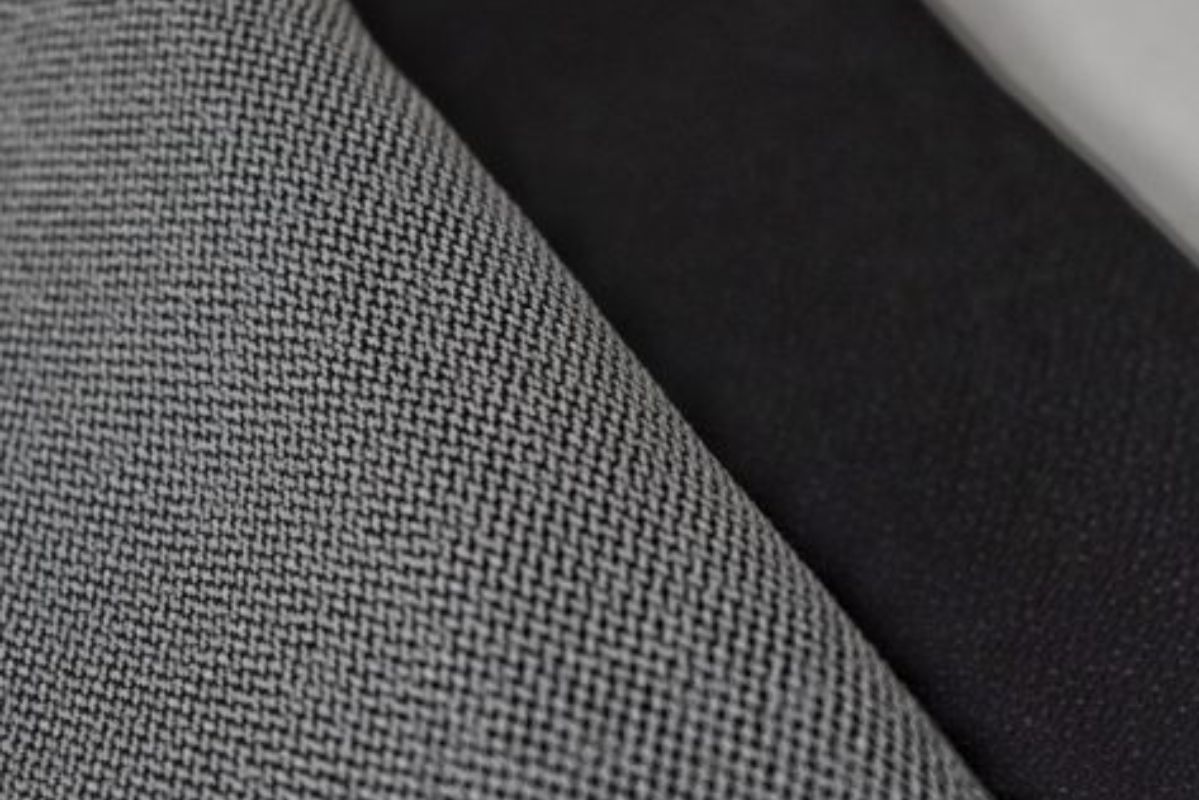
Woven interlining is a supporting fabric made by interlacing two sets of yarns: warp yarns running lengthwise and weft yarns running across the width. This construction gives the material a defined fabric structure.
It is placed between the outer fabric and the garment’s inner layers to provide support, improve shape retention and help maintain the intended construction of specific garment sections.
Depending on its construction and attachment method, woven interlining is available in fusible and sew-in varieties.
You will commonly find woven interlining used in:
- Suit and blazer front panels
- Sherwani construction
- Jacket collars and lapels
- Waistbands
- Formal garment facings
- Structured jacket components
The choice depends on how much support the garment needs, the properties of the outer fabric and the preferred manufacturing method.
What Is Fusible Woven Interlining?
Fusible woven interlining is a woven base fabric coated with a heat-activated adhesive. It is attached to the reverse side of the garment’s outer fabric using controlled heat, pressure and time.
During the fusing process, the adhesive softens and bonds with the outer fabric. Once the material cools, both layers remain attached, forming a combined fabric structure.
How Is Fusible Woven Interlining Applied?
The application process generally involves four steps:
- Cutting: Cut the interlining according to the shape and dimensions of the garment panel.
- Positioning: Place the adhesive-coated side against the reverse side of the outer fabric.
- Fusing: Apply the required heat, pressure and time using a suitable fusing press.
- Cooling: Allow the fused material to cool before handling and checking the bond.
The fusing parameters depend on the adhesive, interlining construction and outer fabric. Incorrect settings can affect bonding quality or the appearance of the garment.
For example, Double Ghoda’s PA double-dot woven fusible interlining has the following specified application parameters:
- Temperature: 125°C–145°C
- Fusing time: 18–25 seconds
- Pressure: 1.5–2.5 kg/cm²
These specifications apply to the product range and should not be treated as universal settings for every fusible interlining.
What Is Sew-In Woven Interlining?
Sew-in woven interlining is a supporting fabric that is attached to the garment through stitching rather than heat-activated adhesive.
It does not rely on an adhesive coating to bond with the outer fabric. Instead, the interlining is positioned between the garment layers and secured through sewing, basting or other suitable garment construction techniques.
This method allows the interlining to be incorporated into the garment without directly bonding its entire surface to the outer fabric.
Sew-in interlining may be preferred when:
- The outer fabric is sensitive to heat.
- Adhesive bonding is unsuitable for the fabric construction.
- The garment requires a particular natural drape or movement.
- The tailoring process calls for traditional sewn-in construction.
- The garment design requires a separately secured supporting layer.
The final result depends on the fabric selection, stitching method and garment construction.
What Is the Difference Between Fusible and Sew-In Woven Interlining?
The main difference is how the interlining is attached to the outer fabric. However, the choice also affects production requirements, fabric compatibility and the construction of the finished garment.
Here is a comparison to help you understand the differences:
| Comparison factor | Fusible woven interlining | Sew-in woven interlining |
| Attachment method | Heat and pressure | Stitching |
| Adhesive | Contains heat-activated adhesive | Does not rely on fusible adhesive |
| Application equipment | Fusing press or suitable fusing equipment | Sewing equipment |
| Production process | Fusing followed by cooling | Positioning and stitching |
| Fabric compatibility | Requires compatibility with heat and adhesive | Suitable where fusible bonding is not preferred |
| Bonding | Adhesive-based attachment | Mechanical attachment through stitches |
| Construction | Forms a bonded fabric combination | Remains secured through garment stitching |
| Application considerations | Requires correct fusing settings | Requires suitable stitching and positioning |
Both options are designed to provide additional support to garment components. Neither is automatically better for every application.Your choice should depend on the outer fabric, garment design, required structure and production process.
When Should You Use Fusible or Sew-In Woven Interlining?
The right option depends on the requirements of your garment. Consider the fabric characteristics and the way you want the finished garment to look and feel.
When Should You Choose Fusible Woven Interlining?
Fusible woven interlining is a practical option when the outer fabric can withstand the required fusing conditions and the production process calls for adhesive bonding.
It is commonly considered for:
- Structured suits and blazers
- Formal jacket front panels
- Sherwani construction
- Garment sections requiring consistent support
- Production processes that use fusing equipment
Before selecting it, check whether the outer fabric is compatible with the adhesive and fusing temperature.
When Should You Choose Sew-In Woven Interlining?
Sew-in woven interlining is worth considering when adhesive bonding is unsuitable or when the garment construction requires a stitched supporting layer.
It can be appropriate for:
- Heat-sensitive outer fabrics
- Traditional tailoring methods
- Garments requiring specific drape characteristics
- Designs where the interlining needs to be secured through stitching
The stitching method should hold the interlining in position without creating unwanted puckering or distortion.
When Should You Choose Sew-In Woven Interlining?
Sew-in woven interlining is worth considering when adhesive bonding is unsuitable or when the garment construction requires a stitched supporting layer.
It can be appropriate for:
- Heat-sensitive outer fabrics
- Traditional tailoring methods
- Garments requiring specific drape characteristics
- Designs where the interlining needs to be secured through stitching
The stitching method should hold the interlining in position without creating unwanted puckering or distortion.
Frequently Asked Questions
What is the main difference between fusible and sew-in woven interlining?
The main difference is the attachment method. Fusible woven interlining uses heat-activated adhesive to bond with the outer fabric, while sew-in woven interlining is secured through stitching.
Is woven interlining always fusible?
No. Woven describes the construction of the base fabric, not its attachment method. Woven interlining can be available in both fusible and sew-in varieties.
Does fusible woven interlining require stitching?
It does not require stitching to create the primary bond between the interlining and outer fabric. However, the garment itself still requires normal stitching and construction.
Can you use sew-in interlining for suits and blazers?
Yes. Sew-in interlining can be used in suits and blazers, particularly where traditional tailoring methods or specific fabric characteristics make stitched construction suitable.
Which is better for garment manufacturing: fusible or sew-in interlining?
Neither is universally better. Fusible interlining can support production processes that use heat-activated bonding, while sew-in interlining is useful when the garment requires mechanical attachment. Your choice should depend on the fabric, design and production requirements.
Explore Woven Fusible Interlining with Double Ghoda
Choosing the right interlining is an important part of garment construction. You need to consider the base fabric, GSM, adhesive coating and intended application before selecting a suitable grade.
At Double Ghoda, we supply woven fusible interlining with PA double-dot coating for garment manufacturers and wholesale buyers. Our range covers 30–150 GSM, with 11 grades, a 150 cm width and 50-metre rolls.
Whether you are sourcing interlining for suits, blazers, sherwanis or other structured garments, we can help you explore the available grades according to your production requirements.
Explore our woven fusible interlining range to learn more about our available options and wholesale supply.
Link of related Articles
- Lightweight Interlining vs. Heavyweight Interlining
- A Beginner’s Guide to Interlining
- Choosing the Right Interlining