Check the roll label and specification sheet for product identification, GSM, width, roll length, composition and coating, then compare each detail against your purchase order and your supplier’s specification before placing a bulk order. When you buy non woven interlining fabric, this simple check confirms that the material meets your production requirements before you commit to volume. Not every roll label carries the same information, so ask for a specification sheet whenever a detail is missing.
This guide shows what to look for, how to verify it and how to match it to your garments. General industry guidance is kept separate from our own range details in Section 6.
What Information Should a Non-Woven Interlining Roll Label Include?
A useful roll label or accompanying specification sheet identifies the product and states its key measurements and materials. Labelling varies by supplier, so treat the list below as a checklist, not an assumption.
| Detail | Why it matters |
| Product name or code | Links the roll to your purchase order |
| GSM | Shows the weight per square metre |
| Width | Affects cutting layout and fabric usage |
| Roll length | Affects quantity planning and costing |
| Composition | Indicates the fibre content of the base |
| Coating information | Indicates the type of adhesive on the surface |
| Colour | Confirms you received the right shade |
| Batch or lot reference | Helps trace the roll if a question arises |
If any of these details are missing, ask your supplier for a specification sheet before you accept the order. Do not fill the gaps with assumptions.
How to Check GSM, Width and Roll Length Specifications
Compare what is printed on the roll with your purchase order and the supplier’s specification, then confirm key values with your own measurements. Follow these steps:
- Match the label to your order. Check product code, GSM, width, length and colour line by line.
- Match the label to the specification sheet. Any difference between the two needs an answer from your supplier.
- Check GSM with a cut sample. Cut a piece of known area, weigh it on an accurate scale and convert the result to grams per square metre. For example, a 10 cm by 10 cm sample covers 0.01 square metres, so a weight of 0.6 g equals 60 GSM.
- Check width flat and relaxed. Lay a cut piece flat without stretching and measure across it in more than one place.
- Check roll length. Confirm the metre count on sample rolls using your normal measuring method.
Acceptable variation differs by supplier and product. We do not suggest a universal tolerance, so ask your supplier what variation applies and agree it in writing before you order.
Understanding Coating Type, Fabric Composition and Intended Use
Composition, coating and intended use together decide whether a material suits your garment. A non woven fusible interlining is a bonded-fibre base with a heat-activated adhesive on one side, so the label or specification sheet should describe both.
- Composition: The fibre content of the base influences hand-feel, shrinkage behaviour and care compatibility.
- Coating type: The adhesive affects bond behaviour, heat compatibility and resistance to washing or dry cleaning. Fusible interlining coating is not the same across all products, so confirm it rather than assuming.
- Intended use: A material designed for small parts is not automatically right for the whole garment.
In our range, the non-woven base is bonded polyester fibres, 100% polyester (pure and blended), with a PES adhesive coating. Our non-woven grades suit smaller parts such as collars, cuffs, plackets and pockets. For the full-front body of suits and sherwanis, we recommend woven grades.
How to Match Roll Specifications to Garment Requirements
Start with the garment part, the area that needs reinforcing, the outer fabric and the support you need. Then choose a roll that fits.
- Garment part and reinforced area: Interlining for collars and cuffs needs to hold a crisp shape. Plackets need stable buttonhole areas. Pockets and small parts need light, controlled support.
- Outer-fabric characteristics: A light, delicate fabric usually needs lighter, softer support. A dense or textured fabric may need a different base or coating.
- Required support: Decide how firm or soft the finished part should feel.
- Care method: Your garments may be washed or dry-cleaned, and your interlining should suit that.
Always confirm compatibility with a sample. Fuse the material on your actual outer fabric, using your normal process and your supplier’s guidance. Check bond, hand-feel and appearance, and test it through the care method your garment will face. Approve the sample before bulk production.
Common Mistakes to Avoid When Checking Interlining Labels
Most label problems come from assumptions made before the order, so these checks save you time.
- Relying on product names alone: Trade names vary. Even the term “non-fusible interlining” means something different from non-woven, since non-fusible material has no adhesive at all.
- Overlooking specification differences: Two rolls with the same GSM can differ in width, coating or composition.
- Ignoring purchase-order details: If the delivered roll does not match your order, find out before you cut.
- Ordering bulk quantities before confirming suitability: Test first, then order.
- Not recording the approved specification: Keep the approved label details and sample on file, so you can compare when you reorder.
Sourcing Non-Woven Interlining from Double Ghoda
Double Ghoda, a trade name of B.C. Impex, is a wholesale supplier and stockist. We are not a manufacturer.
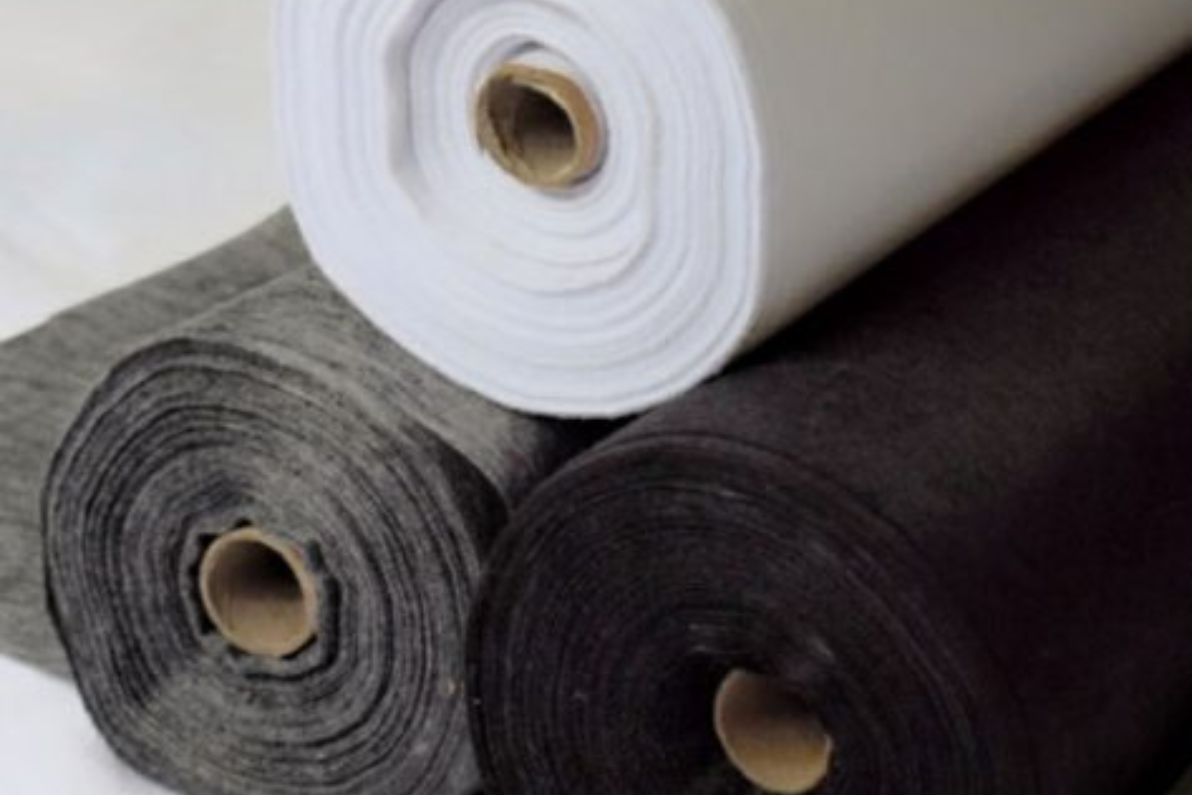
Our non woven fusible interlining range lists the product information you need to review before ordering. We supply non woven interlining in white and black, in 100 cm wide, 90 metre rolls. Our minimum order is 1,000 metres, and we supply wholesale buyers only.
Before you order, confirm these points:
- The garment part you are making
- The grade and GSM you need
- The width, roll length and colour
- The quantity
Ask us for a sample and test it on your own fabric. If you are sourcing wholesale interlining fabric, this groundwork helps you avoid surprises at the cutting table.
FAQs
What specifications should buyers check on a non-woven interlining roll?
Check the product name or code, GSM, width, roll length, composition and coating, plus colour and batch reference where provided. Compare each one with your purchase order and the supplier’s specification sheet.
Why is GSM important when selecting non-woven interlining?
GSM shows weight per square metre, which is a guide to how light or heavy the material is. That influences stiffness and drape. It is one factor among several, so confirm the result with a sample on your own fabric.
Where can buyers explore non-woven fusible interlining from Double Ghoda?
You can explore our non-woven range, including roll width, roll length and colour options, on our official Double Ghoda page. Share your garment part and quantity, and we will help you shortlist grades to sample.
Link of related Articles
- Lightweight Interlining vs. Heavyweight Interlining
- A Beginner’s Guide to Interlining
- Choosing the Right Interlining