Choose interlining by what each part of the garment needs to do: hold a shape, support a structure or stay stable. For formalwear, that usually means a woven fusible grade for the main body of suits, blazers, formal jackets and sherwanis, and a lighter non-woven grade for collars, cuffs and plackets.
Getting the choice right helps garments retain their shape, drape well and look finished. The wrong choice can lead to a limp chest, a stiff front or ripples along the edges.
Whether you manufacture in Delhi, Surat or Ludhiana, the right interlining fabric depends on your outer fabric, design and finishing requirements. This guide covers the main interlining types, how to select them for different garments and what to check before placing a bulk order.
Why choosing the right interlining matters for formalwear
Interlining is the hidden layer between the outer fabric and the lining. Nobody sees it, yet it decides how a garment holds its form, how it sits on the body and how its finish lasts through wear and cleaning.
In formalwear, that layer does three jobs:
- Structure: It supports the chest, front, lapels and collar.
- Shape: It helps the garment keep its silhouette instead of sagging over time.
- Finish: It keeps surfaces smooth, so you get clean lines instead of ripples or bubbles.
Good interlining fabric for suits works with the cloth, not against it. Too little support can leave a jacket soft and shapeless. Too much can make it stiff or bulky.
Because the layer is hidden, a poor match often shows only after the garment is made. That is why the decision is worth getting right at the sourcing stage.
Types of Interlining Fabric for Formalwear
Interlinings are commonly classified by how they are made and how they are applied: woven, non-woven or knitted, and fusible or non-fusible (NZQA unit standard 2848). For formalwear, two types matter most: woven and non-woven fusible interlining. Both are base fabrics with a heat-activated adhesive on one side, and both bond to the outer fabric under heat and pressure.
| Feature | Woven | Non-woven |
| Base construction | Yarns woven in both directions | Fibres bonded into a web |
| Typical role | Main body support | Small parts and lighter support |
| General handling | Generally firmer, holds shape well | Generally lighter and easier to cut |
| In our range | 100% polyester base with PA coating | Bonded polyester fibres with PES coating |
Woven fusible interlining
Woven interlining is generally chosen where a garment needs lasting structure. It is the base for the front body of suits, blazers, formal jackets and sherwanis. Our woven fusible interlining page lists the grades.
Non-woven fusible interlining
Non-woven interlining is generally chosen where lighter, more economical support is enough. It suits collars, cuffs, plackets and pockets. See our non-woven fusible interlining range.
Using both in one garment
Many factories use both in a single garment: woven for the body and non-woven for the details. The practical rule for fusible interlining for garments is simple. Match each grade to the area it supports, rather than using one grade everywhere.
For a wider overview of fusible types, read the different types of fusible interlining.
How to Choose Interlining for Different Garments
Start with the design and mark the areas that need support. Then pick a grade for each area.
Suits and blazers
The front body, chest, lapels and collar carry the structure. Interlining for suit manufacturers usually starts with a woven base for the front, with lighter grades for small parts such as pockets.
Formal jackets
Front panels and collars need support, but the overall feel is often softer than a tailored suit. Choose a weight that holds the shape without stiffness.
Sherwanis
Sherwanis often need firm, lasting structure across the full front, especially under heavy embroidery or brocade. Many sherwani makers ask for 111 quality, a 140 GSM woven grade known by that name in the trade.
Collars, cuffs, plackets and pockets
Small parts and details usually call for lighter, more flexible support. Our note on collar interlining covers this in detail.
No single grade suits every garment, so confirm your choice on your own fabric before you commit to bulk production.
Factors to Consider When Selecting Interlining
Five factors drive most selection decisions.
GSM
GSM is weight per square metre, a useful first filter. It does not alone decide how stiff or soft a finished part feels, because base construction and coating matter too.
Outer-fabric compatibility
The weight, texture, weave and heat tolerance of your outer fabric all affect how the interlining bonds and looks. A heavy brocade and a light suiting rarely need the same grade. For fine cloth, see fusing interlining on delicate fabrics.
Bonding requirements
The coating should suit your fabric and your care method, whether garments are dry-cleaned or washed.
Garment use
Think about how the garment is worn, cleaned and stored.
Sample testing
Fuse samples on your actual outer fabric using your normal process and your supplier’s guidance. Check bond, hand-feel and appearance, then test them through the care method your garment will face. Approve one sample as your reference and keep it on file for reorders.
Finding Fusible Interlining Suppliers in Delhi
Whether a supplier is in Delhi or elsewhere, the questions you ask stay the same. When you compare fusible interlining suppliers, work through these points:
- Product specifications: Ask for GSM, width, roll length, composition and coating details in writing.
- Consistency: Ask how weight, hand-feel and coating are kept steady from one delivery to the next.
- Order quantities: Confirm the minimum order and how quantities are supplied.
- Suitability for production: Test a sample on your own fabric before you order in bulk.
- Business type: Confirm whether you are dealing with a manufacturer, a trader or a stockist.
That last point matters more than it seems. A search for “interlining fabric manufacturer India” brings up manufacturers, traders and stockists side by side. Neither route is automatically better. What counts is that the specifications match your production needs and that you can confirm them in writing.
Sourcing Interlining Fabric from Double Ghoda
Double Ghoda, a trade name of B.C. Impex, is a wholesale supplier and stockist of interlining, lining, buttons and garment accessories. We are not a manufacturer, and we sell wholesale only, with a minimum order of 1,000 metres. We supply buyers across India, including Delhi NCR.
Most formalwear factories need two things from one place: a woven grade for the body and a non-woven grade for the details. That is how we have built our fusible interlining range.
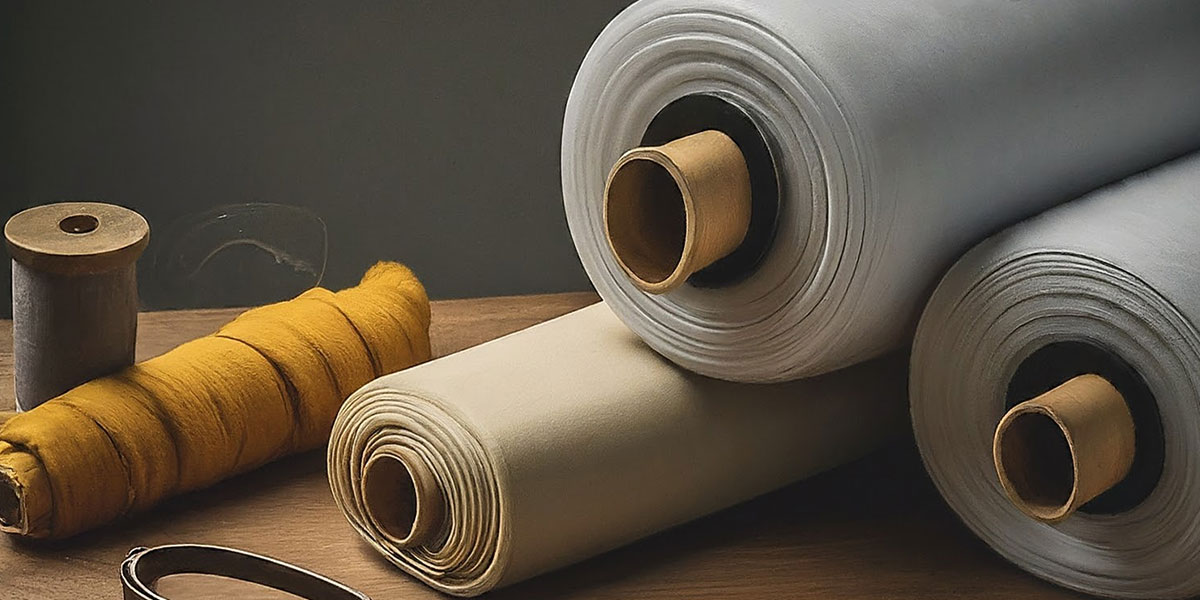
- Woven grades: 100% polyester with PA double-dot coating, from 30 GSM to 150 GSM across 11 grades, including 111 quality. Supplied in 50 metre rolls.
- Non-woven grades: Bonded polyester fibre with PES coating, 30 GSM to 80 GSM, in white and black. Supplied in 90 metre rolls.
If your focus is suits, blazers and sherwanis, start with the woven fusible grades. If you are sorting out collars and small parts, begin with the non-woven grades.
FAQs
Which type of interlining is suitable for formalwear?
Woven fusible interlining is generally used for the main body of suits, blazers, jackets and sherwanis. Non-woven grades suit smaller parts such as collars, cuffs and plackets. The right choice depends on your outer fabric and garment design, so test samples first.
How do manufacturers choose interlining for suits and blazers?
They match the base type, GSM and coating to the weight of the outer fabric, the structure they want and the care method. Then they fuse samples on the actual fabric, compare the results and approve one before bulk production.
What should buyers check before ordering fusible interlining in bulk?
Confirm GSM, width, roll length, composition and coating in writing. Ask about batch consistency and minimum order quantity. Test a sample on your own fabric and match the specification to your purchase order before you commit.
Can woven and non-woven interlining be used in the same garment?
Yes. Many factories use woven for the body and non-woven for the collar, cuffs and plackets. Match each grade to the area it supports.
Where can buyers source interlining fabric from Double Ghoda?
You can source woven and non-woven grades from our official fusible interlining page. Share your garment type, outer fabric and quantity, and we will help you shortlist grades to sample. We supply wholesale only.
Link of related Articles
- Lightweight Interlining vs. Heavyweight Interlining
- A Beginner’s Guide to Interlining
- Choosing the Right Interlining