
Ready stock is generally the better fit when you need standard specifications, faster procurement or recurring production with no custom requirements. Made-to-order sourcing becomes relevant when you need a specification that no standard product offers. For non woven interlining, the right choice depends on your production requirements, specifications, quantity, timing and consistency needs. Neither route is better for every order.
This guide shows how the two routes differ, when each one fits and what to confirm before you order.
What Is the Difference Between Ready Stock and Made-to-Order Interlining?
A fusing test is a trial run in which you fuse the selected interlining to the actual, or a representative, outer fabric Ready stock is material a supplier already holds in standard specifications. Made-to-order material is arranged to your specification after you commit to the order. Both routes are common in B2B textile sourcing.
Six factors shape which route fits:
- Standard specifications: Does an existing product already match what you need?
- Custom requirements: Do you need a GSM, width, colour or coating that no standard product offers?
- Order planning: How far ahead can you plan and commit?
- Production timelines: When does the material need to reach your line?
- Quantity: How much do you need now, and how much over the year?
- Consistency: How closely must every lot match the last one?
Procurement needs sit behind all of these. A line that runs the same part every week has different needs from a one-off programme.
General industry guidance: lead times, minimum quantities and pricing differ by supplier and product. Confirm them case by case instead of assuming that one route is always faster or cheaper.
When Does Ready Stock Make More Sense for Non-Woven Interlining?
Ready stock makes more sense when the specification you need already exists as a standard product. It simplifies procurement because you buy an existing item instead of defining a new one.
Ready stock tends to fit these situations:
- Standard GSM requirements: Your parts use common weights.
- Standard width: Your marker and cutting plan work with the usual width.
- Standard colours: White and black cover your needs.
- Regular production: The same garment runs repeatedly.
- Repeat orders: You reorder the same specification.
- Immediate material requirements: The material is needed soon.
- Production continuity: You want fewer gaps between lots.
- Stock planning: You can plan purchases around available products.
If your required non woven fusible interlining matches a standard GSM, width, colour and roll length, ready stock keeps the order simple. You compare what exists against what you need and move to sample approval.
Ready stock does not guarantee availability. Confirm current stock before you plan production around it.uction. It gives you early, practical evidence about compatibility, and that’s what you use to decide.
When Is Made-to-Order Non-Woven Interlining Worth Considering?
Made-to-order sourcing is worth considering when no standard product meets your requirement and the gap matters to your garment.
These situations may justify it:
- Specific GSM requirements: Your design needs a weight between or beyond standard grades.
- Custom width: Your cutting plan depends on a different width.
- Specific colour: Your garment needs a colour outside the standard range.
- Different construction requirements: The base fabric needs to behave differently.
- Special coating requirements: Your fusing process needs a particular adhesive setup.
- Large planned production: A big, scheduled run can justify extra planning.
- Custom material specifications: Your brand or buyer sets a specification of its own.
Whether made-to-order is possible depends on the product, the supplier’s capabilities, your order quantity and your production requirements. Do not assume it. Ask the supplier early what quantities, timing and sample approval steps apply.
Buyer recommendation: Define the gap first. Identify exactly which specification no standard product meets. Then check whether a small design change lets a standard product work. If it does, ready stock may be the simpler route..
Ready Stock vs Made-to-Order: What Should Manufacturers Compare?
Compare specifications, customisation, quantity, timing, planning, repeat orders, consistency, stock needs, cost and flexibility. Neither approach is universally better. Your actual production requirements decide.
| Factor | Ready stock | Made-to-order |
| Specifications | Standard, existing products | Defined to your requirement |
| Customisation | Limited to what exists | Possible where the supplier can support it |
| Quantity | Often flexible within available stock | Depends on supplier terms and planning |
| Procurement timing | May be shorter, since material exists | Often needs more planning time |
| Production planning | Plan around available products | Plan around agreed timelines |
| Repeat orders | Simple when the same product stays available | Needs the specification recorded and agreed |
| Batch consistency | Confirm lot-to-lot matching | Confirm against an approved sample |
| Stock requirements | Depends on what the supplier holds | Depends on the agreed order |
| Cost considerations | Compare total cost, not just rate | Compare total cost, including any set-up |
| Sourcing flexibility | Quick to switch between standard items | Less flexible once the order is placed |
Treat the table as general industry guidance, because terms vary by supplier. For non woven interlining fabric, a standard product often meets collar, cuff and placket needs, while a distinctive requirement may call for a made-to-order conversation. Judge each order on its own details.ess or the materials before the problem multiplies.
What Should Buyers Confirm Before Ordering Non-Woven Interlining?
Confirm the actual specification before any bulk order, whether the material is ready stock or made to order. Descriptions can match on GSM and still differ in width, coating or colour.
Follow this decision path:
- Production requirements: Define the garment parts and process.
- Standard vs custom specifications: Check whether a standard product meets them.
- Quantity: Estimate this order and your likely repeats.
- Timing: Match the material’s arrival to your schedule.
- Stock requirements: Confirm what is available or what must be arranged.
- Sample approval: Test the sample on your fabric and press.
- Batch consistency: Check that lots match the approved sample.
- Repeat-order needs: Record the specification for future orders.
Then confirm these details in writing:
| Confirm | Why it matters |
| Required GSM | Sets the stiffness and body of the part |
| Width | Affects marker efficiency and waste |
| Colour | Must suit light and dark outer fabrics |
| Construction | Determines how the base behaves |
| Coating | Must suit your fusing conditions |
| Roll length | Affects spreading and roll changes |
| Quantity | Sets this order and sizing for repeats |
| Application | Collar, cuff, placket or another part |
| Sample approval | Proves the fit on your fabric |
| Batch consistency | Keeps lots uniform |
| Production schedule | Aligns material with your line |
| Repeat-order requirements | Keeps later orders identical |
Buyer recommendation: Approve a sample on your actual outer fabric and press. Keep it as your reference. Compare each new batch against it, and record the full specification so repeat orders match.
Non-Woven Interlining Options From Double Ghoda
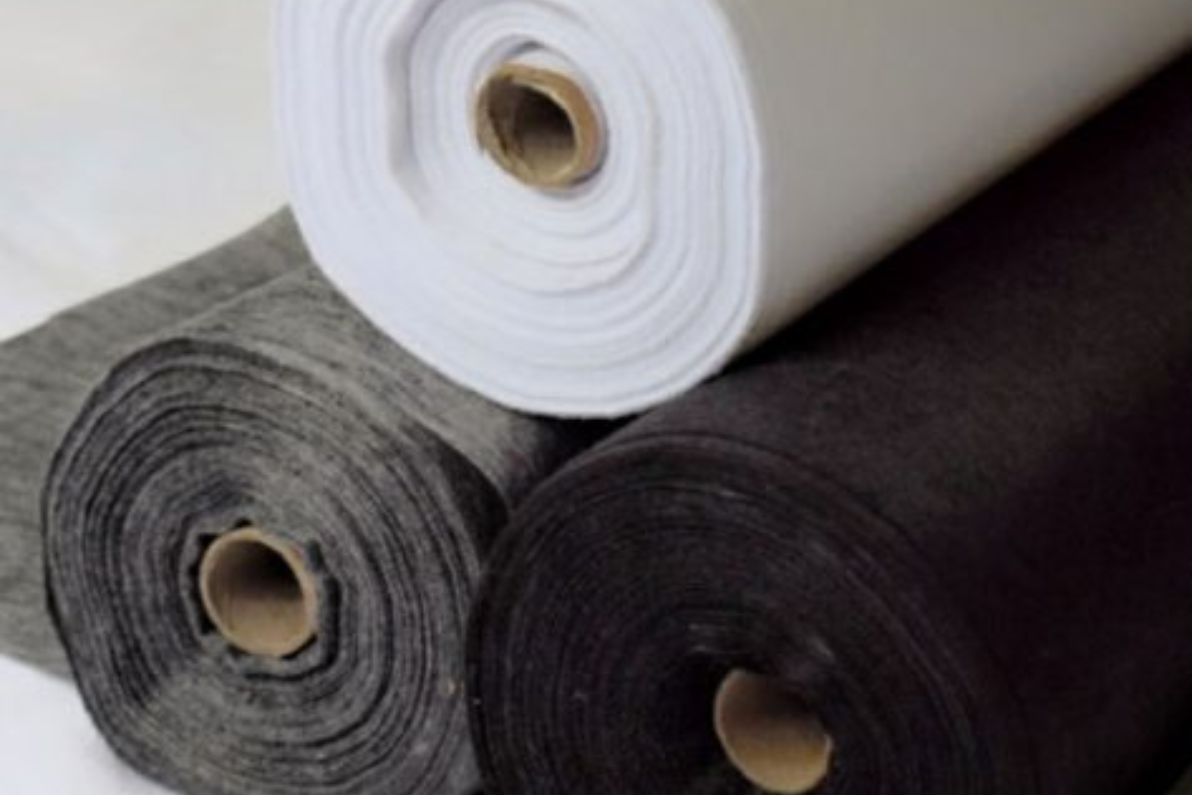
We supply non woven fusible interlining from ready stock held in our Bhiwandi, Maharashtra warehouse.
| Detail | Specification |
| Structure | Bonded polyester fibres |
| Material | 100% polyester (pure and blended) |
| Coating | PES single-dot |
| GSM range | 30 to 80 |
| Width | 100 cm (40 inches) |
| Colours | White, black |
| Roll length | 90 metres per roll |
| Fusing | Up to 120°C on a flatbed pressing machine |
| Care | Machine wash at 40°C, dry-clean safe |
| Certification | OEKO-TEX® Standard 100 |
We check batches through quality control inspection before stock is accepted. We supply to wholesale buyers only, with a minimum order of 1,000 metres.
How this connects to ready stock. If your requirement matches these specifications for GSM, width, colour and roll length, you can source it as a standard product from our stock. Confirm current availability with us before you plan production.
For reference, our guide for common applications is:
| Application | GSM guide |
| Shirt collars and cuffs | 40–60 |
| Plackets | 40–55 |
| Jacket small parts | 50–70 |
| Women’s formal wear | 30–55 |
Treat these as reference ranges, not universal rules. Test them on your own outer fabric. For the full-front body of suits and sherwanis, we suggest woven fusible interlining instead.
If your requirement falls outside these specifications, talk to us before you plan your order. We do not describe a made-to-order service for this range. You can view the full range details for more information.
Frequently Asked Questions
What is the difference between ready-stock and made-to-order interlining?
Ready stock is material a supplier already holds in standard specifications. Made-to-order material is arranged to your specification after you commit. Ready stock suits standard needs, while made-to-order suits requirements no standard product meets.
When should garment manufacturers choose ready-stock interlining?
Choose ready stock when your GSM, width, colour and roll length match a standard product, and you need regular, repeat or immediate supply. Confirm current stock and approve a sample first.
What specifications should buyers confirm before ordering interlining?
Confirm GSM, width, colour, construction, coating, roll length, quantity and application. Also confirm sample approval, batch consistency, your production schedule and repeat-order requirements before any bulk order
What GSM and roll specifications does Double Ghoda offer, and is it supplied from ready stock?
We offer 30 to 80 GSM in 90-metre rolls, 100 cm wide, in white and black. We supply it from ready stock held in our Bhiwandi, Maharashtra warehouse. Confirm current availability with us.
Link of related Articles
- Lightweight Interlining vs. Heavyweight Interlining
- A Beginner’s Guide to Interlining
- Choosing the Right Interlining