
A suitable polyester lining fabric for trousers is one that fits the garment’s construction, outer fabric and intended use. Lining weight, weave and the finish you want matter just as much. Polyester can be a good option where its characteristics match your trouser design and production process, but it is not automatically the right choice for every pair.
This guide shows you what to compare, how to match lining to construction and what to check before a bulk order.
What Role Does Lining Fabric Play in Trousers?
Lining adds a smooth inner layer that supports comfort, movement and finish. It reduces friction against the skin or underlayers, helps the outer fabric hang cleanly and covers inner construction details. Many trousers are unlined and some are lined only in part, so the decision starts with your design.
Weigh these factors when selecting trouser lining:
- Garment construction: Full, half and front-panel lining each place different demands on the fabric.
- Outer fabric: Weight, weave, stretch and texture decide how the lining should behave.
- Comfort: A smooth surface can make trousers easier to wear.
- Movement: The lining should move with the wearer without pulling or bunching.
- Finish: Decide how the inner side should look and feel.
- Lining weight: A lighter lining keeps trousers slim. A heavier one adds body.
- Application: Formal, uniform and everyday trousers carry different expectations.
Avoid universal rules. A lining that suits one trouser design can be wrong for another..
What Makes Polyester Lining Suitable for Trousers?
Polyester can suit trousers when its weight, construction, surface and durability line up with the design. It is widely used as a lining material, but you should confirm it against your own requirements.
Check these characteristics:
- Fabric weight: Lighter grades limit bulk at the waist and hips. Heavier grades add body and cover.
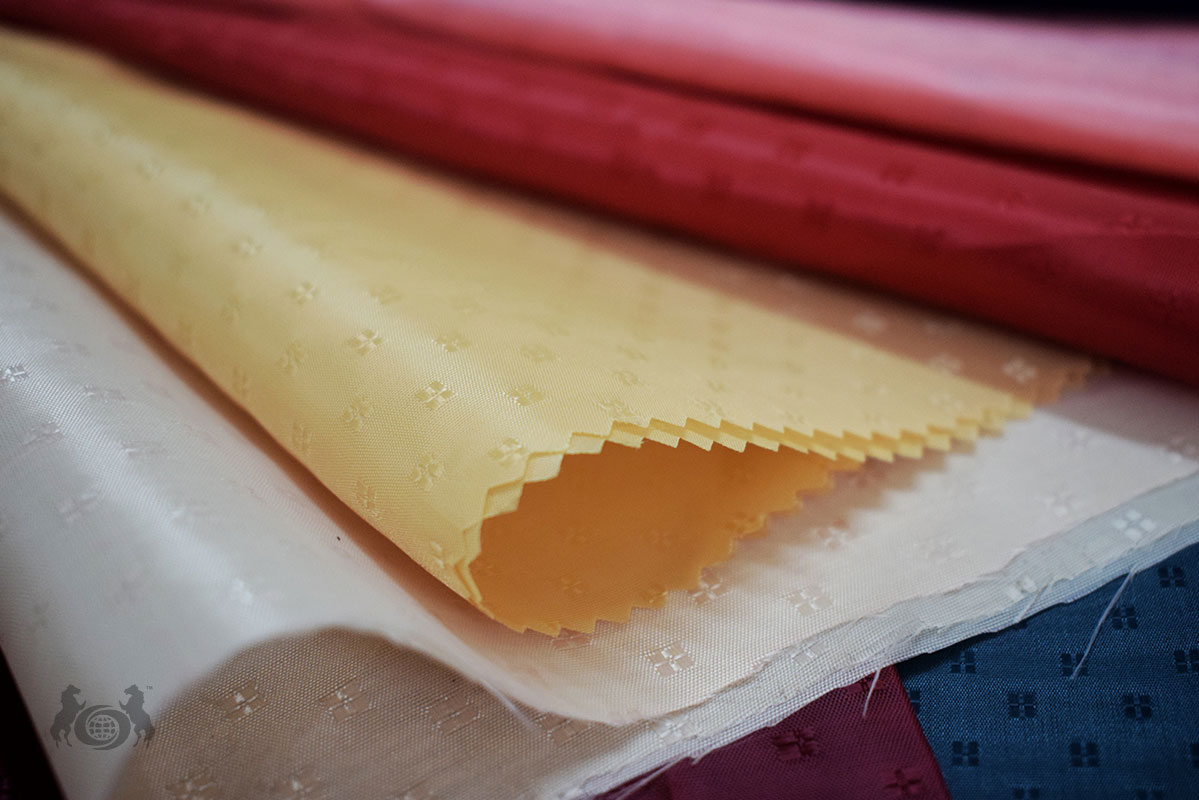
- Construction: Taffeta, satin, dobby and jacquard weaves give different surfaces and levels of body.
- Surface and hand feel: Smooth surfaces tend to slide easily over skin and underlayers. Textured ones feel different against the body.
- Durability requirements: Trousers face friction at the seat and thighs. Uniform trousers worn and laundered often deserve a closer look.
- Outer fabric compatibility: The lining should suit the outer fabric’s weight, weave and care routine.
- Garment application: Formal, tailored and uniform trousers each ask for something different.
- Desired finish: Glossy, matte or textured, depending on the look you want inside.
General industry guidance: polyester is often chosen for lining because it is generally light, smooth and easy to care for. Those traits vary by weave and finish, so verify each grade you shortlist. Polyester is not automatically best. Other lining materials can suit some designs better.
How Should You Match Lining Fabric With Trouser Construction?
Match the lining to the trouser’s design, outer fabric and construction, not to a fixed product rule. The same lining can work in one trouser and fail in another.
Consider these cases:
- Formal trousers: Look for a smooth, quiet lining that keeps the drape clean and avoids ridges at the seams.
- Uniform trousers: Durability and care compatibility often carry more weight, since the garment is worn and washed frequently.
- Tailored trousers: Lining weight and surface should support the cut without adding bulk where the garment needs to sit flat.
- Lightweight trousers: A lighter lining helps protect the cloth’s natural fall, while a heavier one may add weight the cloth does not need.
- Heavier outer fabrics: A lining with more body may balance the cloth, though weight alone does not guarantee a good match.
Garment components matter too. A front-panel lining to the knee, a full-length lining and a waistband area each need different handling. Think about seam allowances, how the lining attaches and whether it should hang free or be anchored at the hem.
The suitable lining varies with outer fabric, garment design, construction and intended use. Confirm every choice with a sample.
Which Polyester Lining Factors Should Manufacturers Compare?
Compare weight, weave, width, roll length, surface, outer fabric compatibility, application and production needs together. GSM alone does not tell you how a lining feels, sews or performs.
| Factor | What to compare | Why it matters |
| GSM or weight | Light, medium or heavier grades | Affects bulk, body and drape |
| Weave or construction | Taffeta, satin, dobby, jacquard | Shapes surface, body and appearance |
| Fabric width | Usable width against your marker | Affects cutting efficiency and waste |
| Roll length | Metres per roll | Affects spreading and roll changes |
| Surface and hand feel | Smooth, glossy or textured | Affects comfort and inner finish |
| Outer fabric compatibility | Weight, weave and care routine | Keeps the garment balanced and stable |
| Garment application | Formal, tailored or uniform | Sets durability and finish needs |
| Production requirements | Sewing, pressing and finishing steps | Confirms the lining runs well on your line |
Two linings at the same GSM can feel and sew very differently because the weave differs. Width and roll length shape your cutting plan and fabric usage. Evaluate several specifications together, then confirm the shortlist on a sample.Compare weight, weave, width, roll length, surface, outer fabric compatibility, application and production needs together. GSM alone does not tell you how a lining feels, sews or performs.
| Factor | What to compare | Why it matters |
| GSM or weight | Light, medium or heavier grades | Affects bulk, body and drape |
| Weave or construction | Taffeta, satin, dobby, jacquard | Shapes surface, body and appearance |
| Fabric width | Usable width against your marker | Affects cutting efficiency and waste |
| Roll length | Metres per roll | Affects spreading and roll changes |
| Surface and hand feel | Smooth, glossy or textured | Affects comfort and inner finish |
| Outer fabric compatibility | Weight, weave and care routine | Keeps the garment balanced and stable |
| Garment application | Formal, tailored or uniform | Sets durability and finish needs |
| Production requirements | Sewing, pressing and finishing steps | Confirms the lining runs well on your line |
Two linings at the same GSM can feel and sew very differently because the weave differs. Width and roll length shape your cutting plan and fabric usage. Evaluate several specifications together, then confirm the shortlist on a sample..
What Should Buyers Check Before Ordering Polyester Lining in Bulk?
Check how the lining performs on your actual garment and production line, not just what the spec sheet says. A bulk order should follow sample evaluation, not replace it.
Follow this decision path:
- Trouser application: Define the end use.
- Outer fabric: Note its weight, weave, stretch and care routine.
- Garment construction: Decide the lining coverage and attachment.
- Required lining characteristics: Set the feel, finish and durability you need.
- GSM or weight: Shortlist suitable weights.
- Weave or construction: Choose the surface and body.
- Width and roll requirements: Match them to your cutting plan.
- Sample evaluation: Test on the real garment.
- Bulk production: Approve only after the sample passes.
Before you place the order, also confirm:
- Batch consistency: Colour, weight and hand feel should match your approved sample across lots.
- Production requirements: The lining should sew, press and finish cleanly on your line.
- Bulk-order suitability: The material should hold up across the full run, not just one sample piece.
Buyer recommendation: Make up a sample trouser with the actual outer fabric. Check how the lining slides, hangs and sews. Look for seam pucker, wrinkling and shade differences, and run it through your pressing and care routine. Keep the approved sample as your reference for every later batch.
Polyester Lining Fabric Options From Double Ghoda
We supply polyester lining in four weaves, all 100% polyester, with 45-metre rolls.
| Weave | GSM range | Surface and character |
| Taffeta (190T) | 52–65 | Lightweight, smooth finish, non-bulky |
| Satin | 67–80 | Smooth, glossy, good drape |
| Satin dobby | 72–82 | Textured satin base with a richer hand |
| Jacquard | 80–85 | Woven surface pattern |
Our full range runs from 52 to 85 GSM. Colours include black, navy, white and off-white as our top sellers, with 50+ shades available overall. We hold colours in consistent dye lots, so reorders can come from the same batch. Our lining is dry-clean compatible and wash-friendly.
How this connects to trouser lining. Our lighter taffeta suits requirements for a non-bulky lining. Our satin grades suit requirements for a smooth, comfortable surface with good drape. Dobby and jacquard add surface interest and more body, so consider whether that fits your trouser design.
Our range is positioned for suits, blazers, sherwanis and formal jackets. We do not position any grade as universally suitable for trousers, so test your shortlist against your own outer fabric and construction. Ask us about width details for your marker planning, and request samples before you commit to bulk.
Share your trouser type, outer fabric and GSM requirement, and we will help you shortlist weaves to sample. You can view the full lining range for more detail.
FAQs
Is polyester suitable as a trouser lining?
It can be. Polyester suits trousers when its weight, weave, surface and care needs match the design and outer fabric. It is not automatically the best choice for every trouser, so confirm with a sample.
What type of lining is used for trousers?
Trousers may use full, half or front-panel lining, in materials such as polyester, viscose or cotton blends. The right type depends on the outer fabric, garment construction, intended use and desired finish.
What GSM is suitable for trouser lining?
There is no single GSM for all trousers. Lighter grades limit bulk and heavier grades add body. Choose weight alongside weave, outer fabric and construction, then confirm on a sample.
How should lining fabric be matched with trouser fabric?
Match the lining’s weight, weave and care routine to the outer fabric and the garment’s construction. Avoid pairing on weight alone. Make a sample trouser and check drape, seams and movement.
Link of related Articles
- Lightweight Interlining vs. Heavyweight Interlining
- A Beginner’s Guide to Interlining
- Choosing the Right Interlining