
There’s no single lining fabric that’s right for every wedding garment. The best choice depends on the garment you’re making, the outer fabric it’s paired with, the finish you want, and how the piece will be constructed and produced. A sherwani, a premium suit, and a lightweight blazer can each call for a different lining, even within the same wedding-season collection.
What matters more than picking “the best” lining is matching weight, weave, and finish to what the garment actually needs. Below is how lining choice affects the finished piece, how to think through it by garment type, and what to check before you commit a lining order to wedding-season production.
What Lining Fabric Works Best for Wedding Season Garments?
The short answer: it depends on the garment, and treating lining as a single, universal choice usually leads to a mismatch somewhere in the range. A structured sherwani front, a tailored suit body, and a lightweight festive jacket each put different demands on the lining, how it drapes, how much body it adds, and how it looks when the garment opens.
Rather than asking which lining is best overall, it’s more useful to ask what each style in your wedding-season line needs: how visible the interior will be, how the garment moves, and how heavy or light the outer fabric already is. That framing carries through the rest of this guide.
Why Does Lining Matter in Wedding Wear?
Lining matters in wedding wear because it directly shapes how the garment looks, moves, and feels once it’s finished, and wedding garments are worn and examined closely, often with the jacket or sherwani open.
A few specific ways lining affects the outcome:
- Interior appearance. In sherwanis and open-front jackets, the lining is visible whenever the garment is worn, it’s part of the finished look, not just a hidden layer.
- Comfort and movement. A smooth interior lets the garment slide easily over what’s worn underneath, which matters through a long wedding function.
- Structure and drape. Lining adds a small amount of body to a panel, which changes how the outer fabric hangs and holds its shape.
- Finish quality. Colour consistency and a clean interior read as quality to a wearer, mismatched shading or a rough interior undercuts an otherwise well-made garment.
Because wedding garments are occasion pieces, buyers and wearers tend to notice these details more than they would on everyday clothing, which is exactly why lining choice deserves the same attention as the outer fabric.
Are Poly Lining andHow Should You Choose Lining Based on the Garment? Polyester Lining the Same?
Choosing lining by garment type means matching the lining’s weight, drape, and finish to how that specific piece is constructed and worn.
A few starting considerations by garment category:
- Sherwanis and open-front ethnic wear. The interior is on display whenever the garment is worn open, so appearance and a premium hand-feel tend to matter more here than on a fully closed garment.
- Structured suits and blazers. These need a lining that supports the tailored shape without adding unwanted bulk, especially at the chest and shoulders.
- Lighter festive jackets and outerwear. A heavier lining can weigh the piece down or change its drape, so lower-bulk options are often more appropriate.
None of these are fixed rules, outer fabric weight, construction method, and your buyer’s expectations all factor in. The point is to work through the garment’s specific requirements rather than defaulting to one lining across your whole range.
How Do Lining Weight and Weave Affect the Final Finish?
Lining weight and weave affect the final finish by changing how the fabric drapes, how much body it adds, and how the interior looks and feels once the garment is complete.
Weight (GSM) considerations:
- Lighter linings generally drape closer to the body and add minimal bulk, which suits garments where you don’t want the lining to compete with the outer fabric’s own structure.
- Heavier linings add more body and a fuller hand-feel, which can suit garments built for a more substantial, structured presence.
Weave considerations:
- Textured or patterned weaves tend to read as a richer, more premium interior finish, which is often relevant for garments where the lining is visible.
- Smoother, plainer weaves offer a cleaner, simpler interior finish, generally at a more accessible cost tier.
Weight and weave work together, not separately, a heavier, textured lining reads differently from a lighter, smooth one, and the right combination depends on the outer fabric and the finished look you’re aiming for. Testing lining against your actual shell fabric and construction, rather than judging it in isolation, is the most reliable way to confirm the pairing works.
What Should You Check Before Buying Lining Fabric for Wedding Production?
Before you commit a lining order to wedding-season production, check that the fabric matches your garment’s requirements, not just its specification sheet.
Practical points to confirm:
- Colour consistency across the order. Wedding-season production often runs in bulk, so shade variation between rolls or deliveries can show up across a batch of finished garments.
- Weight and drape against your actual outer fabric. A lining that looks right on a swatch can behave differently once paired with your specific shell fabric and construction.
- Weave suited to how visible the interior will be. Confirm whether the garment calls for a more decorative interior or a simpler, functional one.
- Consistency across reorders. Wedding-season demand can mean multiple orders in a short window, check whether your supplier can match the same shade and hand-feel on a repeat order.
- Care compatibility. Confirm the lining suits how the finished garment will be cleaned, especially for pieces likely to go to dry cleaners rather than standard washing.
Working through this list against your actual production plan, rather than assuming one lining will suit your whole wedding-season range, is what keeps the finished garments consistent.
Polyester Lining Options From Double Ghoda
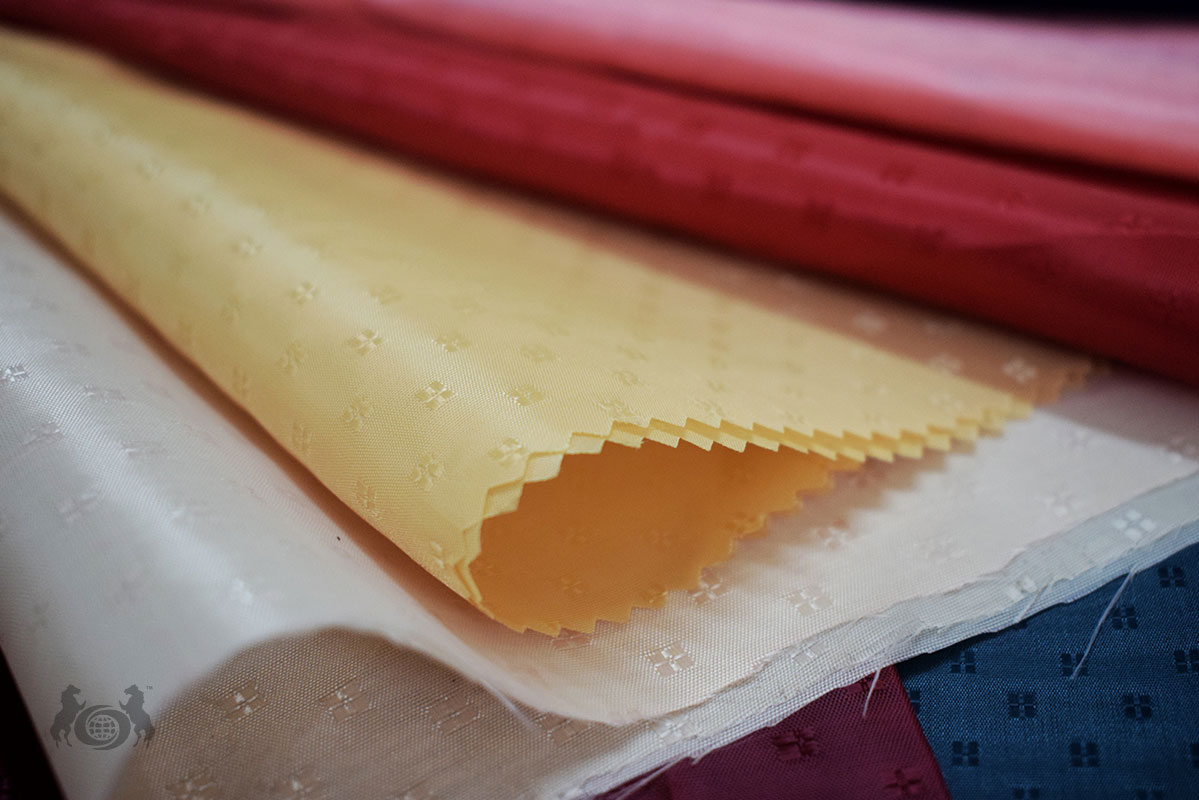
We supply polyester lining fabric across four weave types, Jacquard, Satin Dobby, Satin, and Taffeta, which gives you room to match the interior to different garments within a wedding-season range rather than sourcing one fabric for everything.
Our GSM range runs from 52 to 85 across these weaves, with lighter taffeta and satin grades suited to blazers and lighter outerwear, and heavier jacquard and satin dobby grades used for premium suits and sherwanis where a fuller interior finish is wanted. Jacquard is our most-ordered lining, with a woven pattern on the surface that reads as a premium interior choice, relevant if you’re sourcing lining for a sherwani or another garment where the interior is visible.
Colour consistency is something we hold to deliberately: our lining is kept in consistent dye lots, so a reorder from the same batch matches the shade you ordered before. For wedding-season production, where you may be placing more than one order across the season, that consistency is worth checking against your own production timeline.
Beyond weave, weight, and colour, the right lining for your garment still comes down to the factors covered above, how it’s constructed, how it will be worn, and what finish your buyer expects.
Frequently Asked Questions
How do I choose lining fabric for wedding garments?
Match the lining’s weight, weave, and finish to the specific garment, a sherwani, a suit, and a lighter jacket can each call for a different lining depending on how visible the interior is and how the piece is constructed.
Colour consistency is something we hold to deliberately: our lining is kept in consistent dye lots, so a reorder from the same batch matches the shade you ordered before. For wedding-season production, where you may be placing more than one order across the season, that consistency is worth checking against your own production timeline.
Beyond weave, weight, and colour, the right lining for your garment still comes down to the factors covered above, how it’s constructed, how it will be worn, and what finish your buyer expects.
FAQs
How do I choose lining fabric for wedding garments? Match the lining’s weight, weave, and finish to the specific garment, a sherwani, a suit, and a lighter jacket can each call for a different lining depending on how visible the interior is and how the piece is constructed.
Is jacquard or satin better for sherwani lining?
Both are used for sherwanis. Jacquard offers a more textured, premium-looking interior, which suits garments where the lining is visible when worn. Satin gives a smoother, simpler finish at a more accessible cost tier. Neither is universally better, it depends on the finish you want.
Does lining weight matter for wedding wear?
Yes. Lighter lining adds minimal bulk and drapes closer to the body, while heavier lining adds more body and a fuller hand-feel. The right weight depends on your outer fabric and how structured the garment is meant to feel.
What should I check before ordering lining for a wedding-season collection?
Check colour consistency across the order, how the lining drapes against your actual outer fabric, whether the weave suits how visible the interior will be, and whether your supplier can match the same shade on a reorder.
Can I use the same lining across different wedding garments?
You can, but it’s not usually the best approach. Different garments in a wedding-season range often have different structural and appearance needs, so matching lining to each garment type tends to give a better finished result than a single fabric across the whole line.
Why does colour consistency matter for lining in bulk wedding production?
Wedding-season orders are often produced in volume and sometimes reordered mid-season. Shade variation between rolls or batches can become visible across a run of finished garments, which is why consistent dye lots matter for this kind of production.
Link of related Articles
- Lightweight Interlining vs. Heavyweight Interlining
- A Beginner’s Guide to Interlining
- Choosing the Right Interlining