
Woven interlining and embroidery work together to give a garment structure and stability, but there’s no single “correct” sequence for combining them. Whether you fuse first or embroider first depends on your garment, your embroidery process, your fabric, and the finish you want. Both approaches are used across the trade, and each comes with its own trade-offs.
Here’s how the two processes interact, what each application sequence means for your production, and what to weigh before you decide how to combine them on your next order.
Woven Interlining and Embroidery: How They Work Together
Woven interlining and embroidery work together to give a garment structure and stability, but there’s no single “correct” sequence for combining them. Whether you fuse first or embroider first depends on your garment, your embroidery process, your fabric, and the finish you want. Both approaches are used across the trade, and each comes with its own trade-offs.
Here’s how the two processes interact, what each application sequence means for your production, and what to weigh before you decide how to combine them on your next order.
How Does Woven Interlining Work With Embroidery?
Interlining gives your fabric a stable, even base to embroider on or to hold its shape once embroidery is added. A fused panel resists distortion from needle tension in a way loose fabric on its own doesn’t, that stability is what keeps a dense embroidery design sitting flat instead of pulling or puckering the panel around it.
At the same time, embroidery adds its own weight, density, and sometimes raised texture to a panel. Once you combine the two, you’re managing two things together: how the base fabric handles stitching, and how the fused layer handles the finished, textured surface. Getting a clean result depends on how well those two processes are sequenced for your specific garment.
Why Is Interlining Used for Embroidered Garments?
Interlining is used on embroidered garments to support the fabric through the stress of stitching and to help the finished panel hold its shape afterward. Dense embroidery pulls fabric in multiple directions as the needle passes through it repeatedly, without support, that tension can show up as puckering, rippling, or a panel that sits unevenly once the hoop comes off.
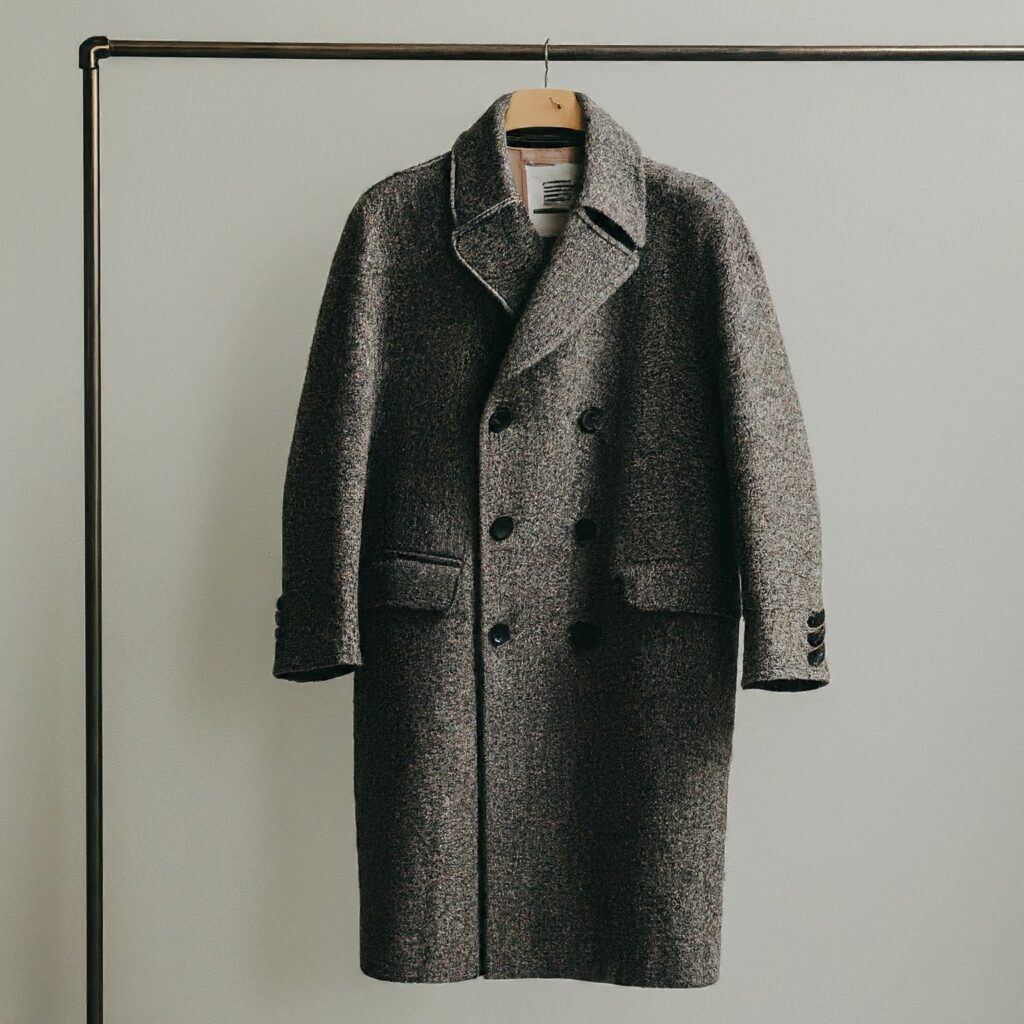
A stable base matters even more on heavier or more structured garments. On a sherwani front, a blazer chest piece, or a bandgala panel, the interlining isn’t just adding stiffness for its own sake, it’s giving the embroidery a foundation that won’t shift once the garment is worn, cleaned, and worn again. Lighter, unstructured garments generally need less of this support, which is one reason the right approach varies by garment type rather than following one fixed rule.
Should You Apply Woven Interlining Before or After Embroidery?
Both sequences are used in production, and which one suits your order depends on your garment, your embroidery design, and your equipment. There’s no universally correct order, only trade-offs worth weighing for your specific case.
Fusing before embroidery gives the embroidery machine a stiffer, more stable panel to work with. That extra stability can reduce shifting and distortion during dense or heavy stitching, especially over large areas. The trade-off is that your needle is now passing through two bonded layers instead of one, which can affect how fine or delicate a design comes through, and how the panel feels once it’s finished.
Embroidering before fusing lets the machine work on a single, more flexible layer, which can suit finer or more intricate designs. The trade-off shows up at the pressing stage: a panel with raised or dense stitching doesn’t present a flat surface to the press, so achieving even heat and pressure across the whole panel, including over and around the stitched area, takes more care to get a clean, consistent bond.
Neither sequence is right by default. The decision depends on your embroidery density and placement, the garment part involved, your press setup, and the finish your buyer expects. Testing both approaches on a sample panel, using your actual fabric and design, is the most reliable way to decide.
How Does Interlining Affect Embroidery Quality and Garment Structure?
Interlining affects embroidery quality mainly through the stability and surface it gives the fabric, and it affects garment structure through the weight, hand-feel, and shape retention of the finished panel.
A few ways this plays out in production:
- Stitch definition. A stable, well-supported panel helps embroidery sit evenly, without the small distortions that come from fabric shifting under the needle.
- Panel weight and drape. A heavier interlining grade adds more body to a panel, which suits structured garments but can change the drape on lighter ones, this is worth matching to what the finished garment needs to feel like.
- Bond evenness under texture. Once embroidery has raised thread or dense coverage, getting an even bond across the whole panel during fusing takes more attention, since the pressing surface is no longer perfectly flat.
- Shape retention over time. A well-matched interlining helps an embroidered panel hold its shape through wear and repeated cleaning, rather than letting the embroidery pull or distort the base fabric over time.
These outcomes vary with fabric weight, embroidery design, garment construction, and your production process, there’s no single combination that works the same way across every order.
How to Choose Woven Interlining for Embroidery
Choosing the right interlining for an embroidered garment comes down to matching its weight and structure to your fabric, your design, and how you plan to sequence production.
Points worth working through before you commit a batch to production:
- Garment type and required stiffness. A full-front sherwani or blazer panel generally needs more structural support than a lighter, unstructured piece.
- Embroidery density and coverage. Heavy, all-over embroidery puts more stress on the base fabric than an isolated motif, which affects how much support the interlining needs to provide.
- Application sequence. Decide, per style, whether you’re fusing before or after embroidery, since that choice affects how the interlining and the stitching interact at the press.
- Press compatibility. Confirm your equipment can deliver even heat and pressure across a panel that may no longer be perfectly flat once embroidery is added.
- Sample testing. Run your actual fabric, interlining, and embroidery design together on a test panel before committing to a full production run, this is the most reliable way to catch issues specific to your combination.
Because embroidery designs, fabrics, and garment constructions vary so widely, results depend on the specific woven interlining and design you’re combining, these are factors to weigh for each style rather than a fixed formula to apply across every order.
Woven Fusible Interlinings From Double Ghoda
If you’re sourcing interlining for garments that carry embroidery, what your supplier can tell you about structure, coating, and consistency is worth reviewing closely, since those are the properties that determine how the fabric behaves once it’s combined with stitching.
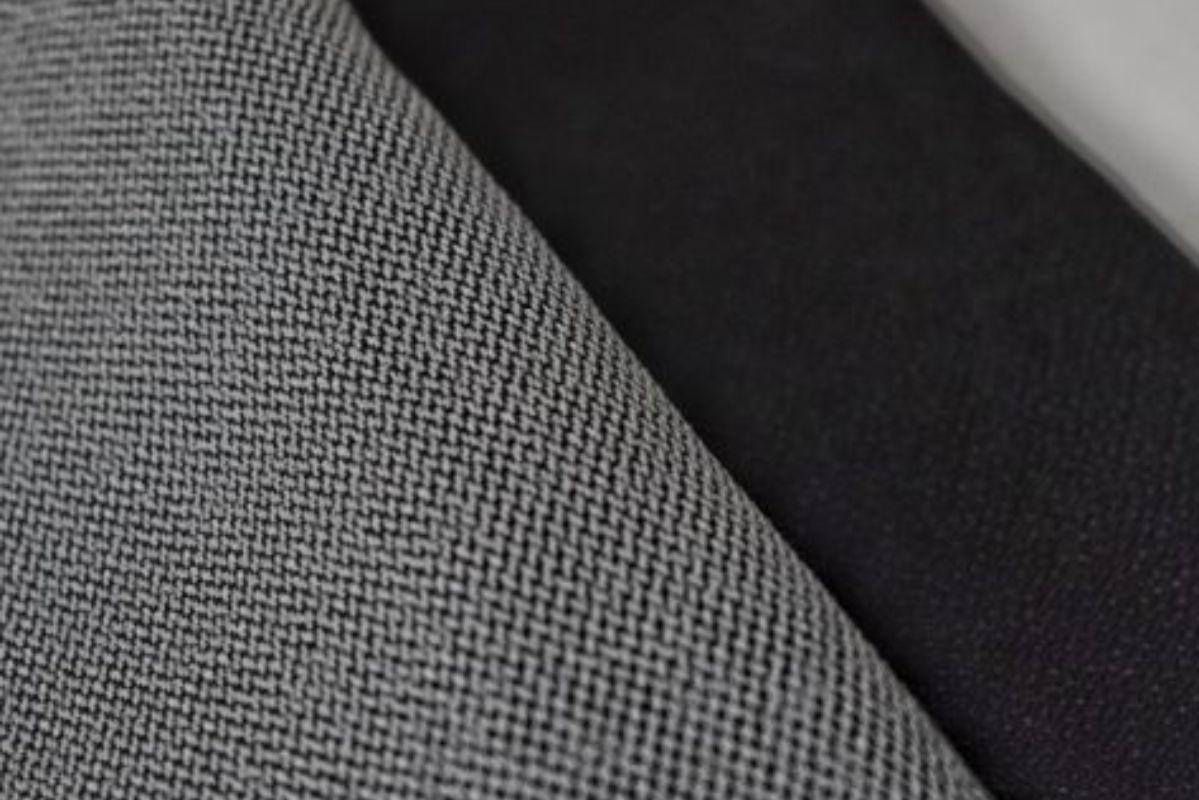
Our woven fusible interlining is built from polyester yarns woven in both warp and weft, coated with PA double-dot adhesive. That woven yarn structure is what gives the fabric its tensile strength, a relevant property when a panel also has to hold up under the tension embroidery stitching puts on it.
Our heaviest grade, 150 GSM, is specified by manufacturers who need maximum shape retention even after heavy embroidery work is added to the garment. We don’t market any single grade as built specifically for embroidery, but this is a case where our heaviest grade is chosen precisely because a garment will carry substantial embroidery afterward, which is directly relevant if you’re planning a similarly dense design.
Every batch we supply goes through inspections covering GSM, coating uniformity, hand-feel, shrinkage control, and PA bonding strength before it enters our stock. For embroidered garments, where design placement and panel behavior both need to be predictable, that batch consistency matters as much as the specification on paper. Our full woven range runs from 30 to 150 GSM, giving you room to match interlining weight to the garment and the embroidery it will carry, the decision points covered above are still yours to work through for your specific style.
Frequently Asked Questions
Do you need interlining for embroidered garments?
Interlining isn’t mandatory for every embroidered piece, but it’s commonly used on structured or heavily embroidered garments because it stabilizes the fabric and helps the finished panel hold its shape.
Should interlining go on before or after embroidery?
Both sequences are used in the trade. Fusing first gives the embroidery machine a more stable panel; embroidering first keeps the fabric flexible during stitching but makes achieving a flat, even bond at the press stage more demanding. The right choice depends on your fabric, design, and equipment.
How does interlining affect embroidery?
It affects how stable the fabric is during stitching and how evenly a design sits once it’s finished. A well-supported panel resists the puckering and distortion that loose fabric can develop under dense stitching.
Does heavier interlining work better for embroidered garments?
Not automatically. Heavier grades add more shape retention, which suits structured, heavily embroidered garments, but a lighter garment may need a lighter grade to keep its intended drape. Match the weight to the garment and the design.
What should I check before combining interlining and embroidery in production?
Test your actual fabric, interlining, and embroidery design together on a sample panel first, and confirm your press can deliver even heat and pressure once the embroidered texture is no longer flat.
Does batch consistency matter for embroidered garments?
Yes. Since embroidery placement and panel behavior both depend on predictable fabric properties, consistent GSM, hand-feel, and bonding from batch to batch reduces the chance of surprises once a design is stitched.
Link of related Articles
- Lightweight Interlining vs. Heavyweight Interlining
- A Beginner’s Guide to Interlining
- Choosing the Right Interlining