
If you’re comparing PA and PES coating before placing a bulk order, here’s the short answer: there isn’t a single “better” coating, the right one depends on the interlining construction, the garment part, the structure you need, the GSM, and the application. PA coating is used with woven fusible interlining and is built for structured garment bodies. PES coating is used with non-woven interlining and is built for lighter, smaller garment parts. Your job as a buyer isn’t to pick a “winner”, it’s to match the coating to what you’re actually constructing.
This guide breaks that decision down so your sourcing team can order the right interlining fabric the first time, without guesswork.
What Are PA and PES Coatings in Fusible Interlining?
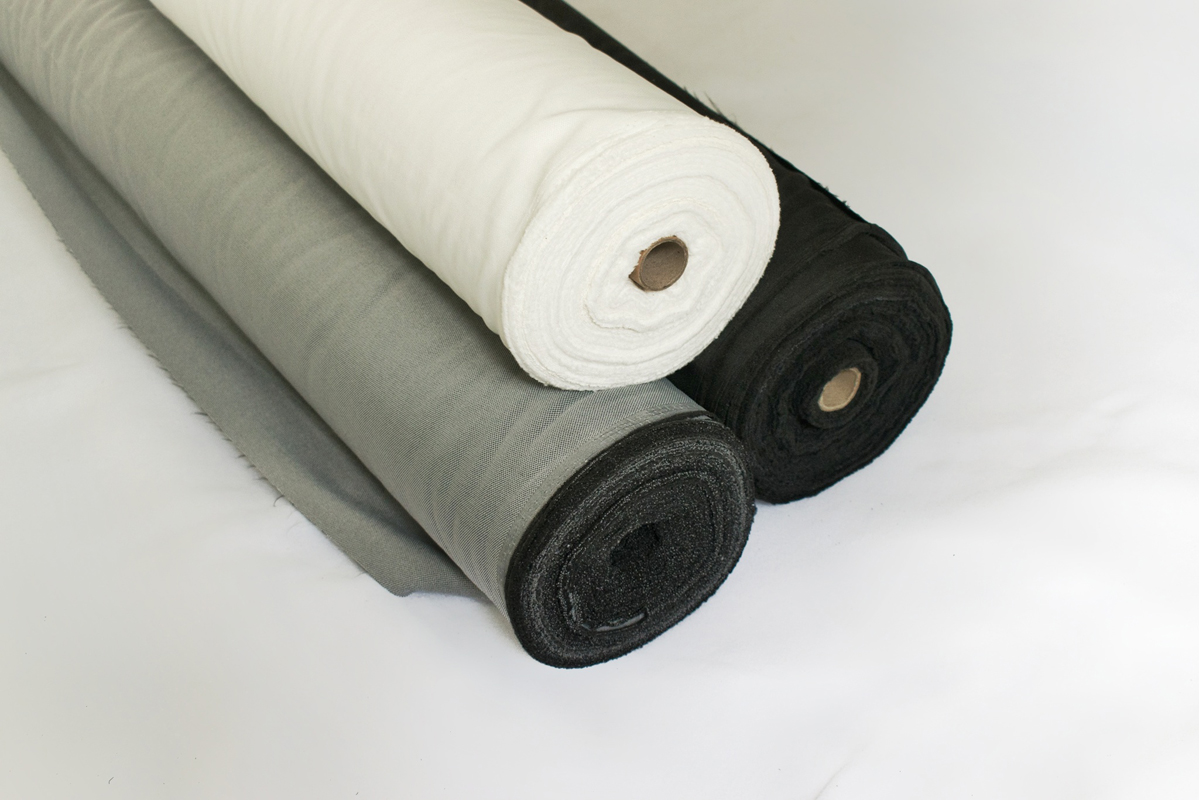
Fusible interlining is a base fabric — woven or non-woven — coated on one side with a thermoplastic adhesive. When you press it against your fashion fabric with heat and pressure, that adhesive melts and bonds the two layers together permanently. This is what gives a collar its crispness or a suit front its shape.
PA stands for polyamide, and PES stands for polyester — both are types of adhesive used to coat interlining. The coating isn’t chosen at random; it’s tied directly to how the interlining itself is built.
Woven fusible interlining, made from interlaced polyester yarns, is typically finished with a PA double-dot coating. In this pattern, the adhesive is applied as two staggered rows of dots, which increases coverage and helps the coating bond more completely across the panel. Non-woven fusible interlining, made from bonded fibres rather than a woven structure, is typically finished with a PES coating instead.
So before you ask “PA or PES,” it helps to ask “woven or non-woven” — the coating usually follows the construction, not the other way around.
PA vs PES Coating: What Is the Difference?
At a glance, PA and PES coatings differ less in the chemistry a buyer needs to memorise and more in what they’re paired with and where they end up in a garment.
| Factor | PA Coating | PES Coating |
| Typical construction | Woven fusible interlining | Non-woven fusible interlining |
| Application pattern | Double-dot | Coated finish |
| Garment role | Structured body panels | Smaller, lighter parts |
| General strength | Higher tensile and tear strength | Moderate — sufficient for its use case |
| Typical GSM range | Runs into the heavier grades | Stays in the lighter grades |
Woven grades with PA coating are generally positioned as stronger and better suited to structured garment bodies, while non-woven grades with PES coating are positioned as lighter and better suited to smaller garment parts. Neither is a universal upgrade over the other — a heavier, stronger construction isn’t useful on a collar that needs to stay soft and move with the fabric, and a lighter non-woven construction won’t hold a suit front’s shape.
This is the core purchasing logic: coating type is a signal of what the interlining is designed to do, not a standalone quality marker.
When Should You Order PA-Coated Fusible Interlining?
Order PA-coated woven interlining when the garment needs real structure — a panel that holds its shape through wear, movement and repeated cleaning.
This is the standard choice for:
- Suits
- Blazers
- Sherwanis
- Full-front body fusing on structured formal wear
The logic here is straightforward: woven construction → PA coating → structural garment applications. A suit front or sherwani body needs to resist distortion and keep a clean silhouette, and the woven base with its PA double-dot coating is built for that job.
That said, PA-coated interlining isn’t the automatic answer for every part of every garment. A full sherwani body needs it; the collar sitting above it may not. Ordering PA-coated interlining for a component that only needs light support usually means paying for structure you don’t need and ending up with a stiffer hand-feel than the part calls for.
When Is PES-Coated Interlining the Better Fit?
PES-coated non-woven interlining is the better fit when a garment part needs support without heavy structure — where you want the fabric to keep moving naturally rather than hold a rigid shape.
Common applications include:
- Collars
- Cuffs
- Plackets
- Pockets
- Other smaller garment parts
The question to ask isn’t “is PES weaker than PA” — it’s “how much structure does this specific part actually need.” A collar that’s over-stiffened looks and feels wrong on the finished garment, even if the bond itself is sound. PES-coated non-woven interlining is generally lighter, which suits parts where flexibility and a soft hand matter as much as support.
Choosing PES coating here isn’t a compromise — it’s the correct call for the job, in the same way PA is correct for a body panel. The two coatings solve different problems, and buyers who treat this as PA-good, PES-lesser tend to over-spec their smaller components.
How Do GSM, Garment Type and Application Affect Your Choice?
Coating type is only one part of the order. GSM — grams per square metre — is what actually determines how much structure the interlining fabric delivers, and it should be considered alongside, not instead of, your coating decision.
As a general reference, woven grades span a GSM range from roughly 30 to 150, and non-woven grades from roughly 30 to 82. A higher GSM generally means a heavier, firmer interlining; a lower GSM means a lighter one. Two woven fabrics can both carry a PA coating and still behave very differently on the sewing floor purely because of GSM.
Practically, this means your order should factor in:
- Garment type — a lightweight kurta and a heavy bandgala jacket don’t need the same GSM, even in the same construction category.
- Garment section — the body, collar, cuffs and pockets of a single garment can each call for a different interlining fabric.
- Fabric weight — heavier outer fabrics usually need a heavier interlining to fuse well and hold shape.
- Desired hand-feel — how stiff or soft the finished part should feel to the wearer.
- Production requirements — what your fusing setup and workflow are already calibrated for.
This is also why the same garment often needs two orders, not one. A structured jacket might need woven, PA-coated interlining at a heavier GSM for the body, and non-woven, PES-coated interlining at a lighter GSM for the collar and cuffs. Treating “PA vs PES” as a single, garment-wide decision is where most sourcing mismatches happen — the decision is really made part by part.
Before placing a bulk order, it helps to check: the construction (woven or non-woven), the GSM range appropriate to the garment part, and how the interlining will actually be pressed and finished in your process. Getting these three aligned matters more than picking a coating in isolation.
Which Fusible Interlining Should You Order From Double Ghoda?
We supply both woven and non-woven fusible interlining, so you can source your structured panels and your smaller garment parts from a single order rather than two separate suppliers.
Here’s how our range maps to the decision above:
- Our woven fusible interlining uses PA double-dot coating and is positioned for structured garment bodies — suits, blazers and sherwanis where the panel needs to hold its shape.
- Our non-woven fusible interlining uses PES coating and is positioned for collars, cuffs, plackets and other smaller garment parts that need lighter support.
If you’re placing an order and aren’t sure which to choose, start with the part of the garment you’re fusing, not the coating name. Ask yourself whether that part needs to hold a structured shape (woven, PA-coated) or stay light and flexible (non-woven, PES-coated), then narrow down the GSM based on your fabric weight and garment type. If a single style needs both — a formal jacket with a structured body and a soft collar, for instance — you can order both constructions together and match each to the relevant panel.
Whichever you need, we’re happy to talk through the specifics of your garment before you place a bulk order, so the interlining you receive actually matches the construction you’re building.
FAQs
What is PA coating in fusible interlining?
PA stands for polyamide, the adhesive used to coat woven fusible interlining. It’s typically applied in a double-dot pattern, which is associated with woven grades built for structured garment applications.
What is PES coating in fusible interlining?
PES stands for polyester, the adhesive used to coat non-woven fusible interlining. It’s associated with lighter grades used on smaller garment parts such as collars and cuffs.
What is the difference between PA and PES coating?
The main difference is what they’re paired with and where they’re used: PA coating goes with woven interlining for structured body panels, while PES coating goes with non-woven interlining for lighter, smaller parts. Neither is universally better — the right choice depends on the garment part and required structure.
Is PA coating always used on woven interlining?
Woven fusible interlining is generally finished with PA double-dot coating, since the combination is built to deliver stronger, more structured support.
Is PES coating always used on non-woven interlining?
Non-woven fusible interlining is generally finished with PES coating, matching its lighter, more flexible construction.
Which coating should I order for suits, sherwanis, collars or cuffs?
For suits, blazers and sherwani bodies, PA-coated woven interlining is the standard choice. For collars, cuffs, plackets and other smaller parts, PES-coated non-woven interlining is generally the better fit. Many garments need both, ordered for their respective parts.
Link of related Articles
- Lightweight Interlining vs. Heavyweight Interlining
- A Beginner’s Guide to Interlining
- Choosing the Right Interlining