
Double-dot woven interlining is a woven fabric coated on one side with adhesive dots, applied in a staggered two-row pattern, so it can be fused permanently to a garment fabric with heat and pressure. Manufacturers generally choose it when a garment part needs real structure, support or stability, the exact grade depends on the fabric, GSM, construction and specification you’re working with.
If you’re sourcing for suits, blazers, sherwanis or other structured formal wear, this guide explains what the “double-dot” actually refers to, how the coating works during fusing, where this fabric is typically used, and what to check before you place a bulk order.
What Is Double-Dot Woven Interlining?
Woven interlining starts as a base fabric made from polyester yarns interlaced in both directions — warp and weft — the same basic construction as ordinary woven cloth. What makes it “fusible” is a coating of thermoplastic adhesive applied to one side. When that adhesive is applied as two staggered rows of dots rather than a single row, it’s referred to as double-dot.
The base fabric and the adhesive coating are two separate things, and it helps to think of them separately. The woven base gives the interlining its tensile strength and shape-holding ability. The dot coating sits on top of that base and is what actually bonds it to your garment fabric — the woven structure itself doesn’t stick to anything on its own.
On Double Ghoda’s woven fusible interlining, this coating is PA double-dot — PA standing for polyamide, the adhesive used, applied in the staggered two-coat pattern described above. During fusing, the coated side is pressed against the wrong side of the fashion fabric so the adhesive sits between the two layers rather than showing on the garment’s face.
How Does Double-Dot Coating Work on Woven Interlining?
Double-dot coating works on a simple principle: heat softens the adhesive dots, pressure pushes the softened adhesive into contact with the fashion fabric, and the layers bond as the adhesive cools and sets.
The reason the pattern matters is coverage. A double-dot application puts adhesive across more of the surface than a single row would, which is the basic logic behind why manufacturers use this pattern for interlining that needs to bond evenly across a full panel — a suit front or sherwani body, for example, where patchy adhesion would show up as bubbling or an uneven hand-feel later.
The relationship is straightforward: woven base → adhesive dots → heat and pressure → bonded garment layers. Each step depends on the one before it — the dots need the right heat and pressure to activate properly, and the woven base needs to hold its shape once that bond is formed.
On the specifics of temperature, pressure and timing, these settings vary by press, fabric and production line, so we won’t generalise beyond what’s stated for our own product. For reference, our woven fusible interlining’s fusing parameters and full technical specification are listed on our site — worth checking against your own press setup before a bulk run.
Where Is Double-Dot Woven Interlining Used?
Double-dot woven interlining is used on garment parts that need to hold a defined shape through construction, wear and repeated cleaning — most commonly the structured panels of formal wear.
Typical applications include:
- Suits and blazers — chest and front panels that need to hold their shape and drape correctly on the body
- Sherwanis — full-front construction, where India’s heavier GSM grades are the standard
- Bandgala and Nehru jackets — heavy ethnic formal wear that needs strong shape retention through events and dry cleaning
- Formal jackets — front panels and other structural sections
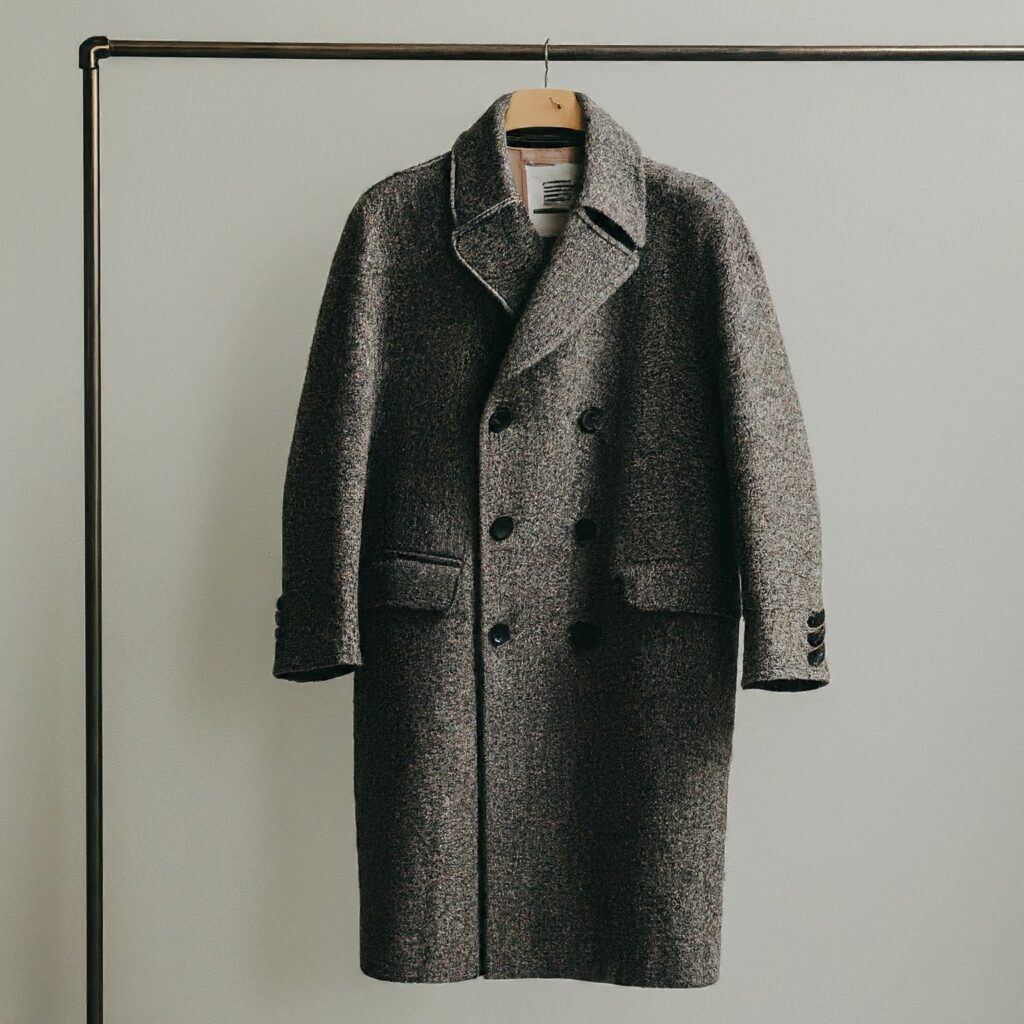
- Woollen overcoats — full structural support for heavy winter formal wear
The pattern across all of these is the same: garment type → required structure → woven interlining selection. A garment that needs to hold a defined silhouette is a candidate for woven interlining; a garment part that just needs light reinforcement — a collar or cuff, for instance — is typically handled differently. Not every part of every garment calls for this fabric, and it’s worth checking part by part rather than defaulting to one interlining across an entire style.
Why Is Woven Interlining Suitable for Structured Garments?
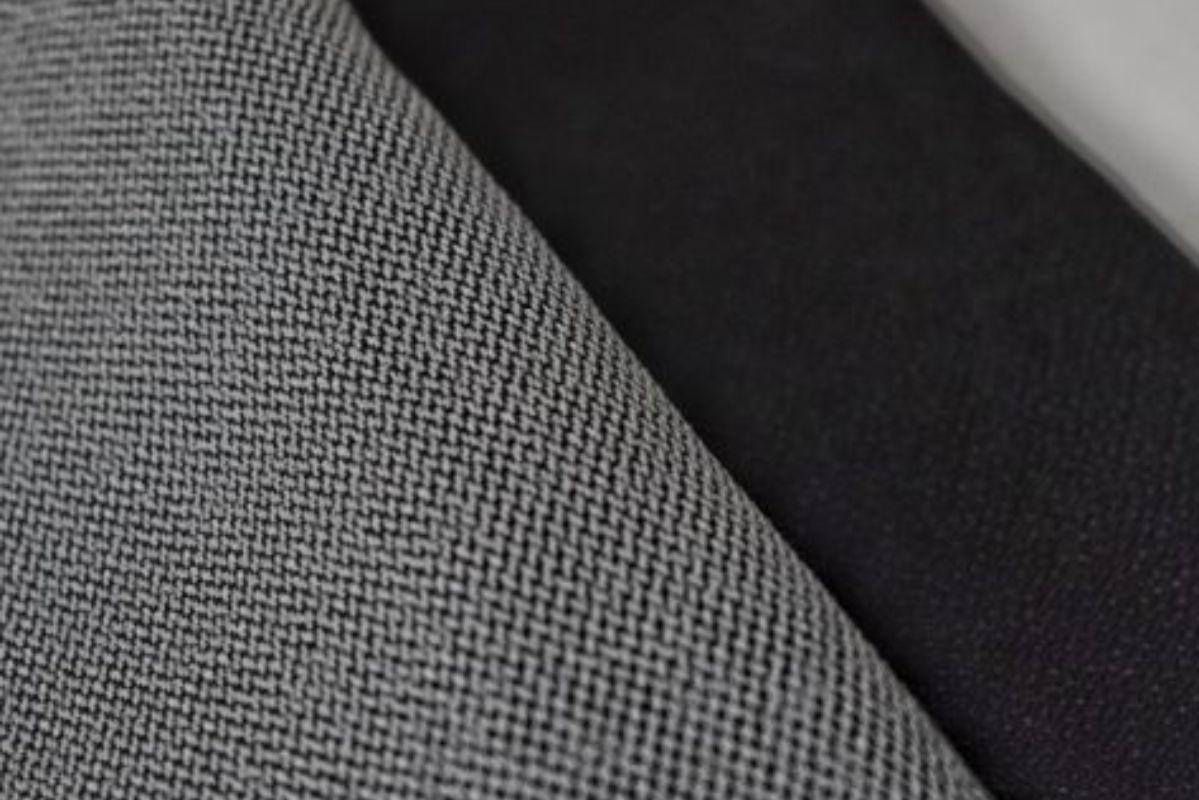
Woven construction matters here because interlaced yarns hold their shape and resist distortion better than a fibre web does — which is exactly what a structured garment panel needs.
A suit front, sherwani body or blazer chest has to keep a consistent silhouette through wear, movement and repeated dry cleaning. Because the yarns run in both directions, a woven base resists stretching and sagging under normal wear in a way that’s useful for exactly this kind of application. That’s the practical reason woven interlining is the standard choice for full-body and full-front construction on structured formal wear.
That said, it’s worth being precise about what this does and doesn’t mean. Woven double-dot interlining isn’t a guarantee of the strongest possible support in every scenario, and it isn’t the right fit for every fabric or every garment part — a light kurta placket doesn’t need the same structural base as a sherwani body. Where a garment calls for a softer hand-feel or less rigidity, other constructions are usually the more appropriate choice. The decision comes down to how much structure the specific part actually requires, not a general rule that woven is always “better.”
How Do GSM and Fabric Type Affect Double-Dot Interlining Selection?
GSM — the weight of the fabric per square metre — is often the deciding factor in whether a woven interlining grade will actually work for your garment, and it needs to be considered alongside the coating rather than instead of it.
Our woven fusible interlining is available across an 11-grade range, from 30 GSM up to 150 GSM. As a general pattern, lighter grades (roughly 30–55 GSM) suit fine or lightweight fabrics and light formal wear, mid-range grades (roughly 60–100 GSM) suit standard blazers and mid-weight suits, and the heavier grades (100–150 GSM) suit structured suits, sherwanis, bandgala jackets and heavy winter formal wear. Indian ethnic formal wear typically sits at the heavier end of this range compared to international markets, since garments like sherwanis and bandgala jackets need more body to hold their construction.
GSM isn’t the only variable, though. Selection also depends on:
- The weight and hand-feel of your outer fabric — a heavier outer fabric generally calls for a heavier interlining to fuse well
- Garment construction — a full-front panel and a smaller structural section within the same garment can call for different grades
- Desired stiffness — how firm or soft the finished panel should feel
- Fusing setup compatibility — whether your press parameters suit the grade you’re ordering
Before finalising a bulk order, it’s worth checking fabric compatibility, the GSM against your garment’s structural requirement, and how a sample performs on your own press — rather than selecting a grade on coating type or GSM number alone.
How to Choose Double-Dot Woven Interlining From Double Ghoda?
Our woven fusible interlining is a 100% polyester woven fabric, coated with PA double-dot adhesive, available across 30 to 150 GSM in eleven grades, in white, black and grey/charcoal, on 150cm-wide rolls.
Within that range, our 140 GSM grade — traded as “111 quality” — is stocked specifically for full-front sherwani construction, and is one of the more recognised grades across Surat’s ethnic wear manufacturing cluster. Lighter and mid-weight grades in the same range are stocked for blazers, formal jackets, bandgala construction and other structured applications, so the choice within our range comes down to matching the GSM and shade to your specific garment.
Before you place an order with us, it helps to have clarity on a few things:
- The GSM your garment construction actually requires
- The specific garment and garment section you’re fusing (full body vs. a smaller structural part)
- Fabric compatibility between your outer fabric and the interlining you’re considering
- The level of structure the finished panel needs to hold
- Whether you’d like a sample to test on your own press before committing to a bulk quantity
Our GSM guide and technical specification are listed on the woven fusible interlining page, which is a good starting reference before you send us your requirement.

Frequently Asked Questions
What is double-dot woven interlining?
It’s a woven interlining coated with adhesive applied in a staggered two-row (double-dot) pattern, allowing it to fuse to a garment fabric under heat and pressure. It’s generally selected when a garment needs added structure or stability.
What does double-dot mean in woven interlining?
“Double-dot” refers to the coating pattern — two staggered rows of adhesive dots applied to the woven base, rather than a single row, which increases the coated surface area.
Where is double-dot woven interlining used?
It’s commonly used on structured garment panels — suit and blazer fronts, sherwani bodies, bandgala and Nehru jackets, formal jackets, and woollen overcoats — where the panel needs to hold a defined shape.
Is double-dot woven interlining suitable for suits and blazers?
Yes. Woven interlining with PA double-dot coating is a standard choice for suit and blazer chest and front panels, where structure and shape retention matter.
How does GSM affect woven interlining selection?
GSM determines how much body and stiffness the interlining adds. Lighter GSM suits fine fabrics and light formal wear; heavier GSM suits structured suits, sherwanis and heavy ethnic formal wear. The right GSM depends on your outer fabric weight and the structure your garment needs.
What should buyers check before ordering woven interlining?
Confirm the GSM against your garment’s structural requirement, check compatibility with your outer fabric, and test a sample on your own fusing press before placing a bulk order.
Link of related Articles
- Lightweight Interlining vs. Heavyweight Interlining
- A Beginner’s Guide to Interlining
- Choosing the Right Interlining