
To match woven fusible interlining with outer fabric weight, start with your fabric’s weight, but don’t stop there. Match the interlining to your outer fabric’s weight, construction, and the level of structure your garment needs, rather than choosing by GSM alone. There is no universal GSM ratio between outer fabric and interlining.
Think of it as a chain: outer fabric weight → interlining weight → garment structure → desired finish. In this guide, we walk you through that chain for lightweight, medium-weight, and heavy fabrics, and show you what to check before you commit to a grade.
Why Outer Fabric Weight Matters When Choosing Woven Interlining
Your outer fabric’s weight shows how much support the fabric can take before the interlining starts to change its drape or hand feel. That makes it the right starting point, though not the only input.
Here is how the pieces connect:
- Outer fabric GSM tells you how heavy and substantial the fabric is.
- Interlining GSM adds support on top of that base.
- Garment structure sets how much support each part actually needs.
- Drape and hand feel show whether the combination works.
In general, an interlining that is too light for your fabric may leave a garment under-structured. One that is too heavy may make it stiff or change how the fabric hangs. Neither outcome is guaranteed, because fabric construction and garment design play a role too.
When you choose woven interlining, treat fabric weight as a filter that narrows your options. Then use garment type, section, and finish to make the final call. A chest panel and a pocket in the same jacket can reasonably take different weights.
How to Match Interlining Weight to Lightweight Fabrics
With lightweight fabrics, aim to add the support you need without changing the character of the outer fabric. Light fabrics leave less margin for error.
Watch these points:
- Interlining weight: a heavy grade can overpower a fine fabric.
- Drape: the fused area should still move like the rest of the garment.
- Hand feel: the fused part shouldn’t feel noticeably stiffer than its surroundings.
- Visibility: on thin or sheer fabrics, check that the interlining and adhesive don’t show through.
- Bonding compatibility: fine fabrics can react differently to heat and pressure, so test before you commit.
Picture a light summer jacket, a fine blouse, or ladies’ ethnic wear. You usually want crispness only where it helps, such as a front edge or a waistband.
Our lighter grades follow that logic:
- 30 GSM: made for lightweight chiffon, georgette, and fine fabrics, adding minimal structure.
- 42 GSM: suited to light formal wear, summer jackets, and ladies’ ethnic wear.
- 55 GSM: used for thin-fabric jackets, front parts, and waistbands on lighter garments.
Even with a suitable grade, confirm the result on your own fabric.
Choosing Woven Interlining for Medium-Weight Fabrics
Medium-weight fabrics give you more room, so garment type, section, and finish matter more than fabric GSM alone.
A medium-weight jacket, blazer, or pair of trousers can often accept more than one interlining option. The right one depends on:
- Fabric construction: a tightly woven fabric and a loosely woven one of similar weight can behave differently.
- Garment type: a tailored blazer needs more chest structure than a casual jacket.
- Garment section: fronts, waistbands, and pocket areas may each need a different weight.
- Desired finish: a soft, fluid finish and a firm, shaped one point to different choices.
- Overall balance: the fused fabric should still feel like one coherent piece.
Imagine two medium-weight blazers. One is meant to look sharp and structured. The other is meant to feel relaxed. They may share a fabric weight but call for different interlining weights.
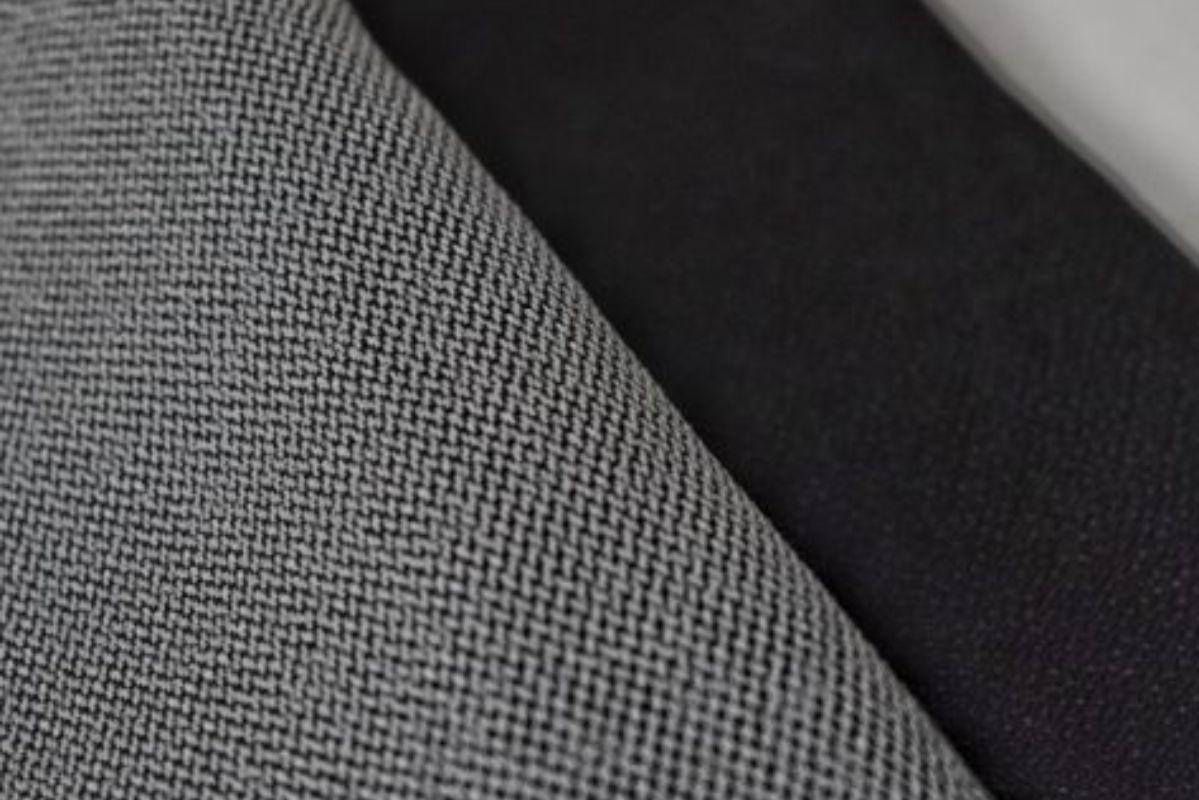
Our 80 GSM grade is the standard choice for blazers and jackets, with a good balance of structure and drape. Our 60 GSM grade suits mid-weight formal wear and small parts such as cuffs and pockets. Our 70 GSM grade is used for polyester shirts, uniforms, and mid-grade suits. For suits and blazers, our range runs from 80 to 120 GSM depending on fabric weight. Treat that as a guide to the available range, not a matching formula.
How to Select Interlining for Heavy Outer Fabrics
Heavy outer fabrics need enough support to hold their shape, but a heavier outer fabric doesn’t automatically need the heaviest available grade.
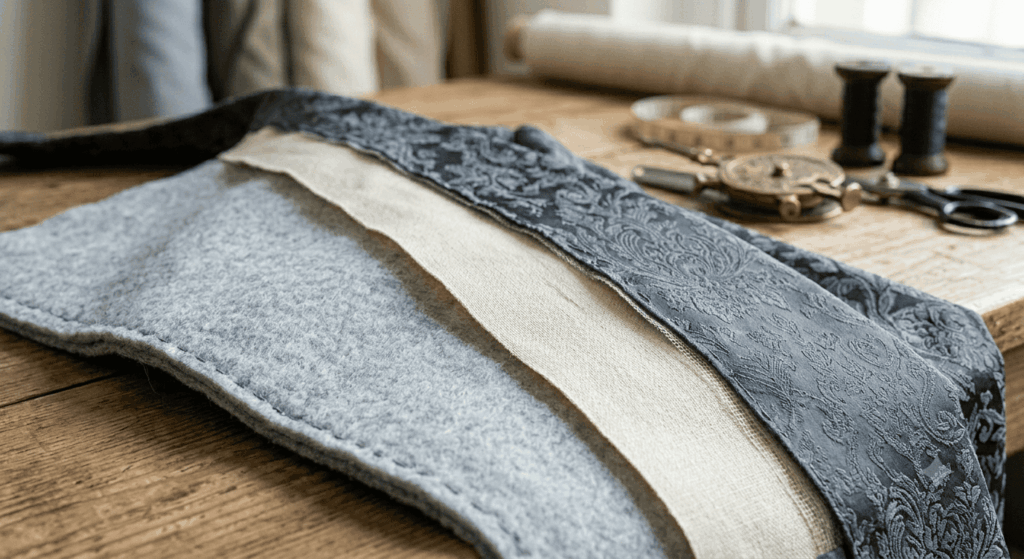
Heavy woollens, brocades, and thick suiting carry their own body. Before you pick a grade, consider:
- Required structural support: how much shape must the interlining add, and where?
- Compatibility: do the two materials work together under your fusing process?
- Garment construction: coats, structured jackets, and formalwear use interlining in different ways.
- Overall weight: the fused panel shouldn’t weigh the garment down more than necessary.
- Hand feel: the chest should feel supported, not boardy.
- Intended application: an occasion garment has different needs from an everyday coat.
A heavy fabric that already holds its own shape may need less added body than a heavy fabric that is soft and drapey. That’s why you should assess the whole garment, not GSM alone, and why heavier woven interlining isn’t always the answer.
Our heavier grades cover these uses:
- 100 GSM: structured suits.
- 120 GSM: premium suits, blazers, and bandgala jackets.
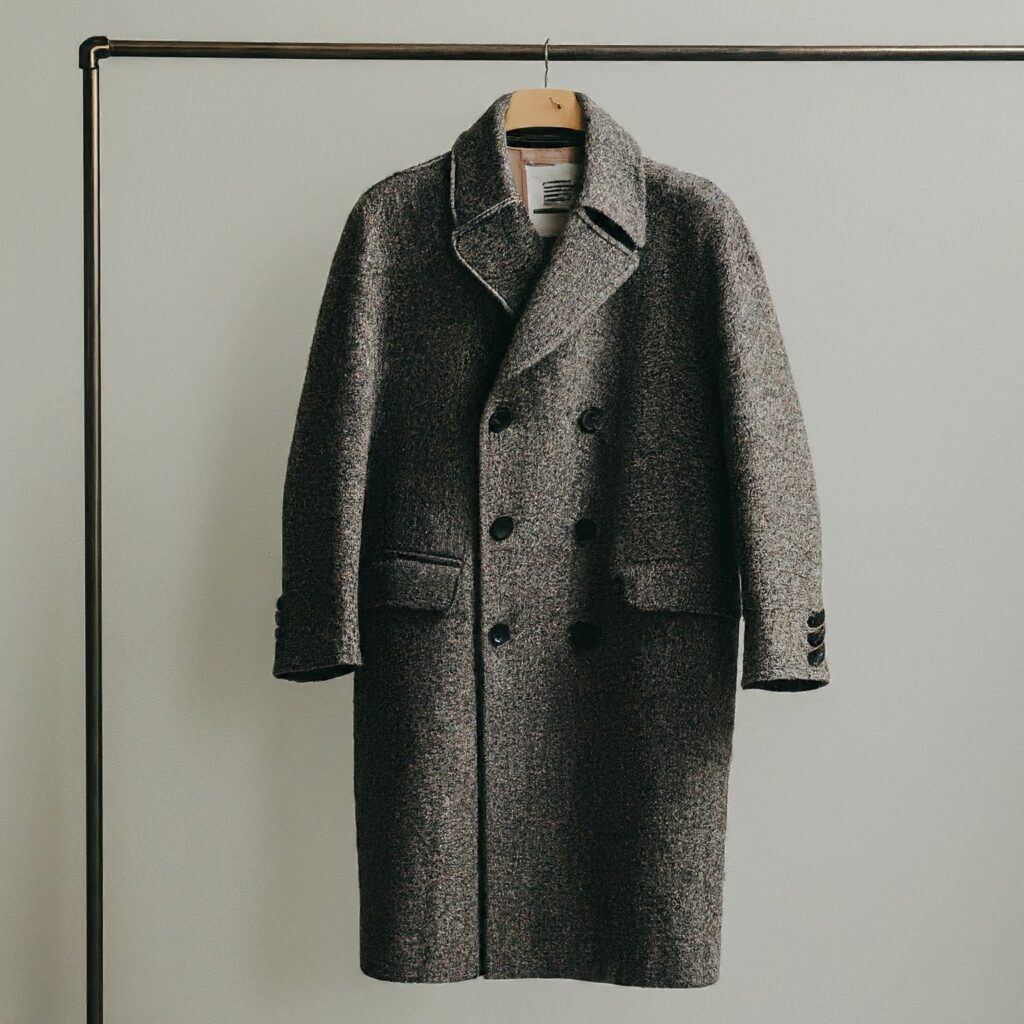
- 130 GSM: heavy formal jackets and woollen overcoats.
- 140 GSM: full-front sherwani construction.
- 150 GSM: our heaviest grade, for maximum structure in the heaviest formal wear.
These heavier grades exist for garments that need that level of support. They aren’t better by default.
When Fabric Weight Alone Is Not Enough to Choose Interlining
Two fabrics with the same GSM can need different interlining, because construction, garment use, and finish goals differ. A sample or production trial confirms what a specification can’t.
| Factor | What to ask |
| Fabric construction | Is the fabric dense, open, smooth, or textured? Does it stretch? |
| Garment type | Is it a tailored blazer, a uniform, or ethnic formalwear? |
| Garment section | Chest panel, collar, waistband, or pocket? |
| Desired structure | Do you need firm shaping or light stabilisation? |
| Hand feel and drape | Should the fused area feel crisp or soft? |
| Coating | Is the adhesive type suited to your fabric and process? |
| Fusing compatibility | Can your fabric take the required heat and pressure? |
| Production requirements | Do roll width and length suit your cutting plan? |
For example, a dense, smooth wool and a loosely woven, textured fabric might weigh the same. The first may bond cleanly with a given grade. The second may need a different weight or coating to look right.
Before a larger order, make a sample garment or run a small production trial. Fuse your own fabric on your own press, then check the bond, surface appearance, drape, and hand feel. Note your settings so you can repeat the result. This step turns a reasonable guess into a confirmed match.
Woven Fusible Interlining From Double Ghoda
Our woven fusible interlining runs from 30 to 150 GSM in 11 grades. That gives you a range to shortlist from, though no single grade suits every fabric weight.
Here is what defines our woven grades:
Structure and material: woven, with polyester yarns in both warp and weft, 100% polyester.
Coating: PA double-dot, using a polyamide thermoplastic adhesive.
Width: 150 cm (58–60 inches).
Colours: white, black, and grey/charcoal.
Roll length: 50 metres per roll.
Care: machine wash at 40°C and dry clean safe.
Certification: OEKO-TEX® Standard 100.
This table links our grades to the garment uses covered above:
GSM
Typical use
30
Chiffon, georgette, fine fabrics; minimal structure
42
Light formal wear, summer jackets, ladies’ ethnic wear
55
Thin-fabric jackets, front parts, waistbands
60–70
Mid-weight formal wear, small parts, shirts, uniforms, mid-grade suits
80
Standard blazers and jackets
100–120
Structured and premium suits, blazers, bandgala jackets
130
Heavy formal jackets, woollen overcoats
140
Full-front sherwani construction
150
Maximum structure for the heaviest formal wear
For fusing, our woven grades work at 125–145°C for 18–25 seconds at 1.5–2.5 kg/cm² on a flatbed or rotary press, with the PA-coated, rougher side facing the wrong side of your fashion fabric. Use these figures as a starting point, and confirm them on your own fabric before production.
To put this to work, move down the chain. Start with your outer fabric’s weight and construction. Add your garment section and the structure you want. Then compare the grade table and test the closest grade or two on your own fabric. Let the trial make the final call.
Frequently Asked Questions
How do I match interlining GSM to fabric GSM?
Use your fabric’s weight as a starting point, then consider construction, garment type, section, and desired finish. There is no fixed GSM ratio. Confirm your choice with a sample.
What woven interlining is suitable for lightweight fabrics?
Lighter grades suit lightweight fabrics. Our 30 GSM grade is made for chiffon, georgette, and fine fabrics, our 42 GSM grade for light formal wear and summer jackets, and our 55 GSM grade for thin-fabric jackets and waistbands.
Does heavier fabric always need heavier interlining?
No. A heavy fabric that already holds its shape may need less added structure than a heavy but soft fabric. Assess the whole garment and test the combination.
Can two fabrics with the same GSM require different interlinings?
Yes. Weave density, texture, stretch, and garment use can change how a fabric accepts interlining, even at the same weight.
What should I consider besides fabric weight?
Fabric construction, garment type, garment section, required structure, hand feel, drape, coating, fusing compatibility, and production requirements.
Which woven grades do we supply?
We supply woven grades from 30 to 150 GSM in 11 grades, with PA double-dot coating, a 150 cm width, and 50 m rolls.
Your framework: start with your outer fabric’s weight, then consider its construction, your garment type and section, and the structure and finish you want. Shortlist one or two grades from our range, then test them on your own fabric and press before you commit to a bulk order. Following this chain keeps your choice tied to the whole garment, not a single number.
Link of related Articles
- Lightweight Interlining vs. Heavyweight Interlining
- A Beginner’s Guide to Interlining
- Choosing the Right Interlining