
For B2B buyers, the right polyester lining fabric specification depends on your garment, the weight you need, the weave, the width, your roll requirements, and your production plan. It doesn’t come from choosing the cheapest or most commonly used lining. A lining that works for one garment can add bulk or look wrong in another.
In this guide, we walk you through the buying path: garment requirement → lining construction → GSM → width and roll length → purchase specification. Where we mention our own range, the details come from our official product page. Everything else is general industry guidance.
Where Polyester Lining Fits in Garment Production
Lining is the interior finishing layer of a structured garment. It sits inside suits, blazers, sherwanis, and formal jackets, and it shapes how the garment’s inside looks, feels, and hangs.
In production, lining covers the internal construction: seams, interlining, and tailoring work. It also gives the garment a smooth interior that slides over the clothes beneath, and it protects the inner face of the outer fabric. That makes lining a specification decision, not an afterthought.
You usually need to define lining by:
- Garment category: a lightweight blazer and a heavily structured sherwani have different interior needs.
- Construction: full lining, half lining, or sleeve lining changes how much fabric you use and how the lining behaves.
- Required weight: lining should balance with the outer fabric rather than fight it.
- Lining type: the weave sets the surface, feel, and look of the interior.
- Production volume: larger runs make consistency across rolls more important.
- Roll requirements: roll length affects cutting and planning.
A premium sherwani may show its lining when worn open, so the weave and finish carry more weight. A safari suit or light blazer may call for a lighter, less bulky option. Neither choice is universally right. It follows the garment.
52 GSM, 65 GSM or 85 GSM: When Does the Weight Matter?
Weight matters whenever the lining’s body affects how the garment hangs, feels, or builds. GSM (grams per square metre) measures weight, but you should read it alongside weave, garment construction, and the outer fabric.
In general industry practice, a lining that is too light may crease or feel flimsy inside a structured garment. One that is too heavy can add bulk, especially at seams, hems, and edges. Where the balance falls depends on your outer fabric, your construction, and the hand feel you want.
Our product page groups our range into three weight bands:
| GSM band | Weave | What our page says |
| 52–65 | Taffeta / light satin | Blazers, safari suits, lightweight outerwear; minimal bulk, good drape |
| 67–80 | Satin / satin dobby | Standard suits and blazers; balance of weight, drape, and durability |
| 80–85 | Jacquard / dobby | Premium sherwanis and heavily structured suits; more body, richer interior feel |
Use this as a shortlist, not a rule. A 52–65 GSM lining may suit a lightweight shell, but it isn’t the answer for every light garment. An 80–85 GSM lining adds body, but it isn’t required for every structured one.
Ask these questions when weighing a grade:
- Outer fabric: is the lining much lighter or heavier than the shell?
- Construction: does your garment have thick seams or layered areas where bulk shows?
- Hand feel: do you want a fluid interior or one with more body?
- Production: will the weight behave the same through cutting and sewing?
Weight is one input. The weave and the width, covered next, change the result just as much.
Taffeta, Jacquard vs Satin Dobby: What Changes for Buyers?
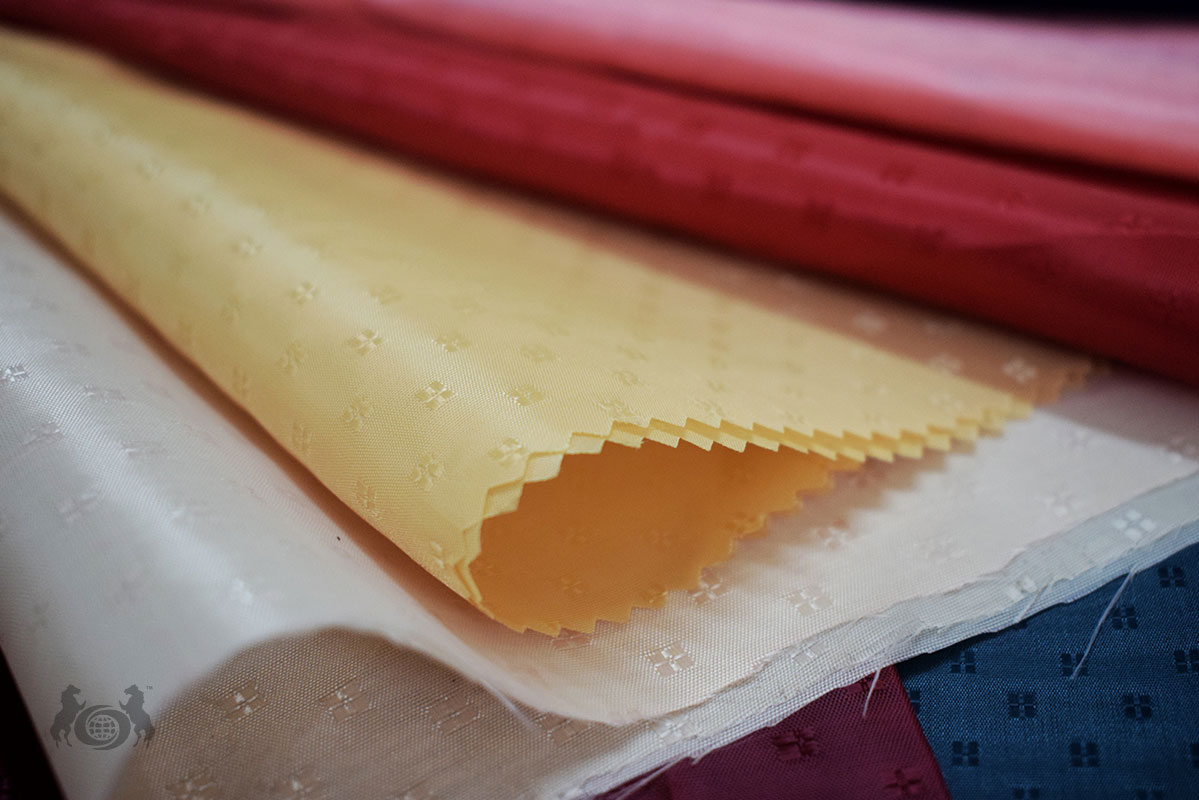
The three weaves differ in surface, weight range, and the garments they’re listed for. None is better in every case. The right one depends on what your garment needs from its interior.
| Taffeta (190T) | Jacquard | Satin Dobby | |
| GSM range | 52–65 | 80–85 | 72–82 |
| Surface | Smooth, crisp, lightweight | Woven pattern on the surface | Dobby texture on a satin base |
| Character | Clean look without adding weight to the shell | Premium interior look | Richer hand, with satin’s smooth feel and drape |
| Roll length | 45 m | 45 m | 45 m |
| Listed uses | Blazers, safari suits, outerwear | Sherwanis, premium suits, blazers | Suits, blazers, formal jackets |
Here is what the differences mean in practice:
- Taffeta (190T): the 190T figure refers to thread count. It gives a high-density, lightweight lining that adds little weight to the outerwear shell. Consider it where you want a non-bulky interior.
- Jacquard: the weave pattern shows on the surface. It suits garments where the interior is visible or where you want a more distinctive finish.
- Satin Dobby: it adds surface interest to a satin base, so the hand feels richer than plain satin while keeping satin’s smooth drape.
When you write a purchase order, name the weave explicitly. “Lining” alone leaves room for different surfaces, weights, and looks.
How Lining Width and Roll Length Affect Fabric Consumption
Width and roll length shape how efficiently you can cut, plan, and store lining. Two linings with the same GSM can create different purchasing considerations if their widths and roll lengths differ.
In general production terms:
- Fabric width: it sets how pattern pieces fit across the fabric. A different width can change your cutting layout, so check it against your largest lining panel.
- Roll length: longer rolls mean fewer roll changes on the cutting table, while shorter rolls are easier to handle and store.
- Cutting requirements: your marker plan, pattern shapes, and any pattern repeat on jacquard all affect how much fabric you need.
- Production planning: convert your garment volume into metres using your own cutting data, then compare against roll length so you can plan whole rolls.
- Storage and handling: roll size and weight affect how you store and move fabric.
We can’t give you a general yield figure, because consumption depends on your patterns, markers, and garment sizes. Calculate it from your own cutting plan.
Our lining rolls are 45 metres across our range of taffeta, jacquard, satin dobby, and satin. Our product page doesn’t list a width, so confirm width for the quality you want when you finalise your specification. Treat width as its own line on your order, not an assumption.
How to Specify Polyester Lining for a Production Order
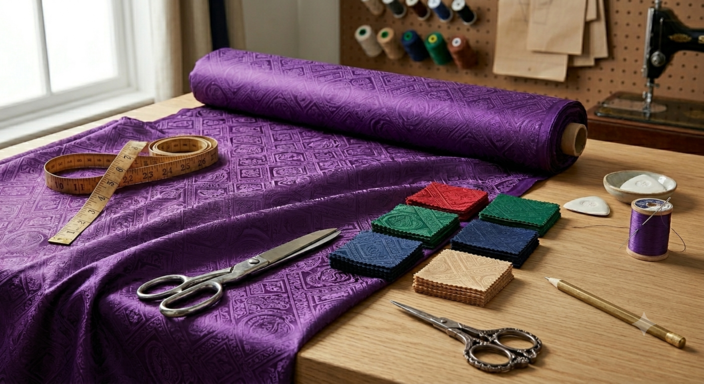
Define the material in enough detail that your sourcing team, production team, and supplier all read the order the same way. When you place a polyester lining order, vague wording is the usual source of mismatches.
Use this specification checklist:
| Specification | What to define | Why it matters |
| Garment application | Suit, blazer, sherwani, jacket | Ties every other choice back to the garment |
| Construction | Taffeta, jacquard, satin dobby, or satin | Sets surface, feel, and appearance |
| GSM | A specific figure or range | Controls body and bulk |
| Width | Exact width | Affects your cutting layout |
| Roll length | Required roll length | Affects planning and handling |
| Colour or shade | Named shade, or an approved sample | Reduces shade confusion |
| Pattern (if any) | Jacquard design reference | Keeps patterned lining consistent |
| Quantity | Total metres needed | Matches your production plan |
| Other requirements | Care or finishing needs you must meet | Prevents surprises after delivery |
The more of this you define, the less your supplier has to guess. If you’re unsure about any line, send a swatch or an approved sample and describe the garment. Match the written specification to the sample, and keep a record of both.
Polyester Lining Options Available From Double Ghoda
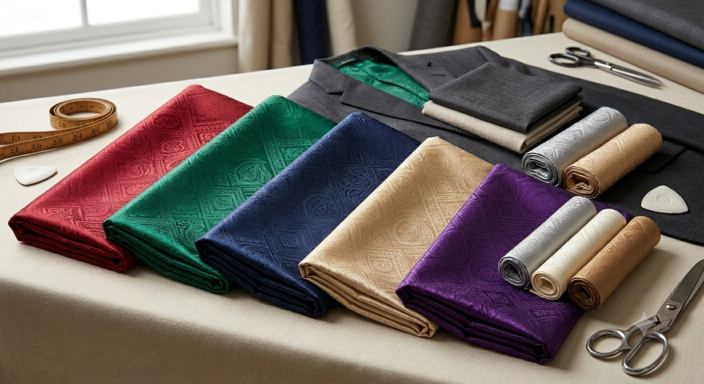
We offer 100% polyester lining from 52 to 85 GSM in taffeta (190T), jacquard, satin dobby, and plain satin. Our rolls are 45 metres.
| Weave | GSM | Surface | Listed for |
| Taffeta (190T) | 52–65 | Lightweight, smooth finish | Blazers, safari suits, outerwear |
| Satin Dobby | 72–82 | Dobby texture on satin base | Suits, blazers, formal jackets |
| Jacquard | 80–85 | Woven pattern on the surface | Sherwanis, premium suits, blazers |
| Satin | 67–80 | Smooth, glossy, good drape | Suits, blazers, formal jackets |
Our lining’s surface ranges from smooth to semi-textured depending on the weave, and it’s dry clean compatible and wash-friendly. Our top colours are black, navy blue, white, and off-white, with a wider range beyond those.
Here is how to use this section with the earlier ones:
- Start with your garment, then see which weaves are listed for that use.
- Check the GSM band against your outer fabric and construction.
- Review the roll length against your cutting and handling plan.
- Confirm width for your chosen quality, since our page doesn’t list it.
- Write the specification using the checklist in Section 5.
A listed use is a starting point, not a guarantee for your fabric. Test lining against your outer fabric before you commit to a full production run.
FAQs
What GSM should garment manufacturers choose?
It depends on your garment, outer fabric, and construction. Our range runs from 52 to 85 GSM, with lighter taffeta for non-bulky outerwear and heavier jacquard for more body. Test the weight on your fabric.
What is the difference between Taffeta and Satin Dobby lining?
Taffeta is a lightweight, smooth, crisp lining. Satin Dobby has a dobby texture on a satin base, which gives a richer hand. Our taffeta runs 52–65 GSM and our satin dobby 72–82 GSM.
Is 85 GSM suitable for every garment?
No. At 85 GSM, jacquard adds body, which suits heavily structured garments such as premium sherwanis. On lighter garments it may add more weight than you want.
Why does lining width matter for garment production?
Width affects how your pattern pieces fit across the fabric, so it changes your cutting layout and fabric use. Specify it separately from GSM.
What specifications should I provide when ordering?
Garment application, weave, GSM, width, roll length, colour or shade, any pattern, and total quantity. A sample alongside the written specification helps.
What lining options do we offer?
We offer taffeta (190T), jacquard, satin dobby, and plain satin, from 52 to 85 GSM, in 45 m rolls.
Before you order, work down the path: garment requirement, lining construction, GSM, width and roll length, then a clear written specification. Confirm each line, test a sample on your outer fabric, and you’ll reduce guesswork before bulk production.
Link of related Articles
- Lightweight Interlining vs. Heavyweight Interlining
- A Beginner’s Guide to Interlining
- Choosing the Right Interlining