
When you compare fusing cloth for apparel manufacturing, look beyond GSM. The specifications that matter are compatibility with your garment fabric, the structure your garment needs, your fusing process, bonding, finish, and roll specifications. No single GSM, construction, or coating suits every garment.
In this guide, we show you what to compare, why each specification matters, and what to confirm before a bulk order. Figures from our own product page are marked “we state.” Everything else is general industry guidance.
How to Match Fusing Cloth With Your Garment Fabric
Choose your fusing material for the fabric it will support, not as a standalone item. Your outer fabric’s weight, construction, and finish decide how much support the interlining should add.
| What to compare | Why it matters to you |
| Fabric weight | A light fabric can feel stiff under a heavy interlining. A heavy fabric can look under-supported with a light one. |
| Fabric construction | Woven, knit, and textured fabrics respond differently to heat, pressure, and adhesive. |
| Garment structure | A tailored jacket front needs more support than a casual shirt panel. |
| Required support | Decide whether the part needs shape, stability, or light reinforcement. |
| Garment section | Collars, cuffs, plackets, and front panels do different jobs. |
| Desired finish | A crisp, soft, or fluid result points to different choices. |
Think about a formal jacket and a shirt. Your jacket front is large and must hold chest and lapel shape, so body fusing in a woven construction is a common choice. Your shirt collar is smaller and needs crispness without a board-like feel, so a lighter grade is usually enough. One factory, two different interlining decisions.
A poor match shows up in your finished garment as stiffness, weak shape, or an uneven surface. Fabrics vary too much for any chart to pair every fabric with one interlining. Use charts as a starting point, and confirm with a sample.
Which Fusing Cloth GSM Works for Apparel Manufacturing?
No single GSM works for every apparel application. GSM (grams per square metre) indicates the weight of the interlining and, broadly, the level of support. Read it alongside your fabric weight, garment type, construction, and intended use.
These GSM ranges by garment part:
| Garment part | GSM we state | Type we state |
| Sheer or delicate reinforcement | 30–40 | Woven |
| Collars, cuffs, plackets | 40–60 | Woven |
| Light jacket parts, waistbands, pockets | 55–70 | Woven |
| Lightweight garments | 30–60 | Woven or non-woven |
| Blazers | 80–120 | Woven |
| Structured suits | 80–130 | Woven |
| Heavy ethnic formal wear | 100–150 | Woven |
Our woven grades run 30–150 GSM and our non-woven grades run 30–82 GSM.
These ranges overlap on purpose. Your garment may use different weights in different sections: a heavier grade across the front, a lighter one on the collar, and something lighter again at the waistband. Using one GSM throughout can leave some parts over-stiff and others under-supported.
How do woven and non-woven differ? Our woven interlining has yarns interlaced in both directions, which makes it stronger and better at holding shape. Non-woven is made of bonded fibres. It is lighter, more economical, and suited to smaller parts where you don’t need full structural support. Neither is better in general. Your choice depends on the garment part.
How Fusing Conditions Affect Fusible Interlining Bonding
Fusing conditions decide whether the adhesive activates properly and bonds evenly. Fusible interlining is a base fabric, woven or non-woven, coated on one side with thermoplastic adhesive. Under heat and pressure, the adhesive melts and bonds to your fashion fabric.
In general industry practice, four variables work together:
- Temperature: the adhesive must reach its activation point. Too little can leave a weak bond. Too much can damage heat-sensitive fabric.
- Pressure: it brings the adhesive into contact with the fabric surface.
- Dwell time: it gives heat time to pass through the fabric and activate the adhesive.
- Fabric compatibility: thickness, fibre content, and finish affect how heat and pressure reach the adhesive.
Garment-technology references treat temperature, pressure, and time as the core fusing parameters. A cycle that is too short can leave the bond incomplete, while one that runs too long can push adhesive through to the face of the fabric, a defect known as strike-through (Online Clothing Study).
Uneven settings across a panel or between batches lead to inconsistent bonding.
For flatbed pressing, we state 125–145°C for woven grades with PA coating, and up to 120°C for non-woven grades with PES coating. We state 18–25 seconds at 1.5–2.5 kg/cm². We also advise placing the coated side, which feels slightly rougher, against the wrong side of your fashion fabric.
These are our stated figures, not a universal rule. Your fabric may need different settings, so confirm the fusing requirements for each interlining and fabric pairing before you start production.
What to Check for Fusing Cloth Performance and Garment Finish
Check bonding, appearance, hand feel, garment structure, compatibility with your outer fabric, and consistency across the production run.
- Bonding: we state that you should look for no bubbles, no edge lifting, and consistent adhesion across the full panel, after the panel has cooled completely.
- Appearance: look for surface ripples or visible marks on the face of your fabric. This is general guidance.
- Hand feel: the fused section should feel right for the garment. A collar and a jacket front need different results.
- Garment structure: does the part hold its shape in handling and on the body?
- Compatibility: check that your outer fabric shows no unwanted change after fusing.
- Consistency: compare early and late pieces in a run, and one batch against the next.
A sample or production trial helps most when you use a new fabric, a new supplier, or a new garment construction. A small trial on your own fabric, with your own press settings, is a practical way to vet fusing cloth before you commit to bulk volume. It reveals problems that a specification sheet cannot. Record the settings you used so you can repeat the result.
Which Roll Specifications Matter for Bulk Apparel Production?
Width, roll length, GSM, construction, coating, and total quantity. Interlining fabric is bought by the roll, so these physical specifications affect your cutting layouts, roll changes, and how far the material goes.
- Width: it should suit your pattern pieces and cutting layout. Check it against the largest panel you cut.
- Roll length: it affects how often your cutting tables need a roll change and how you plan quantities.
- GSM and construction: confirm both match your approved sample. A matching GSM alone doesn’t guarantee a matching woven or non-woven structure.
- Coating: confirm the adhesive type, because it ties to the fusing conditions on your production line.
- Quantity: calculate the metres you need from your cutting plan and garment volume.
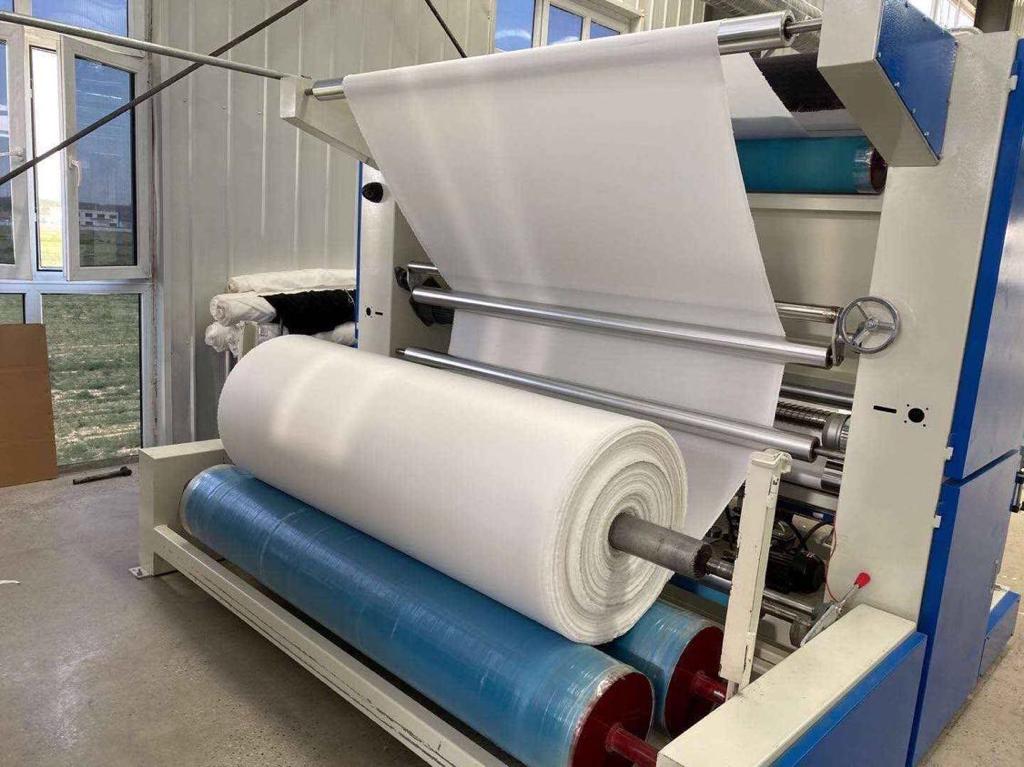
Our woven grades come in 50 m rolls at 150 cm width, and our non-woven grades in 90 m rolls at 100 cm width.
Before you order, compare the stated roll specifications against your cutting plan, approved sample, and production schedule. If anything on a specification sheet is unclear, ask us or any supplier directly.
Fusing Cloth and Fusible Interlining From Double Ghoda
We supply both woven and non-woven fusible interlining from 30 to 150 GSM. We state that both types are dry-clean safe and OEKO-TEX® Standard 100 certified.
We use body fusing as the trade term for our heavy woven grades of 100–150 GSM used in full-front construction. Our 140 GSM “111 quality” is the flagship grade we state for sherwani fusing.
| Specification | Woven (as we state) | Non-woven (as we state) |
| Construction | Woven polyester yarns | Bonded polyester fibres |
| Coating | PA double-dot | PES |
| GSM range | 30–150 | 30–82 |
| Roll length | 50 m | 90 m |
| Width | 150 cm | 100 cm |
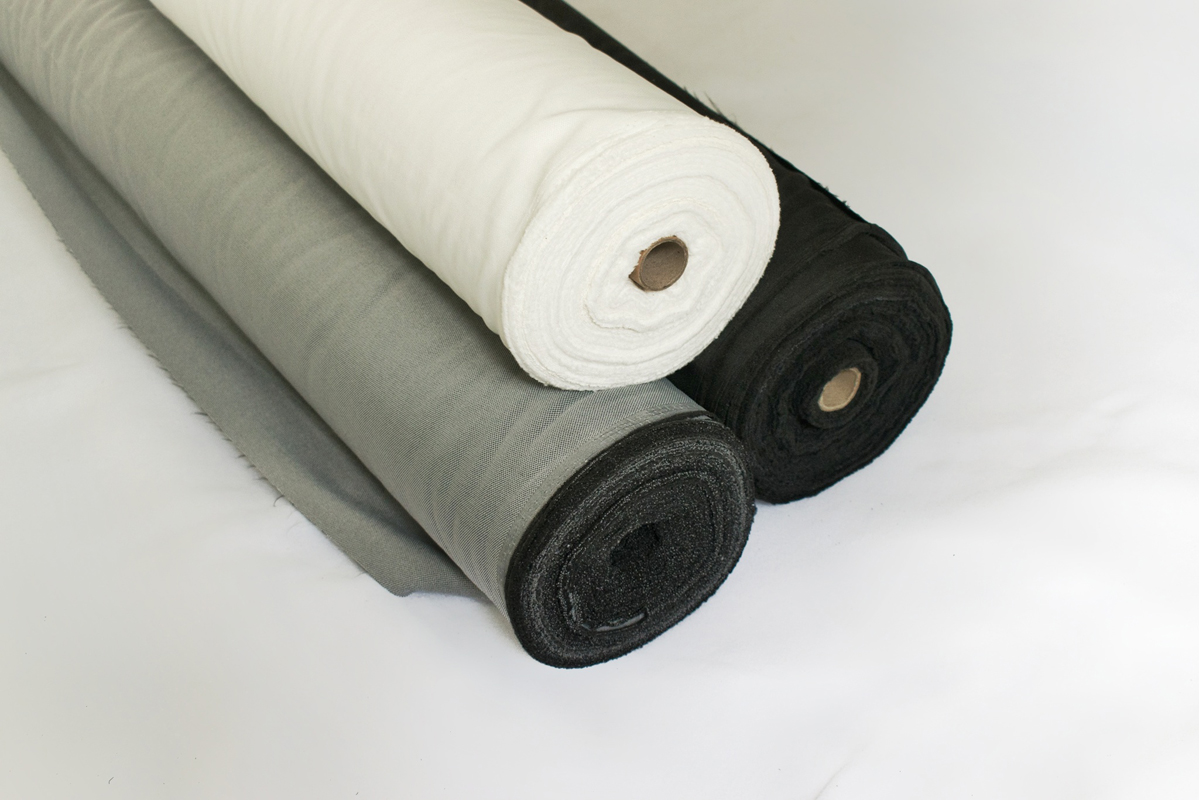
| Colours | White, black, grey/charcoal | White, black |
| Fusing temperature | 125–145°C | Up to 120°C |
| Primary use | Suits, blazers, sherwanis (full front) | Collars, cuffs, plackets, pockets |
You can use these specifications as a decision path:
your garment fabric → required structure → construction → GSM → coating → roll specification
For example, if you make a premium suit in a mid-to-heavy fabric, the front points to woven construction. That narrows your GSM to the woven range we state for suits, which in turn sets the coating (PA) and the roll format (50 m, 150 cm). A shirt placket moves down the same path to a lighter grade and the 90 m, 100 cm format. In both cases, confirm your final choice with a sample on your own fabric.
The figures here are as stated on our page when this was written. Please verify current specifications with us before you order.
FAQs
What is fusing material used for in apparel manufacturing?
It adds structure, shape, and stability to garment parts such as collars, cuffs, plackets, and jacket fronts. Heat and pressure bond a coated base fabric to your outer fabric.
How do you choose the right GSM?
Match it to your fabric weight, garment type, and the support each section needs. There is no universal GSM. Lighter grades suit small parts, and heavier grades suit structured garment fronts. Confirm with a sample.
What is the difference between woven and non-woven fusible grades?
Woven grades use interlaced yarns and are stronger, which suits garment bodies. Non-woven grades use bonded fibres and are lighter, which suits smaller parts. We state that our woven grades run 30–150 GSM and our non-woven grades 30–82 GSM.
Why do fusing conditions matter for garment production?
Temperature, pressure, and dwell time control adhesive activation. Incorrect or uneven settings can cause weak or inconsistent bonding. Confirm the conditions on your own fabric before production.
What roll specifications should you check before ordering?
Width, roll length, GSM, construction, coating, and total quantity. Check each against your cutting layout and approved sample.
What do we supply?
We supply woven and non-woven fusible grades from 30 to 150 GSM. We state PA double-dot coating on woven and PES coating on non-woven.
Before you order, confirm six things: your garment fabric and section, the construction, the GSM, the coating, your fusing conditions, and the roll width and length. Then test the match on a sample. Settling these before a bulk purchase of interlining fabric keeps your decision tied to your production needs rather than to a single number.
Link of related Articles
- Lightweight Interlining vs. Heavyweight Interlining
- A Beginner’s Guide to Interlining
- Choosing the Right Interlining