

When you order fusible interlining wholesale in India, specify the fabric type, required GSM, construction or coating, width, roll requirements, quantity, and intended garment application. Don’t just ask for “fusible interlining.” A name alone leaves too many details open, and each open detail is a chance for a mismatch.
Think of your order as a path: garment requirement → interlining type → GSM → construction and coating → width and roll length → quantity → order confirmation. In this guide, we walk through each step. We label general industry guidance, buyer tips, and details about our own range, which come from our official website.
What Should You Specify Before Ordering Fusible Interlining?
Specify the interlining type, fabric construction, GSM, coating, width, roll length, quantity, and garment application. Together, they define exactly what you want.
“Fusible interlining” covers many different products. A woven grade and a non-woven grade, two GSM levels, or two coatings can all carry the same general name while behaving differently in your garment. If your order doesn’t say which one you mean, your buyer, your sourcing team, and the supplier may each picture something different.
Here is what a complete specification covers:
- Interlining type: woven or non-woven.
- Fabric construction: the base structure of the material.
- GSM: the weight of the interlining.
- Coating: the adhesive type and pattern.
- Width: the usable fabric width.
- Roll length: the length of each roll.
- Quantity: the total amount, with a clear unit.
- Garment application: the garment and the part, such as a suit front or a collar.
Buyer tip: write these as separate lines on your enquiry, not as one description. When fusible interlining suppliers receive a clear, line-by-line request, they can match it against exactly what they offer. Incomplete specifications are a common source of confusion, so the effort you put in at this stage pays off later.
How Should You Specify Interlining GSM and Fabric Type?
State the fabric type and GSM together, and tie both to your garment application and outer fabric. GSM alone doesn’t describe the material.
GSM (grams per square metre) tells you the weight, but two interlinings with the same GSM can differ in structure. Specify:
- Woven or non-woven: in general, woven interlining has interlaced yarns and suits garments that need more structure. Non-woven is made of bonded fibres and is usually used for smaller parts.
- Required GSM: a figure or a range.
- Garment application: the part you are fusing, such as a chest panel, collar, cuff, or placket.
- Outer fabric: its weight and construction, because the interlining should suit the fabric it supports.
- Required structure: firm shaping or light stabilisation.
For a suit, a blazer, or formalwear, you might fuse the front with one grade and use a lighter one on small parts. When you request interlining for suit manufacturer production, say which part each grade is for. A uniform maker may need a different balance again. There is no universal GSM for a given garment, so test before bulk.
Our own range runs from 30 to 150 GSM in woven and up to 80 GSM in non-woven. The next sections explain what else to add.
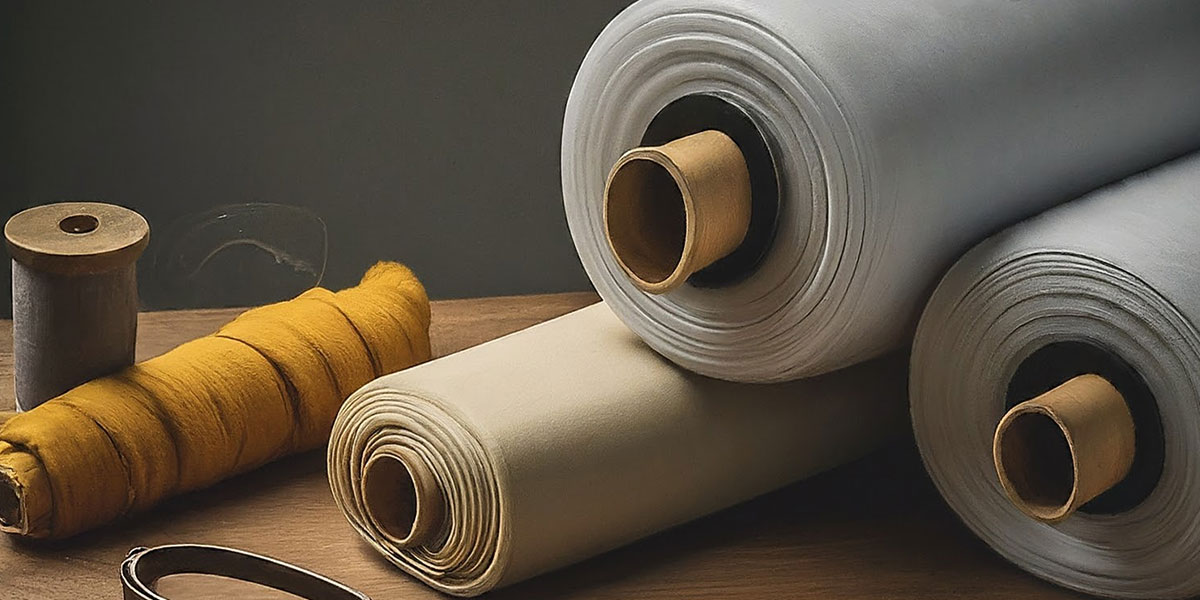
Which Coating and Construction Details Matter in a Wholesale Order?
Coating and construction change the product you receive. Name them, rather than assuming every fusible interlining bonds the same way.
In general industry practice:
- Construction: the base is woven or non-woven. This sets the structure and how the interlining feels once fused.
- Coating type: the adhesive may be polyamide (PA) or polyester (PES). Different adhesives can call for different fusing conditions.
- Dot pattern: single-dot and double-dot describe how adhesive is applied. A different pattern changes how the adhesive covers the fabric.
None of these is universally better. The right combination depends on your fabric, your garment, and your fusing process.
Whether you buy from an interlining fabric manufacturer in India, an importer, or a stockist, ask for the coating and construction in writing. Don’t leave them to assumption.
Our woven grades use PA double-dot coating on a woven polyester base. Our non-woven grades use PES coating on a base of bonded polyester fibres. If your process or fabric needs a specific coating, say so in your order.
What Width, Roll Length and Quantity Should You Mention?
State the width you need, the roll length you prefer, the total quantity, and the unit of measurement. These shape how the order fits your production.
- Width: it affects how your pattern pieces fit across the fabric. Check it against the largest part you cut.
- Roll length: it affects roll changes at cutting, handling, and storage.
- Quantity: give a total, and say whether it’s in metres or rolls.
- Unit: write the unit every time. “1,000” is unclear without it.
- Production requirement: note when and how you’ll use the material, such as a single run or a repeating one.
In a fusible interlining wholesale in India order, a clear quantity and unit prevent the most basic mismatches. We can’t offer yield figures, because consumption depends on your patterns and cutting plan. Work it out from your own data.
Our woven grades come in 50 m rolls, 150 cm wide, and our non-woven grades in 90 m rolls, 100 cm wide. If your cutting table or storage works better with one format, say so when you enquire.
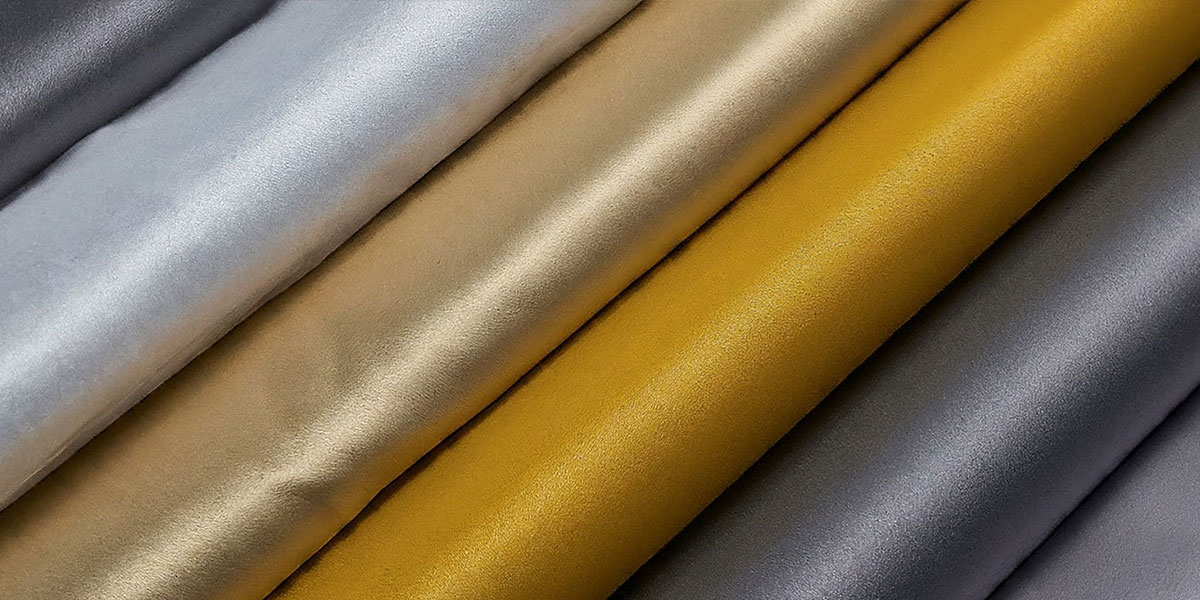
Which Order Details Can Prevent Production-Side Confusion?
Confirm every material detail in writing before you finalise. A written specification means everyone works from the same description.
This matters most when you are buying several grades at once, such as one for the body and one for small parts. Use this checklist:
| Detail | What to write |
| Interlining type | Woven or non-woven |
| Fabric construction | The base structure |
| GSM | A specific figure for each grade |
| Coating | PA or PES, and the dot pattern if relevant |
| Width | In centimetres or inches |
| Roll length | In metres |
| Colour or shade | The named colour, or an approved sample |
| Garment application | The garment and the part |
| Quantity | A total with its unit |
| Sample or trial needs | Whether you need a sample or fusing test first |
| Other agreed details | Anything else you’ve agreed on |
Keep one document that lists each grade with its details, and refer to it on every order, invoice, and delivery check. If a grade changes, update the document. That way, anyone can compare what arrived against what was agreed.
If you aren’t sure a grade will suit your fabric, ask for a sample and run a fusing test on your own fabric before you commit to bulk.
Fusible Interlining Wholesale Options From Double Ghoda
We supply woven and non-woven fusible interlining. We are a supplier and stockist of these products, and the details below come from our official website.
Here are our two options, using the same fields as the checklist in Section 5:
| Specification | Woven | Non-woven |
| Construction | Woven polyester yarns | Bonded polyester fibres |
| Material | 100% polyester | 100% polyester |
| Coating | PA double-dot | PES |
| GSM range | 30–150 | 30–80 |
| Width | 150 cm | 100 cm |
| Roll length | 50 m (6 rolls per bale) | 90 m |
| Colours | White, black, grey/charcoal | White, black |
| Fusing temperature | 125–145°C | Up to 120°C |
| Listed applications | Suits, blazers, sherwanis, heavy formalwear | Collars, cuffs, plackets |
Our woven page also lists fusing at 18–25 seconds and 1.5–2.5 kg/cm². Use these figures as a starting point only. Your fabric and press may need different settings, so confirm them in a trial.
Our site lists these application ranges:
- Sherwanis: our 140 GSM “111 quality” woven grade.
- Suits and blazers: woven grades in the 80–130 GSM range for the chest, fronts, and collar.
- Collars, cuffs, and plackets: non-woven grades, with lighter ranges for lighter garments.
A listed application is a starting point, not a promise for every fabric. For fusible interlining suppliers like us, the details above are what you can use to describe your requirement: garment, type, GSM, coating, width, roll length, and quantity.
To work with us, bring your garment, the part you’re fusing, your outer fabric, and your target GSM. Then confirm the full specification in writing, as in Section 5.
Frequently Asked Questions
What should I specify when ordering fusible interlining wholesale?
Specify the interlining type (woven or non-woven), fabric construction, GSM, coating, width, roll length, quantity with its unit, and the garment application.
How do I choose the right GSM for fusible interlining?
Match it to your outer fabric, garment, and the part you’re fusing, then confirm with a sample. There is no universal GSM for a garment.
What is the difference between woven and non-woven fusible interlining?
Woven has interlaced yarns and suits garment bodies that need structure. Non-woven is made of bonded fibres and is usually used for collars, cuffs, and plackets.
Why should buyers specify coating type when ordering interlining?
Coating type affects how the adhesive bonds and what fusing conditions suit it. Naming it avoids receiving a different product from the one you meant.
What details should I include in a bulk interlining enquiry?
Include type, construction, GSM, coating, width, roll length, colour, garment application, quantity with its unit, and any sample or trial need.
What fusible interlining options do we supply?
We supply woven grades from 30 to 150 GSM (PA double-dot, 150 cm width, 50 m rolls) and non-woven grades up to 80 GSM (PES coating, 100 cm width, 90 m rolls).
Before you order, work down your path: garment requirement, interlining type, GSM, construction and coating, width and roll length, quantity. Write every line down and confirm it before bulk production.
Link of related Articles
- Lightweight Interlining vs. Heavyweight Interlining
- A Beginner’s Guide to Interlining
- Choosing the Right Interlining