
If you manufacture suits, blazers or sherwanis, you already know the finished garment is only as good as what’s inside it. The outer fabric gets the attention, but the layer underneath, the fusible interlining, is what decides whether your garment holds its shape after the first wear or after the fiftieth.
At Double Ghoda, we supply fusing cloth and fusible interlining to garment factories across Surat and North India every day. In this article, we’ll walk you through exactly how interlining fabric improves durability and structure, and how to choose the right one for your production line, whether you’re fusing sherwani panels, blazer chests or shirt collars.
Table of Contents
- What Fusible Interlining Actually Does to a Garment
- How Fusible Interlining Improves Garment Durability
- Fusing Cloth, Body Fusing, Interlining Fabric — Are They the Same?
- Choosing the Right GSM for Shape and Structure
- Why PA Double-Dot Coating Matters for Bonding Strength
- How to Choose a Fusible Interlining Supplier You Can Rely On
What Fusible Interlining Actually Does to a Garment
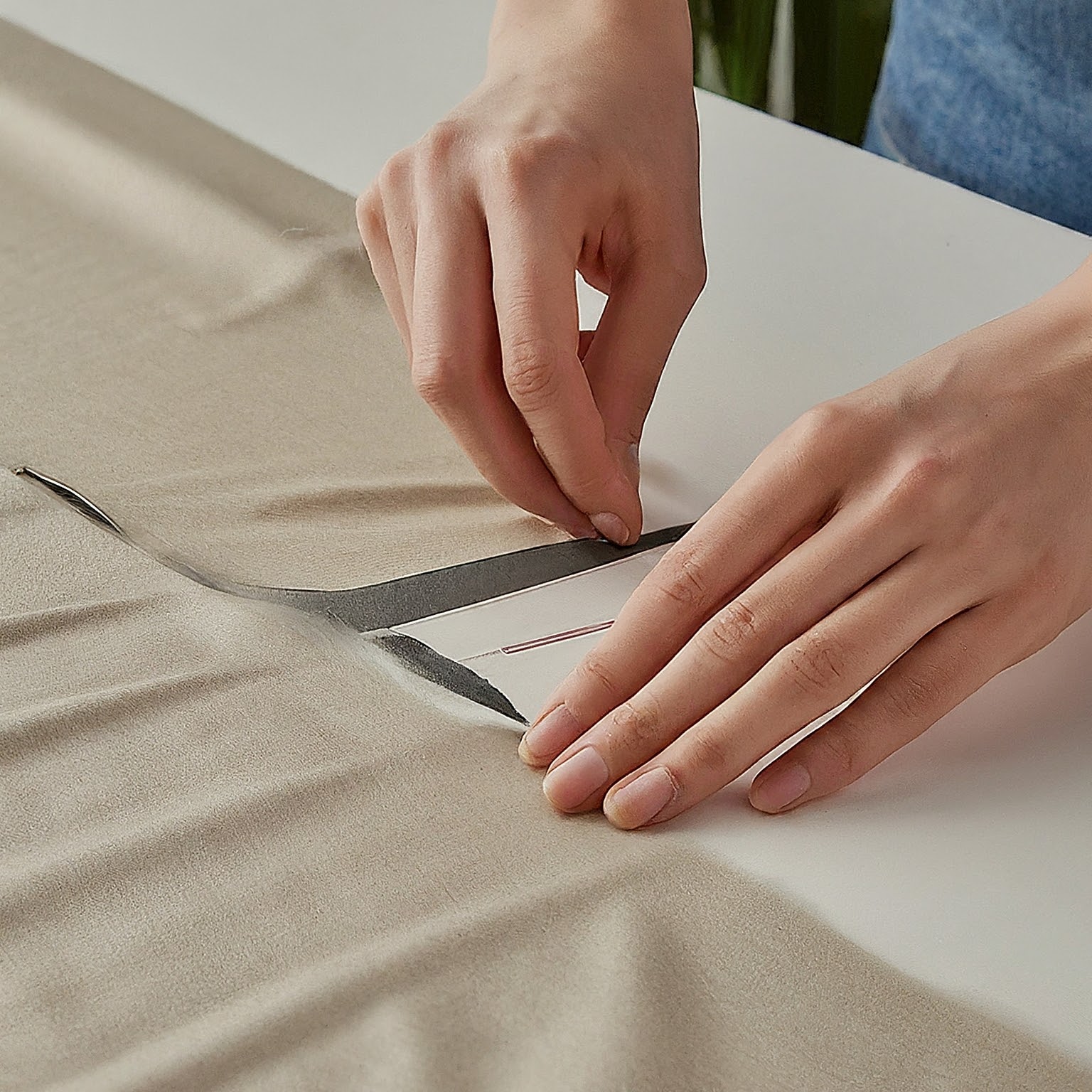
Fusible interlining is a base fabric, woven or non-woven, coated on one side with a thermoplastic adhesive. When you press it against your fashion fabric with heat and pressure, that adhesive melts and bonds the two layers together permanently.
You won’t see this layer in the finished garment. But you’ll feel its absence immediately if it’s missing or poorly matched. Without proper interlining fabric, a suit front collapses, a sherwani collar loses its crispness, and a blazer lapel folds instead of rolling cleanly.
Here’s what interlining does for you on the production floor:
- Gives structure to suit fronts, sherwani panels, blazer chests and collars
- Prevents the outer fabric from stretching, sagging or losing shape over time
- Adds a firmness that tailors and buyers can feel, the difference between a garment that looks “off the rack” and one that looks tailored
- Improves how the fashion fabric drapes and moves once it’s on the body
For anyone sourcing at scale, this isn’t a minor add-on. It’s a structural decision that affects every unit you produce.
Think about what happens on your cutting table when the wrong support fabric goes in. A collar without proper interlining folds unevenly under the presser foot. A blazer front without body fusing looks limp on the hanger, no matter how good the outer fabric is. Your tailors end up compensating with extra stitching or extra pressing time, and that eats into your production schedule. Getting the interlining right at the sourcing stage saves you that rework further down the line.
It’s also worth remembering that this layer works alongside your lining fabric and your accessories, shoulder pads, chest pieces, sleeve heads, to build the complete internal structure of a formal garment. Interlining gives the shape; the rest of the internal components hold that shape in place. When all of these are matched correctly, the finished suit or sherwani looks and feels the way a buyer expects it to.
How Fusible Interlining Improves Garment Durability
Shape is only half the story. The other half is how long that shape lasts, through wear, through movement, and through dry cleaning cycles that heavy ethnic formal wear routinely goes through.
Here’s how the right fusible interlining directly improves durability:
- Resists distortion through repeated wear. A well-bonded interlining keeps the outer fabric from stretching out of shape at stress points, shoulders, chest, collar edges.
- Withstands dry cleaning. Sherwanis, blazers and suits are dry-cleaned repeatedly. A weak bond means the interlining separates or bubbles after a few cleans. A strong fuse holds through the garment’s full lifespan.
- Prevents delamination. When adhesive coverage is inconsistent, you get peeling or bubbling at the seams over time. This is one of the most common complaints factories have with low-quality fusing cloth.
- Reduces production rejects. Consistent GSM and bonding strength mean fewer garments failing quality checks after fusing, which saves both fabric and labour cost.
- Maintains a consistent hand-feel batch after batch. If your interlining fabric varies from roll to roll, your finished garments will vary too, and that inconsistency shows up in customer returns.
This is exactly why we build every roll of Double Ghoda woven interlining with PA double-dot coating and controlled GSM, because durability isn’t something you can fix after the garment is stitched. It has to be built in at the fusing stage.
There’s also a cost angle here that’s easy to overlook. A garment that comes back with a bubbled collar or a sagging front panel after a customer’s first dry clean isn’t just a reputation problem, it’s a direct cost in returns, replacements and damaged trust with your buyer. Factories that standardise on a reliable fusing cloth see far fewer of these complaints, which is why experienced buyers treat interlining quality as seriously as they treat the outer fabric itself.
Fusing Cloth, Body Fusing, Interlining Fabric — Are They the Same?
If you’re sourcing across Surat, Ludhiana or Delhi, you’ve probably heard your supplier, your tailor and your factory floor use three or four different names for the same product. This confuses a lot of first-time buyers, so let’s clear it up.
- Fusing cloth — the term most commonly used on the ground in Surat and Gujarat’s garment trade.
- Body fusing — refers specifically to the heavier woven grades (100 GSM and above) applied across the full front body of a suit or sherwani.
- Fusible interlining — the technical, trade-standard term used across India and international markets.
- Suit fusing / interlining fabric — variations of the same product, used interchangeably depending on region and buyer.
Whatever your team calls it, the product is the same: a woven or non-woven base coated with adhesive, designed to bond permanently to your fashion fabric. At Double Ghoda, we stock the full range regardless of which name you use to order, 111 quality, suit fusing, body fusing or fusible interlining, we know exactly what you mean.
This naming overlap causes real confusion when factories are sourcing from multiple suppliers or onboarding a new procurement team. A buyer in Ludhiana might ask for “suit fusing” while their counterpart in Surat asks for the same product by its GSM and calls it “111 quality.” Neither is wrong, it’s simply how the trade language has evolved regionally. A supplier who understands all these names, and who can match them to the correct GSM and coating spec without back-and-forth, saves you time on every order.
Choosing the Right GSM for Shape and Structure
GSM (grams per square metre) is the single most important spec when you’re sourcing fusing cloth. Get it wrong, and your garment ends up either under-structured or stiff as cardboard, neither is acceptable for a finished product headed to a wholesaler or a brand.
Here’s a quick reference for Indian ethnic and formal wear:
| GSM Range | Best For |
| 30–60 GSM | Collars, cuffs, plackets, shirts, light ethnic wear |
| 80–100 GSM | Standard blazers, structured suits |
| 100–130 GSM | Premium suits, bandgala jackets, heavier formal wear |
| 140 GSM (111 quality) | Full-front sherwani fusing, India’s top-selling grade |
| 150 GSM | Heavily embroidered sherwanis, maximum structure |
International markets generally use lighter weight fusing. Indian buyers, especially in Surat, consistently prefer 100+ GSM because ethnic formal wear demands more rigidity and a fuller silhouette. If you’re manufacturing sherwanis, our 140 GSM 111 quality is the grade the trade already recognises by name, no need to explain the spec twice to your tailoring team.
It helps to think of GSM selection as a balance rather than a fixed rule. Too light, and your sherwani front won’t hold its silhouette through a full day of wear. Too heavy, and the garment feels stiff and uncomfortable, which shows up in customer feedback just as fast as under-structuring does. That’s why factories producing across multiple garment types, suits, blazers and heavier ethnic wear, usually keep two or three GSM grades in stock rather than standardising on just one. It gives your production team the flexibility to match the interlining to the fashion fabric and the garment style, rather than forcing every panel through the same spec.
Why PA Double-Dot Coating Matters for Bonding Strength
Once you’ve picked the right GSM, the coating is what actually determines how well your interlining performs on the fusing table.
PA stands for polyamide, the adhesive used on woven fusible interlining. Double-dot means the adhesive is applied in two staggered rows instead of one, which increases the surface area of contact between the interlining and your fashion fabric.
What this means for you in production:
- Faster fusing — the adhesive activates more completely at the same press time
- Stronger bonds — more contact area means a more even fuse across the panel
- Better resistance to delamination — critical for garments that go through repeated dry cleaning
Single-dot or paste-dot alternatives can look similar on the roll, but they don’t hold up the same way after a few wears and cleans. This is one of the details experienced buyers check for before they commit to a supplier, and it’s exactly why PA double-dot is our standard on every woven roll, not an upgrade you pay extra for.
If you want to check coating quality on the factory floor, run a simple fuse test before committing to a bulk order: press a sample panel at spec, 125–145°C for woven interlining, 18–25 seconds, moderate pressure, then let it cool fully and try to peel a corner by hand. A properly coated fusing cloth won’t lift cleanly; the bond should feel permanent, not tacky. This one check tells you more about long-term durability than looking at the roll alone ever will.
How to Choose a Fusible Interlining Supplier You Can Rely On
Your interlining supplier affects far more than your per-metre cost. It affects your rejects, your reorders, and how consistent your garments look season after season. Here’s what to check before you commit to a bulk order:
- Accurate metres on every roll. Short metres are a common, and costly, problem in this trade. Ask for verified roll lengths before dispatch.
- Batch-to-batch consistency. Your reorders should match your first order in GSM, hand-feel and shrinkage. If they don’t, your production line pays for it.
- The right GSM range for ethnic wear. Many generic suppliers don’t stock 100–150 GSM consistently. If you’re in Surat producing sherwanis and blazers, this range should be your supplier’s core stock, not a special request.
- PA double-dot coating as standard, not an optional upgrade.
- Fast dispatch to your city. Surat, Ludhiana, Delhi, Chandigarh and Kolkata all have different lead times depending on where your supplier holds stock.
At Double Ghoda, we’ve supplied woven and non-woven fusible interlining, polyester lining and garment accessories to factories across Gujarat and North India for over a decade. We hold ready stock of our flagship 111 quality and our full GSM range at our Bhiwandi warehouse, so your orders move fast, accurate meters, consistent quality, every single roll.
If your production line needs fusing cloth that holds its shape and its bond, get in touch with us on WhatsApp or through our enquiry form. Tell us your GSM, colour and quantity, and we’ll quote you within the hour.
Link of related Articles
- Lightweight Interlining vs. Heavyweight Interlining
- A Beginner’s Guide to Interlining
- Choosing the Right Interlining