
When you’re manufacturing suits, blazers or sherwanis, the fabric you choose for the outer shell isn’t the only decision that shapes the final garment. What you fuse underneath it matters just as much, and for formal wear, that’s almost always woven fusible interlining.
At Double Ghoda, woven fusible interlining is where we specialise. We supply it to suit manufacturers, sherwani makers and formal wear factories across Surat and North India, and in this article, we’ll break down exactly why it’s the right choice for structured garments, and what you should check before you place your next order.
Table of Contents
- What Makes Woven Fusible Interlining Different
- Why Formal Wear Needs Woven Interlining, Not Just Any Interlining
- Woven vs Non-Woven Interlining, Which One Does Your Garment Need
- Key Properties That Make Woven Interlining Ideal for Suits and Sherwanis
- GSM and Coating Specs You Should Check Before Ordering
- How to Source Reliable Woven Fusible Interlining for Your Factory
What Makes Woven Fusible Interlining Different
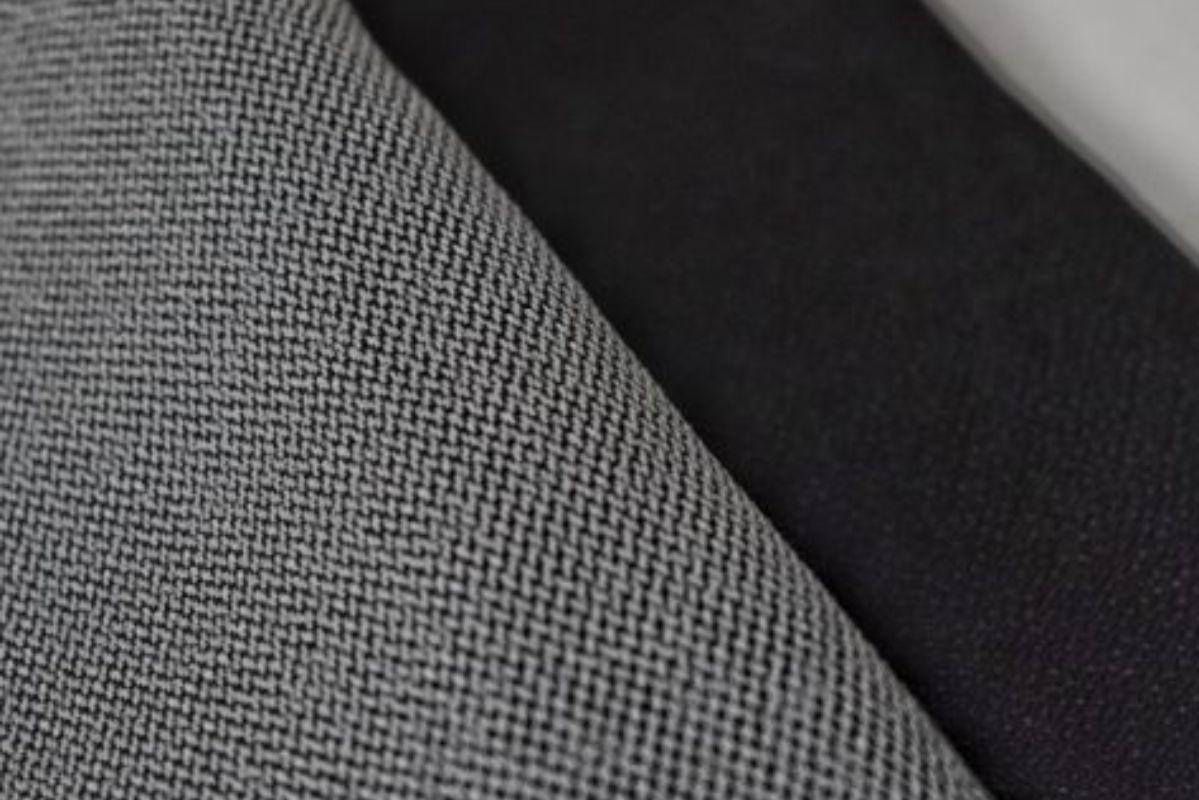
Woven fusible interlining is built from actual woven polyester yarns, interlaced in both directions, the same way your fashion fabric is constructed. That’s the key difference between it and non-woven interlining, which is made by bonding loose fibres together rather than weaving them.
This construction gives you a base fabric with genuine tensile strength and tear resistance, not just a bonded mat that adds stiffness. One side is coated with a thermoplastic adhesive, usually PA (polyamide), applied in a double-dot pattern. When you press it against your fashion fabric with heat and pressure, that adhesive melts and creates a permanent bond between the two layers.
Here’s what this means for you on the factory floor:
- You get a true fabric structure, not a fibre mat, so it holds up better under stress and repeated handling
- It carries higher bonding strength, which matters when the garment is dry-cleaned again and again
- It comes with better shrink resistance, so your finished garment stays true to size after washing or cleaning
- It’s available across a wide GSM range, 22 GSM up to 150 GSM, so you can match it to everything from a light spring jacket to a heavy sherwani front
For anyone producing formal wear at scale, this isn’t a technical detail you can skip over. It’s the layer that decides whether your garment looks structured on day one and still looks structured after twenty wears.
It’s also the layer that determines how your tailoring team experiences the fabric on the cutting and pressing tables. A woven interlining behaves predictably under the iron and the flatbed press because its yarn structure doesn’t distort the way a fibre mat can under uneven pressure. That predictability translates into fewer rejects and a faster, more consistent fusing process across large production runs, which matters when you’re fusing thousands of panels a week.
Why Formal Wear Needs Woven Interlining, Not Just Any Interlining
Formal wear has different demands than everyday clothing. A shirt collar needs some support. A suit front, a blazer chest or a sherwani panel needs full structural rigidity that holds its shape through hours of wear, sitting, movement and, critically, repeated dry cleaning.
This is exactly the job woven interlining is built for. Its interlaced yarn structure gives it the tensile strength to resist sagging and distortion at stress points, something a non-woven base simply can’t match at the same weight.
You’ll see woven fusible interlining used across:
- Full-front fusing for suits, blazers and sherwanis
- Structured jacket panels and heavy ethnic formal wear like bandgalas and achkans
- Collars and cuffs on higher-grade jackets and shirts, where a crisper finish is needed
- Waistbands and embroidered front panels that need to hold their shape under decorative stitching
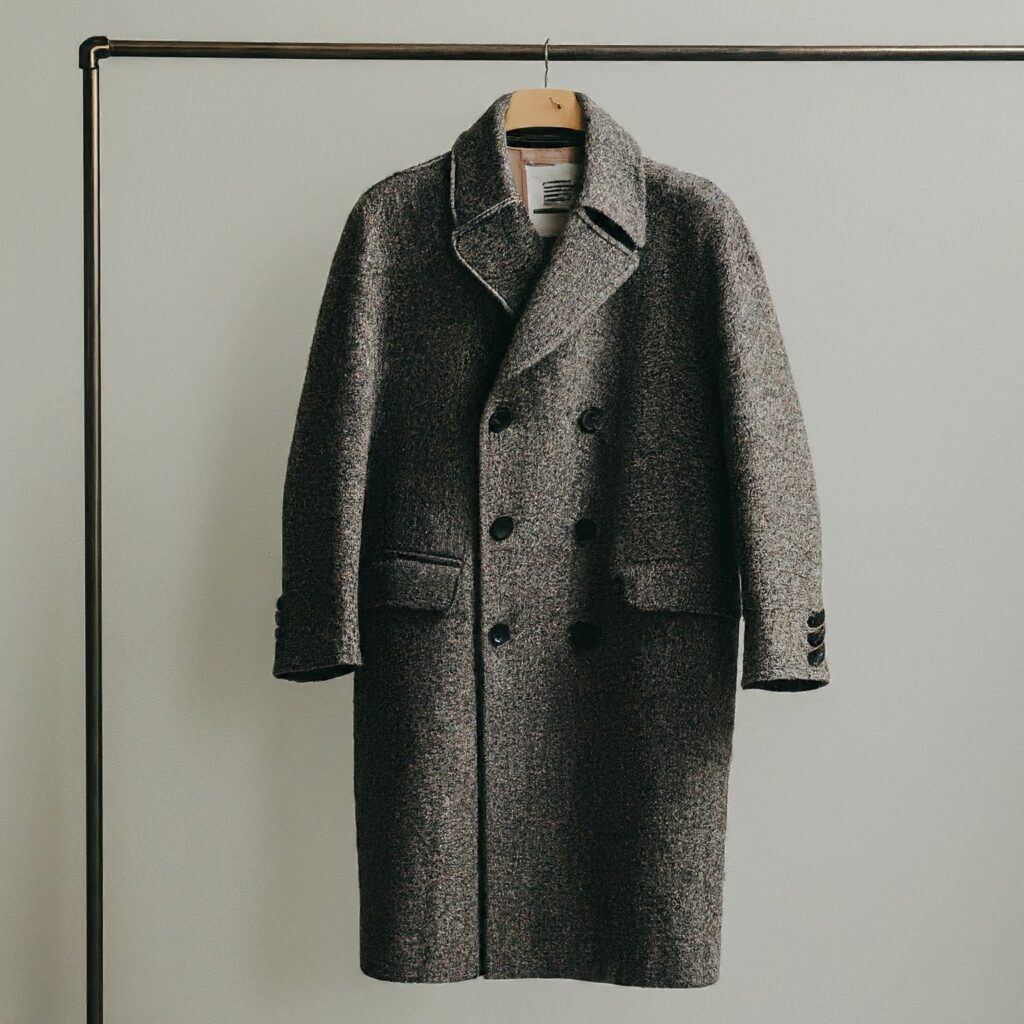
Indian ethnic formal wear, in particular, leans on heavier woven grades far more than international markets do. Buyers in Surat and across North India consistently order 100+ GSM woven interlining for sherwanis and premium suits, because the finished garment needs a fuller, firmer silhouette than a Western-style blazer typically requires. If you’re producing for this market, defaulting to a lighter or non-woven base is one of the quickest ways to end up with a garment that looks flat on the hanger.
There’s a practical reason this matters beyond aesthetics too. Heavy ethnic formal wear, sherwanis especially, often carries embroidery, appliqué work or heavier trims on the front panel. That added weight puts extra strain on the interlining underneath. A lightweight or non-woven base can sag or distort under this load over time, while a properly specified woven interlining holds the panel flat and supports the embellishment work through the garment’s full life.
Woven vs Non-Woven Interlining, Which One Does Your Garment Need
This is one of the most common sourcing questions we get, and the answer depends entirely on which part of the garment you’re fusing.
Woven fusible interlining is the right call when you need:
- Full-front body fusing for suits, blazers and sherwanis
- High tensile and tear strength for structural, load-bearing panels
- A GSM range up to 150 for heavy, ethnic formal wear
- A finish that holds up through dry cleaning without delaminating
Non-woven fusible interlining is the more economical choice for:
- Collars, cuffs and shirt plackets
- Lighter garments where full structural rigidity isn’t needed
- Applications where budget matters more than maximum strength
Most factories we work with order both, woven interlining for the garment body, and a lighter non-woven grade for collars and cuffs. The mistake to avoid is using non-woven interlining on a full suit front or sherwani panel to save on cost. It might look fine off the press, but it won’t hold up the same way through wear and repeated cleaning, and that shows up fast in customer complaints and returns.
If you’re unsure which grade a specific garment part needs, a simple rule helps: any panel that carries structural weight or defines the garment’s silhouette, the chest, the front body, a stiff collar stand, calls for woven. Any part that just needs light reinforcement, a soft collar, a placket, an inner pocket, can usually run on non-woven without any loss in finished quality. Getting this split right across your cutting plan is one of the easiest ways to control cost without compromising on the parts of the garment buyers actually judge.
Key Properties That Make Woven Interlining Ideal for Suits and Sherwanis
If you’re comparing interlining suppliers, these are the properties worth checking closely, they’re what actually separates a good woven fusible interlining from an average one.
- Superior bonding strength. A stronger bond means the interlining stays fused to your fashion fabric through repeated dry cleaning, without bubbling or lifting at the edges.
- Soft handle feeling. Good woven interlining shouldn’t feel like cardboard once fused. It should add structure while still letting the fashion fabric drape naturally.
- Shrink resistance. Controlled shrinkage means your finished garment holds its measurements after washing or cleaning, critical for consistent sizing across a production run.
- Tear resistance. Because it’s a true woven structure, it resists tearing at stress points far better than a non-woven base at the same weight.
- Variety in thickness. A GSM range from light to heavy lets you match the interlining precisely to your fashion fabric and garment type, rather than compromising on one universal grade.
- Consistent finish across every roll. Batch-to-batch uniformity in colour, hand-feel and GSM means your tailoring team gets the same result every time they fuse a panel.
Together, these properties are why woven interlining remains the standard for suits, blazers and sherwanis, even though it costs more per metre than non-woven alternatives. The performance difference is exactly where that extra cost goes.
GSM and Coating Specs You Should Check Before Ordering
GSM (grams per square metre) and coating type are the two specs that determine how your woven interlining will actually perform once it’s fused. Here’s what to look for:
| Spec | What to Check |
| GSM range | 22–150 GSM available; 100+ GSM preferred for Indian formal and ethnic wear |
| Coating | PA (polyamide) double-dot for stronger, more even bonding |
| Width | 150 cm standard, for efficient panel cutting |
| Fusing temperature | 125–145°C |
| Pressure | 1.5–2.5 kg/cm² |
| Fusing time | 18–25 seconds |
| Care | Washing at 40°C and dry-cleaning safe |
| Certification | OEKO-TEX® Standard 100, tested for harmful substances |
Double-dot coating deserves particular attention. It refers to the adhesive being applied in two staggered rows instead of one, which increases surface contact between the interlining and your fashion fabric. In practice, this gives you faster fusing, a stronger bond and better resistance to delamination, exactly what heavy formal wear needs given how often it goes through dry cleaning. Single-dot alternatives can look similar on the roll but simply don’t perform the same way once the garment is in wear.
Before committing to a bulk order, it’s worth running a quick fuse test: press a sample at the specified temperature and time, let it cool fully, and try to peel a corner by hand. A properly coated woven interlining won’t lift cleanly, the bond should feel permanent.
How to Source Reliable Woven Fusible Interlining for Your Factory
Once you know the specs to look for, the next question is who to buy from. Your supplier affects far more than your per-metre price, it affects your rejects, your reorders and how consistent your garments look season after season.
Here’s what to check before you commit to a bulk order:
- Accurate roll lengths. Short metres are a common issue in this trade and directly hurt your production planning.
- PA double-dot coating as standard, not an optional upgrade you pay extra for.
- A genuine GSM range, especially 100–150 GSM, since many generic suppliers don’t carry these grades consistently.
- Batch-to-batch consistency in hand-feel, colour and shrinkage across every delivery.
- OEKO-TEX® certification, particularly relevant if any part of your production is export-facing.
- Fast dispatch to your city, Surat, Ludhiana, Delhi, Chandigarh and Kolkata all need different lead times depending on where your supplier stocks inventory.
At Double Ghoda, woven fusible interlining is our core specialisation. We supply the complete 22–150 GSM range in white, black and grey, with PA double-dot coating as standard on every roll, and ready stock held at our Bhiwandi warehouse for fast dispatch across Gujarat and North India. Our 140 GSM 111 quality remains the most-recognised woven interlining grade for sherwani manufacturers in Surat, and it’s the one buyers ask for by name.
If your production line needs woven interlining that holds its shape and its bond through repeated wear and cleaning, get in touch with us on WhatsApp or through our enquiry form. Share your GSM, colour and quantity, and we’ll get you a quotation within the hour.
Link of related Articles
- Lightweight Interlining vs. Heavyweight Interlining
- A Beginner’s Guide to Interlining
- Choosing the Right Interlining