

If you manufacture blazers, you already know the fabric on the outside gets all the attention. But what’s underneath, the layer nobody sees, is what decides whether that blazer holds its shape after the first wear, or after the fifth dry clean.
That layer is the body fusing. And the GSM you choose for it changes everything about how the finished jacket behaves.
This is a question we hear constantly from suit and blazer manufacturers: should you go with a lighter grade or a heavier one? The honest answer is that it depends on the fabric, the construction and the finish you’re going for. There’s no single “correct” GSM for every blazer, a wool-blend winter jacket and a lightweight summer blazer are two completely different fusing jobs, even if both end up on the same rack.
What we’ve found, after years of supplying factories across Surat and North India, is that most of the confusion isn’t really about GSM as a number. It’s about matching that number to the fabric, the season and the finish the buyer expects. Get that matching right, and the rest of the decision becomes fairly simple. Let’s walk through it properly.
Table of Contents
- What Body Fusing Actually Does to a Blazer
- Why GSM Is the Number That Matters Most
- 80 GSM: The Standard Blazer Choice
- 100 GSM: The Structured Suit Standard
- 120 GSM: Built for Premium and Heavy Formal Wear
- How to Pick the Right Weight Without Guessing
What Body Fusing Actually Does to a Blazer
Every blazer needs something inside the front panel to keep it from collapsing into a shapeless piece of cloth. That’s the job of the interlining fabric bonded to the wrong side of the outer fabric.
Here’s what it’s actually doing, in practical terms:
- Holding the chest and lapel line so the jacket doesn’t sag or wrinkle across the front
- Supporting the shoulder and armhole so the garment keeps its silhouette when worn
- Giving the tailor a stable base to work with during construction, cutting and pressing
- Surviving repeated dry cleaning without the bond breaking down or bubbling
None of this shows up on a hanger. It shows up three months later, when one blazer still looks sharp and another one is starting to sag at the chest. That difference almost always traces back to the fusing.
At Double Ghoda, this is the part of the garment we spend the most time talking about with factory owners, because it’s the input that’s easiest to get wrong and hardest to fix once the garment is stitched.
Why GSM Is the Number That Matters Most
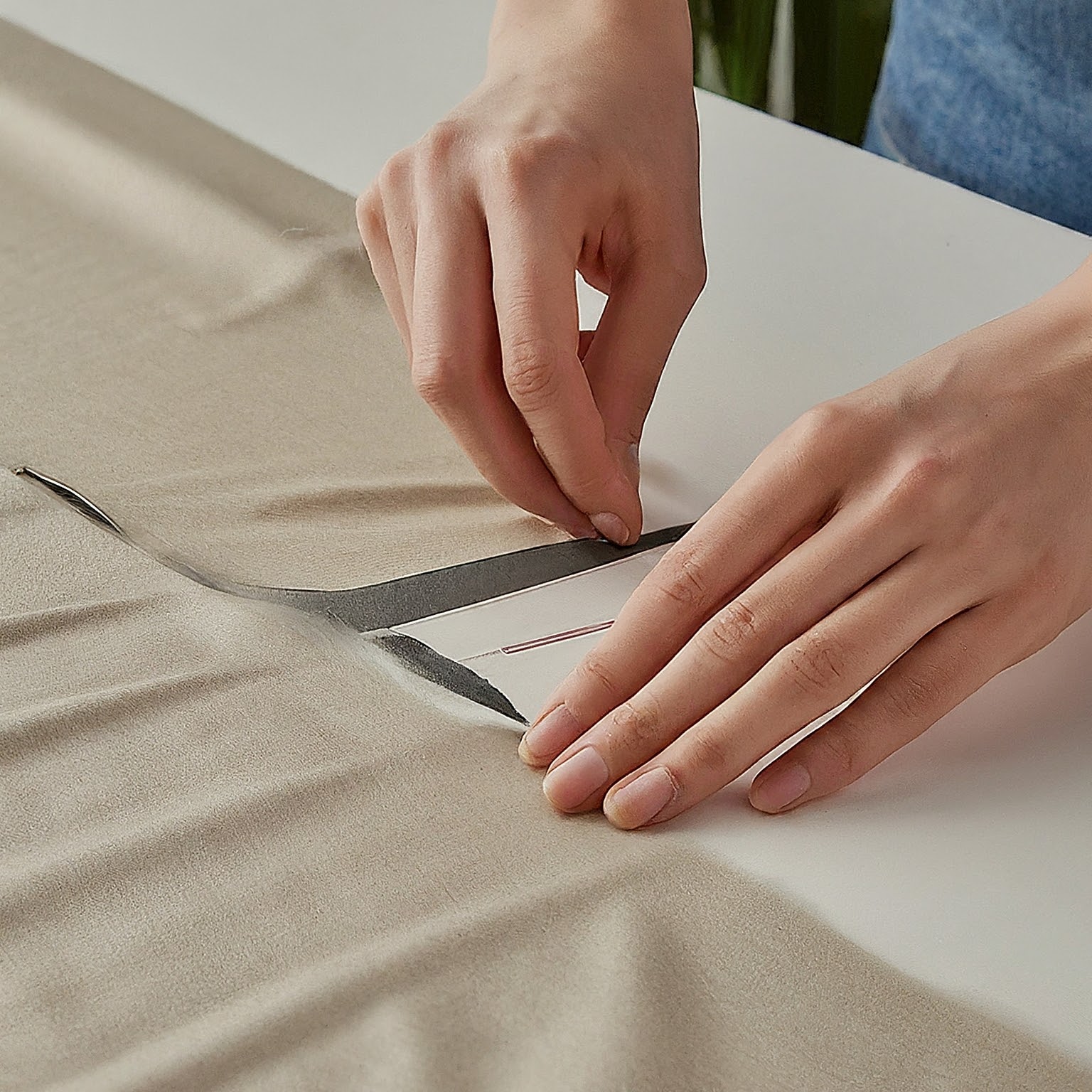
GSM stands for grams per square metre. In plain terms, it tells you how heavy and dense the base fabric is before any coating goes on it, and it’s the single spec that changes how a woven fusible interlining performs once it’s fused to your outer fabric.
A low GSM fabric is thin, soft and drapes easily. A high GSM fabric is thick, stiff and holds a firmer shape. Neither is “better”, the right one depends entirely on what you’re making and what the outer fabric needs.
Get the GSM wrong in either direction and you’ll see it immediately on the line:
| If GSM is too low | If GSM is too high |
| Chest looks flat, no shape | Jacket feels board-like, stiff |
| Fabric collapses after a few wears | Movement feels restricted |
| Lapel doesn’t roll properly | Outer fabric puckers under pressing |
| Feels cheap even on good outer fabric | Too heavy for the season or fabric weight |
This is why factories rarely fuse an entire product line with one single grade. Most run two or three GSM options depending on the outer fabric and the finish the buyer wants.
There’s also a regional angle worth knowing. Buyers in Surat and across North India generally lean toward heavier grades than what’s common internationally. Ethnic formal wear and occasion blazers in this market are expected to hold a firm, structured look, so factories here tend to sit on the heavier side of the GSM range compared to Western tailoring, where a softer, more relaxed chest is often the preference. If you’re producing for export as well as domestic buyers, it’s worth keeping separate GSM standards for each market rather than fusing everything the same way.
A few common mistakes we see on the factory floor:
- Using one GSM across an entire product range regardless of how the outer fabric changes from style to style
- Skipping a test fuse when switching to a new outer fabric supplier, even a supplier making a similar-looking cloth
- Assuming a heavier interlining automatically means a “better” blazer, when in fact it can overpower a lighter fabric
- Not accounting for seasonal fabric changes, a GSM that worked for winter wool won’t necessarily suit a lighter summer blend
80 GSM: The Standard Blazer Choice
80 GSM sits at the lighter end of what’s used for blazer body fusing, and it’s a common starting point for factories producing in volume.
Best suited for:
- Standard, everyday blazers where the fabric already has some body of its own
- Lightweight to mid-weight suiting fabrics that don’t need heavy reinforcement
- Warmer-weather garments where a softer handle is preferred
- Cost-conscious production runs where the outer fabric is doing most of the structural work
At this weight, the blazer keeps a natural drape. It won’t feel stiff, and it’s a safe choice when you’re working with fabrics that are already fairly structured on their own. The trade-off is that it gives less support if your outer fabric is soft or loosely woven, in that case, 80 GSM fusing cloth alone may not hold the shape you want.

100 GSM: The Structured Suit Standard
100 GSM is the middle ground, and for a lot of factories, it’s the default choice for structured suits and blazers.
Best suited for:
- Formal blazers that need a defined, structured chest
- Mid-weight to slightly heavier suiting fabrics
- Garments where the buyer expects a “proper” tailored look, not a casual drape
- Year-round production where you don’t want to switch grades by season
This weight gives you a noticeably firmer chest and cleaner lapel roll compared to 80 GSM, without tipping into stiffness. It’s the grade we see requested most often by suit manufacturers who want consistency across a range of fabric weights, one interlining fabric that performs reliably whether the outer cloth is slightly light or slightly heavy.
120 GSM: Built for Premium and Heavy Formal Wear
120 GSM is for garments that need to hold a strong, defined shape and stay that way through heavy use.
Best suited for:
- Premium and heavily structured blazers
- Bandgala jackets and similar heavy formal Indian wear
- Winter-weight or heavier outer fabrics that can carry a firmer interlining without feeling stiff
- Occasion wear where shape retention matters more than softness
This is where fusing starts doing serious structural work rather than just supporting the fabric. It’s a common choice for factories producing premium formal wear, where the buyer is paying for a garment that holds its silhouette long after cheaper blazers have started to soften.
One thing worth flagging here: 120 GSM only performs well when it’s paired with a fabric that can carry it. Put it under a very light, delicate outer fabric and you risk the opposite problem, a garment that feels heavier and stiffer than the design intended.
It’s also worth knowing where woven and non-woven bases differ at this point, since factories sometimes ask whether a non-woven option can do the same job. For full-front blazer panels at 100 GSM and above, a woven base almost always performs better, it has genuine tensile strength in both directions and holds its shape under repeated pressing and dry cleaning. Non-woven bases are better suited to lighter jobs like collars, cuffs and plackets, where the panel is smaller and doesn’t carry the same structural load. If you’re building a full blazer front at 100–120 GSM, stick with a woven construction.
Quick Comparison: 80 vs 100 vs 120 GSM
| GSM | Feel | Typical Use | Season |
| 80 GSM | Soft, natural drape | Standard blazers, lighter fabrics | Warmer weather |
| 100 GSM | Balanced, structured | Formal suits & blazers | Year-round |
| 120 GSM | Firm, strong hold | Premium & heavy ethnic formal wear | Winter / heavier fabric |
How to Pick the Right Weight Without Guessing
If you’re still unsure which way to go, work through these four questions before you finalise a grade:
- How heavy is your outer fabric? Lighter fabrics generally pair with lighter fusing; heavier fabrics can carry more weight without feeling stiff.
- What finish is the buyer expecting? A soft, relaxed drape calls for a lower GSM. A sharp, structured chest calls for something heavier.
- What season is the garment for? Summer-weight blazers usually lean lighter; winter and occasion wear can go heavier.
- What’s your production volume and consistency need? If you’re running large volumes across multiple fabric batches, a mid-weight grade like 100 GSM often gives you the most consistent results across the board.
There’s no universal right answer here – and honestly, most experienced factories run a small test fuse before committing a full batch, especially with a new outer fabric. It costs a few minutes and saves you from a rejected batch later.
A simple way to run that test: cut a small swatch of your outer fabric, fuse it at the correct temperature and time for the GSM you’re testing, let it cool fully, then check three things, does the chest hold a natural curve when you drape it over your hand, does the lapel roll cleanly without a hard crease, and does the bond stay intact when you flex the swatch repeatedly. If all three hold up, you’ve likely found your grade. If the swatch feels stiff or board-like, drop down to the next lighter GSM and test again.
This is also where working with a supplier who actually understands garment construction helps. Double Ghoda works with suit and blazer manufacturers across Surat and North India every day, and a large part of that conversation is exactly this, matching GSM to the fabric and finish, not just selling a roll of fusing cloth off a price list. Our woven fusible interlining range runs from lighter grades right up to heavy 150 GSM options, with PA double-dot coating across the board for a faster, stronger fuse.
If you’re setting up a new blazer line or refining an existing one, it’s worth getting this decision right at the sampling stage rather than after a production run. A short conversation with someone who fuses these grades daily can save a lot of rework.
Frequently Asked Questions
What GSM is best for a standard blazer?
Most standard, everyday blazers work well with 80–100 GSM woven fusing. It gives enough structure to hold the chest and lapel without making the jacket feel stiff.
Does heavier GSM always mean a better quality blazer?
Not necessarily. Heavier GSM gives more structure, but it only works well when paired with an outer fabric that can carry that weight. The right pairing matters more than the highest number.
Can I use the same GSM for all my blazer fabrics?
You can, but it’s not usually the best approach. Different outer fabric weights respond differently to the same interlining, so many factories keep two or three GSM options on hand for flexibility.
How do I know if I’ve chosen the wrong GSM?
Watch for a flat, shapeless chest (too light) or a stiff, board-like feel with puckering after pressing (too heavy). A test fuse before full production catches this early.
Link of related Articles
- Lightweight Interlining vs. Heavyweight Interlining
- A Beginner’s Guide to Interlining
- Choosing the Right Interlining