
If you run a garment factory, you already know that interlining is one of those inputs nobody talks about on the runway, but it decides whether a jacket holds its shape after the third dry clean. Get the sourcing wrong, and it shows up months later as complaints from your buyer. Get it right, and nobody notices, which, in this business, is exactly the point.
This guide covers what we tell manufacturers to check when choosing fusible interlining suppliers: how to read the basics without getting lost in jargon, which mistakes cost factories the most, and what a dependable supplier relationship looks like once the first order goes through.
Table of Contents
- What Fusible Interlining Actually Does in a Garment
- What to Look For When Choosing a Supplier
- Woven vs Non-Woven Interlining: Which One Do You Need
- Common Sourcing Mistakes Manufacturers Make
- Why Manufacturers Choose Double Ghoda for Interlining and Lining
- What to Expect When You Start Working With Us
1. What Fusible Interlining Actually Does in a Garment
Interlining sits between the outer fabric and the lining, and its job is simple: give the garment shape. Without it, a blazer front collapses, a sherwani collar loses its edge, and a jacket lapel won’t sit flat no matter how well it’s cut.
Fusible interlining specifically refers to the version with a heat-activated adhesive coating. Instead of stitching a support layer in by hand, the factory presses it onto the fabric using heat and pressure, and the two layers bond into one. This is different from sew-in interlining, which is slower and used far less in bulk garment production today.
For structured formal wear, suits, blazers, sherwanis, jackets, this bonding step isn’t optional. It’s what separates a garment that holds its silhouette through a full day of wear from one that looks tired by lunchtime.
A few things fusible interlining does inside a garment:
- Holds the chest, collar, and front panels in shape
- Prevents stretching or sagging in high-stress areas
- Gives the fabric a crisper, cleaner finish
- Makes the garment easier to press and maintain over time
Not every garment needs the same treatment. A shirt collar and a sherwani front are asking completely different things of the material, which is why the sourcing decision behind interlining for suit manufacturer needs looks so different from sourcing for lighter, everyday garments. Choosing the right supplier matters just as much as the fabric itself, and that’s what the next section covers.
2. What to Look For When Choosing a Supplier
Most factories don’t switch suppliers often, because a bad batch mid-production is expensive to fix. So it’s worth getting the selection right the first time. Here’s what experienced buyers typically check before placing an order.
Consistency across batches. The biggest risk with interlining isn’t a single bad roll, it’s variation between rolls. If bonding strength or thickness shifts from batch to batch, the production line has to keep adjusting press settings, and rejects go up. Reliable fusible interlining suppliers test their material before it leaves the warehouse, not just the first sample they send.
Accurate roll length. Short meters on a roll are a quiet cost that adds up fast across a bulk order. Asking how rolls are measured, and whether that’s checked before dispatch, is a simple question that says a lot about how carefully a supplier runs their operation.
Strong, even bonding. A well-applied adhesive coating fuses evenly and holds up through repeated wear and cleaning, which matters more for occasion wear like sherwanis than it does for something worn once and retired.
Stock depth in the weights actually needed. A supplier who mostly stocks lightweight, generic ranges isn’t a good long-term fit for factories producing heavier ethnic formal wear, even if their pricing looks fine on paper.
Specialisation. A supplier who understands the difference between what a shirt collar needs and what a sherwani front needs will ask better questions before an order is placed, not after something goes wrong on the cutting table.
These five points cover most of what’s worth checking before committing to a new supplier, and they apply whether the order is for interlining, lining, or accessories.
3. Woven vs Non-Woven Interlining: Which One Do You Need
This is one of the first decisions in sourcing, and it depends entirely on what’s being made.
Woven interlining has a grain, much like regular fabric, which gives it dimensional stability and a natural drape. It’s the go-to choice for structured, heavier applications, suit fronts, blazer panels, and full sherwani construction, where the garment needs to hold its shape through an entire day of wear and movement.
Non-woven interlining is made by bonding fibres together rather than weaving them, which makes it lighter and more uniform in feel. It works well for smaller, lighter applications like collars, cuffs, and shirt plackets, where support is needed without adding bulk.
A simple way to think about it: woven interlining behaves like a fabric partner to the outer material, while non-woven behaves more like a support layer underneath it. Neither is “better” on its own, they’re built for different jobs, and mismatching them is one of the more common, and avoidable, production errors in this trade.
A good rule of thumb: the heavier and more structured the garment, the more likely it needs woven interlining rather than non-woven. Sherwanis, bandgala jackets, and tailored blazers almost always fall into this category, which is why heavier woven interlining tends to be in higher demand wherever occasion and formal wear is manufactured at scale.
It also helps to remember that interlining isn’t a one-size-fits-all decision even within a single garment. A sherwani, for instance, might use a heavier woven interlining across the front panels for structure, while the collar and cuffs use a lighter option for flexibility. Factories that get this balance right end up with garments that feel structured where it matters and comfortable everywhere else, which is really the whole point of interlining in the first place.
4. Common Sourcing Mistakes Manufacturers Make
Even experienced buyers run into avoidable issues when sourcing changes or a new supplier comes into the mix. A few patterns worth watching for:
- Choosing on price alone. The cheapest roll per meter isn’t cheap if it fuses inconsistently and leads to re-pressing garments on the line.
- Using the wrong weight for the job. A lighter interlining meant for shirting, used on a structured sherwani front, leads to a garment that looks fine on day one and loses shape within weeks.
- Skipping the test run. A quick bonding and press test on a small sample catches problems before they show up across a thousand-meter order.
- Overlooking roll accuracy. Short meters mean recalculating the cutting plan mid-run, which slows everything down.
- Treating supplier conversations as one-time. Interlining needs shift as the product mix changes. A supplier who understands the production, not just the last order, is worth more over time than one offering the lowest quote this month.
Most of these mistakes trace back to the same root cause: treating interlining as an afterthought rather than a specified input, the same way a factory would specify its shell fabric or its buttons. Manufacturers sourcing fusible interlining wholesale india supply chains rely on tend to avoid most of these issues simply by working with a supplier who checks material before it leaves the warehouse.
5. Why Manufacturers Choose Double Ghoda for Interlining and Lining
We import and supply fusible interlining, polyester lining, buttons, and garment accessories to garment manufacturers across India, with a particular focus on Surat and North India, the heart of the country’s sherwani, blazer, and formal wear production.
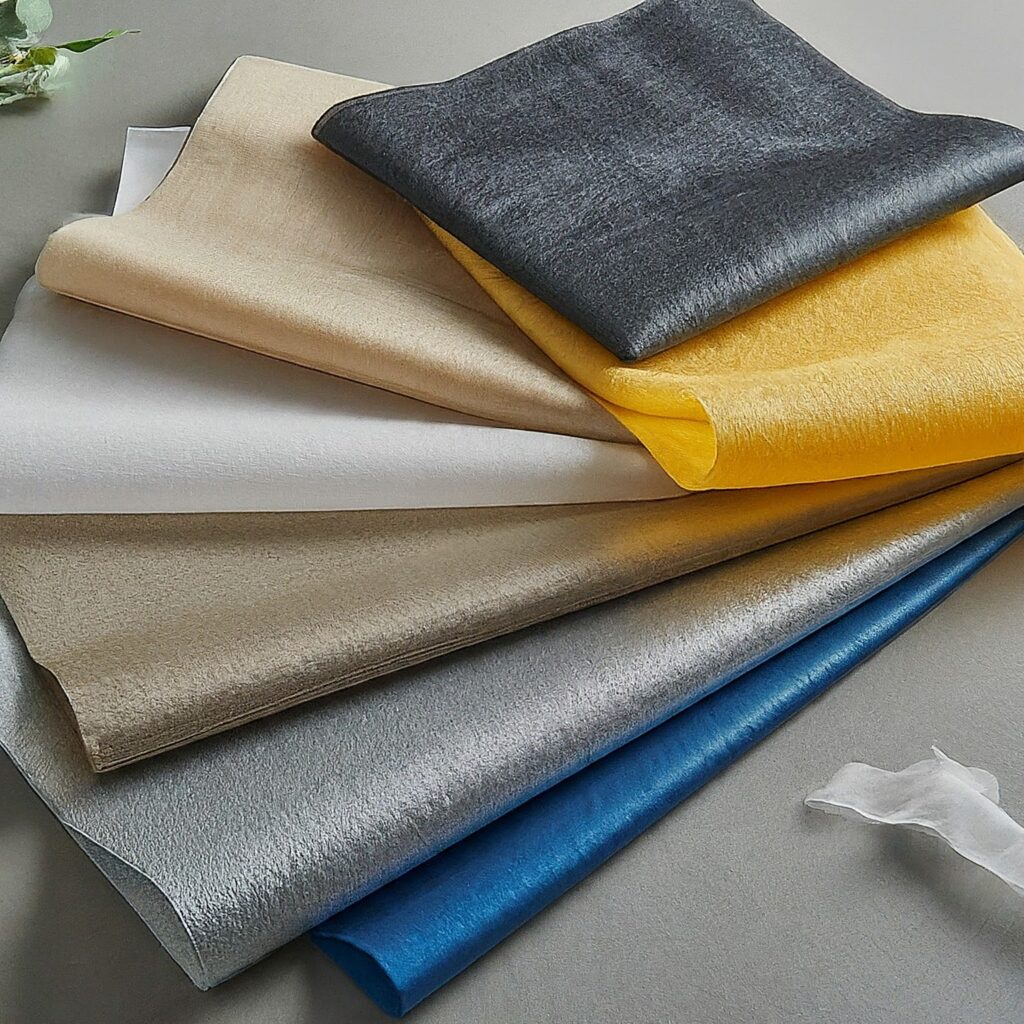
Our range is built specifically for Indian ethnic and formal wear, including our 111 quality woven interlining, which has become one of the most recognised names for sherwani fusing in the trade. Alongside that sit non-woven interlining for lighter garments, polyester lining in a range of colours and finishes, and the buttons and accessories that go with structured formal wear, shoulder pads, chest pieces, sleeve heads, and more.
Every order runs on wholesale terms, with rolls verified for accurate meters before dispatch. Buyers evaluating an interlining fabric manufacturer india production runs depend on usually find this kind of consistency is exactly what keeps a factory’s cutting table free of surprises. It’s a standard we hold ourselves to on every dispatch, not just the first order from a new buyer.
We’re not trying to be everything to everyone. The focus stays on what garment factories actually need for ethnic and formal wear, order after order, with a catalogue shaped around real production requirements rather than a generic international spec sheet.
6. What to Expect When You Start Working With Us
Once the type and weight of material are settled, the next step is simply getting the working relationship right. A good supplier relationship in this space tends to follow a familiar rhythm, whether the order is for interlining, lining, or accessories. For most manufacturers, this rhythm matters more in the long run than any single order, it’s what separates a one-time transaction from steady, dependable sourcing, whether working with an interlining fabric manufacturer india factories already trust, or bringing on a new supplier for the first time.
- A conversation about the product mix. What’s being manufactured, suits, sherwanis, jackets, lighter formal wear, shapes which materials make sense.
- A sample and test run. Before committing to bulk, a short trial on the actual production line confirms bonding, hand-feel, and press compatibility.
- A bulk order, checked before it ships. Once specs are confirmed, orders move to bulk quantities, with rolls verified for accurate length before dispatch.
- Ongoing supply that stays consistent. As production continues, repeat orders stay simple, consistent quality, no surprises batch to batch.
For manufacturers looking for interlining for suit manufacturer needs, structured ethnic wear, or general fusible interlining wholesale india supply, it’s worth having a quick conversation about the product mix before the next production cycle rather than finding out mid-run that the material doesn’t hold up. We keep our full product range online, and we’re easy to reach for a direct conversation about specs, quantities, or a sample order before committing to bulk.
Whatever stage the sourcing is at, switching suppliers, adding a new garment category, or just double-checking current specs, working with fusible interlining suppliers who understand Indian ethnic and formal wear from the start makes the entire production process smoother, from the first sample to the final press.
Frequently Asked Questions
What is fusible interlining used for?
Fusible interlining is used to add shape, structure, and stability to garments. It’s fused onto the inside of fabric panels, most commonly collars, cuffs, and full-front panels in suits, blazers, and sherwanis, using heat and pressure, so the garment holds its form through wear and cleaning.
What’s the difference between woven and non-woven interlining?
Woven interlining has a grain structure, similar to regular fabric, and is used for heavier, structured applications like suit fronts and sherwanis. Non-woven interlining is made by bonding fibres together without a grain, and works well for lighter applications like collars, cuffs, and shirt plackets.
How do I know which interlining is right for my garment?
It depends on the structure the garment needs. Lighter, everyday garments generally do well with non-woven interlining, while structured formal and ethnic wear, especially sherwanis and blazers, typically needs a heavier, woven interlining for proper body and hold. When in doubt, it’s worth asking the supplier directly.
Is there a minimum order quantity for wholesale interlining?
Yes, most wholesale interlining suppliers work on bulk minimums rather than retail quantities, since the product is manufactured and imported for factory-scale use. Exact minimums vary by supplier, so it’s best to confirm directly before planning an order.
Link of related Articles
- Lightweight Interlining vs. Heavyweight Interlining
- A Beginner’s Guide to Interlining
- Choosing the Right Interlining