
“Premium” and “non-woven” don’t sound like they belong in the same sentence, but that’s more about assumption than fact. The honest answer is: it depends entirely on which part of the garment you’re talking about. Used in the right place, non-woven interlining does a genuinely good job, even in high-end formal wear. Used in the wrong place, it can quietly undercut a garment that’s premium everywhere else.
This is a question that comes up more than you’d think, usually when a factory is trying to control cost on a high-end order without cutting corners anywhere a buyer would notice. The good news is that the answer isn’t a flat yes or no, it’s a matter of matching the right construction to the right part of the garment, which is a much easier problem to solve once you know what to look for.
This guide walks through exactly where non-woven interlining earns its place in premium construction, where it doesn’t, and how to make that call without guesswork.
Table of Contents
- What Sets Non-Woven Interlining Apart From Woven
- Where Non-Woven Fits Comfortably in Premium Garments
- Where Non-Woven Falls Short in Premium Construction
- Non-Woven vs Woven: A Practical Comparison
- How to Use Non-Woven Without Compromising a Premium Finish
- How Double Ghoda Helps You Choose the Right Interlining
What Sets Non-Woven Interlining Apart From Woven
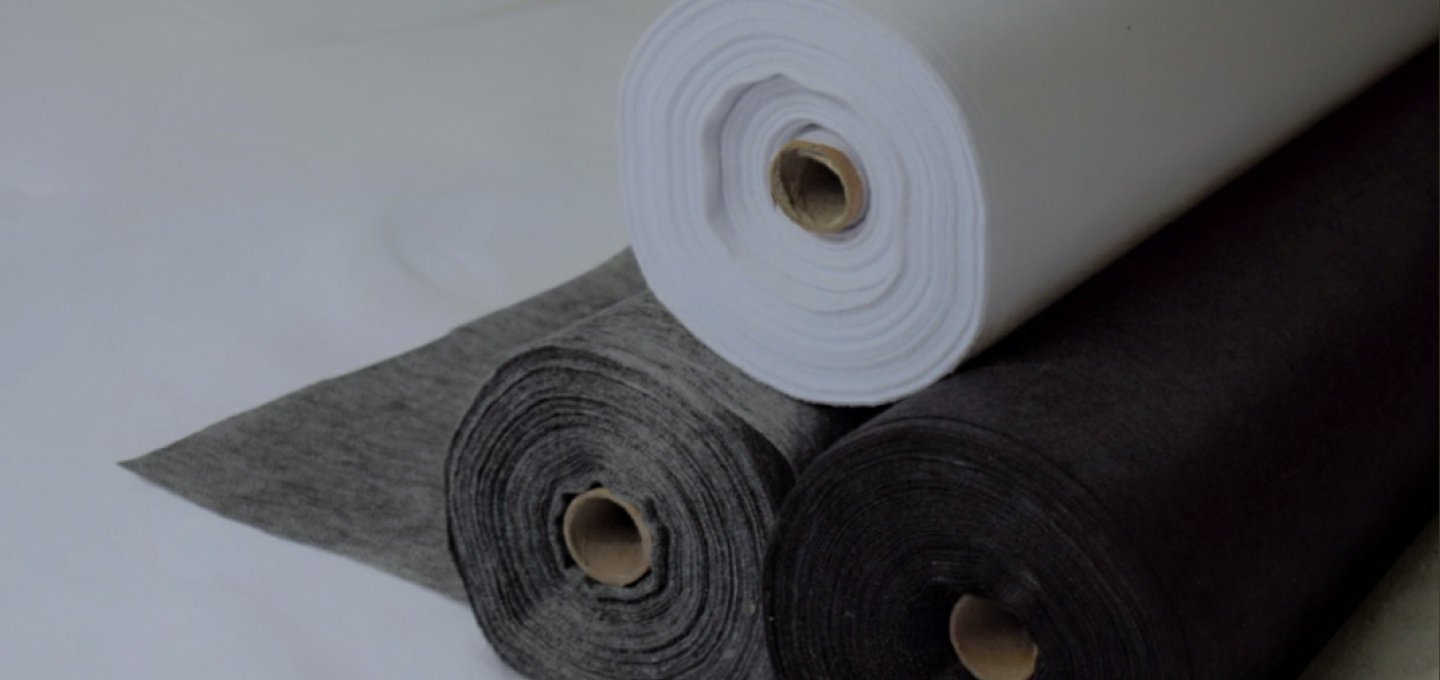
Interlining sits between the outer fabric and the lining of a garment, bonding under heat to give a panel its shape and stiffness. What separates non-woven from woven is how the base fabric is built.
Woven interlining is made from yarns interlaced in two directions, giving it strength and structure in every direction. Non woven fusible interlining swaps that structure for bonded polyester fibres instead, a lighter, more economical construction, but one with less inherent strength and shape retention.
Here’s the short version of what that difference means in practice:
- Woven holds a fixed, tailored shape and resists distortion, the right choice for the main body of a structured garment.
- Non-woven is lighter, easier to cut precisely, and more economical, well suited to smaller parts that need stiffness without bulk.
Neither one is a downgrade of the other. They’re built for different jobs, and the word “premium” applies to how well a material is matched to its job, not to which construction sounds more impressive on paper. A garment can be genuinely high-end and still use both types side by side, as long as each one is doing the work it’s actually suited for.
Where Non-Woven Fits Comfortably in Premium Garments
Plenty of premium, well-constructed garments use non-woven interlining, and buyers never notice, because it’s doing exactly what it’s supposed to do. Here’s where it belongs, even in high-end production:
- Collars and cuffs. Even on a premium formal shirt or a high-end sherwani’s undercollar, non-woven gives clean, crisp structure without adding unnecessary bulk.
- Plackets. The button placket on a premium shirt or kurta needs stability around the buttonholes, not full-body rigidity, non-woven interlining fabric handles this precisely and economically.
- Pockets and pocket flaps. On suits and blazers, smaller parts like pocket openings and flaps are commonly reinforced with non-woven, even in high-end tailoring, because the woven body fusing would add unnecessary weight here.
- Lightweight premium womenswear. For delicate or fine fashion fabrics, a light non-woven base adds stability without disturbing the drape, something a heavier woven base could easily ruin.
In all of these cases, the quality of the non-woven itself still matters. A well-made batch, with a consistent bond and no bubbling after pressing, reads as premium. A cheap, inconsistent batch reads as cut corners, regardless of how good the rest of the garment is. Buyers may never consciously notice a collar or placket, but they will notice if it puckers or bubbles after a few washes, and that’s exactly the kind of small failure that undermines an otherwise well-built garment.
Where Non-Woven Falls Short in Premium Construction
The one place non-woven consistently falls short is the main structural body of a heavy, tailored garment, and this matters more in Indian ethnic formal wear than almost anywhere else.
Here’s why it doesn’t work for full-body construction:
- It can’t hold a fixed silhouette the way a woven base can. Non woven interlining fabric simply doesn’t have the tensile strength to keep a chest panel from sagging or losing shape over time.
- It won’t survive repeated dry cleaning on a heavy panel. Sherwanis and bandgala jackets go through cycle after cycle of dry cleaning, and a lightweight base isn’t built to take that kind of repeated stress across a large panel.
- It doesn’t give the firm hand that defines structured formal wear. The chest and front of a sherwani or premium suit needs a certain firmness to hold its line, non-woven simply doesn’t carry that body.
If you’re constructing the full front of a suit, blazer, or sherwani, this isn’t the material for that job, no matter how premium the rest of the build is. Using it there doesn’t save money in the long run either, since the garment risks losing its shape and coming back as a complaint or a rework. The cost of a returned or reworked garment almost always outweighs whatever was saved on the interlining itself.
Non-Woven vs Woven: A Practical Comparison
Here’s a quick reference to settle the question for any specific garment part:
| Non-Woven | Woven | |
| Best for | Collars, cuffs, plackets, pockets, light fashion fabrics | Full-front suit, blazer, and sherwani body |
| Shape retention | Good for small, supported parts | Excellent, holds a full garment silhouette |
| Weight | Lighter, more economical | Heavier, more durable |
| Feel | Soft, precise, easy to cut | Firm, crisp, tailored |
| Use in premium garments | Yes, for the right parts | Yes, for structural panels |
| Risk if used wrong | Fine on small parts, wrong on a full-front body panel | Overbuilt and bulky on delicate, small parts |
The rule that settles almost every case: match the construction to the job the panel is doing, not to the garment’s overall price point. A premium garment can, and often does, use both types in different places.
How to Use Non-Woven Without Compromising a Premium Finish
If you’re deciding whether non-woven belongs in a premium build, run through this quick checklist:
- Ask what the panel needs to do. Hold a fixed shape across a large area, or add light support to a small part? The answer points you straight to woven or non-woven.
- Check the bonding quality before committing to a batch. A premium finish depends on a clean, even bond, no bubbling, no edge lifting, regardless of construction type.
- Test on your actual fashion fabric. Interlining behaves differently once it’s fused to a specific outer fabric. A quick sample press catches problems before a full production run.
- Don’t assume “non-woven” means “lower quality.” It means a different job. The quality bar, consistent GSM, clean bonding, accurate roll length, should be just as high as it is for woven.
- Reserve woven for the structural panels. Front bodies, chest panels, and full sherwani construction should stay on a woven base, even when every other part of the garment uses non-woven.
Getting this right is less about picking a “better” material and more about being deliberate, matching each panel to the construction that actually suits it.
How Double Ghoda Helps You Choose the Right Interlining
We supply both woven and non woven fusible interlining to garment manufacturers across India, with Surat and North India as our core markets. Our non-woven range covers collars, cuffs, plackets, and lighter garment parts, while our woven range is built for the full-front body of suits, blazers, and sherwanis.
Here’s how we help you get this decision right:
- Straight guidance on which construction fits your panel. Tell us what you’re building, and we’ll point you to the right product rather than sell you whatever’s easiest to move.
- Consistent quality in both ranges. The same bonding performance and hand-feel batch after batch, whether you’re ordering woven or non-woven.
- A full range under one supplier. Alongside interlining, we supply polyester lining, buttons, and garment accessories, so a premium build doesn’t mean juggling multiple vendors for different parts.
We work directly with garment manufacturers, wholesalers, and formal wear factories, not individual tailors or retail buyers, so every conversation starts with your actual construction requirement.
If you’re planning a premium garment and aren’t sure which parts call for non woven interlining fabric and which need a woven base, the fastest way to find out is to send us the garment breakdown before you place a bulk order. Reach out to Double Ghoda directly, or visit our website to see the full interlining range and place your enquiry.
Frequently Asked Questions
Can non-woven interlining be used in premium suits or sherwanis?
Not for the main body. The front panel of a suit or sherwani needs a woven base to hold its shape through construction and repeated dry cleaning. Non-woven works well in the same premium garment for smaller parts like collars, cuffs, and pockets.
Is non-woven interlining lower quality than woven?
No, it’s a different construction built for a different job. Non-woven suits smaller, lighter parts that need stiffness without bulk, while woven suits structural panels that must hold a fixed shape. Quality depends on how well the material is made and applied, not which type it is.
What’s the difference between non-woven and non-fusible interlining?
They’re not the same thing. Non-fusible interlining has no adhesive at all and must be sewn in by hand. Non-woven interlining is fusible, it bonds with heat, and “non-woven” refers only to how the base fabric itself is constructed.
Where is non-woven interlining most commonly used?
It’s most common in shirt collars, cuffs, plackets, pocket flaps, and lightweight fashion fabrics, anywhere a garment part needs stability and stiffness without the weight or cost of a woven base.
Link of related Articles
- Lightweight Interlining vs. Heavyweight Interlining
- A Beginner’s Guide to Interlining
- Choosing the Right Interlining