
Walk into any well-run garment factory and you’ll notice something: nobody debates the outer fabric colour for long, but the lining colour conversation can go on for days. That’s because a mismatched lining shows up the moment a customer tries the jacket on, unbuttons it, or catches a glimpse of the sleeve. Getting it right isn’t a finishing touch, it’s part of how your garment reads as premium or ordinary.
We work with suit factories, sherwani manufacturers and formal wear wholesalers every day at Double Ghoda, and colour choice is one of the questions we get asked about most. In this guide, we’ll walk you through how to choose polyester lining colour with confidence, avoid the mistakes that lead to rework, and source it consistently at wholesale volume.
Table of Contents
- Why Lining Colour Matters More Than You Think
- Black, Navy, White or Off-White: Matching Lining to Your Outer Fabric
- Matching Lining Colour to Garment Type: Suits, Sherwanis and Blazers
- Common Colour-Matching Mistakes That Cost You Rework
- Solid, Jacquard or Print: Choosing the Right Lining Finish
- Sourcing Consistent Lining Colour at Wholesale Scale
Why Lining Colour Matters More Than You Think
Lining fabric sits inside a suit, sherwani or blazer, hiding the seams, the interlining and the raw construction underneath. But it’s rarely fully hidden. It shows at the cuff when a sleeve is rolled back, at the front when a sherwani is worn open, and at the collar edge on a blazer. Buyers — especially at the premium end, notice this detail even when they can’t name why a garment feels finished.
Colour choice affects your garment in a few practical ways:
- Perceived quality — a lining that matches or intentionally contrasts with the outer fabric signals attention to detail; a random or mismatched colour signals the opposite
- Consistency across a production run — buyers expect every unit in an order to carry identical interior colour, not shade variation between batches
- Brand positioning — premium suit and sherwani brands often use lining colour deliberately, choosing jacquard patterns or unexpected contrast linings as a signature
- Practical wear — darker linings hide sweat marks and general soiling better over the life of the garment, which matters for daily-wear formal pieces
Getting this right at the sourcing stage saves you from a much more expensive problem later: garments returned or reworked because the interior didn’t match what the buyer expected.
Black, Navy, White or Off-White: Matching Lining to Your Outer Fabric
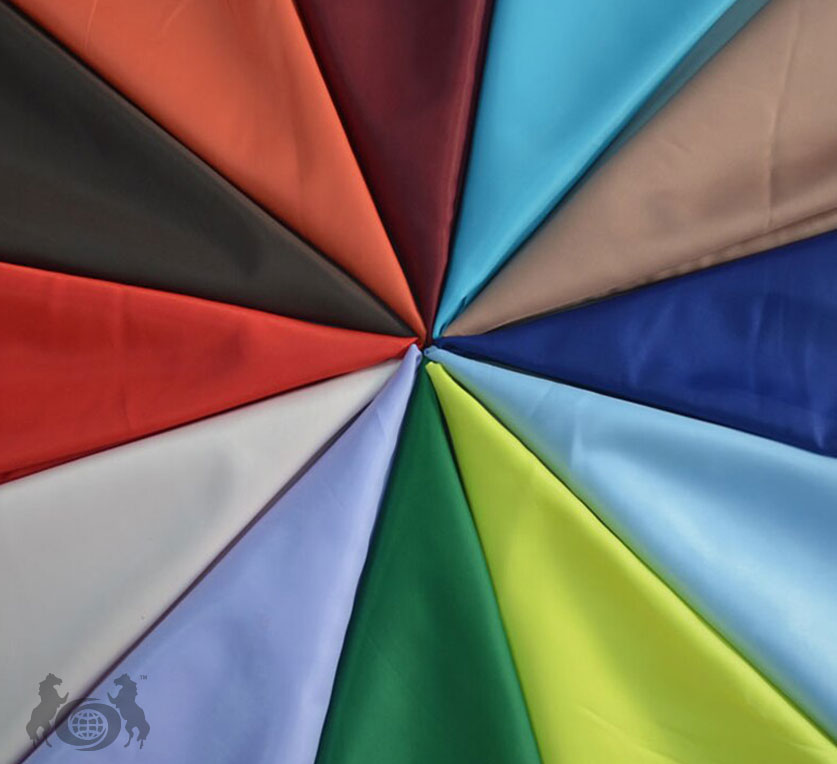
Most polyester lining fabric orders in India settle around four core colours – black, navy blue, white and off-white. There’s a reason these dominate: they work across the widest range of outer fabric shades without clashing, and they’re the easiest to source consistently at wholesale volume.
Here’s a practical way to think about matching:
| Outer Fabric Shade | Recommended Lining Colour | Why It Works |
| Black or charcoal suiting | Black | Seamless match, no visible contrast at seams |
| Navy or dark blue suiting | Navy blue or black | Navy blends naturally; black gives subtle contrast |
| Grey or light suiting | Off-white or white | Keeps the interior light and avoids a heavy look |
| Cream or ivory sherwani fabric | Off-white or matching pastel | Preserves the soft tone of ethnic formal wear |
| Brocade or embroidered sherwani | Black or maroon | Dark lining lets embroidery detail stand out |
| Bright or patterned outer fabric | Neutral (black, navy or white) | Keeps the interior from competing with the pattern |
A general rule that holds across most formal wear: match tone-on-tone for a quiet, premium finish, or go for deliberate contrast (a bright lining inside a dark, restrained outer fabric) if the brand wants a distinctive interior reveal. What you should avoid is a near-match that’s slightly off, a lining that’s almost but not quite the same shade as the outer fabric reads as a mistake rather than a choice.
Matching Lining Colour to Garment Type: Suits, Sherwanis and Blazers
Different garment categories carry different colour expectations, largely because of how much of the lining is actually visible in normal wear.
Suits — For suit lining, black, navy and grey dominate because these garments are typically worn buttoned, with the lining only glimpsed at the cuff or when the jacket is removed. Satin or jacquard polyester lining in these tones covers the vast majority of suit orders we see.
Sherwanis — Sherwanis are often worn open or half-open, which means the lining colour is on full display. This is where colour choice matters most. Black and dark navy jacquard remain the most-ordered combination for sherwani interiors, since the pattern reads as premium against rich outer fabrics like brocade and silk blends. For lighter cream or pastel sherwanis, manufacturers often move to off-white or a tonal pastel to keep the whole garment feeling cohesive.
Blazers — Blazers split into two colour approaches. Formal, corporate-style blazers usually stay conservative, black, navy or grey satin. Fashion-forward or event blazers sometimes use a contrasting lining colour deliberately, treating the interior reveal as part of the design.
Bandgala and Nehru jackets — Since the stand collar is fully visible and the jacket is worn closed to the neck, lining colour matters mainly at the front opening and cuffs. Jacquard or satin dobby in a tone that complements the outer fabric is the common choice here.
A quick summary table:
| Garment | Typical Lining Colour Approach |
| Formal suit | Tone-matched black, navy or grey |
| Sherwani (worn open) | Black or navy jacquard, or tonal pastel for light fabrics |
| Blazer (corporate) | Conservative tone-matched satin |
| Blazer (fashion) | Contrast colour as design feature |
| Bandgala / Nehru jacket | Jacquard or satin dobby, complementary tone |
Common Colour-Matching Mistakes That Cost You Rework
Even experienced production teams run into the same handful of colour issues repeatedly. Here are the ones worth watching for:
- Ordering lining before finalising the outer fabric colour. Shade decisions made too early often need to be revisited once the actual fabric roll arrives, since dye lots vary.
- Assuming “black” is one colour. Black lining can carry a warm or cool undertone depending on the dye batch. Pairing a cool-toned black lining with a warm-toned black suiting fabric can look mismatched under certain lighting.
- Mixing dye lots mid-order. Reordering lining partway through a production run from a different batch, even in the “same” colour, risks a visible shade shift between garments.
- Choosing lining weight without checking colour availability. Not every colour is available in every GSM or weave, check both together before finalising your cutting plan.
- Ignoring how the lining looks under factory lighting versus daylight. A colour that looks fine under fluorescent factory light can shift noticeably in natural light, which is when buyers usually inspect the garment.
The fix for most of these is straightforward: lock your outer fabric first, request a lining sample against that exact fabric, and confirm before you commit to bulk quantity.
Solid, Jacquard or Print: Choosing the Right Lining Finish
Colour and finish work together, so it helps to think about both at once. Double Ghoda supplies polyester lining fabric across four weave types, and each carries a different colour personality.
- Jacquard — Has a woven pattern on the surface, which means colour reads with texture and shine variation built in. This is the top-selling choice for sherwani and premium suit interiors because the pattern signals quality even in a single dominant colour like black or navy.
- Satin Dobby — Adds a subtle textured pattern to a satin base. Slightly richer than plain satin, good for premium suits and blazers where you want more surface interest than a flat colour but less pattern than jacquard.
- Plain Satin — Smooth and glossy, colour reads clean and consistent across the whole panel. This is the standard, cost-effective choice for suits and blazers where a solid, reliable colour match matters more than surface pattern.
- Taffeta — Lightweight and crisp, typically ordered in solid black or white. Colour here tends toward the practical end, taffeta is chosen more for economy and low bulk than for a decorative colour statement.
If your priority is a premium visual signal, jacquard in black or navy is the safest, most recognised choice in the Indian formal wear trade. If your priority is consistent, budget-friendly colour across a large production run, satin or taffeta in solid tones gives you that reliability.
Sourcing Consistent Lining Colour at Wholesale Scale
Choosing the right colour on paper is only half the job, the bigger challenge at wholesale volume is getting the same shade every time you reorder. A few things worth checking with any polyester lining supplier before you commit:
- Do they hold dye lots for reorders, or does every order risk a slightly different batch?
- Can they show you the actual roll, not just a swatch card that may not match production stock?
- Do they stock your required colour in the weave and GSM you need, rather than asking you to compromise on one or the other?
- What’s their minimum order quantity, and does it fit your production run?
This is exactly what we focus on at Double Ghoda. We hold our lining fabric in consistent dye lots at our Bhiwandi warehouse, across black, navy, white, off-white and a wider range that includes maroon, brown, grey, green and purple, in Jacquard, Satin Dobby, Satin and Taffeta weaves from 52 to 85 GSM. If you’re reordering the same colour for a repeat production run, we can match you to the same batch wherever stock allows, so your buyers never see a shade shift between deliveries.
Our minimum order is 1,000 meters, supplied in 45m rolls, and we work only with garment manufacturers, formal wear wholesalers and clothing brands, not individual tailors or retail buyers. If you tell us your outer fabric colour, garment type and quantity, we’ll recommend the lining colour and weave that fits, and get you a sample before you commit to bulk.
Frequently Asked Questions
What is the best lining colour for a black suit? Black is the safest and most common choice for a black suit, giving a seamless match at the seams and cuffs. Some manufacturers use a subtle contrast, like dark grey or navy, as a deliberate design detail, but true tone-matched black remains the standard choice for formal suiting.
What colour lining is best for a sherwani? Black and dark navy jacquard are the most-ordered lining colours for sherwanis, since the interior is often visible when the garment is worn open. For lighter cream or pastel sherwani fabrics, off-white or a matching pastel tone keeps the overall look cohesive.
Should lining match or contrast with the outer fabric? Both approaches work, depending on the effect you want. Tone-matched lining gives a quiet, seamless, premium finish. Contrast lining, using a bold or unexpected colour against a restrained outer fabric, works well for brands that want the interior reveal to be part of the design statement.
Why does black lining sometimes look mismatched with black suiting fabric? Black dye can carry a warm or cool undertone depending on the batch, so two “black” fabrics from different sources can look slightly different under certain lighting. Always check a lining sample against your actual fabric roll, not just a swatch card, before committing to bulk.
What is the difference between jacquard and satin lining colour? Jacquard lining carries a woven pattern, so colour reads with built-in texture and shine variation, giving a premium look even in a single shade like black or navy. Satin lining has a smooth, glossy, flat surface, so the colour reads clean and uniform across the whole panel.
How do I make sure my lining colour stays consistent across a bulk order? Order your full production quantity from a single dye lot where possible, and confirm with your supplier that they can match reorders to the same batch. Reordering the same named colour from a different lot, even from the same supplier, can carry a slight shade shift.
What is the minimum order quantity for polyester lining fabric in specific colours? Most wholesale suppliers, including Double Ghoda, set a minimum order of around 1,000 meters for polyester lining fabric, supplied in standard roll lengths. Colour availability at this quantity depends on current stock, so it’s worth confirming your exact shade and weave before finalising your order.
Can I get a custom lining colour for my brand? Custom colours and prints are generally available for polyester lining fabric on bulk orders, though lead times and minimum quantities are usually higher than for stock colours. It’s best to confirm your required shade against a physical sample, and check GSM and weave availability, before committing to a custom colour run.
Link of related Articles
- Lightweight Interlining vs. Heavyweight Interlining
- A Beginner’s Guide to Interlining
- Choosing the Right Interlining