
You have the outer fabric sorted. The interlining is confirmed. But when it comes to the lining, you are stuck between two options — satin or jacquard.
Both are polyester lining types. Both are widely used in Indian ethnic formal wear. Both look good on the roll. But inside a sherwani, a bandhgala, or a premium blazer, they behave differently — and the wrong choice shows up in ways your customer will notice.
The answer depends on one thing — what your garment is worth to your customer. Here is how to match the lining to that.
Table of Contents
- What Satin Lining Actually Is
- What Jacquard Lining Actually Is
- Satin vs Jacquard — The Real Differences
- Which Polyester Lining Works for Which Ethnic Formal Garment
- What to Check Before Ordering Satin or Jacquard Lining
What Satin Lining Actually Is
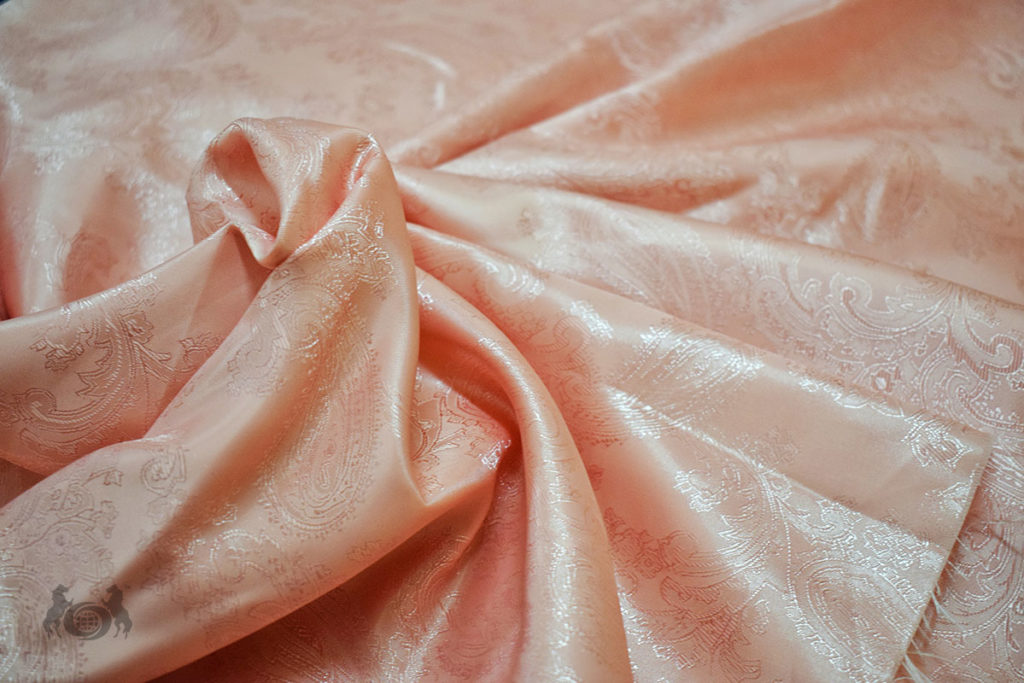
Satin is not a fibre — it is a weave structure. Satin polyester lining fabric is woven in a way that floats more threads on the surface, creating a smooth, high-sheen face on one side and a flatter, matte finish on the other.
That smooth surface is what makes satin the most widely used garment lining in Indian manufacturing. It reduces friction — your garment slides on and off without catching on the wearer’s clothing underneath. For suits, blazers, and lighter sherwanis worn daily or at formal events, this ease of wear is a practical requirement, not a luxury.
What satin lining delivers:
- High surface sheen — the glossy face gives the interior a clean, premium look when the garment is opened
- Low friction — the smooth surface means the garment moves with the wearer, not against them
- Lightweight — adds minimal bulk, which is important for structured garments where the interlining already adds body
- High tearing strength — despite being lightweight, satin lining holds up well through regular wear and dry cleaning
- Easy to cut and sew — consistent weave structure means predictable behaviour at production scale
- Wrinkle resistance — the fabric recovers well and does not stay creased after normal wear
Where satin sits in the GSM range:
Our lining range covers 55 GSM to 85 GSM. Satin typically sits in the lighter end of this range — making it well suited to garments where you want a clean interior finish without adding weight.
The limitation of satin:
Satin is smooth and functional — but it is plain. There is no pattern, no texture, no visual complexity. For volume production of mid-range garments, this is absolutely fine. But for premium ethnic formal wear where the interior of the garment is part of the quality story — a sherwani at a wedding, a bandhgala for a formal reception — plain satin can feel like a missed opportunity.
This is exactly where jacquard comes in.
What Jacquard Lining Actually Is
Jacquard is also a weave structure — but a significantly more complex one. Jacquard polyester lining is woven on a specialised loom that controls individual threads, allowing intricate patterns to be built directly into the fabric structure itself.
This is the key distinction: the pattern in jacquard lining is not printed on. It is not applied on top. It is woven in. That means it does not fade, peel, crack, or wash out. The pattern is as durable as the fabric itself.
Jacquard is the top-selling lining type in our range — and across the Indian market for premium ethnic formal wear, it has become the expected standard for sherwanis, bandhgalas, and high-end suit jackets.
What jacquard lining delivers:
- Woven-in pattern — intricate geometric, floral, or traditional motifs built into the fabric structure, not printed
- Premium interior signal — when your customer opens the garment, the pattern immediately communicates quality and attention to detail
- Slightly more body — sits a little heavier than plain satin, which helps it lay flat against heavy outer fabrics
- Durability of pattern — because the design is woven, it survives repeated dry cleaning without any degradation
- High tearing strength — same structural durability as satin, with the added visual complexity
- Available in multiple colours — including black, blue, white, and off-white, which are the top-selling colours for ethnic formal wear lining in India
Where jacquard sits in the market:
Jacquard lining for suits and sherwanis is used by manufacturers producing in the mid-to-premium segment — where the buyer is paying for a complete garment experience, not just the outer fabric. Large ethnic formal wear brands consistently specify jacquard for their higher-value pieces because it elevates the perceived quality of the entire garment.
Satin vs Jacquard — The Real Differences
Now that you understand what each one is, here is how they compare across the factors that actually matter in production:
| Factor | Satin | Jacquard |
| Surface finish | High sheen, smooth, plain | Woven pattern, textured, visual depth |
| Pattern | None | Woven-in geometric or floral motif |
| Weight | Lighter end of GSM range | Slightly heavier, more body |
| Interior signal | Clean, functional | Premium, crafted |
| Friction | Very low — slides easily | Low — slightly more grip than satin |
| Durability | High | High — pattern does not fade |
| Production ease | Easy to cut and sew | Slight care needed for pattern alignment |
| Best price point | Mid-range garments | Premium and high-end garments |
| Top use | Suits, blazers, mid-range sherwanis | Premium sherwanis, bandhgalas, high-end suits |
The friction question
Jacquard has very slightly more surface grip than plain satin because of the woven texture. For most garments this makes no practical difference — the lining still performs smoothly. But for garments worn specifically over a dress shirt or heavily starched clothing, satin’s ultra-smooth surface can feel marginally easier in use.
The pattern alignment question
If you are using jacquard with a directional or large-scale pattern, your cutting team needs to be careful about pattern alignment at seams. This adds a small amount of time and care to the cutting process. For volume production runs, factor this into your planning. Plain satin has no such requirement.
The price difference
Jacquard carries a higher price than plain satin — expected given the complexity of the weave. But for premium ethnic formal wear, the cost difference per garment is small relative to the quality signal it adds to the interior. Most experienced manufacturers in Surat and Ludhiana factor this in from the start rather than substituting jacquard with satin on high-value pieces.
Which Polyester Lining Works for Which Ethnic Formal Garment
This is the decision most buyers are actually trying to make. Here is how to match lining type to garment — based on what works in real production across India’s ethnic formal wear market:
- Sherwanis — go jacquard
A premium sherwani is a complete garment experience. The outer fabric gets the most attention, but the first thing the wearer feels is the interior — and when they or their tailor opens the garment, the lining is immediately visible. Jacquard in black, navy, or off-white is the standard for sherwanis in the mid-to-premium segment. It matches the weight of heavy outer fabrics — brocade, silk jacquard, heavy embroidered fabric — and sits flat without looking collapsed against a dense outer layer.
For budget sherwanis in the volume segment, satin is acceptable and widely used. But if your garment is priced above the entry level, jacquard is the right choice.
- Bandhgalas and Nehru jackets — jacquard or taffeta
The bandhgala is a structured, formal garment where the interior construction is often visible when the jacket is hung or displayed. Jacquard gives it a finished, crafted interior that matches the garment’s formal character. Taffeta is a good alternative for very structured bandhgalas where a crisper interior is preferred.
Plain satin can feel too lightweight and informal for a well-made bandhgala — the lining does not visually match the garment’s character.
- Formal blazers and suit jackets — satin for volume, jacquard for premium
For mid-range blazers and suit jackets produced in volume, satin is the practical standard. It is functional, easy to work with, and gives a clean interior at a price that works for the garment’s positioning.
For branded suits, premium blazers, or garments produced for a specific label with quality standards — jacquard is the right upgrade. The cost per metre difference is minimal relative to the overall garment cost, and the interior quality signal is significant.
- Safari suits and Indo-Western jackets — satin
These garment types are typically produced for a slightly more relaxed formal context — corporate gifting, festive occasions, semi-formal events. Satin in a dark colour — black is the most versatile — is the right call here. It is functional, easy, and appropriate for the garment’s positioning. Jacquard would be over-specifying for most safari suit production.
- Wedding occasion wear and festive ethnic garments — jacquard
Any garment produced specifically for wedding occasions or premium festive wear — whether for the groom, groomsmen, or family members — warrants jacquard. These garments are high-visibility, high-value purchases where the interior is part of the quality assessment. Satin in this context feels like a shortcut.
Quick reference:
| Garment | Recommended Lining | Reason |
| Premium sherwani | Jacquard | Interior quality signal, weight match |
| Budget/volume sherwani | Satin | Functional, cost-appropriate |
| Bandhgala / Nehru jacket | Jacquard or Taffeta | Structured interior, formal character |
| Premium blazer / branded suit | Jacquard | Elevates interior finish |
| Mid-range blazer / suit | Satin | Volume production standard |
| Safari suit | Satin | Functional, appropriate weight |
| Wedding occasion wear | Jacquard | High-value garment, full experience |
What to Check Before Ordering Satin or Jacquard Lining
Once you have made the satin vs jacquard decision for your garment range, here is what to confirm before placing your bulk order:
Step 1 — Match GSM to your outer fabric
Our polyester lining fabric range covers 55 GSM to 85 GSM. Heavier outer fabrics — brocade, silk jacquard, heavy embroidered fabric — need a lining at the upper end of this range so it sits flat and does not look collapsed inside the garment. Lighter outer fabrics work well with lining at the lower end. Always match lining weight to outer fabric weight before ordering.
Step 2 — Confirm your colour requirement
The top-selling colours in India’s ethnic formal wear market are:
- Black — the most versatile across all garment types and outer colours
- Blue — navy and royal blue are popular for sherwanis and formal ethnic wear
- White and off-white — for cream, ivory, and lighter sherwanis and occasion wear
Both satin and jacquard are available in multiple colours. Confirm availability for your specific type and order quantity before committing — particularly for jacquard, where specific pattern and colour combinations may have lead time implications.
Step 3 — Request a sample before bulk ordering
Never order in bulk without testing a sample against your actual outer fabric. Check:
- How it sits against the outer fabric — does it lay flat or gather?
- How the surface feels — smooth enough for ease of wear?
- For jacquard — is the pattern clean and even across the full width?
- How it behaves after a dry clean — does it hold its finish?
Step 4 — Confirm roll length and MOQ
Our polyester lining comes in 45-metre rolls. Minimum order quantity is 1,000 metres. Plan your cutting schedules and order quantities based on these figures. For high-volume production before wedding season — when demand for jacquard lining for sherwanis spikes across Surat, Ludhiana, and Delhi — confirm availability and lead time well in advance.
Step 5 — Consider sourcing lining and interlining together
If you are already sourcing woven fusible interlining from us, consolidating your lining order with the same supplier simplifies procurement and gives you one point of contact for your core garment construction inputs. Consistent supplier means consistent quality across your full production.
The satin vs jacquard decision is straightforward once you know your garment positioning. Volume mid-range production — satin. Premium ethnic formal wear where the interior is part of the quality story — jacquard. And for bandhgalas and heavy structured pieces where you need a crisper interior — taffeta is worth considering too.
If you are producing across multiple price points, you likely need both in your inventory. We supply both in bulk, in the colours and GSM range that Indian ethnic formal wear actually needs.
Link of related Articles
- Lightweight Interlining vs. Heavyweight Interlining
- A Beginner’s Guide to Interlining
- Choosing the Right Interlining