

Yes, fusible interlining can shrink or change dimensions. Heat and pressure during fusing, and later washing or dry cleaning, can cause a small amount of dimensional change in the base fabric, the adhesive coating, or both. In most cases the change is minor and expected. The risk comes when it doesn’t match the shrinkage of your shell fabric, that’s what causes puckering, bubbling, or a panel that no longer lies flat.
This is why we always recommend you don’t take a roll straight into bulk cutting. Test a sample of the batch first, fuse it, cool it, and put it through the same washing or dry-cleaning process your finished garment will face, before you commit the full order to production.
Here’s why dimensional change happens, what it does to a garment when it’s out of step with the shell fabric, and how you can run a practical pre-test on any batch before full production starts.
Why Does Fusible Interlining Shrink?
Dimensional change happens because heat, moisture, and mechanical tension act on the fibers, the bonding or weave structure, and the adhesive coating, and none of those materials respond identically.
A few factors drive it:
- Heat-setting during fusing. Your press applies heat and pressure to melt the adhesive and bond it to the shell fabric. That same heat can relax residual tension left in the interlining fabric from manufacturing, letting fibers or yarns pull back slightly.
- Construction type. A woven base holds its yarns in a fixed grid, so it tends to move less than a bonded-fiber, non-woven structure. Non-woven grades can respond a little differently to heat, and their behavior can vary more between production lots.
- Moisture exposure. Washing or dry cleaning introduces moisture and mechanical agitation, which can cause a second, smaller round of dimensional change after the garment leaves your factory.
- Coating and finishing. The adhesive coating and any pre-treatment applied to the base cloth can affect how the material relaxes under heat, independent of the fiber itself.
- Roll-to-roll and lot-to-lot variation. Even within the same specification, raw material and finishing can vary slightly between production runs. That’s one reason a batch that performed well before still deserves its own check.
None of this means the material is defective. It means dimensional behavior is a real, measurable property that varies by construction and by batch, and that’s exactly what a pre-test is designed to catch before it reaches your finished garment.
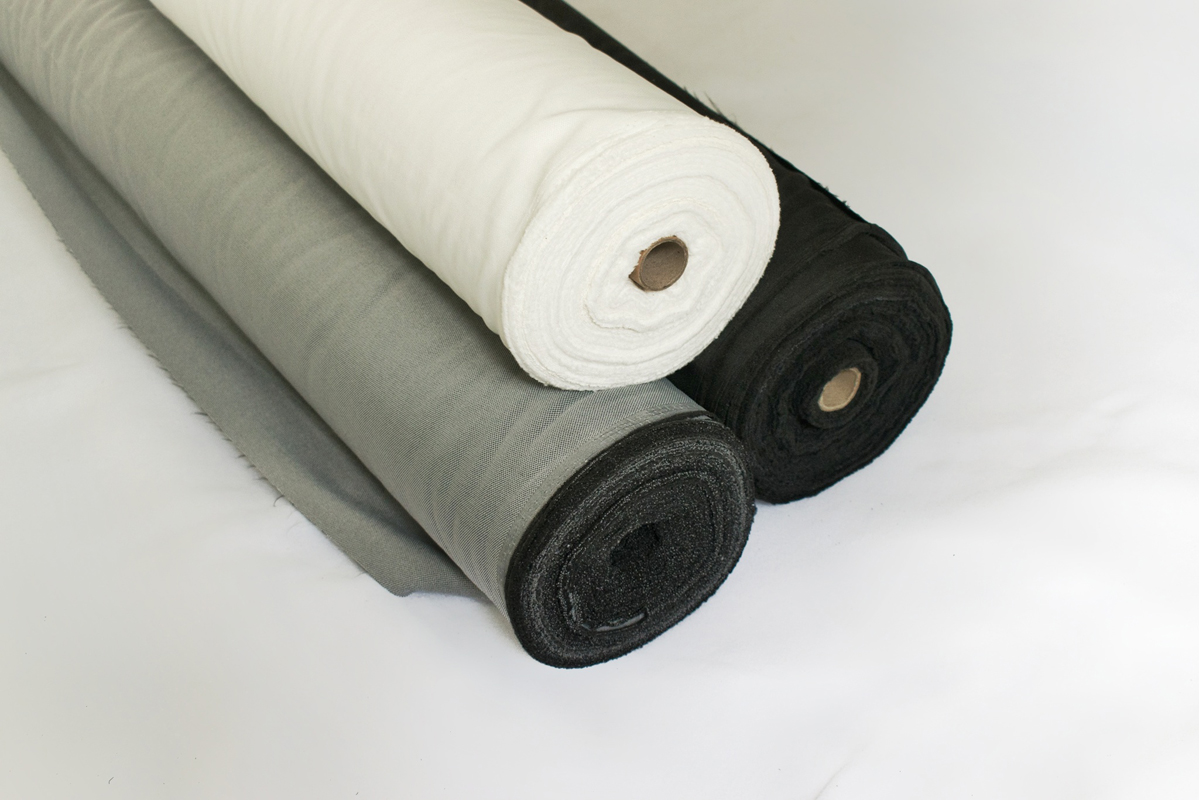
What Happens When Interlining Shrinks Differently From the Fabric?
The problem isn’t shrinkage on its own, it’s a mismatch between how much the interlining moves and how much your shell fabric moves. When the two are out of step, the bonded panel can’t stay flat.
Typical signs on a finished panel include:
Bubbling or puckering across the fused area, especially visible on structured suit fronts and lapels under good light
Edge lifting or delamination at panel edges, where uneven tension pulls at the bond line
Distorted seams where a fused panel no longer matches the dimensions of the panel it’s sewn to
A stiffer or looser hand-feel than intended, if the material pulled tighter or looser than the fabric around it
Problems that only appear after the first wash or dry clean, once the garment has been through the cleaning cycle your customer will actually use
Body fusing panels are worth watching especially closely, since a full-front chest piece covers a large, visible area where any mismatch shows immediately. This is why shrinkage compatibility between the interlining and your shell fabric matters more than the interlining’s shrinkage in isolation. A pair that each moves by a similar amount, in a similar direction, will fuse and hold its shape. A pair that moves at different rates is where rejects come from, usually discovered only after cutting, fusing, and sometimes after the garment has already shipped.
How to Pre-Test a Fusible Interlining Batch
The goal of a pre-test is simple: fuse a sample the same way you’ll fuse the bulk order, then put it through the same finishing or care process your garment will see, and check what moved.
This is general industry practice, not a specification tied to any one supplier, you should run it against your own press settings and your own shell fabric.
- Cut swatches from the actual roll of fusing cloth you plan to use, not from an old sample card. A batch pre-test only means something if it tests the batch you’re about to cut.
- Mark reference measurements before fusing. Draw a square or grid on the swatch (a 10cm x 10cm box works well) so you have a fixed, measurable baseline in both directions.
- Fuse the swatch using your actual production settings, the same press temperature, pressure, and dwell time you use on your shop floor, not a generic default.
- Let it cool fully and flat before measuring, and check the bond itself: no bubbling, no edge lifting, an even, consistent adhesion across the panel.
- Re-measure the marked square and record any dimensional change in both length and width.
- Run the swatch through your garment’s expected finishing or care process, washing or dry cleaning, using the same cycle the finished garment will go through, then measure again.
- Fuse a matching swatch of your shell fabric through the same steps and compare the two results side by side. What matters is the gap between them, not either number alone.
- Repeat across a few points in the roll, not just one cut, to see whether the batch is consistent from end to end.
Keep the results on file. A short record, swatch source, press settings, before-and-after measurements, and the shell fabric comparison, turns this from a one-off check into a repeatable step your team can run on every new delivery.
What to Check Before Starting Full Production
A pre-test only pays off if the results actually change a decision. Before you release a batch to bulk cutting, check:
- Dimensional change is within what your garment construction can tolerate, compared against your shell fabric’s own movement
- The bond held cleanly, no bubbling, delamination, or uneven adhesion on the test swatch after fusing and after washing or dry cleaning
- Hand-feel and appearance are consistent across the swatches you tested from different points in the roll
- The batch matches what you ordered, GSM, color, and construction consistent with previous deliveries of the same product
- Results are compared against the specific shell fabric for this order, not a general assumption from a previous style
- The test reflects your actual press settings and care instructions, not a generic lab default that doesn’t match your factory floor
If a batch passes on all of these, it’s ready for full production. For heavy, full-front body fusing especially, it’s far cheaper to catch a problem on a swatch than after a full run of panels has already been cut and fused.
Why Choose Double Ghoda for Fusible Interlining
Batch pre-testing works best when your supplier’s own process supports consistency in the first place. That’s something we take seriously: uniform GSM, hand-feel, and shrinkage across every delivery, so when you reorder from the same quality lot, you get the same product performance every time.
That consistency matters directly to the pre-testing process above. If a supplier’s deliveries vary widely from batch to batch, a pre-test result from one roll won’t tell you much about the next one, every new delivery becomes an unknown you have to test from scratch. When we keep our deliveries consistent, your pre-test results stay representative of the batches that follow, which helps your sourcing and quality team decide how often you actually need to re-test.
We also measure and verify every roll before dispatch, which matters for your production planning even beyond shrinkage. On fusing performance, our woven fusing cloth uses PA double-dot coating, a staggered two-coat adhesive pattern that gives faster, more even fusing and stronger resistance to delamination, which is directly relevant to how cleanly your panel bonds during the pre-test steps above. Our woven interlining is also dry-clean safe and OEKO-TEX® Standard 100 certified, and our range covers both woven and non-woven grades across a wide GSM band for different garment parts.
None of this replaces running your own pre-test on your own batch, press, and shell fabric. But when you source from a supplier that treats consistency as a stated priority, and you verify it yourself with the steps above, you cut down the number of surprises a new delivery can bring to your production floor.
FAQs
Does interlining shrink during fusing?
Yes. It can shrink or change dimensions slightly during fusing and again during washing or dry cleaning. The amount varies by construction and batch, which is why we recommend pre-testing a sample before full production.
What causes interlining shrinkage?
Heat and pressure from the press can relax residual tension in the base fabric, and moisture from later washing or dry cleaning can cause a further small dimensional change. Fiber type, coating, and batch-to-batch variation all play a role.
How do I pre-test a batch before production?
Cut swatches from the actual roll, mark a measured grid, fuse them using your real press settings, cool and measure, then run them through your garment’s expected wash or dry-clean cycle and measure again. Compare the results against a swatch of your shell fabric tested the same way.
Why does shrinkage compatibility with the shell fabric matter?
What causes problems isn’t dimensional change on its own, it’s a mismatch between how much the interlining moves and how much your shell fabric moves. A close match holds flat; a mismatch shows up as bubbling, puckering, or distorted seams.
What should I check before bulk production?
Confirm the dimensional change is within tolerance against your shell fabric, the bond held cleanly with no bubbling or delamination, hand-feel is consistent across the roll, and the batch matches your previous order’s specification.
Is batch-to-batch consistency the same as zero shrinkage?
o. Consistency means each delivery behaves the same way as the last one, not that there’s no dimensional change at all. Sourcing from a consistent supplier makes your pre-test results more reliable predictors for future batches, it doesn’t remove the need to test each new delivery.
Link of related Articles
- Lightweight Interlining vs. Heavyweight Interlining
- A Beginner’s Guide to Interlining
- Choosing the Right Interlining