
If you’re sourcing lining for garment production in Ludhiana, the short answer is this: the right polyester lining isn’t chosen just because it’s polyester — it’s chosen by matching garment type, fabric construction, GSM, weave and finish to what the garment actually needs. “Polyester” tells you the fibre; it doesn’t tell you whether a lining will drape correctly inside a structured blazer or hold its shade across a bulk reorder.
This guide walks through what polyester lining is, how GSM and weave affect your choice, which options suit different garment types, and what to check before placing a bulk order — whether you’re producing suits, blazers, jackets or ethnic wear.
What Is Polyester Lining Fabric and Where Is It Used in Garment Production?
Polyester lining fabric is the interior finishing layer sewn inside a garment, sitting between the outer shell and the wearer. Unlike the outer fabric, which is chosen for appearance and durability, lining is chosen for a different job: covering the inside construction, adding a smooth wearing surface, and giving the garment a finished interior.
In practical terms, lining sits over the fusible interlining and seam work on the inside of a suit, blazer, jacket or sherwani, hiding the tailoring detail that shouldn’t be visible from inside the garment. It also gives the wearer a smooth surface that the outer fabric can slide over comfortably.
Selection isn’t just about picking “polyester” as a fibre — GSM (the fabric’s weight) and weave type both shape how the lining behaves once it’s sewn in. A lighter, crisper weave suits a different application than a heavier, patterned one, which is why the next two sections cover GSM and weave before garment type.
Why Is Polyester Lining Fabric Commonly Used in Ludhiana Garment Manufacturing?
If you’re producing formal or ethnic garments in Ludhiana, the lining decision comes down to the same fundamentals any garment manufacturer works through — garment type, outer fabric, and the finish you’re aiming for — rather than any single lining being the automatic choice for the region.
A few general considerations are worth thinking through as you plan a production run:
- Garment type — a structured blazer, a sherwani, and a lighter jacket each place different demands on lining.
- Outer fabric weight — a heavier outer shell generally pairs better with a lining that won’t feel flimsy against it, while a lighter shell can be weighed down by too heavy a lining.
- Lining weight and weave — these affect drape, hand-feel and how the finished interior looks when the garment is worn open.
- Finish expectations — buyers evaluating a premium sherwani or blazer often judge interior quality alongside the outer construction.
- Production volume — bulk runs need consistency across rolls and reorders, which matters more as order size grows.
These are general production considerations that any sourcing team — in Ludhiana or elsewhere — works through when finalising a lining specification. The right way to approach it is to treat lining as one more construction decision tied to your specific garment, rather than a fixed choice.
How Do GSM and Weave Type Affect Polyester Lining Selection?
GSM and weave together determine how a lining behaves once it’s sewn into a garment — too light and it can wrinkle or feel insubstantial; too heavy and it adds bulk the outer fabric doesn’t need.
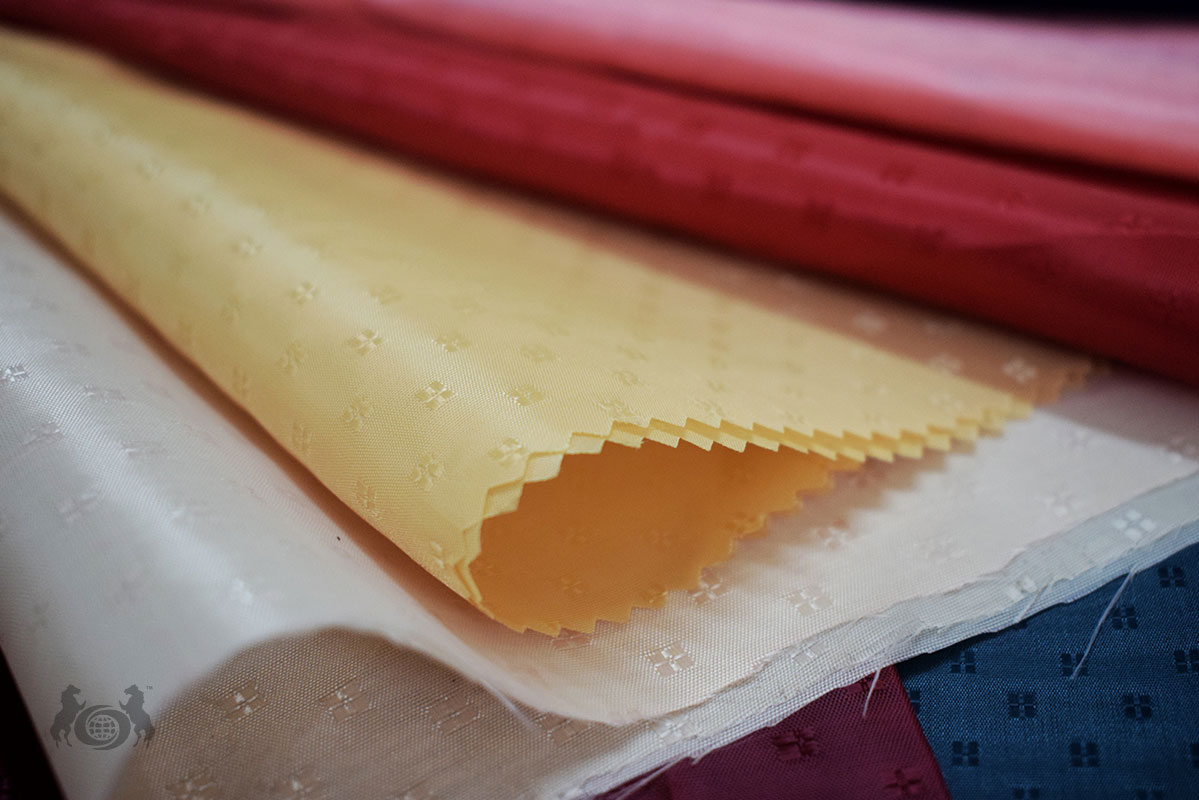
Polyester lining is available across a range of weave types, each with its own typical GSM band and surface character:
| Weave Type | Typical GSM | Surface |
| Jacquard | 80–85 GSM | Patterned weave |
| Satin Dobby | 72–82 GSM | Textured satin |
| Plain Satin | 67–70 GSM | Smooth & glossy |
| Taffeta (190T) | 52–65 GSM | Crisp & lightweight |
Jacquard sits at the heavier, more textured end of the range, with a woven pattern on the surface. Satin Dobby combines a dobby texture with a satin base, sitting slightly lighter than jacquard. Plain satin is smooth and glossy at a mid-range weight. Taffeta, identified as a 190T construction, is the lightest and crispest of the group.
As a general principle, lighter GSM and crisper weaves like taffeta suit garments where bulk needs to be minimised, while heavier, more textured weaves like jacquard add more body and a richer interior feel — useful where the lining itself contributes to the garment’s perceived quality. Matching GSM and weave to your outer fabric and construction is the starting point before you look at garment-specific applications.
Which Polyester Lining Fabric Works for Different Garment Types?
There’s no single lining that works across every garment — the right choice depends on comparing the garment’s construction against the lining’s GSM, weave and stated application.
A few examples of how this plays out:
- Sherwanis — often produced with an interior that’s visible when the garment is worn open, which is one reason heavier, patterned weaves like jacquard or satin dobby are commonly used for this category.
- Suits and blazers — structured formal wear where satin or satin dobby are typical choices, balancing weight, drape and durability.
- Safari suits and lighter outerwear — where a lighter, crisper option like taffeta can help keep the interior from adding unwanted bulk.
Before ordering, compare the garment construction with the lining’s GSM, weave, and stated application rather than defaulting to whichever lining you’ve used before. A sherwani and a lightweight jacket don’t call for the same interior fabric, even if both are formal garments, and getting this match right at the sourcing stage avoids rework later in production.
What Should Ludhiana Garment Manufacturers Check Before Ordering Lining Fabric?
Before placing a bulk order, run through a short checklist to confirm the lining actually fits your production requirement — this applies whether you’re sourcing from Ludhiana or any other manufacturing hub.
- GSM — does the weight suit your outer fabric and the finish you’re aiming for?
- Weave type — jacquard, satin, satin dobby or taffeta — does the surface match your garment’s positioning?
- Fabric construction — how the lining is built, and whether it’s consistent with what you’ve specified.
- Garment application — is this lining suited to the specific garment category you’re producing?
- Compatibility with the outer fabric — does the lining’s weight and drape work with your shell fabric?
- Required finish and feel — smooth and glossy versus textured, depending on the garment.
- Sample evaluation — testing a sample against your actual construction before committing to volume.
- Bulk-order consistency — whether the same shade and hand-feel will be available across reorders.
- Product specification — confirming GSM, weave and colour match what you’ve requested, in writing.
- Quantity requirements — confirming your order volume against what the supplier can commit to.
Requesting a sample before a bulk order is one of the more useful steps here — it lets you check drape, hand-feel and colour against your actual garment construction, rather than relying on a specification sheet alone. This is particularly relevant for large production runs, where a mismatch discovered after a bulk order is a costlier problem to fix.
How to Source Polyester Lining Fabric for Bulk Garment Production?
Sourcing lining fabric for a bulk run comes down to being specific about what you need before you request a quotation — GSM, weave, garment application, colour and quantity all shape whether a supplier’s stock is actually a fit.
Before reaching out to a supplier, it helps to have clarity on:
- The GSM your garment construction calls for
- The weave type — jacquard, satin, satin dobby or taffeta — that suits your finish requirement
- The specific garment you’re producing lining for
- Your required quantity
- Whether you need a sample before committing to a bulk order
- Your consistency requirements across reorders, particularly for colour matching
Double Ghoda supplies polyester lining fabric across jacquard, satin dobby, plain satin and taffeta weaves, in a GSM range of 52 to 85, with a standard colour range that includes black, navy, white and off-white alongside additional shades. If you’re evaluating which weave and GSM suit your production run, it’s worth comparing your garment construction against this range before finalising a specification — and requesting a sample is a reasonable step before placing a bulk order.
FAQs
What is polyester lining fabric?
It’s the interior finishing layer sewn inside garments like suits, blazers, jackets and sherwanis, covering the inside construction and providing a smooth wearing surface between the outer fabric and the wearer.
What is polyester lining used for?
It’s used inside structured and ethnic formal garments to finish the interior, cover seam and interlining work, and give the wearer a comfortable, smooth surface against the outer fabric.
How does GSM affect polyester lining?
GSM determines the lining’s weight and body. Lighter GSM suits garments where bulk should be minimised; heavier GSM adds more body and a richer interior feel, generally used where the lining itself is visible or contributes to perceived quality.
Which polyester lining is suitable for garments?
It depends on the garment. Heavier, patterned weaves like jacquard suit garments with a visible interior, such as sherwanis, while lighter weaves like taffeta suit garments where minimising bulk matters more.
What should garment manufacturers check before buying polyester lining?
Confirm GSM, weave type, compatibility with your outer fabric, required finish, and consistency across reorders — and evaluate a sample against your actual construction before committing to a bulk order.
How should a garment manufacturer source polyester lining in bulk?
Start by defining your GSM, weave and garment application, request a sample to confirm fit, and confirm quantity and consistency requirements with your supplier before finalising the order.
Link of related Articles
- Lightweight Interlining vs. Heavyweight Interlining
- A Beginner’s Guide to Interlining
- Choosing the Right Interlining