
You already understand how it feels if you oversee a clothing production line. When a batch comes off the fusing press, it appears fine at first, but a few days later, the suit front becomes soft at the edges or the collar begins to bubble. One of those issues that seldom appears on the press table is poor bonding; instead, it appears after the garment has been shipped, dry cleaned, or, worse, worn by the customer.
The good news is that bonding failures in fusible interlining almost always trace back to a handful of root causes, and every one of them is fixable once you know where to look. In this guide, we’ll walk through what proper bonding actually means, why it fails, and what you can do on the factory floor to get consistent results every time.
Table of Contents
- What Is Fusible Interlining and Why Is Proper Bonding Important?
- What Causes Poor Bonding in Fusible Interlining?
- Temperature, Pressure and Fusing Time: What Affects Bonding?
- Common Bonding Problems and Their Solutions
- Choosing the Right Fusible Interlining for Different Fabrics
- Our Approach to Fusible Interlining Quality at Double Ghoda
What Is Fusible Interlining and Why Is Proper Bonding Important?
A woven or non-woven base fabric with a thermoplastic adhesive coating on one side is called fusible interlining. The adhesive melts and creates a long-lasting connection between the two layers when you apply pressure and heat to your fashion fabric. The interlining joins the structure of the garment once it cools. If it doesn’t work out, you won’t be able to see it in the final product, but you will definitely sense its absence.
This bonding step is what gives a suit front its shape, keeps a collar standing crisp, and stops a cuff from collapsing after the first wash. Garment factories across India often call this process by different names depending on the region and application. You might hear it referred to as fusing cloth in Surat’s garment belt, or as body fusing when it’s specifically the heavy woven grade used across the full front panel of a suit, sherwani or blazer. Whatever term your factory uses, the underlying goal is the same: a bond strong enough to survive wear, washing and dry cleaning without lifting, bubbling or going flat.
Proper bonding matters for a few practical reasons:
- It protects your reputation. A garment that loses its shape after a few wears comes back as a complaint, a return, or a lost repeat order.
- It affects how the garment looks on the hanger and on the body. Structure is part of what customers are paying for, especially in tailored and ethnic formal wear.
- It determines how the garment performs through its lifecycle. Dry cleaning, ironing, and everyday movement all put stress on the bond, and a weak fuse won’t hold up.
When bonding goes wrong, it’s rarely the fabric’s fault alone. It’s usually a combination of process variables that didn’t line up correctly during fusing. Let’s look at what those are.
What Causes Poor Bonding in Fusible Interlining?
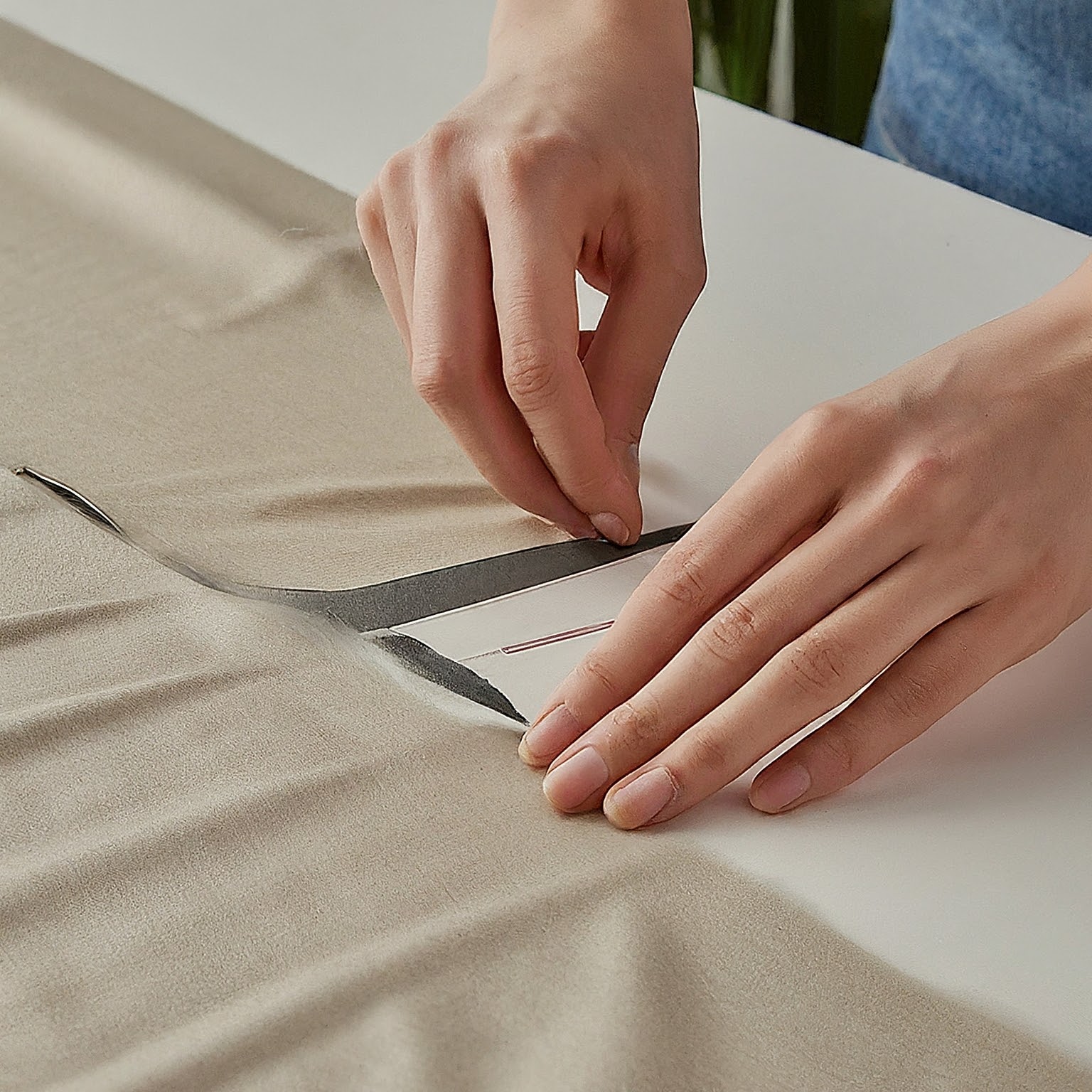
In most cases, poor bonding is not coincidental. Usually, there is a mismatch between the materials, the machine settings, or the operator’s handling of the panel before and during pressing. These are the most prevalent root causes found in clothing factories.
1. Incorrect heat, pressure or time settings. Together, these three factors are effective. A weak or uneven bond will result from the adhesive not activating properly if even one of them is slightly off.
2. Wrong side facing up. The interlining’s coated side must face the fashion fabric’s incorrect side. The adhesive never comes into contact with the fabric it is meant to adhere to if a panel is flipped during layout or cutting.
3. Mismatched interlining grade for the fabric. A heavy woven grade can feel stiff and overly structured on a delicate fabric, and a lightweight non-woven interlining intended for a collar won’t last on a heavy suit front. Because the interlining and the fashion fabric behave differently under heat, the incorrect pairing frequently manifests as poor adhesion.
4. Inconsistent pressing surface contact. The adhesive may not make complete contact throughout the panel due to wrinkled fabric, uneven panel thickness, or seams caught under the press. Only in situations of direct contact under pressure does bonding occur.
5. Contaminated or moisture-affected fabric. Adhesive activation may be hampered by dust, oil, sizing chemicals, or moisture on the fashion fabric. Fabrics that have not been adequately conditioned prior to fusing are particularly prone to this.
6. Adhesive coating quality. Not all coatings are equal. Because a single-dot coating has a smaller adhesive surface area than a double-dot coating, it requires more exacting conditions to form a strong bond. One of the more often disregarded reasons for bonding failure on the factory floor is lower-quality or inconsistent coating batches.
7. Cooling the panel too soon. When the panel is taken off the press, the bond is not completely set. The adhesive may be disturbed before it has completely solidified if it is handled, folded, or stacked before it cools.
The good news is that the majority of these causes are process-related. It implies that bonding issues can be resolved with the appropriate modifications rather than necessitating a total material replacement.
Temperature, Pressure and Fusing Time: What Affects Bonding?
Think of temperature, pressure and time as three dials that all need to be set correctly together. Change one without adjusting the others, and the bond quality shifts.
Temperature determines whether the adhesive melts enough to flow into the weave of the fashion fabric. If it is too low, the adhesive will remain partially solid, resulting in a patchy and weak bond. If you go too high, you run the risk of burning the fashion fabric, leaving shine marks, or melting the adhesive too much, causing it to spread unevenly rather than bonding cleanly.
Pressure is what forces the melted adhesive into contact with the fashion fabric’s fibres. Insufficient pressure causes the adhesive to sit on the surface rather than properly grasping the weave. Conversely, excessive pressure can push the panel out of shape, flatten texture, or result in strike-through on delicate fabrics.
Time gives the adhesive enough dwell under heat and pressure to activate fully.Even if the temperature and pressure were right, the bond won’t have fully formed if the cycle is rushed. If you leave it too long, you run the risk of experiencing the same over-melting or scorching problems that come with too much heat.
Here’s a simple way to think about how these three variables interact:
| Variable | Too Low | Too High |
| Temperature | Adhesive doesn’t melt fully; weak, patchy bond | Scorching, shine marks, uneven adhesive spread |
| Pressure | Poor contact between layers; adhesive sits on the surface | Flattened texture, strike-through, panel distortion |
| Time | Adhesive doesn’t activate fully; incomplete bond | Scorching, over-melted adhesive, stiff hand-feel |
The fashion fabric itself and whether you’re working with a woven or non-woven interlining will determine the best combination. Because woven interlining is designed for heavier applications like suit and sherwani fronts, it typically requires a slightly wider temperature range than non-woven interlining. Running a test fuse on a fabric swatch prior to a full production run is one of the most helpful habits a factory can develop because every fabric and interlining pairing is slightly different.
Common Fusible Interlining Bonding Problems and Their Solutions
Let’s get specific. Here are the bonding problems factories run into most often, along with practical fixes for each.
Bubbling or blistering after pressing
This typically indicates that the adhesive melted unevenly, frequently as a result of trapped air between layers or uneven pressure across the panel.
- Make sure your press bed is uniformly padded and level.
- Before pressing, make sure the panels are smooth and free of folds and wrinkles.
- If there is also scorching, shorten the dwell time a little.
Delamination after dry cleaning or washing
At first glance, the bond appeared to be intact, but it later broke. The adhesive made contact but was never fully activated, which is a classic indication of under-fusing.
- Test again after gradually raising the temperature or dwell time.
- Verify that the coated side was pressed in the proper direction.
- Verify if the interlining grade is appropriate for the garment’s maintenance needs.
Edge lifting on collars, cuffs or plackets
The panel’s edges peel off, but the center adheres well. Particularly on smaller parts where the press doesn’t apply uniform force throughout the entire shape, this is frequently a pressure distribution problem.
- For small parts, use an appropriately sized pressing block or attachment.
- To prevent unsupported edges, trim the interlining slightly within the seam allowance.
- Recheck the press’s pressure calibration, paying special attention to the platen’s edges.
Stiff, board-like hand-feel after fusing
This indicates over-fusing, which is the use of excessive heat, pressure, or time relative to the fabric weight.
- Retest on a swatch after lowering the temperature a little.
- Make sure you’re using the appropriate interlining weight not a heavier grade than is required for that specific garment part.
- If the fashion fabric is delicate or light, apply less pressure.
Uneven bonding across a large panel (like a full suit front)
Because heat and pressure must continuously reach every area of the surface, large panels are more difficult to fuse evenly.
- Look for press beds that are warped or uneven, as this is a common issue with older machines.
- If your press bed is unable to cover the entire panel at once, fuse in smaller, overlapping sections.
- Before proceeding to the next step, visually and tactilely inspect the entire panel, not just the center.
Bonding failure traced back to the fabric itself
Sometimes contamination or finish chemicals on the fashion fabric are the problem, not the interlining or press settings.
- Inquire about any finishing treatments that might have an impact on adhesion with your fabric supplier.
- Before committing to a full production batch, especially with a new fabric lot, run a small test fuse.
Most of these problems can be found with a quick test fuse on a scrap swatch, checked after cooling, before they become a full batch of rejects.
Choosing the Right Fusible Interlining for Different Fabrics
Bonding problems often start before the panel ever reaches the press they start with choosing the wrong fusing cloth for the job. Matching the right type and weight of interlining fabric to your fashion fabric is one of the simplest ways to prevent bonding issues from the outset.
As a general guide:
- Heavy structured garments like suit fronts, sherwanis and blazers need a woven grade with enough weight to hold their shape through repeated wear and dry cleaning.
- Collars, cuffs and plackets typically call for a lighter interlining, often non-woven, since these parts need structure without excess bulk or stiffness.
- Lightweight or delicate fashion fabrics generally pair better with lighter interlining grades. A heavy interlining on a light fabric can lead to strike-through, poor drape, or an over-stiff finished look.
- Ethnic formal wear, which tends to be heavier and more structured than Western formal wear, usually needs the higher end of the weight range for full-front body fusing.
Additionally, woven and non-woven interlining cannot be used interchangeably. The woven type is the standard option for full-front garment construction because it is constructed from interlaced yarns, which give it better shape retention and higher tensile strength. Because non-woven interlining is composed of bonded fibers rather than a true weave, it is more affordable, lighter, and suitable for smaller components where complete structural support isn’t a top concern.
Correct matching has an impact on the final garment’s draping, mobility, and durability in addition to bonding strength. It’s better to ask your supplier directly if you’re unsure of the grade that works best for your fabric than to make a guess and run the entire batch through the press.
Our Approach to Fusible Interlining Quality at Double Ghoda
At Double Ghoda, we provide woven and non-woven fusible interlining to suit manufacturers, sherwani producers, and clothing factories throughout India. We consider bonding reliability throughout the supply chain, not just during the pressing phase. Even with flawless press settings, bonding issues will still arise if the interlining is inconsistent.
Here’s how we approach it:
- PA double-dot coating on our woven range. The adhesive is applied in a staggered two-coat pattern, which increases the adhesive surface area compared to single-dot coatings. This supports faster fusing and a stronger, more even bond, which matters especially for heavy ethnic formal wear that goes through repeated dry cleaning.
- Batch-to-batch consistency. We keep GSM, hand-feel and coating uniform across every delivery, so if a bonding recipe works well for one batch, it should work just as well for the next.
- A full weight range for real production needs. We stock woven interlining from 30 to 150 GSM and non-woven from 30 to 82 GSM, covering everything from delicate collar work to heavy sherwani fusing.
- OEKO-TEX® Standard 100 certification on our woven range, tested for harmful substances — relevant if you’re supplying export-oriented production.
- Accurate metres on every roll, so what you order is what you receive, without the short-metre issues that can throw off planning on the production floor.
We work as a wholesale supplier to garment factories, not individual tailors, with a minimum order of 1,000 metres across our range. If you’re dealing with recurring bonding issues and aren’t sure whether it’s a process problem or a material problem, reach out to our team. We’re happy to talk through your fabric, your fusing setup and the right interlining fabric for your production line.
Frequently Asked Questions
Why does fusible interlining bubble after fusing? Bubbling usually happens when the adhesive melts unevenly across the panel, often due to inconsistent pressure, trapped air, or wrinkles between the interlining and the fashion fabric during pressing. Checking that the press bed is flat and the panel is laid smooth before pressing solves this in most cases.
Why does interlining come apart after dry cleaning? This is typically a sign of under-fusing, where the adhesive made contact but never fully activated during pressing. It can also happen if the interlining grade wasn’t suited to the garment’s care requirements. Increasing dwell time or temperature slightly, and confirming the coated side was oriented correctly, usually resolves it.
Can you re-fuse a garment part if the first bond fails? In many cases, yes, especially if the failure was caught early and the fashion fabric hasn’t been damaged. The panel needs to be pressed again with corrected settings, though repeated fusing on the same fabric can sometimes affect its hand-feel, so it’s best to identify and fix the root cause before it happens again.
How do I know if I’m using the wrong interlining for my fabric? Common signs include an overly stiff or board-like finish, poor drape, strike-through on lightweight fabrics, or a bond that looks fine off the press but fails after washing or dry cleaning. Running a small test fuse on a fabric swatch before a full production run is the most reliable way to confirm the pairing is correct.
Link of related Articles
- Lightweight Interlining vs. Heavyweight Interlining
- A Beginner’s Guide to Interlining
- Choosing the Right Interlining