
If you’ve started sourcing interlining for shirt collars, cuffs or lighter garment parts, you’ve probably run into the same question early on: how much do you actually need to order? Wholesale suppliers work differently from retail, and understanding the minimum order quantity before you reach out saves you time and helps you plan your production properly.
This guide walks through what MOQ means for non woven interlining specifically, why suppliers set it the way they do, and what you should know before placing your first bulk order.
If you’re new to sourcing interlining directly, rather than through a middleman or a smaller distributor, this MOQ structure can take a bit of getting used to. It’s a different way of buying than picking up fabric locally in whatever quantity you need that week. Once you understand why it works this way, though, planning around it becomes fairly straightforward.
Table of Contents
- What Non Woven Interlining Actually Is
- Why Wholesale Suppliers Set a Minimum Order Quantity
- What the MOQ Looks Like for This Fabric in India
- What You Get for That Order
- Planning Your Order Around Your Actual Production Needs
- Sourcing Non Woven Interlining from Double Ghoda
What This Fabric Actually Is
Before getting into order quantities, it helps to be clear on what you’re actually buying. Non woven fusible interlining is made by bonding polyester fibres together, rather than weaving them into a fabric, and coating one side with a thermoplastic adhesive. When pressed with heat, it fuses permanently to your fashion fabric, adding stiffness exactly where you need it.
It’s typically used for:
- Shirt collars and cuffs, where it gives structure without stiffness
- Plackets, to stabilise the button and buttonhole area
- Pockets and smaller garment parts on jackets and blazers
- Lightweight women’s formal wear, where you need stability without affecting drape
It’s worth knowing this isn’t the right choice for everything. For the full-front body of suits, blazers and sherwanis, a woven grade holds up better under the structural load, non-woven interlining is built for smaller, lighter jobs, not whole-garment support.
The distinction matters more than it might seem at first. Woven interlining is built from yarns interlaced in both directions, giving it real tensile strength across a large panel. Non-woven interlining is a bonded fibre sheet, lighter, more economical, and easier to cut into small, precise shapes like collar points and cuff corners. Most factories end up using both, choosing the type based on the size and structural demand of the specific garment part, not out of habit or convenience.
Why Wholesale Suppliers Set a Minimum Order Quantity
MOQ exists because wholesale suppliers are built around bulk supply, not retail. Sourcing fabric internationally, holding stock, running quality checks and dispatching accurately all make more sense at volume, which is why most interlining suppliers in India, including Double Ghoda, work exclusively on a B2B wholesale basis.
A few reasons MOQ makes sense from a supplier’s side:
- Batch consistency — fabric performs better when it’s sourced and quality-checked in complete production lots, not split into small quantities
- Roll integrity — interlining is supplied in fixed roll lengths, and cutting into smaller pieces isn’t practical for either party
- Focus on the right customer — wholesale suppliers are set up to serve garment factories and manufacturers, not individual tailors buying a few metres at a time
None of this means small buyers are unwelcome, it simply means the wholesale model is built around a different scale of customer. If your business is a garment factory or a formal wear manufacturer, you’re exactly the kind of buyer this structure is designed for.
If you’re a garment factory, this structure usually works in your favour. You’re not paying a retail markup, and you’re getting fabric that’s been through proper batch-level quality control before it reaches you.
There’s also a practical production reason MOQ works this way. Interlining performance depends on consistency, the same GSM, the same coating weight, the same hand-feel from the start of a roll to the end. That kind of consistency is much easier to guarantee across a full production lot than it would be if suppliers were splitting rolls into small custom quantities for every buyer. In effect, the MOQ structure is part of what keeps the fabric quality dependable, not just a pricing rule.
What the MOQ Looks Like for This Fabric in India
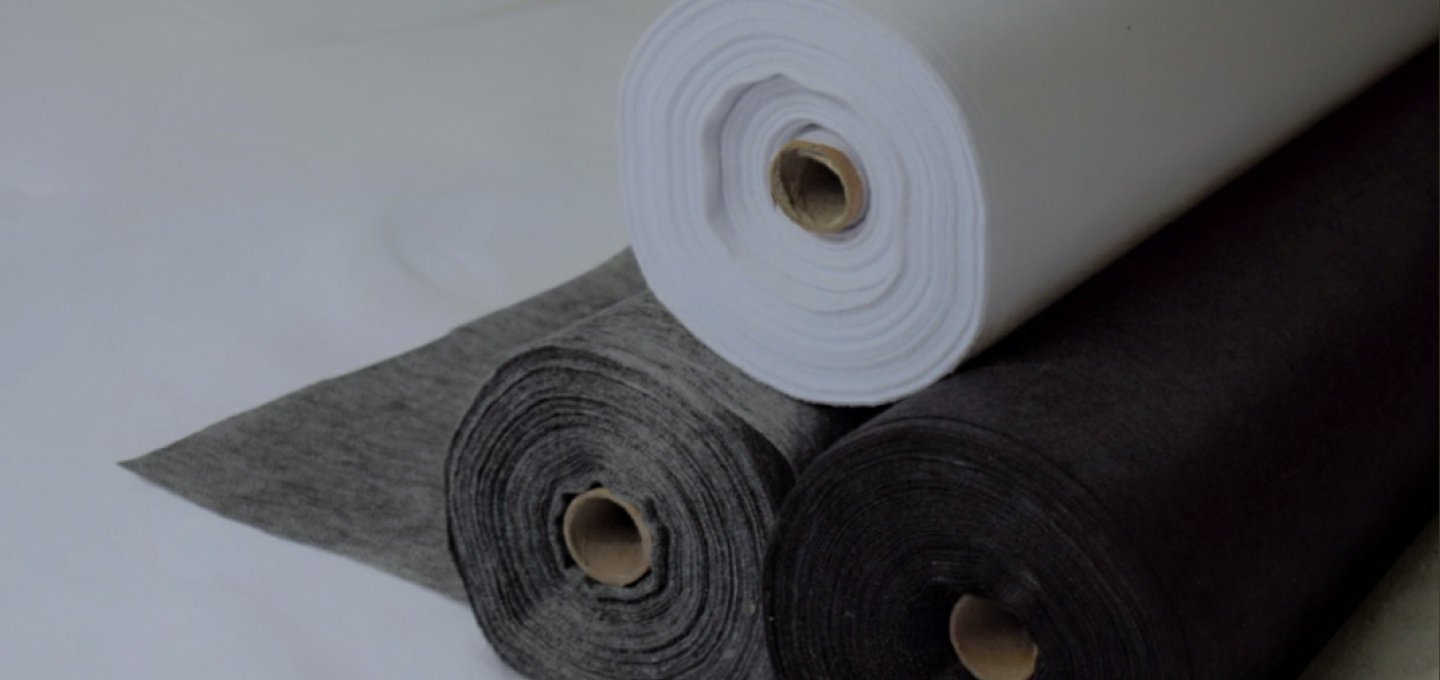
For non woven fusible interlining, the standard minimum order quantity from Double Ghoda is 1,000 metres. This applies across the fabric’s GSM range and both available colours, and it’s a B2B-only structure, the supply chain here is built for garment factories, shirt manufacturers and formal wear producers, not retail or single-piece buyers.
This isn’t unusual in the trade. Most established interlining suppliers in India work to a similar wholesale threshold, because the fabric is imported and stocked at scale, and quality control happens at the batch level rather than piece by piece.
This is also fairly consistent with how the wider interlining trade operates across India, not just for non-woven grades. Woven interlining, polyester lining and other garment inputs typically carry similar wholesale minimums, since the underlying reasons, batch sourcing, quality control and roll-based supply, apply just as much to those products.
A simple way to think about it:
| Buyer type | Typical order size | Fits wholesale MOQ? |
| Individual tailor | A few metres | No |
| Small garment workshop | Several hundred metres | Usually not on its own |
| Garment factory | 1,000+ metres | Yes |
| Formal wear brand (multiple styles) | Several thousand metres | Yes |
If your current requirement is well below the standard MOQ, it’s worth checking whether combining your order across a few garment parts or styles gets you to that threshold – collars, cuffs and plackets across a full shirt range can add up faster than expected.
It’s also worth remembering that MOQ is measured across your total order, not per colour or per GSM. If your requirement spans a couple of different weights or both white and black, those quantities typically combine toward the same minimum rather than each needing to individually clear it, though it’s always worth confirming this directly with your supplier, since terms can vary.
What You Get for That Order
Understanding what’s included in a standard order helps you plan your production line without surprises.
Non woven interlining fabric from Double Ghoda is supplied in 90-metre rolls, in white and black. Both colours are held as standard stock, which keeps lead times short compared to a custom colour request. The fabric itself covers a GSM range suited to everything from soft shirt collars through to firmer, structured cuffs, the right weight depends on the specific garment part you’re fusing.
Before placing an order, it helps to have ready:
- The GSM or garment part you’re fusing (collar, cuff, placket, etc.)
- Your required colour, white or black
- Total metreage needed across your production run
- Delivery city, so freight terms can be confirmed alongside pricing
Having these details ready when you reach out means you get an accurate quotation faster, without back-and-forth on basics that could have been settled upfront.
It’s also worth asking your supplier what stock is currently ready to move versus what needs to be produced against your order. Standard colours in commonly requested GSM ranges are usually held in ready stock, which shortens your lead time considerably compared to a request that falls outside the typical range.
Planning Your Order Around Your Actual Production Needs
Once you know the MOQ, the next step is figuring out how it fits your actual production volume, something factories sometimes work out only after they’ve already reached out for a quote.
- Estimate your metreage per garment. A shirt collar and cuff set typically uses a small, predictable length of interlining, multiplying that by your production run to get a rough total.
- Combine garment parts where it makes sense. If you’re producing shirts, kurtas and jackets, your non-woven requirement across collars, cuffs, plackets and small parts can be sourced together rather than separately.
- Think ahead to your next few production cycles. Ordering slightly ahead of an immediate need, rather than exactly to it, can save you from a second small order that doesn’t clear MOQ on its own.
- Keep woven and non-woven sourcing together where possible. Many factories order both from a single supplier, woven for the garment body, non-woven for smaller parts, which simplifies logistics and often means better consistency across your whole production line. A quick estimate based on your production plan usually settles it in a few minutes.
If you’re not sure whether your current volume clears the threshold, it’s worth having that conversation with your supplier directly rather than assuming a small order isn’t worth the enquiry.
It also helps to think in terms of a season or a production cycle rather than a single order. Factories that place one large order to cover several months of collar and cuff production, rather than several smaller orders spread out over time, generally find it easier to stay above MOQ and avoid the back-and-forth of repeated small enquiries.
Sourcing Non Woven Interlining from Double Ghoda
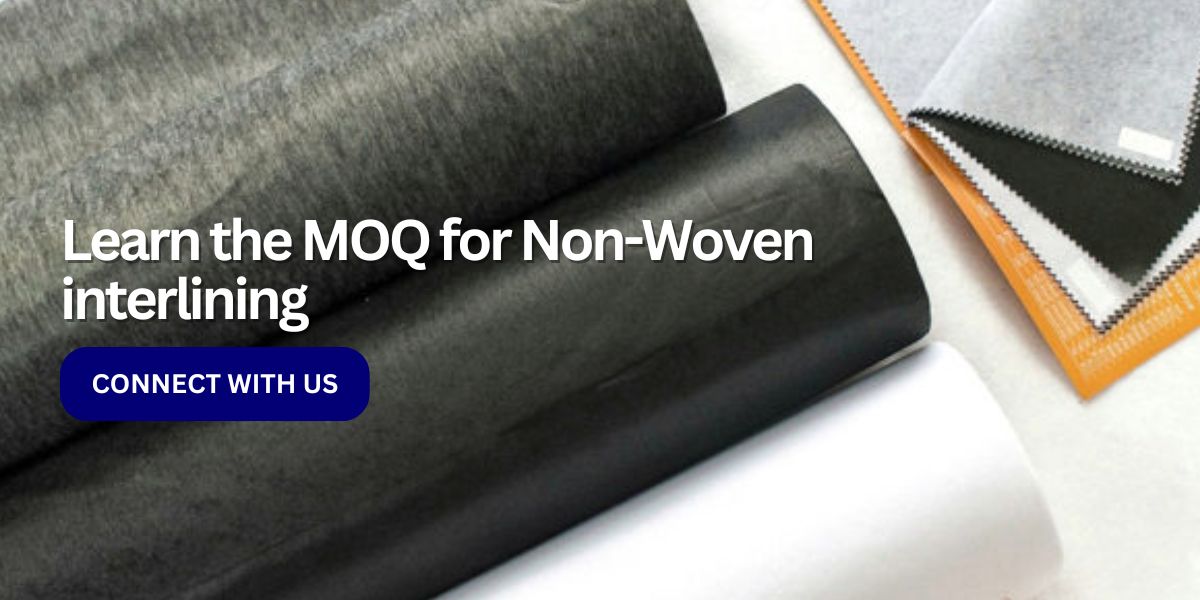
We supply non woven interlining fabric to garment factories, shirt manufacturers, women’s wear producers and formal wear factories across India, from ready stock held in our Bhiwandi, Maharashtra warehouse. Our minimum order is 1,000 metres, and every batch goes through quality checks before it’s accepted into stock.
What factories consistently ask us for:
- Accurate roll lengths, so your production planning doesn’t run short mid-batch
- Consistent bond quality, so collars and cuffs hold their shape after repeated washing
- A supplier who also stocks woven interlining, so you can source your full requirement, body fusing and small-part fusing, from one place
If you’re setting up production or scaling an existing line, talk to us about your GSM, colour and quantity requirement, and we’ll put together a written quotation with freight terms to your city.
We work with factories across Surat, Delhi NCR, Mumbai, Ludhiana, Kolkata, Chandigarh and Amritsar, dispatching from ready stock held at our Bhiwandi warehouse. Whether this is your first wholesale order or you’re switching from another supplier, we’re happy to walk through your requirement and confirm exactly what fits within a standard order before you commit.
Sourcing directly from an interlining supplier, rather than through an intermediary, usually means better pricing and more control over lead times, but it also means understanding how that supplier’s ordering structure works. Getting comfortable with MOQ early on makes every future order simpler, since you’ll already know how to plan your quantities before you reach out.
Frequently Asked Questions
What is the minimum order quantity for non-woven interlining in India?
The standard minimum order is 1,000 metres, supplied wholesale to garment factories and manufacturers rather than individual tailors or retail buyers.
Can I order less than the minimum quantity?
Wholesale suppliers generally work to a fixed MOQ because fabric is sourced, quality-checked and stocked in bulk. If your requirement is smaller, combining orders across multiple garment parts or styles is usually the practical way to reach the threshold.
What roll length does non-woven interlining come in?
It’s typically supplied in 90-metre rolls, available in white and black as standard stock.
Is non-woven interlining suitable for suits and sherwanis?
Not for the main body. Non-woven interlining works well for smaller parts like collars, cuffs and plackets, but suits and sherwanis need a woven grade for full-front structural support.
Link of related Articles
- Lightweight Interlining vs. Heavyweight Interlining
- A Beginner’s Guide to Interlining
- Choosing the Right Interlining