
You probably spend a lot of time choosing the right outer fabric and the right interlining. The lining? It often gets decided last — sometimes in a hurry.
But here is the thing. The lining is the first thing your customer feels when they put on the garment. It is what makes your sherwani slide on smoothly, your blazer feel finished from the inside, and your suit jacket looks sharp even when the customer checks the interior. A poor lining choice shows up immediately — in the feel, in the finish quality, and in how long the garment holds its interior construction together.
Before you place your next polyester lining fabric order, read this — it covers the decisions most manufacturers only think about after something goes wrong.
Table of Contents
- What Polyester Lining Fabric Actually Does in a Garment
- Types of Polyester Lining — Satin, Jacquard, Taffeta and Satin Dobby
- Which Lining Works for Which Garment
- GSM, Colours and Specs — What to Check Before Ordering
- How to Source Polyester Lining in Bulk in India
What Polyester Lining Fabric Actually Does in a Garment
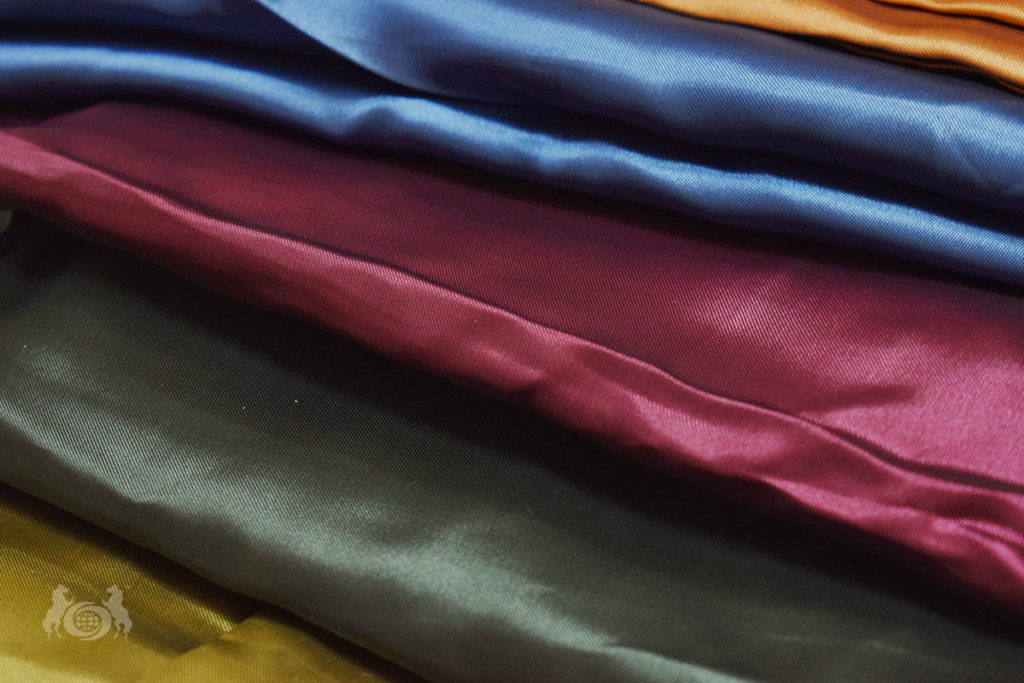
Polyester lining is attached to the interior of a garment. It sits between the outer fabric and the wearer — and it does several things simultaneously that most buyers do not fully think through until something goes wrong.
- It hides the interior construction
Inside any structured garment you make — a suit jacket, a sherwani, a blazer — there is fusible interlining, chest pieces, shoulder pads, seam allowances, and stitching work. None of that should be visible when your customer opens the garment. The right polyester lining fabric covers all of it cleanly and gives your garment a finished, professional interior that matches the quality of the outside.
- It makes the garment easier to put on and take off
A smooth polyester lining reduces friction between the outer fabric and the wearer’s clothing or skin. This matters especially for suits and blazers worn over a shirt — the garment slides on and off without catching or pulling. For a sherwani worn at a wedding, where the wearer is putting it on and taking it off multiple times across a long day, this is a real comfort factor.
- It protects the interior construction
The lining acts as a barrier between the tailoring work inside and the wear and sweat of regular use. It extends the life of the interlining, the stitching, and the shape of the garment — especially in structured formal wear that gets dry cleaned repeatedly.
- It helps maintain the garment’s shape
A well-chosen polyester lining fabric with the right weight and weave adds a layer of dimensional stability to the interior. It keeps the outer fabric from twisting or distorting under wear and supports the structure that the interlining provides.
- It contributes to the overall finish quality
When your customer opens a suit jacket and sees a quality jacquard lining in a clean colour, it signals craftsmanship. It tells them you paid attention to every part — not just the outside. For the premium sherwanis and formal blazers you produce, the lining you choose is a visible quality signal that your customer will judge.
Types of Polyester Lining — Satin, Jacquard, Taffeta and Satin Dobby
Not all polyester lining is the same. The weave structure and surface finish determine how the lining looks, feels, and performs inside the garment. Here are the four main types you will encounter:
Satin polyester lining
Satin lining has a smooth, glossy surface on one side and a matte finish on the other. It is the most widely used lining type across garment manufacturing because of its slippery surface — it allows the garment to slide on and off effortlessly. It is lightweight, wrinkle-resistant, and easy to cut and sew at production scale.
- Best for: suit jackets, blazers, formal shirts, lighter sherwanis
- Feel: smooth and cool against the skin
- Surface: high sheen, gives garment a premium interior look
Jacquard polyester lining
Jacquard lining is woven with a pattern built into the fabric structure itself — not printed on top. The pattern is part of the weave, which means it does not fade, peel, or crack over time. Jacquard lining is the top-selling lining type at Double Ghoda — it is the preferred choice for premium suits, sherwanis, and formal ethnic wear where the interior finish is a visible quality marker.
- Best for: premium sherwanis, bandhgalas, high-end suit jackets
- Feel: slightly heavier than satin, more body
- Surface: textured pattern visible from the inside — signals premium construction
Taffeta polyester lining
Taffeta has a crisp, slightly stiff hand feel and a subtle sheen. It holds its shape well and gives structure to the garment interior. It is often used in garments where a more defined, structured interior is needed — particularly in heavier ethnic formal wear.
- Best for: heavy sherwanis, achkans, structured ethnic formal jackets
- Feel: crisper and firmer than satin
- Surface: subtle sheen, clean flat finish
Satin Dobby polyester lining
Satin Dobby combines the smooth surface of satin with a subtle woven texture or dobby pattern. It gives a slightly richer look than plain satin while remaining lightweight and easy to work with. It sits between plain satin and jacquard in terms of cost and visual finish.
- Best for: mid-range suits, blazers, sherwanis where a step up from plain satin is needed
- Feel: similar to satin, slightly more texture
- Surface: subtle pattern adds visual interest without the cost of full jacquard
Quick comparison:
| Lining Type | Surface | Best Use | Feel |
| Satin | High sheen, smooth | Suits, blazers, lighter garments | Smooth, slippery |
| Jacquard | Woven pattern | Premium sherwanis, high-end suits | Slightly heavier |
| Taffeta | Crisp, subtle sheen | Heavy ethnic wear, structured jackets | Firm, structured |
| Satin Dobby | Soft sheen + texture | Mid-range suits and sherwanis | Between satin and jacquard |
Which Lining Works for Which Garment
Choosing the right polyester lining fabric for each garment type saves you from quality issues, returns, and customer complaints. Here is how experienced manufacturers match lining type to garment:
- Sherwanis and achkans
For premium sherwanis, jacquard lining is the standard. The woven pattern visible on the interior signals quality and craftsmanship — buyers at this price point look inside the garment. Taffeta works well for heavier, more structured sherwanis where a crisper interior is preferred.
- Formal blazers and suit jackets
Satin is the most common choice for blazers and suit jackets — it is lightweight, smooth, and functional. For premium blazers or branded suit production, jacquard lining elevates the interior finish significantly. Satin Dobby works well as a mid-point option for volume production where plain satin feels too basic.
- Bandhgalas and Nehru jackets
These garments have a specific structured feel that calls for a lining with slightly more body. Jacquard or taffeta polyester lining works better here than plain satin — both hold their position better in the structured interior of a bandhgala.
- Safari suits and Indo-Western jackets
Satin or satin dobby works well for these garment types. They need a functional lining that adds ease of wear without adding bulk. Plain satin in a dark colour — black, navy, or charcoal — is the most practical choice for these styles.
Key rule to follow: match your lining weight to your outer fabric weight. A heavy brocade sherwani needs a lining with enough body to sit cleanly against it — plain satin can look collapsed and uneven inside a heavy outer fabric. Jacquard or taffeta handles this better.
GSM, Colours and Specs — What to Check Before Ordering
Before you place a bulk order for polyester lining fabric, these are the specifications you need to confirm with your supplier:
GSM range
Our polyester lining range covers 55 GSM to 85 GSM. This range covers the full spectrum of Indian formal garment requirements:
- 55–65 GSM — lighter applications, satin lining for blazers and suit jackets
- 65–75 GSM — mid-weight, satin dobby and jacquard for suits and sherwanis
- 75–85 GSM — heavier weight, taffeta and structured jacquard for heavy ethnic formal wear
Colours
Lining colour is a production decision that directly affects garment quality. The top-selling colours in the Indian market are:
- Black — the most versatile, works across suits, sherwanis, and blazers in any outer colour
- Blue — popular for sherwanis and formal ethnic wear, particularly in navy and royal blue
- White and off-white — used for lighter outer fabrics, cream and ivory sherwanis, and summer formal wear
Multiple colours are available across all lining types. Confirm colour availability for your specific lining type before ordering.
Roll length
Our polyester lining comes in 45-metre rolls. Plan your order quantities and cutting schedules based on this roll length. For high-volume production runs, confirm the number of rolls per order and lead time in advance.
What to check before bulk ordering:
- Confirm the lining type — satin, jacquard, taffeta, or satin dobby
- Confirm GSM matches your outer fabric weight
- Confirm colour availability in the quantity you need
- Request a sample and check the surface finish, drape, and how it sits against your outer fabric
- Check that the lining slides smoothly — run your hand across it and test against the garment’s inner construction
- Confirm roll length and MOQ before committing
MOQ is 1,000 metres. Double Ghoda supplies wholesale only — no single-metre or retail orders.
How to Source Polyester Lining in Bulk in India
If you are sourcing polyester lining fabric wholesale for the first time — or switching suppliers — here is what experienced buyers look for.
- Consistency across batches
The most common complaint from garment manufacturers about lining suppliers is inconsistency. The first order looks great. The second order has a slightly different sheen, a different weight, or a colour that does not match the previous batch. For a production unit running regular orders, this causes real problems — garments from the same collection end up with slightly different interior finishes.
When you are evaluating a lining supplier, ask specifically about batch consistency. Check two or three samples from different production batches of the same lining, not just one sample.
- Colour matching
If you are producing garments in a specific colourway — a navy sherwani line, a black blazer range — your lining colour needs to be consistent across every roll in every order. Confirm that your supplier can hold colour consistency across batches, not just within a single order.
- Smooth surface and clean finish
Run your hand across the lining surface. It should feel uniformly smooth — no rough patches, no inconsistencies in the weave, no visible defects. For jacquard lining, check that the pattern is clean and even across the full width of the fabric. Any irregularity in the pattern shows up visibly when the garment is opened by the customer.
- Accurate roll length
45-metre rolls are our standard — and we guarantee accurate metres on every order, not just the first one. Short rolls disrupt cutting schedules and cause production floor planning problems. Confirm that your supplier guarantees accurate metres consistently — not just on the first order.
Sourcing both lining and interlining from one supplier
Many garment manufacturers source their polyester lining and their fusible interlining separately — from different suppliers. Consolidating both with one reliable supplier simplifies procurement, reduces lead time variables, and makes it easier to manage quality across your full garment construction inputs.
We supply polyester lining fabric — satin, jacquard, taffeta, and satin dobby — alongside woven and non-woven fusible interlining, all in bulk to garment manufacturers and wholesalers across India. If you are looking for polyester lining in a specific type, GSM, or colour for your current production run, reach out with your requirement and we will confirm availability and pricing.
Link of related Articles
- Lightweight Interlining vs. Heavyweight Interlining
- A Beginner’s Guide to Interlining
- Choosing the Right Interlining