
If you’ve been sourcing for a while, you’ve probably heard your supplier, your tailor, and your factory floor use different words for what looks like the same roll of material. One calls it fusing cloth. Another calls it interlining fabric. Someone else says body fusing. Are you buying three different products, or one product with three names?
We get this question from suit manufacturers, sherwani factories, and formal wear wholesalers often. So let’s clear it up, what each term actually means, where the real technical differences lie, and how you can pick the right one for your production.
Table of Contents
- Understanding Fusing Cloth vs Interlining Fabric
- How Fusible Interlining Supports Garment Structure
- Body Fusing: The Specific Term You’ll Hear in Surat
- Fusing Cloth vs Interlining Fabric: Which Term Should You Use When Ordering?
- Which GSM Should You Choose for Your Product?
- Why Manufacturers Choose Double Ghoda for This Material
1. Understanding Fusing Cloth vs Interlining Fabric
Short answer: yes, mostly. Fusing cloth and interlining fabric refer to the same category of product, a base material that gets bonded to your outer fabric to give it shape. The difference between the two names comes down to regional trade language, not chemistry.
Here’s how you’ll hear it used on the ground:
- The word “fusing” is the term you’ll hear most often in Surat and across Gujarat’s garment trade
- “Interlining” is the broader, more formal word used in trade documents, technical specs, and international sourcing conversations
- Suit fusing is a variant used specifically when talking about suit body construction
- Body fusing is a term we’ll unpack in detail below
So when your supplier asks which one you need, you’re not choosing between two different products. You’re working across two versions of the same trade vocabulary. At Double Ghoda, we stock the same product range regardless of which name you use to ask for it. Tell us what you’re making, and we’ll tell you what to call it and what GSM you need.
This distinction matters more than it sounds. If you’re comparing quotes from different suppliers and one uses one name while another uses the other, don’t assume they’re quoting different products. Always confirm GSM, construction (woven or non-woven), and coating type before you compare price.
2. How Fusible Interlining Supports Garment Structure
Before you decide what to buy, it helps to understand what this material is actually for.
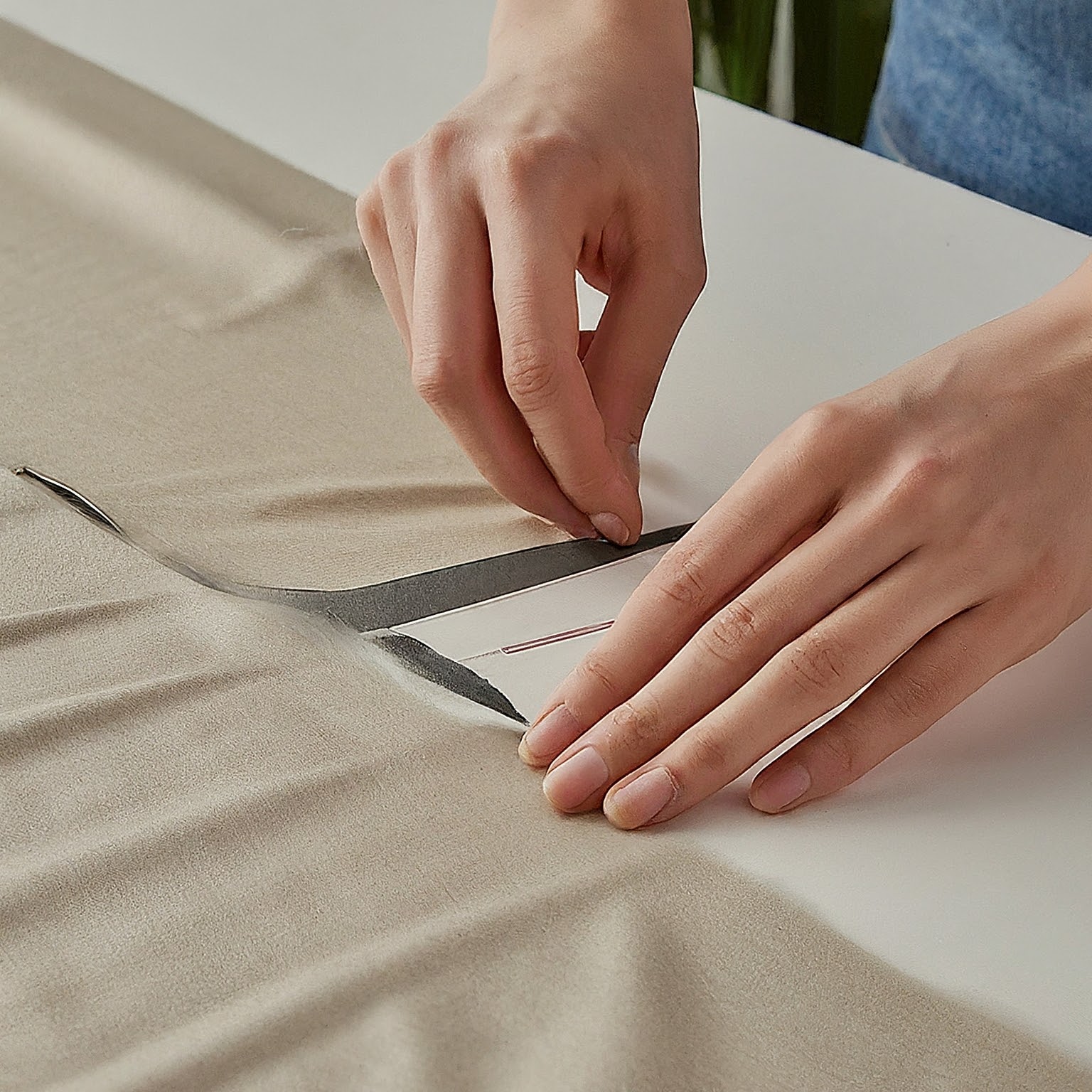
Fusible interlining is a base fabric, woven or non-woven, coated on one side with a thermoplastic adhesive. When you press it against your fashion fabric with heat and pressure, that adhesive melts and bonds the two layers together permanently. You never see it in the finished garment. It sits invisibly between your outer fabric and your lining, doing one job: giving the garment structure.
Here’s what it delivers when you use the right grade:
- Shape retention — your suit front, collar, or cuff holds its silhouette through wear, not just off the hanger
- Faster construction — fusing takes 18–25 seconds under a press, compared to hand-stitching sew-in interlining
- Dry-clean durability — the bond has to survive repeated cleaning cycles without bubbling or lifting
- Consistency — every panel across a production run needs to feel and behave the same way
This is also where sourcing mistakes happen. Use too light a GSM, and your sherwani front collapses after the first wash. Use too heavy a GSM, and a lightweight kurta ends up stiff and board-like. Getting this right is most of what your interlining material decision comes down to.
The coating matters just as much as the base fabric. We use PA double-dot coating across our woven range, which fuses faster and holds a stronger bond than single-dot alternatives, useful when your press timing is fixed and you can’t afford a weak bond on a heavy panel.
3. Body Fusing: The Specific Term You’ll Hear in Surat
Now let’s talk about the term that causes the most confusion, since it’s not just a casual synonym, it has a precise meaning in the trade.
Body fusing refers to the heavier woven grades, typically 100–150 GSM, applied across the full front body of a suit, sherwani, or blazer. It’s not the light interlining you’d use on a collar or placket. It’s the structural layer that shapes the entire chest and front panel of a heavy formal garment.
If you’re manufacturing sherwanis at scale, this term comes up constantly, because full-front construction is where most of your fabric cost and structure decisions live. Our flagship 140 GSM woven grade, known across the trade simply as 111 quality, is the most recognised heavy fusing grade for sherwani manufacturers in Surat and North India. Buyers ask for it by name, and we know exactly what that means.
A quick way to remember the distinction:
- Heavy full-front fusing means the 100–150 GSM range used for suit, blazer, and sherwani bodies
- Collar interlining and cuff support means a lighter grade for smaller parts, usually 30–80 GSM and often non-woven
4. Fusing Cloth vs Interlining Fabric: Which Term Should You Use When Ordering?
This is the practical question behind everything above. When you’re placing an order, does it matter which name you use? Mostly, no, but a few small habits will make your sourcing conversations faster and reduce back-and-forth with your supplier.
Use “fusing cloth” or “fusing” when:
- You’re speaking with a Surat-based supplier, tailor, or trade contact
- You’re referring to a specific quality by trade name, such as 111 quality
- You want a quick, informal quote over a call or WhatsApp message
Use “interlining fabric” or “interlining” when:
- You’re documenting a purchase order, spec sheet, or export paperwork
- You’re speaking with a buyer or brand outside Gujarat who may not use local trade terms
- You’re comparing technical specs like GSM, coating type, and construction across suppliers
What actually matters more than the name you use:
- GSM — this decides how much structure the garment gets
- Construction type — woven for structural body panels, non-woven for lighter parts like collars and cuffs
- Coating — PA double-dot bonds faster and holds stronger than basic single-dot coatings
- Roll length and MOQ — confirm this upfront so your production planning isn’t disrupted mid-run
If you tell us the garment, the fabric weight, and the quantity, we’ll tell you the right grade and the correct name for your paperwork. You don’t need to get the terminology exactly right before you call us. That part is our job.
5. Which GSM Should You Choose for Your Product?
GSM (grams per square metre) is the single most important spec when you’re sourcing this kind of interlining material. Get this wrong, and no coating or construction detail will save the finished garment. Here’s a quick reference:
- 30–60 GSM — light woven or non-woven, for collars, cuffs, and lightweight garments
- 80 GSM — standard blazer body fusing
- 100–120 GSM — structured suits and premium blazers
- 130–150 GSM — heavy ethnic formal wear, bandgala, achkan, and sherwani full-front construction
- 140 GSM (111 quality) — the industry-standard grade specifically for sherwani
A related choice is woven versus non-woven. Woven interlining is a true woven fabric, made from yarns interlaced in both directions, with higher tensile and tear strength. It’s what you want for structural areas, suit fronts, blazer bodies, sherwani panels, anywhere the garment needs to hold its shape under regular wear. Non-woven interlining is made from bonded fibres rather than woven yarns. It costs less, comes in a lighter GSM range (usually 30–80 GSM), and works well for collars, cuffs, plackets, and pockets, where you need light support rather than structure.
Most factories we work with order both in the same production cycle: woven for the body, non-woven for the smaller construction points, including coat interlining details on heavier jackets. Some buyers also use the older term “fusible interfacing” for the same category of product, again, same idea, different corner of the trade.
If you’re not sure which grade fits your product, tell us what you’re constructing and we’ll match you to the right GSM. This is one of the most common conversations we have with new factories, especially those still working with a fixed idea of what “types of fusing” their old supplier offered.
6. Why Manufacturers Choose Double Ghoda for This Material
We’re a family-run import and wholesale business supplying India’s garment manufacturing trade for over 10 years, with a focus on formal wear and ethnic wear factories. We don’t sell to retail buyers, and we don’t handle single-meter orders. Our business is built around consistent, bulk supply to people who make garments for a living.
Here’s what you get when you order from us:
- Accurate metres on every roll, measured and verified before dispatch, so you’re not losing production time to short rolls
- PA double-dot coating as standard, not an upgrade, on every woven grade we supply
- Batch-to-batch consistency, so the GSM, hand-feel, and shrinkage stay the same every time you reorder
- A full 30–150 GSM range, including the 100+ GSM grades many suppliers don’t stock reliably
- OEKO-TEX® Standard 100 certification, relevant if you’re exporting or working with export-focused brands
- Ready stock in our Bhiwandi warehouse, with dispatch to Surat, Delhi, Ludhiana, Kolkata, Chandigarh, Amritsar, and Chhattisgarh
Beyond fusible interlining, we also supply polyester lining in satin, satin dobby, jacquard, and taffeta, plastic buttons in 24 and 32 ligne across 50-plus colours, and garment accessories including shoulder pads, chest piece, sleeve head, reversible hem tape, undercollar felt, and foam lappa. Most of our repeat buyers order more than one of these together, since a single sherwani or blazer run typically needs fusing, lining, and buttons at the same time.
Whatever your factory calls it, fusing cloth, body fusing, or interlining fabric, the product you need is the same, and we stock the complete range under one roof. Our minimum order is 1,000 metres, and we work exclusively with garment factories, wholesalers, and brands.
If you’d like a quote or want help picking the right grade for your next production run, WhatsApp us with your quantity, colour, and city, and we’ll get back to you within the hour.
Link of related Articles
- Lightweight Interlining vs. Heavyweight Interlining
- A Beginner’s Guide to Interlining
- Choosing the Right Interlining