
One bad roll of interlining can wreck a full production batch. Bubbling fronts, curling collars, interlining that peels off after the first dry clean, these problems cost fabric, labour hours, and buyer trust. Most fusing defects trace back to a small set of root causes, and each one has a clear fix.
This guide covers the problems garment manufacturers run into most often during fusing, why they happen, and how to prevent them.
Table of Contents
- Why Fusing Defects Happen in the First Place
- Problem 1: Bubbling and Delamination After Pressing
- Problem 2: Interlining Shrinkage and Garment Puckering
- Problem 3: Wrong GSM Selection for the Garment
- Problem 4: Inconsistent Adhesive Coating Across Rolls
- Problem 5: Poor Bond Strength After Dry Cleaning
- How Double Ghoda Helps You Avoid These Problems
Why Fusing Defects Happen in the First Place
A fusible interlining fabric is a base cloth, woven or non-woven, coated on one side with a thermoplastic adhesive. Press it against your fashion fabric with heat and pressure, and the adhesive melts and bonds the two layers together.
That bond depends on three things lining up: correct press settings, the right interlining grade, and consistent material quality. When one of these is off, defects follow. Most fusing problems come down to one of these four areas:
- Process errors — wrong temperature, pressure, or dwell time on the press
- Material mismatch — an interlining that doesn’t suit the outer fabric or garment type
- Quality inconsistency — coating or GSM variation between rolls or batches
- Storage and handling issues — moisture, creasing, or improper cutting before fusing
The five problems below each map back to one of these areas, along with a straightforward way to prevent them.
Problem 1: Bubbling and Delamination After Pressing
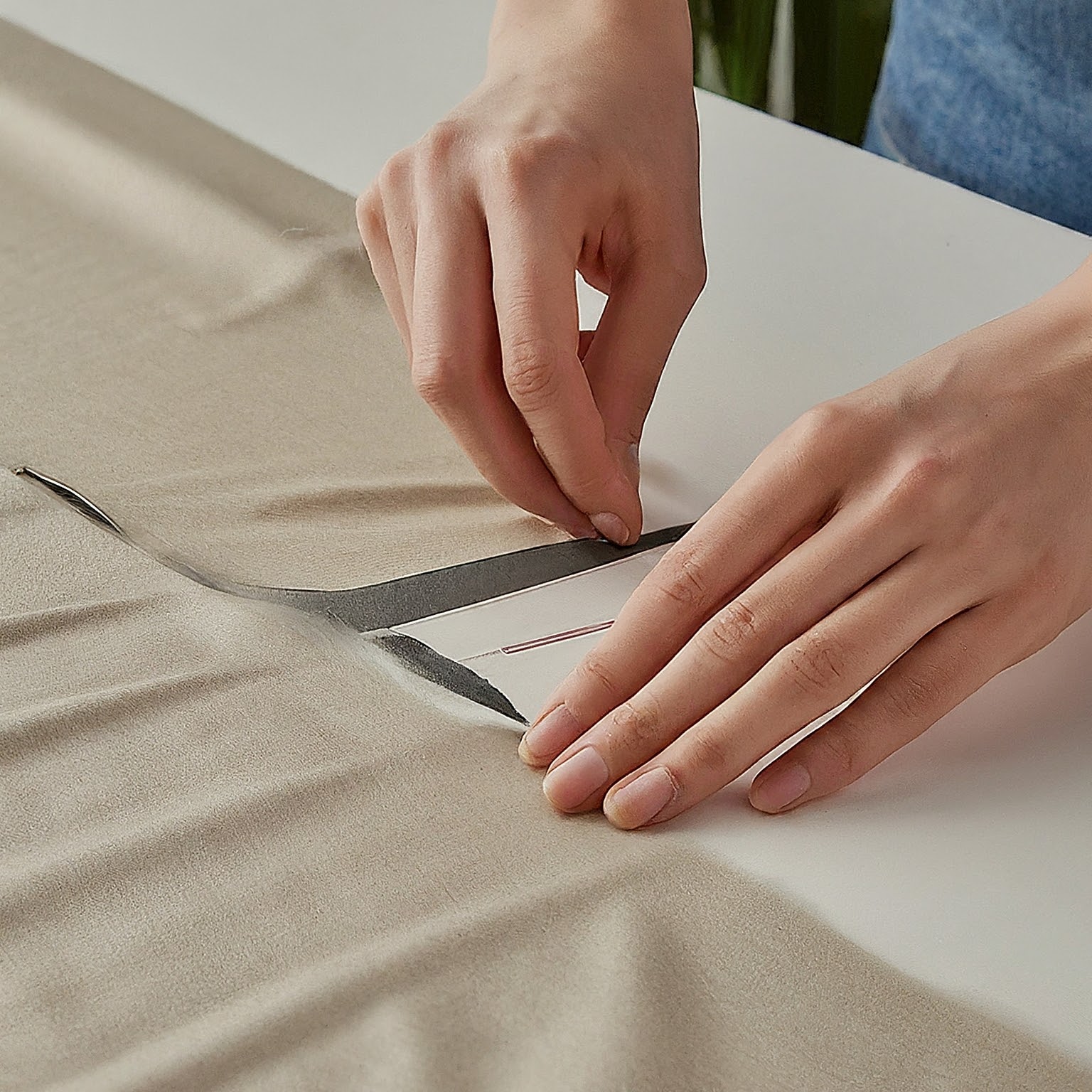
Bubbling, small raised pockets where the interlining hasn’t bonded flat, is usually the first defect a factory notices, right off the press or after the first wash. Delamination is the more serious version: the interlining separates from the shell fabric over time.
What causes it:
- Press temperature too low to fully activate the adhesive dots
- Insufficient dwell time (rushing the press cycle to hit output targets)
- Uneven pressure across the platen, especially on older or poorly maintained presses
- Cutting the interlining panel slightly larger than the fashion fabric, so edges lift
How to avoid it:
- Match press settings to the interlining type. Woven grades typically need 125–145°C; non-woven grades fuse at lower temperatures, up to around 120°C.
- Hold pressure steady at roughly 1.5–2.5 kg/cm² for 18–25 seconds. Don’t shortcut this to speed up the line.
- Let the fused panel cool flat before handling it. A hot-pressed panel moved too soon loses bond strength before it sets.
- Test a panel from every new roll before running a full batch, especially when you switch suppliers or receive a fresh delivery of fusing cloth.
Problem 2: Interlining Shrinkage and Garment Puckering
A panel presses flat, but after the first wash or dry clean, the garment front puckers or the collar warps. This is almost always a shrinkage mismatch between the interlining and the shell fabric.
What causes it:
- The interlining shrinks at a different rate than the outer fabric during pressing or cleaning
- Skipping pre-shrinking or conditioning steps before cutting
- Using a lightweight interlining on a heavier, more stable shell fabric (or vice versa)
How to avoid it:
- Test-fuse a sample swatch and run it through your standard wash or dry-clean cycle before committing to full production.
- Choose an interlining with a similar fibre composition and weight profile to your shell fabric wherever possible.
- Store rolls in a climate-controlled area. Humidity swings change how fabric behaves under heat, factories that store interlining near open windows or loading docks see more shrinkage complaints.
- Work with a supplier that holds batch-to-batch consistency in shrinkage and hand-feel, so each delivery performs the same way.

Problem 3: Wrong GSM Selection for the Garment
This is less a defect and more a design mistake that shows up later as one, a suit front that feels floppy, or a shirt collar so stiff it won’t sit right. GSM (grams per square metre) determines how much structure the interlining fabric adds. Picking the wrong grade is one of the most common sourcing errors in Indian garment manufacturing.
Here’s a quick reference for common garment types:
| Garment Type | Recommended GSM | Construction |
| Sherwani (full-front) | 140 GSM (111 quality) | Woven |
| Structured suits | 80–130 GSM | Woven |
| Blazers | 80–120 GSM | Woven |
| Bandgala / Nehru jacket / achkan | 100–150 GSM | Woven |
| Shirt collars and cuffs | 40–82 GSM | Non-woven |
| Lightweight ladies’ ethnic wear | 30–60 GSM | Woven or Non-woven |
How to avoid the mistake:
- Match GSM to the garment’s structural requirement, not to what’s cheapest on hand.
- For heavy occasion wear like sherwanis and bandgalas, don’t undersize the GSM to save cost, the garment will look under-structured and buyers will notice.
- For collars, cuffs, and plackets, a lighter non-woven grade usually performs better than an oversized woven one, since it needs to move with the garment part rather than stiffen it.
- When in doubt, ask your supplier which grade matches your garment category rather than guessing.
Problem 4: Inconsistent Adhesive Coating Across Rolls
A fusing line runs cleanly for weeks, then bond failures start showing up without any change to the press settings. Nine times out of ten, the interlining itself has changed. Inconsistent coating between rolls or batches is one of the harder problems to catch, since it stays invisible until production is already underway.
What causes it:
- Single-dot or paste-dot coating with uneven adhesive distribution
- Supplier quality drift between production lots
- Short metres or mixed-batch rolls that don’t match the specification you ordered
How to avoid it:
- Look for suppliers using a double-dot coating pattern rather than single-dot. The staggered two-row adhesive application increases surface coverage for a faster, more even, more reliable bond.
- Ask for the same production lot when reordering a fusing cloth you’ve already tested and approved, rather than accepting whatever stock is available.
- Verify roll length on arrival. Short metres are a known issue in the interlining trade and throw off cutting and consumption planning until the roll runs out early.
- Build a simple incoming-QC check: fuse a swatch from every new delivery and compare bond quality against your reference sample before releasing it to the floor.
Problem 5: Poor Bond Strength After Dry Cleaning
A garment can pass every quality check on the day it’s fused and still fail after the customer’s first dry clean, when the interlining starts lifting at the edges or the chest panel goes soft. This shows up downstream, but it starts entirely at the fusing stage.
What causes it:
- Under-fusing at the press stage, so the adhesive never fully bonded in the first place
- Using an interlining that isn’t rated for repeated dry-clean cycles
- Skipping the cooling step, which weakens the initial bond before it fully sets
How to avoid it:
- Don’t treat a visually flat panel as proof of a good bond, cross-check press temperature, time, and pressure logs against your spec sheet.
- Choose a fusible interlining specifically rated as dry-clean safe, and confirm this with your supplier rather than assuming it by default.
- Run periodic bond-strength testing, a simple peel test on a sample swatch, as part of your quality process, not just a one-time approval when you onboard a new fabric.
- Favour suppliers who are OEKO-TEX® Standard 100 certified. Certification won’t guarantee bond strength on its own, but it confirms the material has been tested to a recognised benchmark, which is a useful baseline when evaluating a new supplier for body fusing fabric.
Quick Reference: Fusing Problems at a Glance
| Problem | Root Cause | Quick Fix |
| Bubbling/delamination | Wrong press temp, time, or pressure | Match settings to interlining type; test before full run |
| Shrinkage/puckering | Fibre or weight mismatch with shell fabric | Pre-test wash/dry-clean cycle before cutting |
| Wrong GSM | Poor grade selection for garment type | Use a GSM reference chart matched to garment category |
| Inconsistent coating | Batch-to-batch supplier variation | Source from a consistent, quality-checked supplier |
| Bond failure after cleaning | Under-fusing or wrong fabric rating | Confirm dry-clean rating; run peel tests periodically |
Getting fusing right isn’t about one big fix, it’s about controlling these five variables consistently, order after order. Factories that treat interlining sourcing and press calibration as a routine quality checkpoint, rather than an afterthought, see fewer rejects and fewer returns from buyers.
How Double Ghoda Helps You Avoid These Problems
Most of the problems above start before the panel ever reaches the press, with the interlining itself. That’s where your choice of supplier matters as much as your press calibration.
Double Ghoda supplies woven and non-woven interlining across the full 30–150 GSM range, with PA double-dot coating on every woven grade as standard, not an upgrade. That directly addresses the coating inconsistency covered in Problem 4, the staggered two-row adhesive pattern is built into every roll, not just the premium ones.
A few specifics that map back to the problems in this guide:
- Accurate metres on every roll. Short metres, covered under Problem 4, throw off cutting plans and cost you production time. Every Double Ghoda roll is measured and verified before dispatch.
- Batch-to-batch consistency. Uniform GSM, hand-feel, and shrinkage across every delivery, which addresses the puckering and warping covered in Problem 2.
- A full GSM range built for Indian ethnic wear. From 30 GSM non-woven for collars and cuffs to the 140 GSM 111 quality flagship for sherwanis, so you’re not choosing between the wrong grades covered in Problem 3.
- OEKO-TEX® Standard 100 certified. All woven interlining is tested for harmful substances, relevant for export-oriented factories.
- Ready stock, fast dispatch. Core SKUs are held at the Bhiwandi warehouse for dispatch to Surat, Delhi, Ludhiana, Kolkata, and across North India, minimum order 1,000 metres.
If you manufacture suits, sherwanis, blazers, or formal ethnic wear and want a supplier that treats consistency as the baseline rather than a selling point, contact Double Ghoda for a quotation on your GSM, colour, and quantity.
Frequently Asked Questions
What is the main cause of bubbling in fusible interlining? Bubbling usually happens when the press temperature or dwell time is too low to fully activate the adhesive, or when the interlining panel is cut larger than the fashion fabric, causing the edges to lift.
How do I know if I’m using the wrong GSM for my garment? If the finished garment feels floppy and lacks shape, the GSM is likely too low. If it feels stiff or board-like, the GSM is too high. Match GSM to garment type using a reference chart, and always test-fuse a swatch first.
Can fusible interlining shrink after washing? Yes, if it shrinks at a different rate than the shell fabric. This is why pre-testing a fused swatch through your standard wash or dry-clean cycle before full production is essential.
What’s the difference between single-dot and double-dot coating? Single-dot coating applies adhesive in one row of dots, while double-dot applies it in two staggered rows, increasing surface coverage. Double-dot coating generally fuses faster and bonds more strongly.
Why does interlining sometimes separate after dry cleaning? This is typically due to under-fusing at the press stage or using an interlining fabric that isn’t rated for repeated dry-clean cycles. Confirm the dry-clean rating with your supplier before production.
How can I check the quality of a new interlining roll before using it in full production? Fuse a test swatch, check for even bonding with no bubbles or edge lifting, and run it through a wash or dry-clean cycle to confirm the bond holds. Also verify roll length to rule out short metres.
Is woven or non-woven interlining better for preventing fusing defects? Neither is inherently “better”, it depends on the garment part. Woven interlining suits structured areas like suit fronts and sherwani bodies, while non-woven works well for collars, cuffs, and lighter parts. Using the wrong type for the application is itself a common source of defects.
Link of related Articles
- Lightweight Interlining vs. Heavyweight Interlining
- A Beginner’s Guide to Interlining
- Choosing the Right Interlining