

Winter formal wear runs on volume in Delhi and across North India, and overcoats are some of the most demanding garments you’ll produce. Heavy outer fabric, a full-length structured silhouette, and a finish that has to survive an entire winter season without sagging at the shoulders or front. None of that happens without the right interlining doing its job underneath.
If you manufacture woollen overcoats, you already know that getting the interlining wrong shows up fast, a chest that looks flat under a heavy wool blend, a front panel that won’t hold its line, or a bond that starts lifting after the first dry clean. This guide walks through what actually matters when sourcing woven interlining for overcoat production, without drowning you in spec sheets.
Winter formal wear has a short, intense production window. Factories across Delhi NCR ramp up overcoat manufacturing well ahead of the season, and there’s rarely room to redo a batch once cutting and fusing have started. Getting the interlining decision right before production begins matters more here than it does for garments you produce year-round.
Table of Contents
- Why Overcoats Need a Heavier Interlining Than Suits
- How Interlining Holds an Overcoat’s Structure
- Choosing the Right Weight for Winter Wear
- Why Woven Construction Matters for Heavy Outerwear
- Getting the Fuse Right on the Factory Floor
- Why Delhi Manufacturers Choose Double Ghoda Them
Why Overcoats Need a Heavier Interlining Than Suits
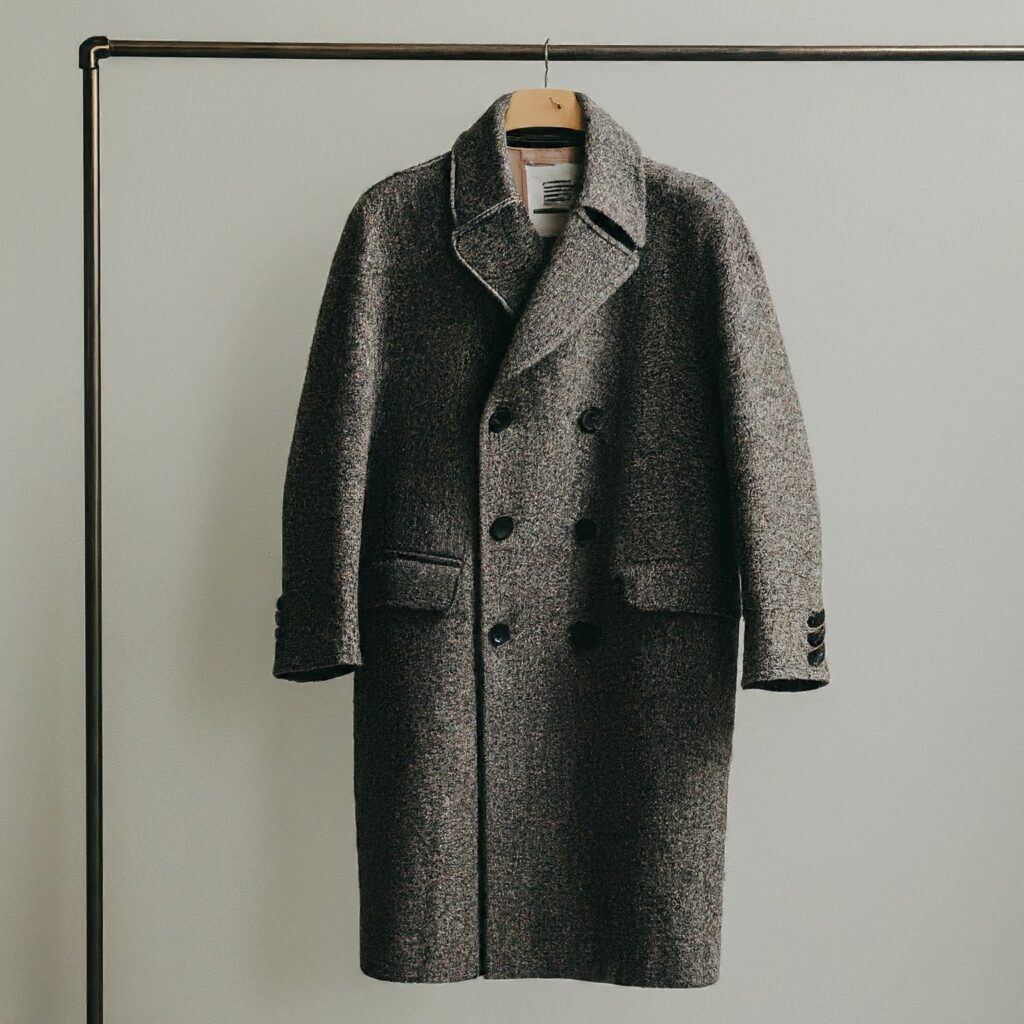
A woollen overcoat isn’t built like a blazer or a lightweight jacket. The outer fabric itself is heavier, the garment is longer, and it’s expected to hold its shape through an entire winter of wear, layering and repeated dry cleaning. That means the interlining underneath has to work harder than it would on a lighter formal garment.
Here’s what changes when you move from a blazer to an overcoat:
- The outer fabric is heavier — wool and wool-blend fabrics need an interlining that can match that weight without being overpowered by it
- The front panel is larger — more surface area means the bond has to stay consistent across a bigger cut
- The garment sees more handling — coats get put on and taken off constantly through the season, which puts repeated stress on the front structure
- The silhouette has to last the whole winter — unlike a blazer worn occasionally, an overcoat is in daily rotation for months
This is why factories producing winter formal wear in Delhi typically move to the heavier end of the interlining range rather than reusing whatever grade works for their suit or blazer lines.
It’s a mistake we see fairly often, a factory that already runs suit or blazer production assumes the same interlining grade will carry over to overcoats without adjustment. The wool fabric itself is usually the giveaway that this won’t work. Overcoat wool is almost always denser and heavier than typical suiting cloth, and a grade that looked perfectly adequate on a blazer front can feel thin and under-supported once it’s fused to a heavy wool panel.
How Interlining Holds an Overcoat’s Structure
The woven interlining sits between the outer wool fabric and the lining, bonded permanently with heat and pressure. Once fused, it becomes part of the garment, invisible from the outside, but doing all the structural work that keeps the coat looking sharp.
For an overcoat specifically, this layer is responsible for:
- Keeping the front chest and lapel from collapsing under the weight of heavy wool
- Supporting the shoulder line so the coat hangs correctly on the body
- Preventing the front panel from stretching or distorting during construction and pressing
- Maintaining a clean silhouette through repeated dry cleaning across the winter season
None of this is visible in the finished coat, but it’s the difference between a garment that still hangs well in February and one that’s already lost its shape by December. A buyer trying on the coat will never see the interlining, they’ll only notice how the coat feels and sits, and that impression is built almost entirely by this hidden layer.
At Double Ghoda, this is a conversation we have often with factories in Delhi and across North India, overcoat production is a different job from suit or blazer manufacturing, and your interlining choice needs to reflect that from the start. Factories that treat overcoat interlining as an afterthought, ordering whatever grade is already in stock for their other product lines, are usually the ones back in touch mid-season asking why a batch didn’t hold up the way they expected.
Choosing the Right Weight for Winter Wear
Interlining weight is measured in GSM, and it’s the single biggest factor in how a coat feels once it’s finished. Go too light, and the wool fabric overwhelms the interlining, leaving the coat with no real structure. Go too heavy without checking how the wool responds, and the front can feel stiff rather than substantial.
For woollen overcoat construction, factories generally work toward the heavier end of the available range, enough body to support a heavy wool fabric across a large front panel, and enough consistency to hold that structure through months of winter wear. The exact weight still depends on how heavy your specific wool fabric is and how structured a silhouette you’re building, which is why a test fuse before a full production run is always worth the few minutes it takes.
A quick way to think about it:
| Garment | Typical interlining need |
| Lightweight jacket | Lighter interlining, softer drape |
| Structured suit or blazer | Mid-weight, defined chest |
| Woollen overcoat | Heaviest range, maximum structural support |
Overcoats sit at the top of that range because the outer fabric itself is already heavy, the interlining needs to hold its own against it, not just add a little support.

Why Woven Construction Matters for Heavy Outerwear
Not all interlining is built the same way, and for a garment as demanding as an overcoat, the construction type matters as much as the weight.
Woven fusible interlining is made from yarns interlaced in both directions, a genuine woven fabric, not a bonded fibre sheet. That structure gives it real tensile strength in every direction, which is exactly what a full-length overcoat front panel needs to resist stretching and hold its shape session after session.
Non-woven interlining, by comparison, is built for lighter jobs – collars, cuffs, plackets and smaller garment parts where the panel is small and doesn’t carry serious structural load. It’s a fine choice for those applications, but it isn’t built to support a heavy wool overcoat front on its own.
| Property | Woven Interlining | Non-Woven Interlining |
| Structure | Yarns woven in both directions | Bonded fibre web |
| Strength | High, resists stretching and distortion | Moderate, fine for small parts |
| Best for | Overcoats, suits, blazers, sherwanis | Collars, cuffs, plackets |
| Shape retention | Excellent over large panels | Good for smaller areas |
For woollen overcoats, the choice is straightforward: full-front construction calls for woven interlining, not non-woven. The larger the panel and the heavier the outer fabric, the more this distinction matters.
Getting the Fuse Right on the Factory Floor
Sourcing the right interlining is only half the job, applying it correctly is what actually determines the finished result. Overcoat fabric is thicker than most suiting material, so the press settings deserve a bit more attention than they would on a lighter garment.
A general process factories follow:
- Cut the interlining to match the front panel shape, allowing for the coat’s larger cutting pattern
- Orient the coated side correctly, the adhesive-coated side faces the wrong side of the wool fabric
- Press at the correct temperature and time for a woven grade, adjusting slightly if your wool fabric is unusually thick or textured
- Cool completely before handling, then check the bond across the full panel, no bubbling, no edge lifting, and a consistent hand-feel throughout
Because wool fabrics vary more in texture and thickness than typical suiting cloth, it’s worth running a test fuse whenever you switch to a new wool batch or a new supplier, even if the GSM looks the same on paper. A few minutes of testing saves an entire panel from being rejected after full production.
It’s also worth checking your press settings specifically for wool rather than assuming your suiting parameters will transfer directly. Wool fabric holds heat differently than polyester-blend suiting cloth, and a press cycle that fuses cleanly on a suit front can under-bond or over-press on a thicker wool panel. If you’re running both product lines on the same equipment, keep separate, tested settings for each rather than switching between them by memory.
Why Delhi Manufacturers Choose Double Ghoda
Delhi and North India run one of the busiest winter formal wear seasons in the country, and overcoat manufacturers here need a supplier who understands what that production actually demands, not just a price list.
We supply woven fusible interlining to garment manufacturers across Delhi NCR and North India, with a full range that covers everything from lighter formal wear through to the heaviest grades used for winter overcoat construction. Every roll carries PA double-dot coating, so you get faster fusing and a stronger bond, something that matters when you’re working with heavy wool fabric that needs a dependable hold through an entire season of wear.
What factories consistently ask us for:
- Consistent GSM and hand-feel across every batch, so your reorders perform the same way every time
- Accurate roll length, so your production planning doesn’t run short mid-batch
- A supplier who understands garment construction, not just fabric specifications
If you’re setting up or scaling overcoat production this season, talk to us about your specific wool fabric and construction before ordering in bulk. Getting the weight and construction type right at the sampling stage saves you far more time than correcting it after a production run.
Overcoat orders in Delhi tend to come in ahead of the winter buying window, and factories that plan their sourcing early generally have an easier season than those scrambling once orders start landing. Stock availability, roll length and consistent GSM across a large order all matter more when you’re fusing hundreds or thousands of metres in a compressed timeframe, so it helps to confirm availability and lead times with us well before your cutting schedule locks in.
Frequently Asked Questions
What type of interlining is best for a woollen overcoat?
A heavier woven interlining is the standard choice for woollen overcoats. The woven structure gives the strength needed to support a large, heavy front panel, and the higher weight range matches the density of typical wool and wool-blend outer fabrics.
Can non-woven interlining be used for overcoats?
Non-woven interlining works well for smaller parts like collars and cuffs, but it isn’t built to support the full front panel of a heavy wool overcoat. For the main body of the coat, a woven grade holds up better over time.
Why do overcoats need a heavier interlining than blazers?
Overcoats use heavier outer fabric, cover a larger front panel and stay in daily rotation through the entire winter season. A heavier interlining matches that fabric weight and keeps the garment structured through repeated wear and dry cleaning.
How do I know if I’ve chosen the right interlining weight for my wool fabric?
Run a small test fuse before committing to a full batch. Check that the front panel drapes naturally without feeling stiff, that the bond stays intact when flexed, and that the interlining doesn’t overpower or get overpowered by the wool fabric’s own weight.
Link of related Articles
- Lightweight Interlining vs. Heavyweight Interlining
- A Beginner’s Guide to Interlining
- Choosing the Right Interlining