
Garment units in Delhi, Ludhiana, Chandigarh and Amritsar sourcing fusible interlining for suits, sherwanis and formal wear need three things from a supplier: the right range of GSM and construction for their production line, consistency across repeat orders, and a supply relationship that can handle bulk quantities without constant renegotiation. Getting these right matters more than finding the cheapest quote, because interlining problems only show up after a garment is cut, fused and finished, by which point a bad batch is a production loss, not a return.
North India’s garment trade is dominated by structured formal wear, suits, blazers, sherwanis, bandgalas, and that shapes what a suitable supplier actually looks like. A factory in Ludhiana running blazer production has different repeat-order needs than a Delhi sherwani manufacturer sourcing heavy body fusing for full-front construction. Both need interlining for suit manufacturer requirements that stays consistent across every reorder, not just a supplier who quotes well on the first sample.
This article walks through what to look for when sourcing interlining for a North Indian production line, the garment-specific options, the supplier model that suits bulk manufacturing, and where Double Ghoda fits as one relevant option for this region.
Table of Contents
- Fusible Interlining for North India Garment Manufacturers
- Interlining Options for Suits, Sherwanis and Formal Wear
- Woven and Non-Woven Interlining for Different Garment Needs
- Why Garment Units Choose a Direct Interlining Supplier
- Fusible Interlining Supply Across Delhi, Ludhiana, Chandigarh and Amritsar
- Order Fusible Interlining for Your Garment Production
Interlining Options for Suits, Sherwanis and Formal Wear
Different garments in the North India formal wear category call for different interlining grades, and getting this match right is where sourcing decisions usually start.
- Sherwanis and bandgalas need heavy, full-front body fusing that holds a firm, structured shape through repeated wear and dry cleaning. This is the heaviest end of the woven interlining range, and it’s where a supplier’s depth of stock matters, lighter grades won’t give a sherwani panel the structure it needs.
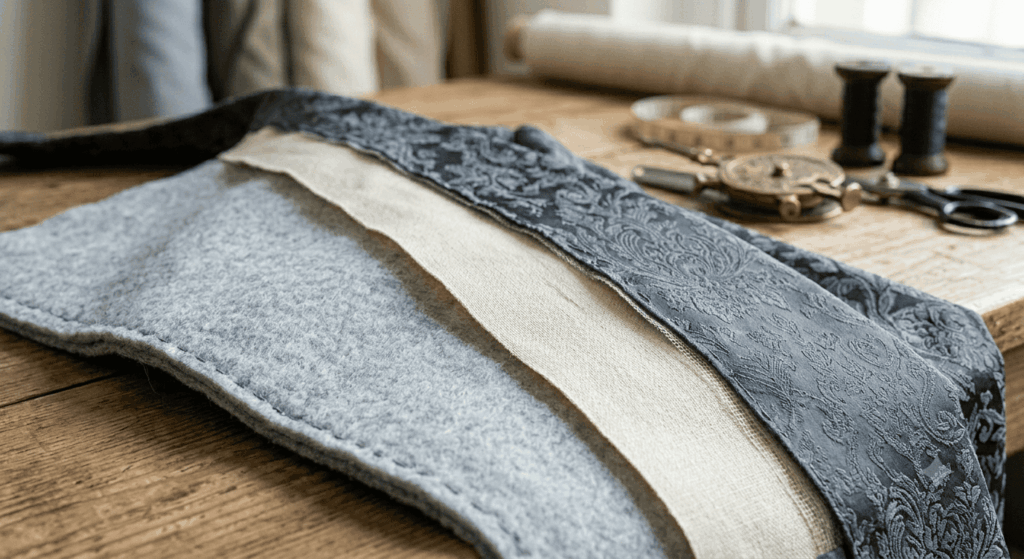
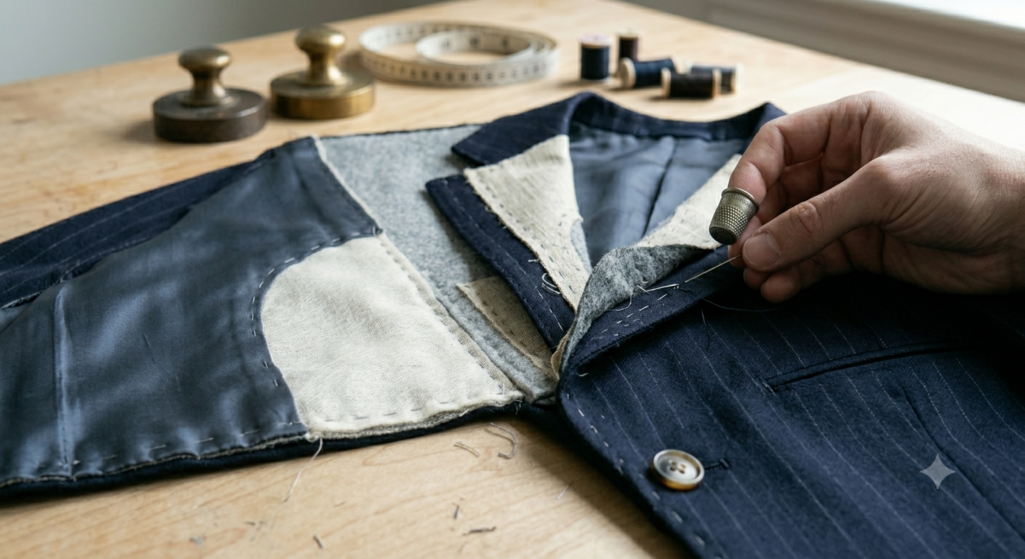
- Suits and blazers typically call for a mid-to-heavy woven grade for the chest and front panels, enough body to hold shape at the lapel without feeling stiff against the wearer. Many suit manufacturers also need supporting materials for the same construction, such as chest pieces and shoulder pads, alongside the core fusing.
- Collars, cuffs and plackets across all these garment types use a lighter construction, since these parts need to hold a crisp edge without the structural load a full-front panel carries.
For a garment unit running multiple product lines, sherwanis and blazers in the same production cycle, for example, sourcing from a single supplier who stocks the full range removes a layer of coordination that otherwise falls on the factory floor.
Woven and Non-Woven Interlining for Different Garment Needs
The construction question comes down to a simple split: woven for full-body structure, non-woven for smaller parts.
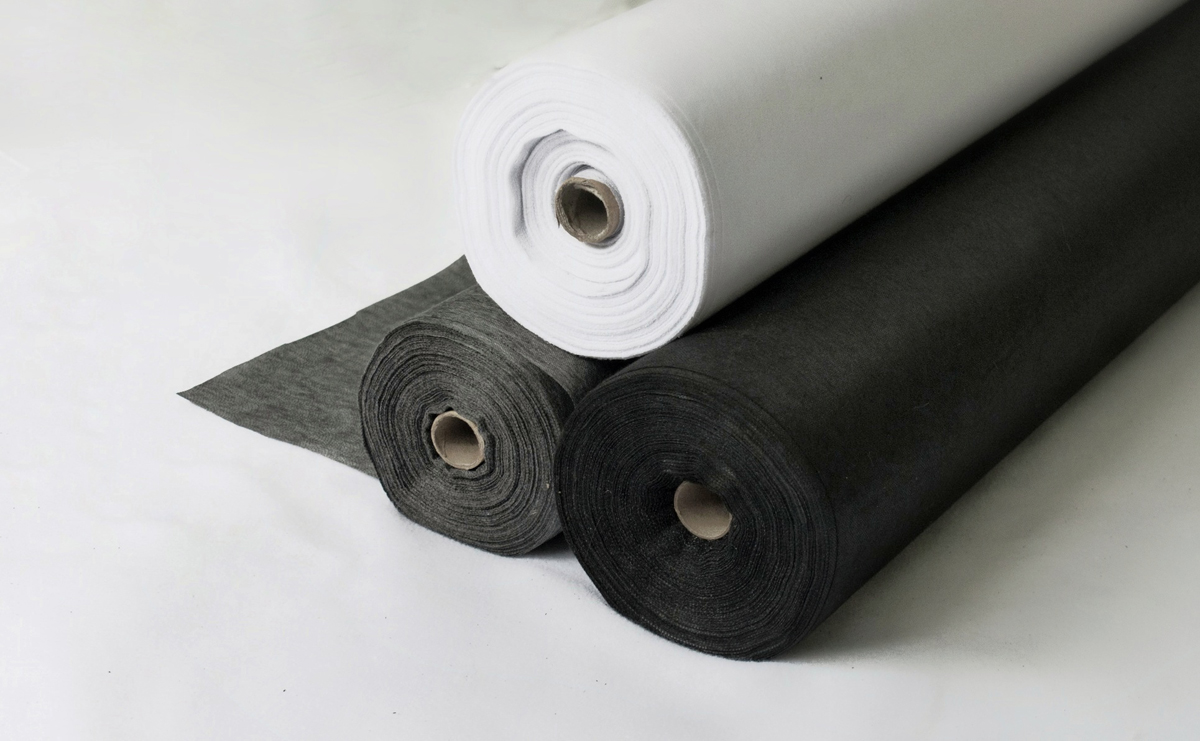
Woven interlining is a true woven fabric, and its strength and shape retention make it the standard choice for suit fronts, blazer bodies and sherwani panels, anywhere the garment needs to hold a defined structure through wear. Non-woven interlining is made from bonded fibres rather than a woven structure. It’s lighter and more economical, and it’s built for collars, cuffs, plackets and other smaller construction details where full structural support isn’t the requirement.
Most formal wear factories order both, on the same production run, because a single garment, a sherwani, for instance, typically uses the woven grade for the body and the non-woven grade for the collar. A supplier who stocks both constructions means one enquiry covers a full garment’s interlining requirement, rather than splitting the order across two vendors and reconciling two sets of specifications.
Why Garment Units Choose a Direct Interlining Supplier
Comparing fusible interlining suppliers for a bulk order usually comes down to one distinction: whether you’re buying from the source or through a layer of intermediaries. Sourcing directly changes how the order actually works.
Specification stays consistent across reorders. A direct supplier holding their own stock can quote the same GSM, coating and hand-feel on a repeat order months later, because the specification isn’t being resold through multiple hands each time.
Bulk quantities are the default, not an exception. Fusible interlining wholesale India sourcing runs on volumes that individual tailors don’t need, a direct supplier’s stock, pricing and processes are built around factory-scale orders rather than retail-style transactions.
Fewer parties means fewer points of failure. Each additional layer between the factory and the original stock is another place where a short roll, a shade mismatch or a delayed dispatch can happen without a clear point of accountability.
Freight and city coverage can be discussed directly. For a garment unit in North India ordering from a supplier based elsewhere, freight terms and delivery timelines are part of the sourcing conversation, worth confirming directly with whoever holds the stock, rather than through an intermediary.
None of this guarantees a perfect order every time. But sourcing directly narrows the number of things that can go wrong between a confirmed specification and a delivered roll.
Fusible Interlining Supply Across Delhi, Ludhiana, Chandigarh and Amritsar
North India’s formal wear manufacturing is spread across a handful of hubs, each with a slightly different production focus, Delhi NCR’s mix of formal wear wholesalers and exporters, Ludhiana’s blazer and jacket factories, and Chandigarh and Amritsar’s formal wear and ethnic wear units.
Double Ghoda supplies fusible interlining to garment manufacturers across these markets, alongside Surat, Mumbai and Kolkata. The core range covers woven fusible interlining from 30 to 150 GSM, including the 140 GSM grade known in the trade as 111 quality, used for sherwani full-front construction, and non-woven fusible interlining from 30 to 80 GSM for collars, cuffs and plackets. Woven interlining uses PA double-dot coating and is OEKO-TEX® Standard 100 certified; stock is held at a Bhiwandi, Maharashtra warehouse for dispatch to North India and other regions.
For a Ludhiana blazer factory or a Delhi sherwani manufacturer, this means the woven and non-woven range needed for a typical formal wear production run is available from a single interlining fabric manufacturer India-wide, rather than sourced across separate vendors for body fusing and collar interlining.
Order Fusible Interlining for Your Garment Production
If you’re running a garment unit in Delhi, Ludhiana, Chandigarh, Amritsar or elsewhere in North India and sourcing fusible interlining for an upcoming production run, the practical next step is to confirm your specification against what’s actually available before placing a bulk order.
That means checking:
- The GSM and construction, woven or non-woven, for each garment part in your production line
- Whether the supplier’s stocked range covers your full requirement, including heavier grades for sherwanis and bandgalas
- Minimum order quantity and how it applies across colours or GSM grades
- Freight terms and expected timelines to your city
Double Ghoda supplies fusible interlining on a minimum order of 1,000 metres, wholesale B2B, with woven interlining in 50-metre rolls and non-woven in 90-metre rolls. If your production run needs a mix of woven body fusing and non-woven collar interlining, sharing your GSM and quantity requirement is the fastest way to get a specification confirmed before you commit to a bulk order.
Frequently Asked Questions
What fusible interlining is typically used for sherwani manufacturing in North India?
Heavy woven interlining, generally in the 100–150 GSM range, is used for full-front sherwani construction. The 140 GSM grade, known in the trade as 111 quality, is the most commonly referenced grade for this application.
Do garment units in Ludhiana and Chandigarh need a different interlining supplier than those in Delhi?
Not necessarily. A supplier stocking the full woven and non-woven range can typically serve blazer-focused units, sherwani manufacturers and formal wear wholesalers across all these markets from the same stock.
Should I order woven or non-woven interlining for my production line?
Most garment units need both, woven for full-body structure in suits, blazers and sherwanis, and non-woven for collars, cuffs and plackets. Which mix you need depends on your specific garment types.
What’s the advantage of sourcing directly from a fusible interlining supplier rather than a distributor?
Direct sourcing generally means more consistent specifications across reorders, since the stock and quotation come from the same source each time, rather than being resold through additional intermediaries.
What is the minimum order quantity for wholesale fusible interlining?
For Double Ghoda, the minimum order is 1,000 metres, supplied on a B2B wholesale basis to garment factories and formal wear wholesalers rather than individual tailors.
Does Double Ghoda supply garment units across North India?
Yes. Double Ghoda supplies fusible interlining to garment manufacturers across Delhi NCR, Ludhiana, Chandigarh and Amritsar, alongside other markets including Surat, Mumbai and Kolkata.
Link of related Articles
- Lightweight Interlining vs. Heavyweight Interlining
- A Beginner’s Guide to Interlining
- Choosing the Right Interlining