
You’ve probably had this happen before: a batch of interlining looks fine on the roll, fuses without issue, and then three washes later, the collar you fused it into has gone soft and shapeless. That’s not a fusing mistake, that’s a quality problem you couldn’t see until it was too late.
If you manufacture shirts, jackets, or women’s wear, you already rely on non woven interlining for collars, cuffs, plackets, and light garment parts every single day. But not all of it performs the same way. Knowing how to tell good interlining from mediocre interlining before you commit to a bulk order can save you from rejected batches, unhappy buyers, and a production line that keeps stalling on rework. Here’s exactly what to check.
Table of Contents
- Why Quality Non Woven Interlining Is Harder to Judge Than You Think
- The Core Quality Checks Every Buyer Should Run
- How to Test Bonding Strength and Adhesive Coating
- GSM, Elasticity and Hand-Feel — What They Tell You
- Certification and Compliance Signals to Look For
- Why Manufacturers Trust Double Ghoda for Non Woven Fusible Interlining
Why Quality Non Woven Interlining Is Harder to Judge Than You Think
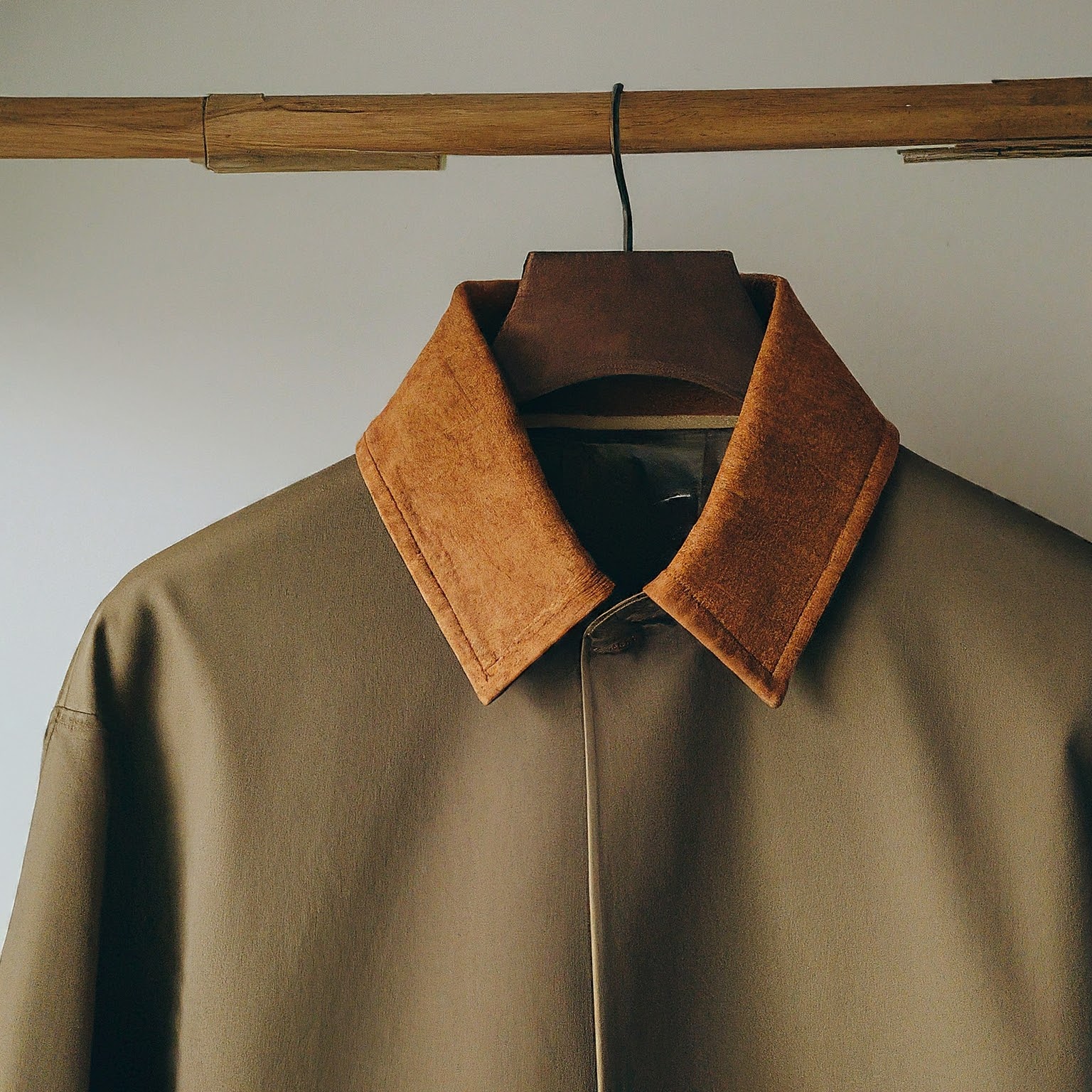
Here’s the tricky part about interlining fabric: it hides inside the garment, so most quality problems don’t show up on day one. They show up after the first wash, or the tenth, when the collar you fused starts to curl or the placket loses its crispness.
Non woven interlining fabric is made by bonding polyester fibres together, rather than weaving them, and coating one side with a thermoplastic adhesive. When you press it against your fashion fabric with heat, that adhesive melts and creates a permanent bond. Good non woven interlining fabric gives you a soft handle after fusing, holds its shape, and survives repeated washing without delamination. Poor-quality interlining might look identical on the roll but fail in exactly the ways that matter once it’s inside a finished garment.
This is exactly why sourcing decisions on this fabric deserve more attention than they usually get:
- Visual inspection alone won’t catch adhesive inconsistency, you need to actually fuse a sample and test it
- Batch-to-batch variation is common among suppliers who don’t run consistent quality checks
- A weak bond only becomes obvious after washing, by which point the garment is already with your buyer
- The wrong GSM or elasticity for your fabric can leave a collar too stiff or too floppy, even if the adhesive bond itself is fine
Knowing what to check before you place a bulk order protects your production timeline and your reputation with buyers.
The Core Quality Checks Every Buyer Should Run
Before you commit to a large order, here’s a practical checklist you can run on any sample roll of non woven fusible interlining.
Check the base fabric construction Genuine non woven interlining fabric should be 100% polyester with consistent fibre density across the roll. Hold a sample up to the light, you’re looking for even distribution, not visible thin patches or clumping, which signal an inconsistent bonding process during manufacturing.
Inspect the adhesive coating pattern Flip the fabric over and look at the coated side. You should see a clean, consistent dot pattern, either a double-dot or paste-dot application, depending on the grade. Uneven or patchy adhesive coverage is one of the clearest early signs of a lower-quality batch.
Feel for consistent thickness Run your hand across the full width and length of the sample. Interlining that varies in thickness across the roll will fuse unevenly, giving you inconsistent results even on a single garment panel.
Fuse a test sample before ordering bulk This is the step too many buyers skip. Take a sample, fuse it to your actual fashion fabric using your factory’s press settings, and check the bond. A supplier confident in their product will always offer samples before asking for a 1,000-metre commitment.
Wash-test the fused sample Fuse a swatch, then run it through your standard wash cycle. Check for bubbling, edge lifting, or any separation between the interlining and the fashion fabric. This single test tells you more about long-term quality than any visual inspection.
Confirm roll length accuracy Short metres on a roll is a common issue in the interlining trade, and it quietly eats into your production margins. A reliable supplier measures and verifies every roll before dispatch.

How to Test Bonding Strength and Adhesive Coating
The adhesive coating is really the heart of any fusible interlining, and it’s the single biggest factor separating a high-quality roll from a mediocre one. Here’s how to evaluate it properly.
Understand the coating types Non woven interlining typically comes with either paste-dot or double-dot adhesive coating, using a PES (polyester) adhesive. Double-dot coating applies adhesive in a more consistent, staggered pattern, which generally gives you stronger, more even bonding than a basic paste-dot application. If your supplier can’t tell you which coating type they use, that’s worth asking about directly.
Test the actual fusing conditions Good non woven fusible interlining should bond cleanly within a defined temperature and pressure range, generally in the 120–150°C range on a flatbed press, with a fusing time of roughly 12 to 18 seconds. If a fabric needs excessive heat, pressure, or time to bond properly, that’s often a sign of weak or inconsistently applied adhesive.
Check for delamination resistance After you’ve fused and washed a test sample, try to gently separate the interlining from the fashion fabric at the edge. A strong bond will resist separation. If it lifts easily, that adhesive won’t hold up through a customer’s regular wash cycle.
Ask about batch consistency A supplier who can explain their coating process, and who holds ready stock with the same adhesive spec applied consistently, is a safer long-term partner than one who can’t confirm what’s actually on the roll. Reorders should perform identically to your first order; if they don’t, that inconsistency will eventually show up as rejects on your production floor.
GSM, Elasticity and Hand-Feel — What They Tell You
GSM (grams per square metre) and elasticity aren’t just technical specs, they tell you a lot about whether the interlining is actually right for your garment, and whether it’s genuinely good quality or just cheaply made.
Match GSM to your garment part Non woven interlining typically ranges from around 30 GSM up to 82 GSM. Lighter grades suit soft-drape applications like women’s wear and lightweight jackets, while heavier grades within this range give you more structure for collars, cuffs, and front-part fusing on medium-weight garments. If a supplier only offers one or two GSM options, you’re limited in how precisely you can match the fabric to your garment.
Check for good elasticity One mark of genuinely good non woven interlining is that it moves naturally with the fabric it’s fused to, rather than fighting against it. Press a fused sample between your fingers and gently flex it, it should have some give, not feel rigid or paper-like. Poor elasticity is a common cause of puckering around collars and cuffs after washing.
Test dimensional stability after washing Quality interlining resists shrinking or distorting after a wash cycle. If your test sample changes shape or pulls away from the fashion fabric after washing, that’s a stability problem that will repeat itself across your entire bulk order.
Feel the hand after fusing, not before Interlining that feels soft on the roll doesn’t always stay soft once it’s fused, heat and adhesive can change the hand-feel significantly. Always judge softness on a fused, cooled sample, not the raw fabric straight off the roll.
Certification and Compliance Signals to Look For
Quality checks on the factory floor matter, but paperwork matters too, especially if you’re supplying buyers who care about compliance, or exporting to markets with stricter regulations.
- OEKO-TEX® Standard 100 certification confirms the fabric has been tested for harmful substances. This is increasingly a baseline requirement rather than a bonus, especially for export-facing manufacturers
- Consistent material declaration — genuine non woven interlining fabric should be clearly specified as 100% polyester; ask your supplier to confirm this on their technical spec sheet
- Documented fusing parameters — a supplier who can hand you a clear temperature, pressure, and time spec for their product is one who actually understands and controls their own manufacturing process
- Willingness to provide test reports — if a supplier hesitates or can’t produce certification documentation on request, treat that as a signal to look elsewhere, particularly for orders headed to regulated export markets
Asking for this documentation upfront, before you place a bulk order, saves you from compliance issues surfacing later in your supply chain, often at the worst possible time, right before a shipment.

Why Manufacturers Trust Double Ghoda for Non Woven Fusible Interlining
At Double Ghoda, non woven fusible interlining is one of our core specialities, alongside our woven interlining and lining fabric range. We built our supply around the exact quality markers that matter to garment manufacturers, not just what looks good on a spec sheet, but what actually performs on your production floor and holds up after your buyer’s first wash.
Here’s what you get when you source non woven interlining fabric from us:
- A super-quality polyester base fabric, pure and blended, built for consistent fibre density across every roll
- Super hotmelt adhesive applied through double-dot treatment, giving you stronger, more even bonding than basic paste-dot alternatives
- A full 30–82 GSM range, so you can match the right weight to collars, cuffs, plackets, front-part fusing, and lightweight women’s wear without switching suppliers
- Good elasticity and dimensional stability after washing, tested to hold its shape through repeated laundering
- OEKO-TEX® Standard 100 certification, ready for compliance-conscious and export-facing buyers
- White, black, and charcoal colour options in 100cm width, packed in 100-yard rolls, 6 rolls per bale, for efficient handling on your factory floor
We specialise in fusible interlining for suits, sherwanis, and other ethnic wear, and our core strength lies in high-tech finishing technology that gives you a soft handle and reliable performance, fusion after fusion. Whether you’re producing shirts, jackets, women’s wear, or lightweight formal garments, we can help you match the right GSM and coating type to your exact production requirement.
Ready to test a sample before your next bulk order? Reach out to us with your GSM, colour, and quantity requirement, we’ll get you a sample and a written quotation fast.
Link of related Articles
- Lightweight Interlining vs. Heavyweight Interlining
- A Beginner’s Guide to Interlining
- Choosing the Right Interlining