
It is one of those decisions that gets made quickly on the production floor and rarely gets questioned, until it should.
White interlining on a dark garment. Black under a light-coloured fabric that presses through. The wrong colour selected for a full batch, visible only once garments are finished and pressed. These are avoidable problems, and they come down to one simple choice that many manufacturers make without a clear framework.
This guide covers non woven fusible interlining, what it is, how it performs, and specifically how to choose between white and black based on garment type, outer fabric colour, and end use. If you are producing shirts, daily wear, collars, cuffs, or lighter garments at scale, this is the decision that needs to be right before cutting starts.
Table of Contents
- What Non Woven Interlining Is and How It Differs From Woven
- The GSM Range: 30 to 80 and What Each Weight Does
- White vs Black: The Colour Decision Explained
- Garment-Specific Use Guide
- Common Mistakes Manufacturers Make With This Interlining
- Choosing a Reliable Non Woven Interlining Supplier
What Non Woven Interlining Is and How It Differs From Woven
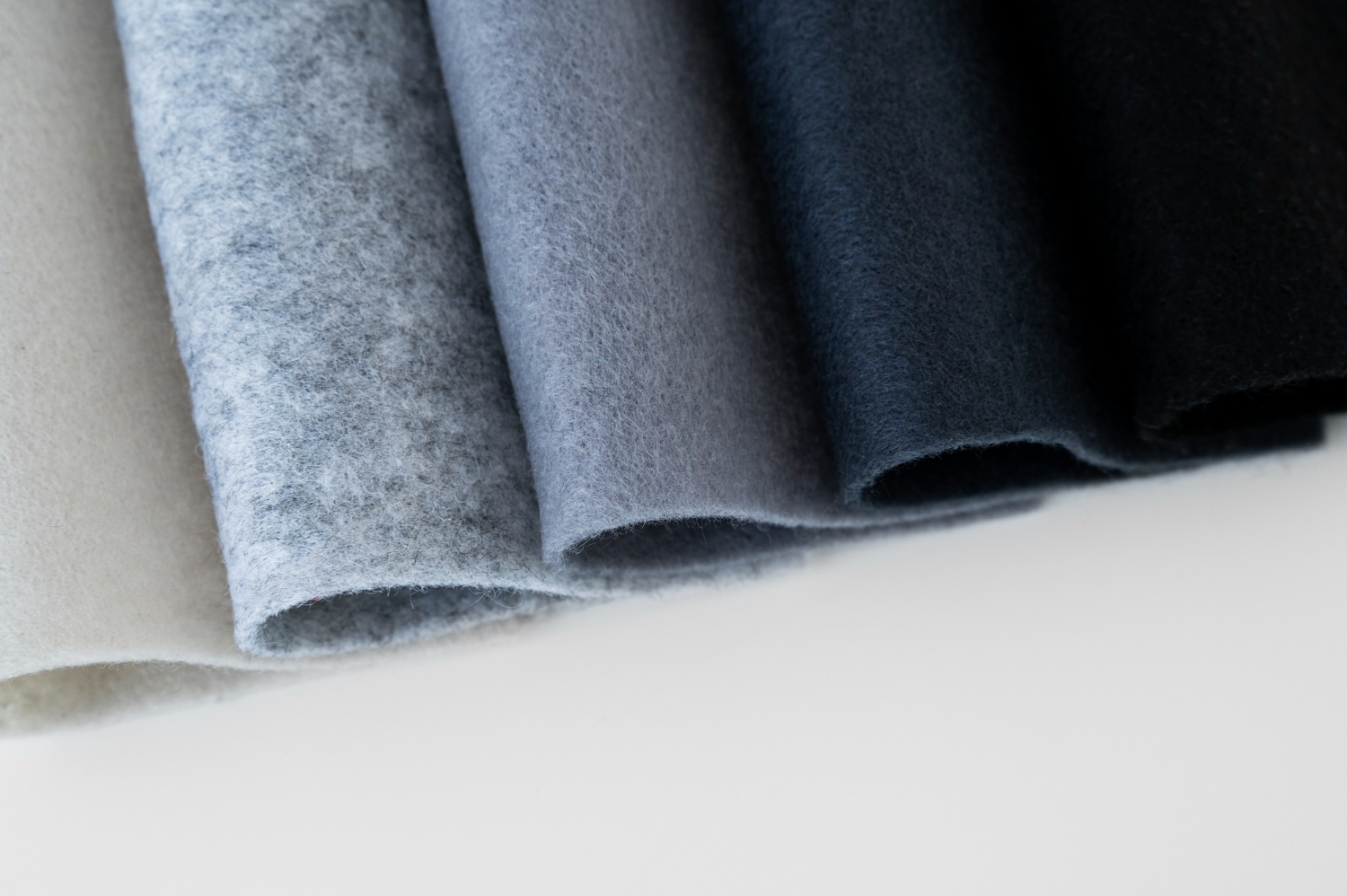
Non woven interlining is a fusible interlining made from bonded fibres rather than woven threads. The fibres are pressed and bonded together using heat, chemical adhesion, or mechanical needling, producing a fabric-like sheet without any woven structure.
This construction makes it fundamentally different from woven fusible interlining in terms of how it behaves inside a garment.
Woven interlining has a structured weave, directional grain, and significant body. It is designed for heavy-duty applications, suits, blazers, sherwanis, structured ethnic formal wear, where the interlining needs to contribute shape, stiffness, and long-term structural integrity to the garment. Our woven fusible range runs from 30 GSM to 150 GSM and uses PA double-dot coating for faster, stronger bonding.
The non woven version has no grain direction, softer body, and more flexibility. It does not hold structure the way woven interlining does. What it does well is add light support, body, and crispness to garment components that need some reinforcement without weight or rigidity. This is why it serves a completely different range of applications, lighter garments, daily wear, functional components like collars and cuffs, rather than structured formal wear.
Key specifications for our non woven fusible interlining:
- GSM range: 30 GSM to 80 GSM
- Roll length: 90 metres
- Colours: White and Black
- Coating: Fusible (heat-bonding adhesive on one side)
- Applications: All garment types, both genders — lighter daily wear, collar and cuff applications, shirt plackets
The 90-metre roll length (versus 50 metres for woven) reflects the lighter per-garment usage, this product covers more garments per roll, and production volumes in the shirt and daily wear category typically run higher than structured formal wear. At Double Ghoda, we supply both roll formats to ensure your production line is never held up by supply mismatch.
The GSM Range: 30 to 80 and What Each Weight Does
The range runs from 30 GSM to 80 GSM. Unlike woven interlining, where Indian manufacturers lean heavily toward 100+ GSM for ethnic formal wear, non woven fusible interlining is used across its full width, with the right weight chosen for the specific garment component.
- 30–40 GSM — Featherlight Support
The lightest end. At 30–40 GSM, the product adds minimal body to very thin fabrics without any discernible stiffness. It is used where the goal is dimensional stability rather than structural support, preventing stretch or distortion in lightweight knit or woven fabrics during cutting and sewing.
Best for: Very light daily wear garments, thin shirt plackets in fine cotton or poly-cotton, lightweight women’s garments where any stiffness would be visible or uncomfortable.
- 45–55 GSM — Light to Mid Support
The practical mid-range for shirt and daily wear applications. 45–55 GSM provides enough body to crisp up a collar or cuff without making the garment feel stiff or over-reinforced.
Best for: Standard shirt collars, shirt cuffs, shirt patti (placket), lightweight jacket facing panels, casual trouser waistband facings.
This weight range accounts for the majority of volume in shirt manufacturing, by far the largest application category for this product type.
- 60–80 GSM — Medium-Heavy
The heavier end. At 60–80 GSM, the product provides significantly more body, enough to add crispness to structured collars, reinforce facing panels in light jackets, or support components in semi-formal garments.
Best for: Structured stand collars in kurtas and bandhgalas, facing panels in light jackets, waistband interfacing in formal trousers, semi-formal women’s garments where collar structure is a design feature.
At 80 GSM, the behaviour begins to approach very light woven interlining, but without the grain direction or long-term shape retention that woven provides. For any garment component requiring lasting structural shape over repeated use and cleaning, woven fusible interlining remains the correct choice.
White vs Black: The Colour Decision Explained
This is the core decision, and it is simpler than it sounds, but it matters more than most manufacturers give it credit for.
The interlining is bonded to the inner surface of an outer fabric layer. In most applications, it is not visible in the finished garment. But under certain conditions, thin outer fabrics, light colours, insufficient lining coverage, the interlining colour can show through to the outside, or create visible tonal variation at bonded areas.
Choosing incorrectly between white and black causes production-level problems that require either rejection or re-work. Here is how to choose correctly.
- When to Use White
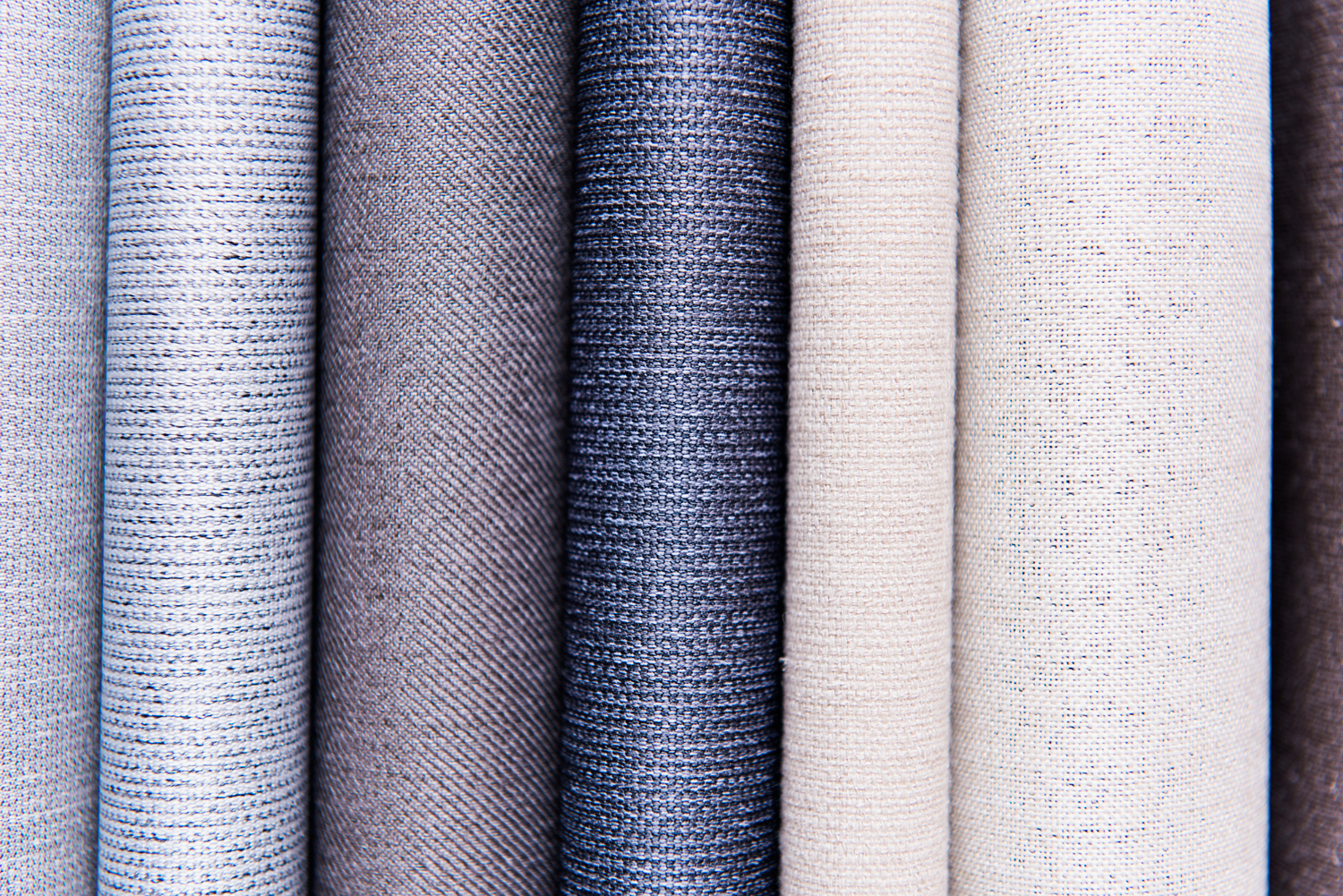
White is the default choice for light-coloured outer fabrics, and in practical terms, this covers the majority of shirt and daily wear production.
Use white for:
- White dress shirts and formal shirts
- Light-coloured shirts, cream, off-white, light blue, pale yellow, light grey, pastels
- Light-coloured ethnic kurtas, bandhgalas, and semi-formal tops in white or off-white fabrics
- Any garment where the outer fabric is lighter than mid-tone
- Women’s garments in light or bright colours
Why it matters: Black interlining under a white or light-coloured fabric creates a shadow effect at the bonded areas, most visible at collars, cuffs, and plackets where interlining coverage is dense and the outer fabric is under tension. Even fabrics that appear opaque on a cutting table can show colour bleed-through after fusing, when heat and pressure bond the layers more tightly together.
White interlining under light fabrics is invisible. There is no show-through, no tonal difference, no shadow. It is the safe and correct choice for the light colour range.
- When to Use Black
Black is specifically for dark outer fabrics.
Use black for:
- Black shirts, dark navy shirts, charcoal garments
- Dark ethnic kurtas, black, deep navy, dark green, maroon
- Dark-coloured women’s garments
- Any outer fabric that is mid-tone or darker, where white interlining edges or show-through would be visible
Why it matters: White interlining behind dark fabrics can create a visible light edge at the interlining boundary, particularly at collar edges, placket lines, and cuff hems where the interlining ends and the outer fabric continues. This edge effect is most problematic with dark fabrics where the contrast between white interlining and dark outer fabric is at its maximum.
Black interlining eliminates this risk. The colour match between interlining and outer fabric means that even if there is minor show-through or edge visibility, it does not create a visible defect on the finished garment.
The Practical Rule
Match the interlining colour to the tone of the outer fabric:
| Outer Fabric Tone | Interlining Colour |
| White | White |
| Off-white, cream, ivory | White |
| Light pastels (blue, pink, yellow, green) | White |
| Light grey | White |
| Mid-tone (medium blue, medium grey) | White (generally), test if uncertain |
| Dark navy, dark grey | Black |
| Black | Black |
| Dark maroon, dark green, deep purple | Black |
| Printed fabric (light base) | White |
| Printed fabric (dark base) | Black |
For mid-tone fabrics where the choice is genuinely uncertain, fuse a small test piece and hold it up to light before committing to a full batch. The show-through test takes two minutes and prevents a production error that takes considerably longer to fix.
Garment-Specific Use Guide
This product type is used across a much wider range of garments than woven interlining. Here is a practical breakdown by garment component and category.
- Shirt Collar
The shirt collar is the highest-visibility application. A well-fused collar holds its shape, stands correctly, and does not soften or lose its crisp edge through wear and washing.
For standard dress shirts and formal shirts, 45–55 GSM is the typical choice. The collar band and collar outer layer are both interfaced to provide the combined stiffness that holds the collar shape.
Colour: Always match to the shirt fabric. White shirts, white. Dark shirts, black.
- Shirt Cuffs
Cuffs require the same crispness as collars and face the same stress, repeated folding, buttoning, and contact with the wrist. 45–55 GSM is standard for dress shirt cuffs. Heavy or structured barrel cuffs may use 60 GSM for additional body.
- Shirt Placket (Patti)
The shirt front placket reinforces the buttonhole area and keeps the shirt front from stretching or pulling during wear. 30–45 GSM is standard for placket applications, light enough not to add stiffness to the shirt front, substantial enough to prevent button-area distortion.
- Kurta and Bandhgala Collars
Stand collars in kurtas and structured necklines in bandhgalas use heavier weight than dress shirts, typically 60–70 GSM, to provide the upright structure the collar design requires. The outer fabric in ethnic wear is often heavier than shirt fabric, so the interlining weight needs to scale accordingly.
Colour selection follows the same rule: light fabrics, white. Dark fabrics, black.
- Casual and Daily Wear Jackets
For casual jackets and unstructured blazers made from lighter outer fabrics, where woven interlining would be too heavy, 60–80 GSM provides a functional alternative at the facing panels, collar, and front edge. This is not a substitute for structured woven interlining in formal wear. It is the appropriate choice for garments that prioritise drape and comfort over structural shape.
- Women’s Garments
This interlining type covers a wider range of women’s garment applications, blouses, kurtas, salwar suits, casual jackets, structured tops. The lighter GSM range (30–55 GSM) is most used here. For women’s wear specifically, the no-show-through rule is more critical, women’s fabrics tend to be lighter weight, and the risk of interlining visibility is higher.
- Waistbands and Facing Panels
Trouser and skirt waistbands, facing panels in jackets, and pocket openings all use this interlining type to add body and prevent stretch. 50–70 GSM is typical, with colour selected to match the outer fabric.
Common Mistakes Manufacturers Make With This Interlining
These are recurring production errors, not uncommon, and not difficult to fix once you know to look for them.
- Not verifying colour consistency across batches. White should be consistent white across every batch, not varying between bright white and off-white. Colour variation in interlining creates tonal variation in finished shirt collars and cuffs that is difficult to explain to buyers and impossible to fix post-production.
- Using woven interlining where non woven interlining fabric is required. Woven interlining in a shirt collar adds too much rigidity, makes the collar feel board-like, and often creates fusing complications because woven interlining is designed for heavier pressing conditions than shirt fabrics can handle. Each product has its application range, using woven for collar and cuff applications is the wrong choice regardless of GSM. When the garment calls for non woven interlining fabric, use it.
- Ignoring colour and defaulting to white for everything. White is the majority-use colour, but applying it to dark garments is a preventable production error. Establish a fixed rule in your cutting department: dark fabric, black, light fabric, white. No exceptions, no guesswork.
- Using too high a GSM for the application. 80 GSM in a fine cotton shirt produces a collar that feels stiff and uncomfortable. Match the interlining weight to the outer fabric weight and the desired hand-feel of the finished garment. Light fabrics need light interlining.
- Insufficient fusing temperature or pressure. The product bonds through heat and pressure. Insufficient fusing leaves the bond incomplete, the interlining appears fused but delaminates after washing or dry cleaning. Follow the correct fusing conditions for the specific weight and outer fabric combination.
- Using this type in applications that require woven. For suits, blazers, sherwanis, and any structured formal wear where the interlining must hold long-term shape, this product is not a substitute for woven fusible interlining. The non woven provides body; woven provides shape retention. These are different properties, and the wrong choice shows up over time.
- Ordering without checking roll metre accuracy. A 90-metre roll should deliver 90 metres. Short rolls create mid-run shortfalls and disrupt cutting schedules. This is a common industry problem, verify metre accuracy from any supplier before committing to bulk volume.
Choosing a Reliable Non Woven Interlining Supplier
For manufacturers ordering at 1,000 metres or above, supplier reliability covers more than product specification alone.
- Consistency batch to batch. Interlining that varies in GSM, bonding strength, or dimensional stability between batches creates production inconsistency. Collar crispness varies. Fusing conditions need to be adjusted mid-run. The problem is not always obvious in a single piece inspection, it shows up across a production run or between two batches of the same specification.
- Accurate metres per roll. Short rolls are a direct production input problem, not just a cost issue, but a scheduling issue. Working with reliable interlining suppliers means the stated metres on every roll are the actual metres your production team cuts from.
- Bonding strength under standard conditions. The adhesive coating must activate correctly under standard fusing temperatures and pressure appropriate for the outer fabric type. Interlining that requires excessive heat to bond will damage light fabrics. Interlining with weak adhesive delaminates in use.
- Full range availability. A supplier who carries the full range, 30 GSM through 80 GSM, white and black, means your production team can source the right specification without splitting orders across multiple suppliers. Consistent single-source supply simplifies procurement and reduces specification drift across your product range.
- Trade-scale minimum quantities. Wholesale supply starts at 1,000 metres. An interlining fabric manufacturer india-based and set up for B2B production, rather than mixed retail, understands manufacturing lead times, bulk dispatch, and the consistency requirements that come with production at scale. Whether you are looking for interlining suppliers in Surat, Ludhiana, Delhi, or anywhere across North India, Double Ghoda operates at the scale and specialisation your production requires.
- Support beyond the product. Colour selection, GSM guidance, pairing recommendations between interlining and lining, these are questions that come up in production. A supplier who can answer them directly, with knowledge of the Indian manufacturing context, saves your team time and prevents the kind of avoidable errors that cost more to fix than they would have to prevent.
We supply both non woven and woven fusible interlining wholesale across India, Surat, Ludhiana, Delhi, Kolkata, Chandigarh, Amritsar, and beyond. Our range is built for the Indian garment manufacturing market: fabric weights, production volumes, and the specific requirements of ethnic formal and Western formal manufacturing in India.
Bringing It Together
This is the right product for lighter garments, daily wear, and functional components, collars, cuffs, plackets, facings, waistbands. It is not the choice for structured formal wear, where woven fusible interlining provides the shape retention and long-term body that this product cannot.
Within the range, two decisions matter most:
GSM: Match the interlining weight to the outer fabric weight and the stiffness requirement of the application. Lighter fabrics need lighter GSM. Do not over-specify.
Colour: Match the interlining tone to the outer fabric tone. Light fabrics, white. Dark fabrics, black. Make this a fixed production rule and it eliminates an entire category of preventable errors.
For manufacturers producing both structured formal wear and lighter garments, our range covers both ends, woven fusible interlining for suits, blazers, and sherwanis; non woven interlining fabric for everything lighter. As an established interlining fabric manufacturer india garment units trust for consistent quality, Double Ghoda supplies wholesale only, with a minimum order of 1,000 metres across both categories.
Link of related Articles
- Lightweight Interlining vs. Heavyweight Interlining
- A Beginner’s Guide to Interlining
- Choosing the Right Interlining