

If you manufacture uniforms, you know the outer fabric only tells half the story. What holds the collar sharp after twenty washes? What keeps the front panel from sagging by lunchtime? The answer sits inside the garment, invisible to anyone wearing it, and it’s the single biggest factor separating a uniform that looks sharp for years from one that looks tired in a month.
That’s where fusing cloth comes in. Choosing the right one isn’t a small decision. It affects your reject rate, your production speed, and how your uniforms perform after hundreds of industrial washes. This guide walks you through everything you need to know before you place your next order.
Table of Contents
- What Is Fusing Cloth and Why Uniforms Need It
- Fusible Interlining vs Body Fusing, Know the Difference
- How to Choose the Right Interlining Fabric for Your Uniform
- GSM Guide for Uniform Fusing Cloth
- Woven vs Non-Woven Fusing Cloth for Uniforms
- Why Manufacturers Choose Double Ghoda for Uniform Fusing Cloth
What Is Fusing Cloth and Why Uniforms Need It
Let’s start with the basics. Fusing cloth is a base fabric, woven or non-woven, coated on one side with a thermoplastic adhesive. When you press it against your outer fabric using heat and pressure, the adhesive melts and bonds the two layers permanently. No stitching required.
For uniform manufacturing, this matters more than it might for casual wear. Uniforms go through repeated washing, ironing, and heavy daily use. Without proper structural support, collars curl, cuffs go limp, and front panels lose their crisp shape within weeks. You end up with unhappy clients and returns you didn’t budget for.
Here’s what a good fusing cloth does for your uniforms:
- Adds structure and shape — the garment holds its silhouette wash after wash
- Speeds up production — fusing takes seconds per panel, far faster than sew-in interlining
- Survives industrial laundering — the bond resists repeated washing and dry cleaning cycles
- Keeps quality consistent — every batch fuses the same way, so your line doesn’t slow down for rework
- Meets safety standards — look for OEKO-TEX® Standard 100 certification, especially if you’re supplying institutional or export orders
If you’re producing corporate uniforms, school uniforms, hospitality wear, or formal institutional attire, this one component decides whether your finished product holds up in real-world conditions or falls apart after a few wash cycles.
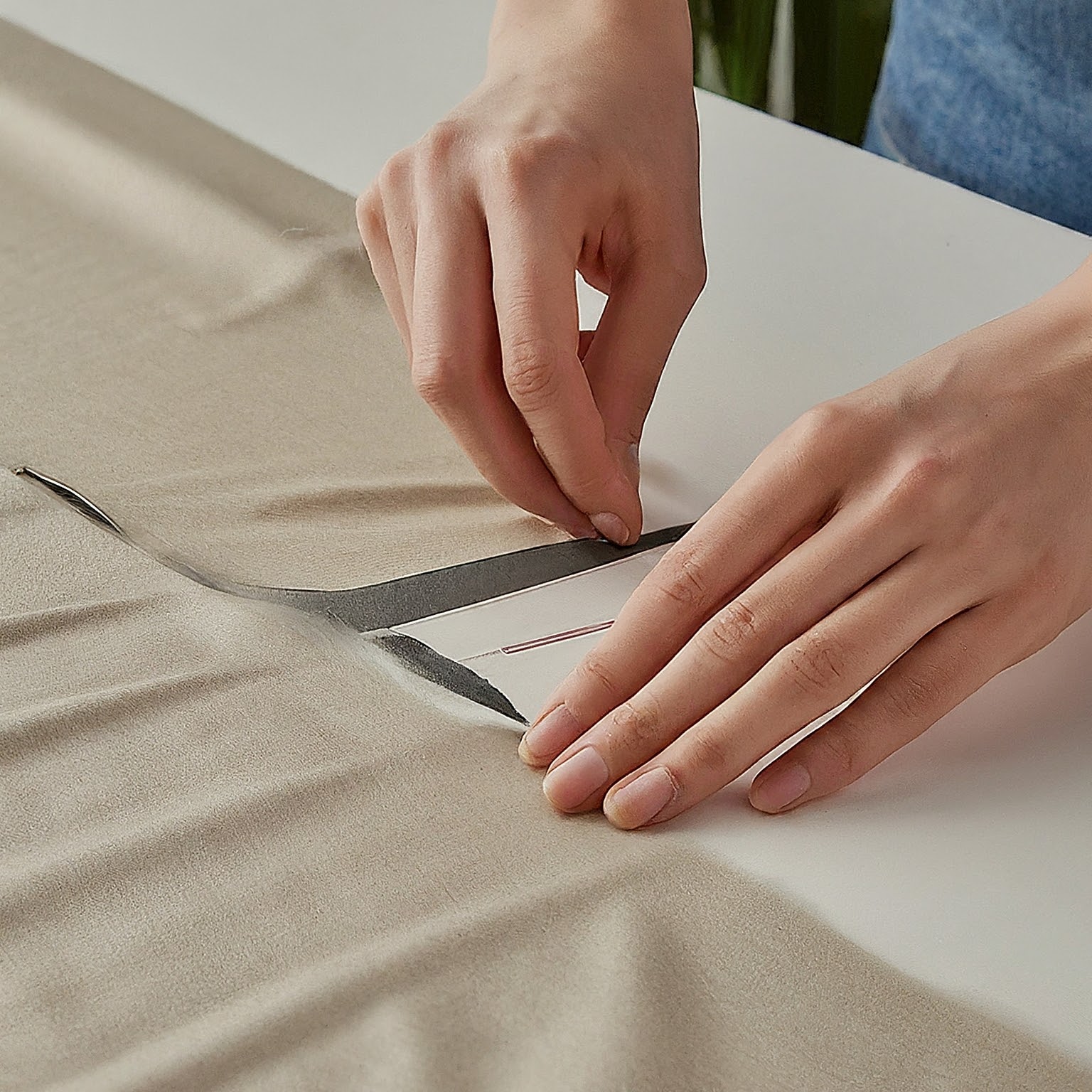
Fusible Interlining vs Body Fusing, Know the Difference
You’ve probably heard several terms thrown around on the factory floor, fusing cloth, body fusing, suit fusing, fusible interlining. Here’s the truth: they’re mostly the same product, just named differently depending on where you’re sourcing from and how you’re using it.
Fusible interlining is the technical term. It refers to any adhesive-coated base fabric used to reinforce a garment part, whether that’s a collar, cuff, waistband, or full front panel.
Body fusing (sometimes called body fusing cloth) refers specifically to the heavier woven grades, typically 100 to 150 GSM, applied across the full front body of a structured garment like a blazer, suit jacket, or formal uniform coat. If your uniform program includes blazers or structured jackets, this is the grade you’ll be ordering most.
For lighter uniform components, shirt collars, cuffs, plackets, you don’t need the heavy body fusing grade. A lighter interlining fabric, usually non-woven, does the job without adding unnecessary bulk or stiffness.
Knowing which term applies to which part of your garment helps you communicate clearly with your supplier and avoid ordering the wrong grade for the job.
How to Choose the Right Interlining Fabric for Your Uniform
Not every uniform needs the same interlining fabric. A hospitality uniform blazer needs different support than a school shirt collar. Here’s how to match the fabric to your garment type.
For structured uniform jackets and blazers (corporate, hospitality, security): You need woven fusing cloth in the 80–120 GSM range. This gives the front panel enough body to hold its shape through a full shift without feeling stiff or uncomfortable to wear.
For formal ceremonial or institutional uniforms: Heavier woven grades between 100 and 150 GSM give you the full structure needed for formal jackets, coats, and heavily tailored pieces.
For shirts, kurtas, and lighter uniform tops: A 40–60 GSM interlining works well for collars and cuffs. This is the standard grade used across the garment trade for everyday formal shirting.
For lightweight or economy uniform lines: 30–60 GSM non-woven fusing cloth keeps costs down while still giving waistbands, pockets, and light panels enough support.
A few questions worth asking yourself before you order:
- How often will this uniform be washed, and at what temperature?
- Does the garment need a firm, structured look, or a softer drape?
- Are you working with a heavier outer fabric that needs stronger adhesive bonding?
- Is this order headed for export, where certification requirements matter?
Getting these answers right before you place a bulk order saves you from costly reordering later.

GSM Guide for Uniform Fusing Cloth
GSM (grams per square metre) is the single most important spec when you’re sourcing fusing cloth. Order the wrong GSM and you’ll end up with a garment that’s either under-structured and floppy, or stiff and uncomfortable, neither one passes quality checks. Here’s a quick reference guide built for uniform manufacturers.
| GSM Grade | Type | Best For | Notes |
| 30–40 GSM | Woven/Non-woven | Sheer or delicate uniform fabrics | Minimum stiffness |
| 40–60 GSM | Woven | Shirt collars, cuffs, plackets | Standard collar grade |
| 55–70 GSM | Woven (light) | Waistbands, pocket areas, light jacket parts | Balance of drape and support |
| 80 GSM | Woven | Standard uniform blazer body | Economy structured grade |
| 100 GSM | Woven | Full-front structured uniform jackets | Minimum for tailored jackets |
| 120 GSM | Woven | Premium uniform blazers, formal coats | High structure grade |
| 130–150 GSM | Woven | Heavy ceremonial or winter uniform jackets | Maximum structure |
If you’re unsure where your garment falls, it’s always better to ask your supplier directly with your fabric type, garment part, and end use, a quick conversation saves you from an expensive misorder.
Woven vs Non-Woven Fusing Cloth for Uniforms
This is probably the most common question uniform manufacturers ask before placing an order. The short answer: use woven for structured body panels, and non-woven for smaller parts. Here’s the full breakdown.
| Property | Woven Fusible Interlining | Non-Woven Fusible Interlining |
| Construction | True woven fabric, interlaced yarns | Bonded polyester fibres |
| Strength | High tensile and tear strength | Moderate, fine for small parts |
| GSM range | 30–150 GSM | 30–82 GSM |
| Best for | Blazer fronts, structured jackets, formal coats | Collars, cuffs, plackets, pockets |
| Cost | Higher, but stronger and longer-lasting | More economical |
| Wash durability | Excellent, dry-clean and industrial-wash safe | Good, best for lighter-use garments |
Most uniform manufacturing units end up ordering both, woven for the body, non-woven for the smaller construction details. That combination gives you the right balance of durability and cost-efficiency across a full uniform range.
One more thing worth checking with any supplier: the coating type. A PA (polyamide) double-dot coating applies adhesive in a staggered two-row pattern, which means faster fusing, a stronger bond, and better resistance to delamination, something that matters a lot when your uniforms are going through weekly or even daily washing.
Why Manufacturers Choose Double Ghoda for Uniform Fusing Cloth
If you’re sourcing fusing cloth for a uniform manufacturing line, consistency matters more than almost anything else. You need every roll to perform exactly like the last one, or your quality checks turn into a bottleneck.
At Double Ghoda, we supply woven and non-woven fusible interlining wholesale to garment factories across India, from 30 GSM up to 150 GSM, covering everything from light shirt collars to full-front structured jackets. Here’s what sets our supply apart:
- PA double-dot coating as standard, not an upgrade, you get faster fusing and a stronger bond on every roll
- Accurate metres, every roll — measured and verified before dispatch, so you’re not losing production time to short deliveries
- Batch-to-batch consistency — the same GSM, hand-feel, and shrinkage every time you reorder
- OEKO-TEX® Standard 100 certified woven interlining, tested for harmful substances, relevant if your uniform contracts include export or institutional buyers
- Ready stock at our Bhiwandi, Maharashtra warehouse, with fast dispatch across Surat, Delhi, Mumbai, Ludhiana, Kolkata, and North India
We’re not a marketplace or a catalogue aggregator. Double Ghoda is a family-run interlining supply business with over 10 years of experience serving India’s garment manufacturing industry, and we know exactly what uniform manufacturers need because we’ve supplied fusing cloth for this segment for years.
Whether you’re producing corporate blazers, school uniforms, hospitality wear, or institutional formal uniforms, we can help you find the right GSM and coating for your production line. Our minimum order is 1,000 metres for both woven and non-woven grades, and we typically respond to enquiries within an hour.
Ready to source fusing cloth for your next uniform order? Reach out to us with your GSM, colour, quantity, and city, we’ll get you a written quotation fast.
Link of related Articles
- Lightweight Interlining vs. Heavyweight Interlining
- A Beginner’s Guide to Interlining
- Choosing the Right Interlining